



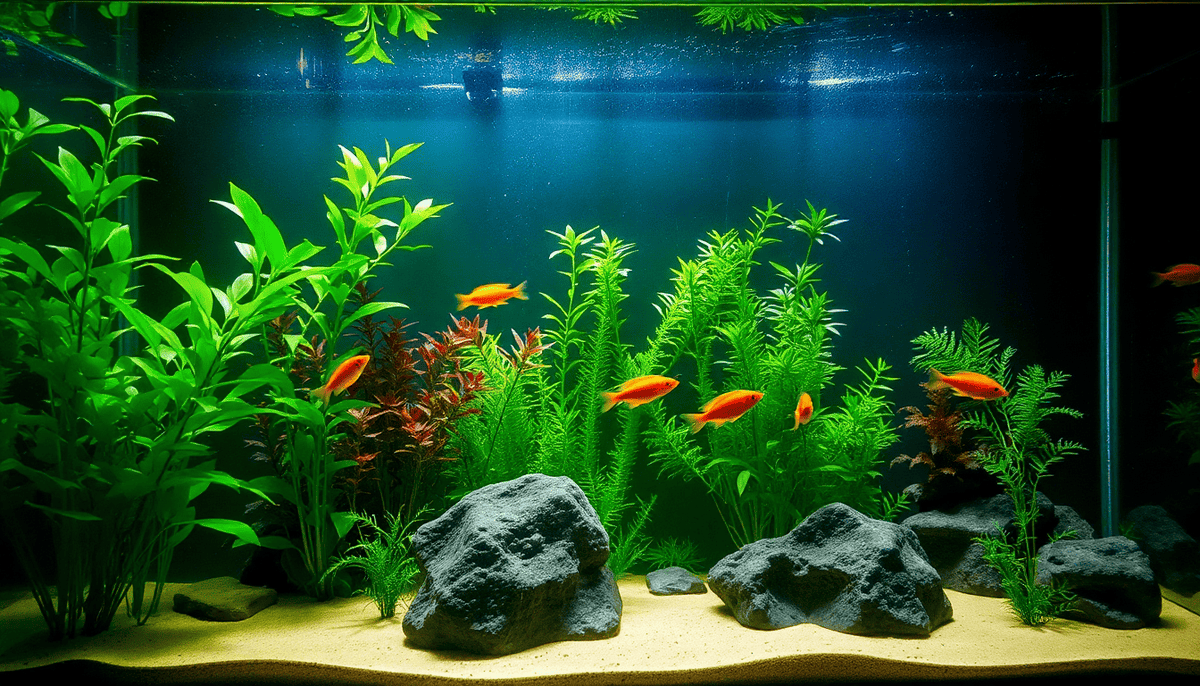
The Complete Guide to T5 HO Lighting for Aquariums: Everything You Need to Know
When it comes to keeping an aquarium, lighting is one of those things that can make or break your entire setup. If you've been researching aquarium lighting options, you've probably stumbled across T5 HO lights more than once. These powerful little fixtures have become incredibly popular among aquarium enthusiasts, and for good reason. Whether you're running a planted tank, a reef aquarium, or just want to show off your fish in the best possible light, T5 HO lighting might be exactly what you're looking for.
In this comprehensive guide, we're going to dive deep into everything you need to know about T5 HO lighting for aquariums. We'll cover what they are, how they work, why they're so popular, and most importantly, how to choose and set up the right system for your specific needs. By the time you finish reading this, you'll be an expert on T5 HO lighting, and you'll know exactly whether this type of lighting is right for your aquarium.
What Exactly Are T5 HO Lights?
Let's start with the basics. T5 HO stands for "T5 High Output," and it refers to a specific type of fluorescent lighting. The "T5" part refers to the diameter of the tube itself – it's 5/8 of an inch in diameter. The "HO" part means it's a high-output version, which means it produces more light than standard T5 tubes.
T5 HO lights are tubular fluorescent bulbs that come in various lengths, typically ranging from 12 inches to 48 inches. They're designed to fit into specific fixtures that hold the tubes and provide the electrical power needed to make them glow. Unlike older incandescent bulbs or even standard fluorescent tubes, T5 HO lights are incredibly efficient at converting electrical energy into usable light for your aquarium.
The technology behind T5 HO lights has been around for quite a while, but they've really gained popularity in the aquarium hobby over the past couple of decades. They've become the go-to choice for many serious aquarists, especially those with planted tanks or reef aquariums that require high-quality lighting.
How Do T5 HO Lights Work?
Understanding how T5 HO lights work can help you appreciate why they're so effective for aquariums. Inside each T5 HO tube, there's a small amount of mercury vapor and argon gas. When electrical current passes through the tube, it ionizes the gas, which causes the mercury to emit ultraviolet light. This UV light then hits a phosphor coating on the inside of the tube, which converts the UV light into visible light that we can see.
The specific color of the light produced depends on the type of phosphor coating used in the tube. Different phosphor coatings produce different color temperatures and spectrums, which is why you can find T5 HO tubes in so many different varieties. Some produce warm white light, some produce cool white light, and some are specifically designed to enhance the colors of your fish or plants.
The ballast is another crucial component of the T5 HO system. The ballast is the electronic component that regulates the electrical current flowing to the tubes. Without a proper ballast, the tubes wouldn't light up correctly, and they could even be damaged. Modern T5 HO fixtures typically use electronic ballasts, which are more efficient and reliable than older magnetic ballasts.
Why Choose T5 HO Lighting for Your Aquarium?
There are several reasons why T5 HO lighting has become so popular among aquarium enthusiasts. Let's explore some of the main advantages.
Energy Efficiency
One of the biggest advantages of T5 HO lighting is its energy efficiency. Compared to older incandescent lighting or even metal halide lights, T5 HO tubes use significantly less electricity to produce the same amount of light. This means lower electricity bills and less heat generation, which is especially important if you're trying to keep your aquarium at a specific temperature.
If you're running multiple lights over a large aquarium, the energy savings can really add up over time. Many aquarists have switched to T5 HO lighting specifically because of the reduced operating costs.
Excellent Light Spectrum
T5 HO tubes come in a wide variety of color temperatures and spectrums. This means you can choose tubes that are specifically designed for your type of aquarium. For planted tanks, you can choose tubes that emphasize the red and blue wavelengths that plants need for photosynthesis. For reef tanks, you can choose tubes that enhance the colors of corals and fish. For general community tanks, you can choose tubes that produce a natural-looking white light.
The ability to customize your lighting spectrum is a huge advantage, especially if you're trying to achieve specific results with your aquarium.
Long Lifespan
T5 HO tubes have a much longer lifespan than incandescent bulbs. While incandescent bulbs might last a few hundred hours, T5 HO tubes typically last between 10,000 and 20,000 hours, depending on the quality and the specific tube. This means you won't have to replace your bulbs nearly as often, which saves you money in the long run.
Low Heat Output
Unlike metal halide lights or incandescent bulbs, T5 HO lights produce relatively little heat. This is a huge advantage if you're trying to maintain a specific temperature in your aquarium, especially in warmer climates or during the summer months. The low heat output also means you don't have to worry as much about the lights cooking your fish or damaging your plants.
Compact Size
T5 HO fixtures are relatively compact and can fit into tight spaces. This makes them ideal for aquariums of various sizes, from small desktop tanks to large custom setups. The compact size also makes them easier to install and adjust compared to some other lighting options.
Different Types of T5 HO Tubes
Not all T5 HO tubes are created equal. There are several different types available, each with its own characteristics and best uses. Let's take a look at some of the most common varieties.
Daylight Tubes
Daylight T5 HO tubes typically produce a color temperature around 6500K to 10000K, which creates a bright, natural-looking white light. These tubes are great for general-purpose aquarium lighting and work well for community tanks with a mix of fish and plants. They're also popular for reef tanks because they provide good color rendering for both fish and corals.
Actinic Tubes
Actinic tubes produce light in the blue spectrum, typically around 420 nanometers. These tubes are specifically designed for reef aquariums and are often used in combination with other tubes to enhance the colors of corals and create a more natural reef environment. Many aquarists use actinic tubes in the evening to simulate the natural lighting conditions of a reef at dusk.
Plant Growth Tubes
Plant growth tubes, often called "grow lights," are specifically designed to promote plant growth. They typically emphasize the red and blue wavelengths that plants use for photosynthesis, while minimizing the green wavelengths that plants don't use as efficiently. These tubes are ideal for planted tanks and can help your plants grow faster and healthier.
Full Spectrum Tubes
Full spectrum T5 HO tubes are designed to mimic natural sunlight as closely as possible. They produce a balanced spectrum of light across all visible wavelengths, making them a good all-purpose choice for various types of aquariums. These tubes are often used in combination with other specialized tubes to create a more complete lighting setup.
Combination Tubes
Some manufacturers produce T5 HO tubes that combine multiple spectrums in a single tube. For example, you might find tubes that combine daylight and actinic spectrums, or tubes that combine plant growth and daylight spectrums. These combination tubes can be convenient if you want to simplify your lighting setup.
Choosing the Right T5 HO Fixture for Your Aquarium
Now that you understand what T5 HO lights are and the different types available, let's talk about choosing the right fixture for your specific aquarium. There are several factors to consider.
Tank Size and Depth
The size and depth of your aquarium is one of the most important factors in choosing a T5 HO fixture. T5 HO lights are generally suitable for aquariums up to about 24 inches deep, though they can work in deeper tanks if you use enough fixtures. For shallow tanks, T5 HO lights are excellent and can provide plenty of light for plants and corals.
If you have a very large or very deep aquarium, you might need to consider other lighting options like LED lights or metal halide lights, which can penetrate deeper into the water column.
Type of Aquarium
The type of aquarium you have will also influence your choice of T5 HO fixture. For planted tanks, you'll want a fixture that can accommodate multiple tubes so you can use a combination of daylight and plant growth tubes. For reef tanks, you'll want a fixture that allows you to use actinic tubes in combination with daylight tubes. For community tanks, a simple fixture with one or two daylight tubes might be sufficient.
Number of Tubes
T5 HO fixtures come in various configurations, from single-tube fixtures to fixtures with six or more tubes. The number of tubes you need depends on the size of your tank and the intensity of light you want to achieve. As a general rule, you should aim for about 2 to 3 watts per gallon for planted tanks, and about 3 to 5 watts per gallon for reef tanks.
Fixture Quality
Not all T5 HO fixtures are created equal. Higher-quality fixtures typically have better ballasts, more durable construction, and better reflectors that direct more light into your tank. While quality fixtures might cost more upfront, they'll last longer and perform better in the long run.
When choosing a fixture, look for one with an electronic ballast rather than a magnetic ballast. Electronic ballasts are more efficient, produce less heat, and are quieter than magnetic ballasts. Also, look for fixtures with good reflectors – these help direct more light into your tank and reduce wasted light.
Adjustability
Some T5 HO fixtures allow you to adjust the height and angle of the tubes, which can be helpful for fine-tuning the light intensity in your tank. If you have a planted tank with plants of varying heights, adjustability can be especially useful.
Setting Up Your T5 HO Lighting System
Once you've chosen your T5 HO fixture, it's time to set it up. Here's a step-by-step guide to getting your system up and running.
Installation
First, you'll need to install the fixture above your aquarium. Most T5 HO fixtures come with mounting hardware that allows you to attach them to the aquarium frame or to a stand above the tank. Make sure the fixture is securely mounted and won't fall into the water.
If you're using a fixture with a hood or canopy, make sure there's adequate ventilation around the fixture to prevent heat buildup. Even though T5 HO lights don't produce as much heat as some other lighting options, they still generate some heat, and proper ventilation is important.
Inserting the Tubes
Once the fixture is installed, you'll need to insert the T5 HO tubes into the fixture. Most fixtures have slots or holders that the tubes slide into. Make sure the tubes are inserted all the way into the holders and are seated properly. If a tube isn't seated correctly, it might not light up properly.
Connecting the Ballast
The ballast will need to be connected to the tubes and to a power source. Most modern T5 HO fixtures have the ballast built into the fixture, so you'll just need to plug the fixture into an electrical outlet. Make sure you're using a properly grounded outlet and that the power cord is in good condition.
Testing the System
Once everything is connected, turn on the fixture and make sure all the tubes light up properly. If a tube doesn't light up, try removing it and reinserting it. If it still doesn't light up, the tube might be defective and need to be replaced.
Adjusting the Height
If your fixture is adjustable, you'll want to adjust the height to achieve the right light intensity in your tank. As a general rule, T5 HO lights should be positioned about 6 to 12 inches above the water surface, depending on the intensity you want to achieve. If you want more intense light, position the fixture closer to the water. If you want less intense light, position it further away.
Maintaining Your T5 HO Lighting System
Like any piece of aquarium equipment, your T5 HO lighting system will need regular maintenance to keep it running properly.
Cleaning the Tubes
Over time, dust and algae can accumulate on the T5 HO tubes, which reduces the amount of light they produce. You should clean your tubes every few months to keep them in optimal condition. To clean the tubes, turn off the fixture and let it cool down. Then, gently wipe the tubes with a soft, damp cloth. Don't use abrasive materials or harsh chemicals, as these can damage the tubes.
Replacing the Tubes
Even though T5 HO tubes have a long lifespan, they will eventually need to be replaced. Most tubes should be replaced every 10,000 to 20,000 hours of use, which typically works out to about once a year or once every two years, depending on how many hours per day you run your lights.
As tubes age, they produce less light and their color spectrum can shift. If you notice that your plants aren't growing as well as they used to, or if the colors in your tank don't look as vibrant, it might be time to replace your tubes.
Checking the Ballast
The ballast is the heart of your T5 HO system. If the ballast starts to fail, your tubes might flicker, not light up properly, or not light up at all. If you notice any problems with your ballast, you'll need to replace it. Most modern fixtures have the ballast built in, so you might need to replace the entire fixture if the ballast fails.
Keeping the Fixture Clean
In addition to cleaning the tubes, you should also keep the fixture itself clean. Dust can accumulate on the reflectors and other parts of the fixture, which reduces efficiency. Wipe down the fixture with a soft, damp cloth every few months to keep it clean.
T5 HO Lighting for Planted Tanks
If you're running a planted tank, T5 HO lighting can be an excellent choice. Plants need light to photosynthesize and grow, and T5 HO lights can provide the right spectrum and intensity for healthy plant growth.
Choosing the Right Tubes for Planted Tanks
For planted tanks, you'll want to use a combination of tubes that provide the right spectrum for plant growth. Many aquarists use a combination of daylight tubes and plant growth tubes. A common setup is to use two daylight tubes and one or two plant growth tubes, which provides a good balance of light for both plant growth and fish visibility.
Some popular tube combinations for planted tanks include:
- Two 6500K daylight tubes and one 660nm red plant growth tube
- One 6500K daylight tube, one 10000K daylight tube, and one plant growth tube
- Three daylight tubes of varying color temperatures
The exact combination you choose will depend on your specific plants and the look you're going for in your tank.
Light Intensity for Planted Tanks
The amount of light your plants need depends on the types of plants you're growing. Low-light plants like anubias and java fern can do well with just 1 to 2 watts per gallon, while high-light plants like glossostigma and dwarf hairgrass need 3 to 5 watts per gallon or more.
If you're growing a mix of low-light and high-light plants, aim for about 2 to 3 watts per gallon, which should be sufficient for most plants.
Photoperiod for Planted Tanks
In addition to the intensity and spectrum of light, the duration of light exposure is also important for planted tanks. Most aquarists run their lights for 8 to 10 hours per day, which mimics the natural day-night cycle and helps prevent algae overgrowth.
Some aquarists use a timer to automatically turn their lights on and off at the same time each day, which helps maintain a consistent photoperiod and makes it easier to manage the tank.
T5 HO Lighting for Reef Tanks
If you're running a reef aquarium, T5 HO lighting can also be an excellent choice, especially for shallow to moderate-depth tanks. Corals need light to photosynthesize and grow, and T5 HO lights can provide the right spectrum for healthy coral growth.
Choosing the Right Tubes for Reef Tanks
For reef tanks, you'll typically want to use a combination of daylight tubes and actinic tubes. The daylight tubes provide the full spectrum of light that corals need, while the actinic tubes enhance the blue colors and create a more natural reef appearance.
A common setup for reef tanks is to use three daylight tubes and two actinic tubes, though the exact ratio will depend on your specific corals and the look you're going for.
Light Intensity for Reef Tanks
The amount of light corals need depends on the types of corals you're keeping. Soft

Written by Talis Us


Leave a comment
This site is protected by hCaptcha and the hCaptcha Privacy Policy and Terms of Service apply.