


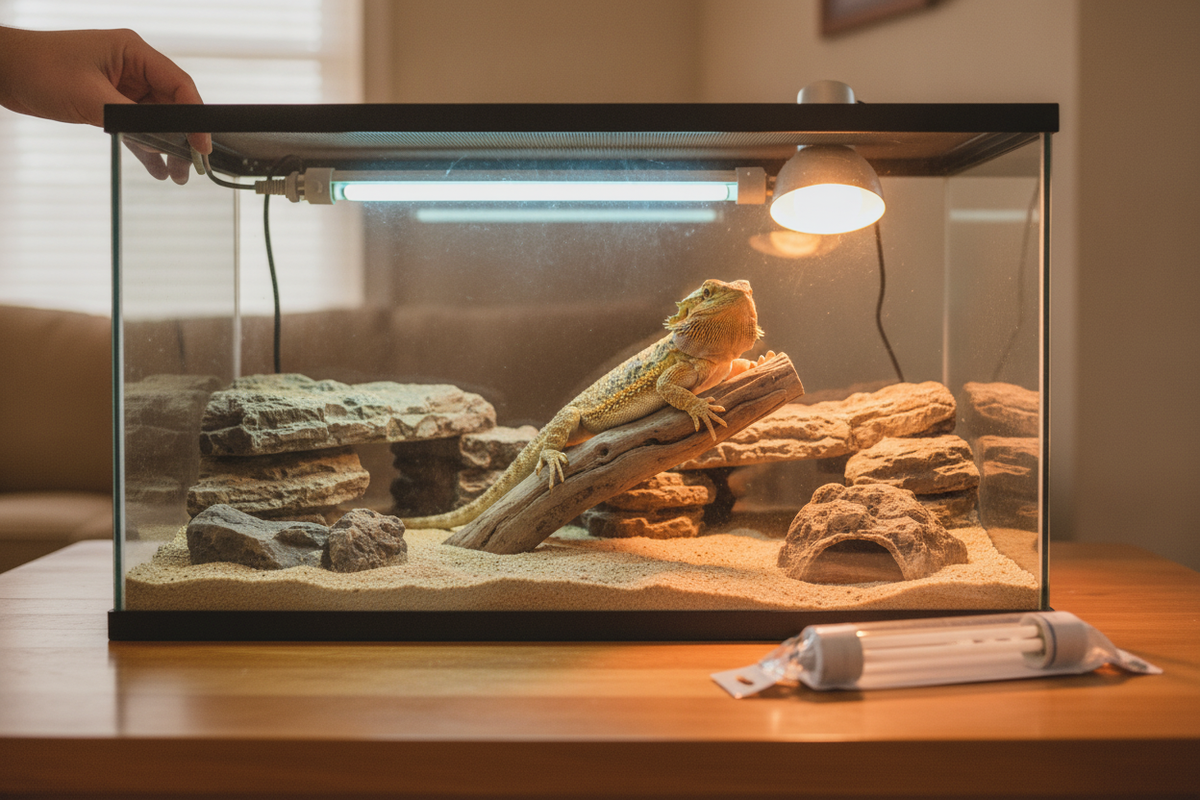
Reptile Light Types: Which One Does Your Pet Need
Is Your Reptile Getting the Right Light?
Choosing the right reptile light can feel overwhelming, especially when you're staring at a wall of bulbs and fixtures with no idea where to start. But here's the thing: lighting isn't just about visibility in your reptile's enclosure. It directly impacts their health, behavior, digestion, and even their lifespan. Whether you're setting up your first terrarium or rethinking your current setup, getting the lighting right is one of the most important decisions you'll make as a reptile owner.
From UVB bulbs to basking lamps and ceramic heat emitters, each reptile light type serves a specific purpose. This guide breaks it all down in plain language so you can confidently choose what your scaly companion actually needs, no confusing jargon, just real, practical answers.
UVB Lights: The Foundation of Reptile Health
If there's one light type that reptile owners absolutely cannot skip, it's UVB. Ultraviolet B (UVB) light plays a critical role in helping reptiles synthesize vitamin D3, which in turn allows them to absorb calcium properly. Without adequate UVB exposure, reptiles are at serious risk of metabolic bone disease, a painful and often fatal condition that weakens bones and affects muscle function.
In the wild, reptiles get their UVB from natural sunlight. Inside an enclosure, that sunlight needs to be replicated with the right bulb. UVB bulbs come in two main styles: fluorescent tube bulbs (great for covering large enclosures) and compact coil bulbs (better suited for smaller setups). The percentage of UVB output matters too. A 5.0 bulb is typically recommended for forest-dwelling species like chameleons and crested geckos, while a 10.0 bulb suits desert species such as bearded dragons and uromastyx.
One important note: UVB bulbs degrade over time even when they still appear to be working. Most quality UVB bulbs should be replaced every 6 to 12 months to ensure your reptile is still receiving effective UV output.
Which Reptiles Need UVB and Why It's Non-Negotiable
Most diurnal reptiles (those active during the day) require UVB lighting. This includes bearded dragons, blue-tongued skinks, water dragons, tortoises, and many species of chameleons and geckos. Even some crepuscular species benefit from low-level UVB exposure.
Nocturnal reptiles like leopard geckos and ball pythons can often get by with minimal or no UVB, though recent research suggests that even these species benefit from low-output UVB in captivity. The key is matching the lighting setup to your specific species' natural environment. When in doubt, consult a reptile-savvy vet or a trusted pet care resource to confirm what your pet needs.
Basking Bulbs: Giving Your Reptile the Warmth They Crave
Reptiles are ectothermic, meaning they rely on external heat sources to regulate their body temperature. In nature, they bask under the sun to warm up and retreat to shade to cool down. Inside an enclosure, a basking bulb recreates that warm zone, giving your reptile a dedicated spot to thermoregulate throughout the day.
Basking bulbs are typically incandescent or halogen bulbs positioned at one end of the enclosure to create a thermal gradient. This gradient is essential: your reptile needs both a warm basking spot and a cooler area so they can move between the two as needed. A single-temperature enclosure forces your pet to stay at one temperature constantly, which is stressful and unhealthy.
Halogen basking bulbs have become increasingly popular because they produce a more focused, intense heat similar to natural sunlight. They also tend to last longer than standard incandescent bulbs and offer better energy efficiency.
How to Set the Right Basking Temperature for Your Species
Getting the basking temperature right is just as important as having the bulb in the first place. Each species has its own ideal temperature range, and using the wrong wattage can lead to overheating or insufficient warmth.
Here are some general basking temperature guidelines:
- Bearded dragons: 100 to 110°F (38 to 43°C)
- Leopard geckos: 88 to 92°F (31 to 33°C)
- Ball pythons: 88 to 92°F (31 to 33°C)
- Chameleons: 85 to 95°F (29 to 35°C)
- Tortoises: 95 to 100°F (35 to 38°C)
Always use a digital thermometer or temperature gun to verify the actual surface temperature at the basking spot. Guessing based on wattage alone isn't reliable, as enclosure size, ventilation, and ambient room temperature all affect the final result.
Heat Lamps vs. Ceramic Heat Emitters: Knowing the Difference
Both heat lamps and ceramic heat emitters (CHEs) provide warmth to your reptile's enclosure, but they work differently and serve different purposes. Understanding which one fits your setup can make a big difference in your pet's comfort and your energy bill.
Heat lamps emit both light and heat, making them ideal for daytime use. They help maintain the thermal gradient in the enclosure while also contributing to the light cycle your reptile needs. Most basking bulbs function as heat lamps.
Ceramic heat emitters, on the other hand, produce heat without any light. They screw into a standard lamp socket and generate infrared heat that warms the air and surfaces in the enclosure. Because they produce no visible light, they are perfect for maintaining nighttime temperatures without disrupting your reptile's natural day-night cycle.
CHEs are especially useful in cooler climates where enclosure temperatures can drop significantly at night. They are also long-lasting, with many models rated for up to 10,000 hours of use, making them a cost-effective heating solution over time.
Nighttime Heating Solutions That Won't Disrupt Your Pet's Sleep Cycle
One of the most common mistakes new reptile owners make is using a regular light bulb to heat the enclosure at night. Visible light at night disrupts your reptile's circadian rhythm, interfering with sleep, hormone regulation, and natural behavior patterns.
For nighttime heating, consider these light-free options:
- Ceramic heat emitters (CHEs): The most widely recommended option for consistent, light-free overnight warmth.
- Radiant heat panels: Installed on the ceiling of the enclosure, these panels emit gentle infrared heat without light.
- Under-tank heaters (UTHs): Placed beneath the enclosure, these provide belly heat and are useful for species that benefit from substrate warmth, though they should always be used with a thermostat.
A thermostat is strongly recommended with any nighttime heating device. It keeps temperatures within a safe range automatically, protecting your reptile from dangerous temperature swings while you sleep.
Give Your Reptile the Light They Deserve
The right reptile light isn't just an accessory you add to make the enclosure look nice. It's a core part of your pet's environment, directly tied to their physical health, mental wellbeing, and quality of life. Matching the correct lighting to your reptile's specific needs, whether that's a high-output UVB tube for a bearded dragon or a ceramic heat emitter for overnight warmth, sets them up for a longer, healthier, and happier life.
Every reptile species has unique requirements, and taking the time to understand those needs shows just how much you care. When your setup is dialed in, you'll notice the difference: more activity, better appetite, brighter colors, and a pet that truly thrives.
Ready to build the perfect lighting setup? Explore Talis US's reptile lighting collection and find everything your scaly companion needs to feel right at home.

Written by Talis Us




Leave a comment
This site is protected by hCaptcha and the hCaptcha Privacy Policy and Terms of Service apply.