


Kelp for Dogs: The Complete Science-Backed Guide
Ocean-Sourced Nutrition for Thyroid Health, Cleaner Teeth, Better Coat, and More
There is a single ingredient used in some of the most respected holistic veterinary diets and natural supplement protocols worldwide — and it is not a synthetic compound, it is not a pharmaceutical derivative, and it does not come from a laboratory. It grows in cold North Atlantic coastal waters, absorbs over 50 essential trace minerals directly from the sea, and has peer-reviewed clinical evidence showing it can reduce a dog's dental plaque by up to 40% — without brushing.
That ingredient is kelp. And while it may seem like an unusual choice for a dog's daily nutrition, the science behind it is among the most solid of any natural pet supplement currently available.
Here is everything you need to know.
Table of Contents
What Is Kelp?
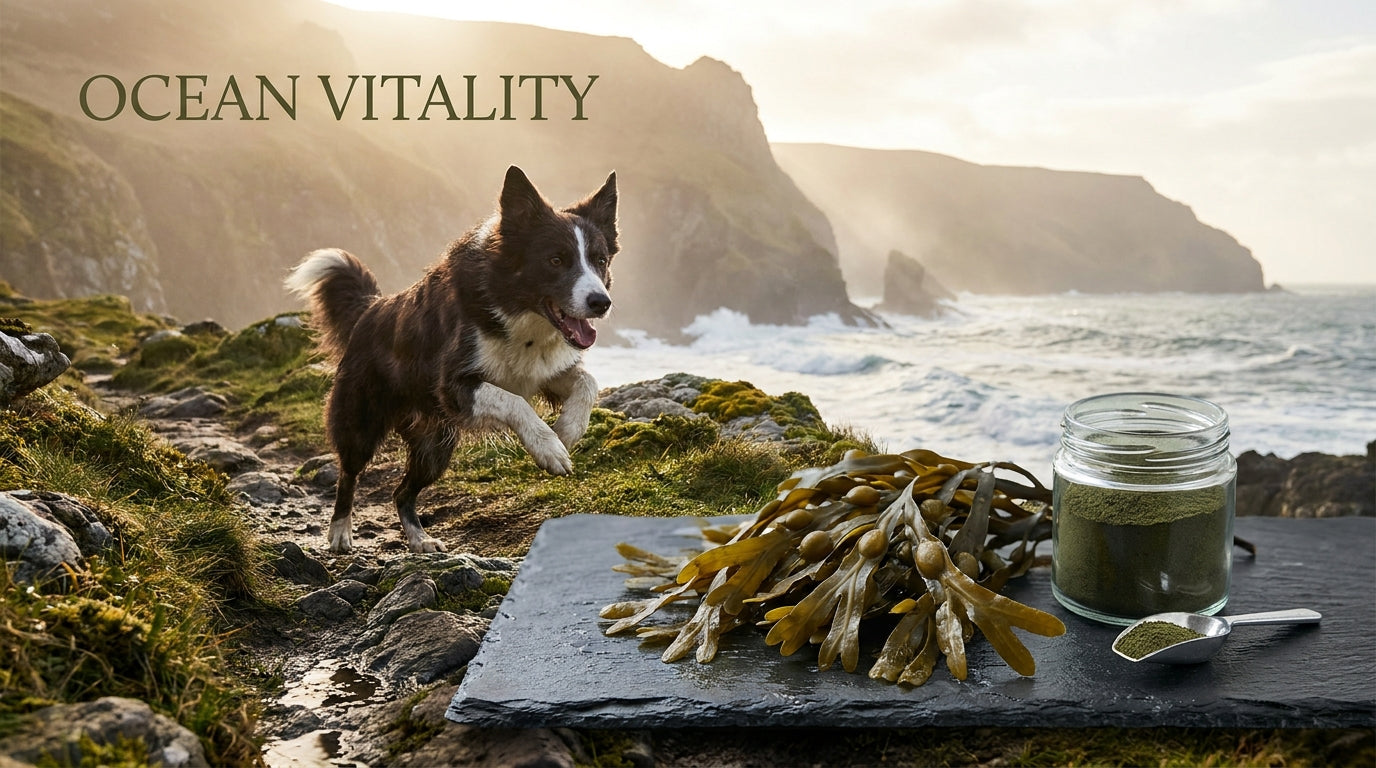
 Kelp grows in cold, mineral-rich North Atlantic and Pacific coastal waters — absorbing over 50 trace elements directly from the sea. It is one of nature's most nutrient-dense whole foods, and one of the few with peer-reviewed clinical evidence specifically in dogs.
Kelp is a category of large brown seaweed belonging to the order Laminariales, which grows in shallow coastal waters around the world — particularly in cold, nutrient-rich Atlantic and Pacific ocean waters. Unlike land plants, kelp and other seaweeds do not grow from soil. Instead, they absorb nutrients directly from the seawater through their fronds — accumulating over 50 essential elements including iodine, calcium, magnesium, iron, zinc, and dozens of trace minerals that are difficult or impossible to obtain from terrestrial food sources.
This is why wild-ocean-harvested kelp, grown in clean coastal waters, provides a mineral density that no land plant can match.
Kelp has been part of human coastal diets for centuries — the Māori of New Zealand, coastal Irish and Scandinavian communities, and Japanese populations have all consumed seaweeds as dietary staples. The observation that these communities showed lower rates of certain inflammatory and thyroid conditions sparked scientific interest in kelp's bioactive properties that continues today.
For dogs, kelp supplements gained veterinary attention primarily through two pathways:
-
As a natural iodine source for thyroid support in homemade and fresh-food diets that would otherwise be iodine-deficient
-
As a clinically proven dental health tool through the seaweed species Ascophyllum nodosum
Sources: Seaweed for Dogs — Benefits, Species, and Safe Use · SeaPet — Benefits of Sea Kelp Supplements for Dogs
The Kelp Species That Matter for Dogs
Not all seaweeds are equal. Different species have distinct nutritional profiles, iodine concentrations, and specific benefits. The following are the species most relevant to canine supplementation:
| Species | Common Name | Primary Benefit | Iodine Level | Key Compounds |
|---|---|---|---|---|
| Ascophyllum nodosum | Norwegian kelp / Rockweed | Dental health + minerals | Moderate (~0.5–0.8 mg/g) | Fucoidan, phlorotannins, alginic acid |
| Laminaria digitata | Oarweed | Thyroid support, minerals | Very high (up to 0.75% DM) | Laminarin, mannitol, all amino acids |
| Saccharina latissima | Sugar kelp | General mineral support, joints | High (0.3–0.5% DM) | Alginates, fucoidan, vitamin K |
| Fucus vesiculosus | Bladderwrack | Thyroid + anti-inflammatory | Moderate-high | Fucoidan, phlorotannins, fucosterol |
| Fucus serratus | Toothed wrack | Thyroid + skin | Moderate | Fucoidan, alginates |
| Chondrus crispus | Irish moss | Digestive soothing | Low | Carrageenan, taurine (trace), minerals |
| Ulva lactuca | Sea lettuce | Protein, minerals (low iodine) | Low | Ulvan, calcium, iron |
For most dog owners, Ascophyllum nodosum is the gold-standard species — it has the most robust clinical evidence in dogs, a well-established safety record, and a moderate iodine level that makes appropriate dosing more manageable than higher-iodine Laminaria species.
Source: Seaweed for Dogs — Species Profiles
What's Inside: The Nutrient Profile
 Kelp's therapeutic power comes from a dense, synergistic matrix of over 50 minerals, vitamins, unique polysaccharides like fucoidan and alginates, natural protein, and antioxidants — all absorbed directly from the sea and unavailable from any land-plant source.
Core Nutritional Components of Kelp (Dried, per 100g)
| Nutrient | Function in Dogs |
|---|---|
| Iodine | Thyroid hormone synthesis (T3, T4); metabolism regulation |
| Fucoidan (unique to brown seaweed) | Anti-inflammatory, immune modulation, dental biofilm disruption |
| Alginates (soluble fiber) | Prebiotic gut fiber; binds toxins; supports satiety |
| Laminarin | Prebiotic; immune-stimulating polysaccharide |
| Vitamin A | Vision, immune function, skin integrity |
| Vitamin K | Blood clotting, bone metabolism |
| B-Complex Vitamins | Nerve function, energy metabolism, coat health |
| Calcium & Magnesium | Bone density, muscle function, nerve conduction |
| Iron | Oxygen transport; red blood cell formation |
| Zinc | Skin, coat, immune function, wound healing |
| Selenium | Antioxidant defense; thyroid hormone activation |
| Natural Protein & Amino Acids | ~25% protein by dry weight; tissue repair, muscle maintenance |
| Fucoxanthin (antioxidant pigment) | Anti-obesity, antioxidant, anti-inflammatory effects |
| Phlorotannins | Antioxidant; oral bacteria inhibition |
| Alginic Acid | Binds to dental plaque biofilm; reduces tartar adhesion |
Why land plants can't compete: Because kelp absorbs minerals directly from seawater — which contains virtually every element on the periodic table in trace amounts — its mineral profile is fundamentally broader and denser than any terrestrial vegetable. A single gram of dried kelp can contain trace quantities of over 50 elements that most commercial dog foods never provide at all.
Sources: SeaPet — Benefits of Sea Kelp Supplements for Dogs · Seaweed for Dogs
Benefit 1: Thyroid & Metabolic Support
The thyroid gland produces the hormones T3 (triiodothyronine) and T4 (thyroxine) — which regulate metabolism, body temperature, heart rate, energy levels, weight, brain function, and coat quality in dogs. Both T3 and T4 require iodine as a structural building block. Without adequate iodine, the thyroid cannot produce sufficient hormone.
Kelp is nature's richest dietary source of iodine — which is precisely why it appears in holistic veterinary protocols for dogs eating homemade, raw, or fresh-food diets, where iodine is often the mineral most likely to be deficient.
Hypothyroidism in Dogs
Hypothyroidism — underactive thyroid — is the most common endocrine disorder in dogs. Golden Retrievers, Labrador Retrievers, Doberman Pinschers, Boxers, and Cocker Spaniels are among the breeds with elevated prevalence. Signs include:
-
Unexplained weight gain
-
Lethargy and reduced activity
-
Coat thinning, hair loss, or poor coat quality
-
Intolerance to cold
-
Thickened, "tragic" facial expression
-
Slow heart rate
Important Nuance: Iodine Is Not Always the Cause
Low dietary iodine is only one potential cause of canine hypothyroidism. Most cases in dogs result from autoimmune thyroiditis (immune system destroying thyroid tissue) or idiopathic thyroid atrophy — not iodine deficiency. Simply adding kelp does not correct hypothyroidism in these cases. Always consult your veterinarian before using kelp with a dog diagnosed with thyroid disease — excess iodine can actually worsen certain thyroid conditions.
Kelp's thyroid benefit is primarily preventive — ensuring dogs on homemade diets maintain adequate iodine intake to support normal thyroid function.
Sources: Raised Right — Kelp for Dogs, Dr. Jnanee Krishnasamy BVSc · Merck Veterinary Manual — Hypothyroidism in Animals
Benefit 2: Dental Health — The Standout Clinical Benefit
 Clinical studies using Ascophyllum nodosum demonstrate up to ~40% reduction in plaque and ~20% reduction in tartar in dogs — without brushing. The mechanism involves systemic absorption and salivary excretion of fucoidan and phlorotannins that disrupt oral bacteria and biofilm formation.
Kelp's most evidence-backed benefit in dogs is also its most surprising: daily Ascophyllum nodosum supplementation measurably reduces dental plaque and tartar without any brushing or mechanical cleaning.
The Clinical Evidence
Gawor et al. 2018 — Frontiers in Veterinary Science In a double-blind trial, dogs given treats containing Ascophyllum nodosum daily for 90 days showed:
-
~40% reduction in plaque compared to the control group
-
~20% reduction in tartar/calculus compared to the control group
-
Improved breath scores (reduced halitosis)
-
Reduced signs of gingivitis
Ascophyllum nodosum as Nutrient Supporting Oral Health in Dogs (PubMed 2023) A systematic review confirmed that brown algae (Ascophyllum nodosum) supplementation changes the composition of the oral microbiome in dogs, reducing plaque-forming bacterial species.
Source: PubMed — Ascophyllum nodosum as a Nutrient Supporting Oral Health in Dogs, 2023
How Does It Work?
The mechanism is genuinely interesting: Ascophyllum nodosum does not work by direct physical contact with the teeth. Instead, its bioactive compounds — primarily fucoidan, phlorotannins, and alginic acid — are absorbed in the gut and excreted into saliva. In the oral cavity, these compounds:
-
Inhibit the growth of plaque-forming bacteria (Streptococcus, Actinomyces species)
-
Disrupt the formation of dental biofilm (the sticky matrix that allows plaque to adhere to tooth enamel)
-
Reduce alginic acid adhesion of tartar to tooth surfaces
This means every time your dog licks their gums or swallows, the compound is being delivered to the teeth and gumline — a passive, continuous, no-brush dental hygiene mechanism.
Why This Matters
Periodontal disease affects an estimated 80% of dogs over three years of age. It is the single most common health problem seen in veterinary practice. Bacteria from infected gums can enter the bloodstream and contribute to heart valve disease, kidney damage, and systemic inflammation. Yet most dogs never receive regular tooth brushing. Ascophyllum nodosum supplementation represents one of the few clinically validated passive dental interventions available for dogs.
The VOHC (Veterinary Oral Health Council) has recognized Ascophyllum nodosum-containing products in its approved seal of acceptance — one of the most rigorous veterinary dental quality standards.
Benefit 3: Skin & Coat
Kelp's broad mineral and vitamin profile — particularly its iodine, zinc, selenium, and B-vitamin content — directly supports the quality of a dog's skin and coat:
-
Iodine & Zinc: Required for keratin production — the protein that forms hair shafts and skin cells. Deficiency in either can cause dry, flaky skin and hair thinning
-
Fucoxanthin: An antioxidant pigment in brown kelp with anti-inflammatory properties — may reduce itching and inflammatory skin conditions
-
Natural omega fatty acids: Some kelp species contain small amounts of omega-3 fatty acids that contribute to skin lipid barrier integrity
-
Selenium: A trace antioxidant mineral that protects skin cells from oxidative damage
Many holistic veterinarians specifically recommend kelp supplementation as a component of natural management for dogs with dull coats, dry skin, or alopecia (hair loss) — particularly when the underlying cause may be micronutrient deficiency rather than allergic or hormonal disease.
Talis Tip: For dogs with skin and coat issues, kelp pairs well with green lipped mussel (which provides ETA omega-3s and anti-inflammatory glycosaminoglycans) as part of a comprehensive nutritional approach to skin health.
Benefit 4: Gut Health & Digestion
Kelp is approximately 25% protein by dry weight and also provides significant dietary fiber — a combination that supports multiple aspects of canine digestive health.
Prebiotic Fiber — Fucoidan and Alginates
The complex polysaccharides in kelp — particularly fucoidan, laminarin, and alginates — pass through the small intestine largely undigested and ferment in the colon. There they act as prebiotics, selectively feeding beneficial gut bacteria (Lactobacillus, Bifidobacterium species) and producing short-chain fatty acids (SCFAs) that:
-
Strengthen the gut lining (gut barrier integrity)
-
Reduce intestinal inflammation
-
Support immune cell development in gut-associated lymphoid tissue (GALT)
-
Improve stool consistency in dogs with intermittent loose stools
Alginate's Toxin-Binding Action
Alginates from kelp can bind to certain heavy metals and toxins in the gut, reducing their absorption and aiding their excretion — providing a natural detoxifying effect alongside the prebiotic benefit.
Protein Support
At ~25% natural protein by dry weight, kelp also contributes a small but meaningful amino acid profile that supports tissue maintenance and muscle health. This makes it particularly useful as a mineral-dense protein supplement in raw or fresh-food diets.
Source: Seaweed for Dogs — Polysaccharides and Canine Health
Benefit 5: Immune System & Anti-Inflammatory Support
Fucoidan — the signature sulfated polysaccharide found in brown kelp — has been among the most actively researched marine compounds in recent decades for its immune-modulating properties.
Laboratory and in vitro research has demonstrated fucoidan's ability to:
-
Modulate the immune response — enhancing pathogen defense while reducing chronic inflammatory signaling
-
Inhibit pro-inflammatory cytokines including TNF-α and IL-6, the same mediators involved in arthritis, allergies, and IBD
-
Exhibit anti-tumor properties — inducing apoptosis in certain cancer cell lines and supporting immune surveillance in animal models
-
Provide antiviral effects — interfering with viral attachment to host cells
For dogs with chronic inflammatory conditions — arthritis, environmental allergies, inflammatory bowel disease — kelp's fucoidan content may contribute meaningfully to systemic inflammation reduction when used as part of a broader nutritional management plan.
Source: Seaweed for Dogs — Immune and Anti-inflammatory Effects
Benefit 6: Weight Management
Two compounds in brown kelp are specifically relevant to weight management in overweight dogs:
Fucoxanthin: A carotenoid pigment unique to brown algae, fucoxanthin has been studied for its anti-obesity effects in animal models — including evidence of increased metabolic rate and promotion of fat cell breakdown (lipolysis), particularly in visceral (abdominal) fat. While human clinical trials are ongoing, the animal research base is promising.
Alginates: Soluble alginate fibers form a viscous gel in the stomach, which slows gastric emptying and prolongs the feeling of fullness. For overweight dogs on a calorie-restricted diet, this satiety-enhancing effect may support dietary compliance — dogs feel satisfied on less food.
Kelp is not a weight-loss treatment on its own — but as part of a veterinary-guided calorie management plan, it may provide a meaningful supporting role.
Benefit 7: Senior Dog Support
Senior dogs face a convergence of challenges that kelp specifically addresses:
| Senior Dog Challenge | Kelp's Contribution |
|---|---|
| Thyroid slowdown — metabolism naturally decreases with age | Iodine supports continued thyroid hormone production |
| Dental disease accumulation | Ascophyllum nodosum provides ongoing passive plaque control |
| Coat thinning / dull coat | Zinc, selenium, B-vitamins support keratin and follicle health |
| Digestive changes | Prebiotic fiber supports gut microbiome health in aging dogs |
| Reduced immune resilience | Fucoidan and antioxidants support immune defense |
| Joint inflammation | Fucoidan's anti-inflammatory properties may reduce arthritic discomfort |
| Cognitive changes | B-vitamins and antioxidants support brain cell health |
SeaPet's veterinary notes specifically highlight kelp as "one of the best natural senior dog supplements" for its multi-system support in aging dogs. Source: SeaPet — Benefits of Sea Kelp Supplements for Dogs
Dosage Guide: How Much Kelp to Give Your Dog
 Kelp for dogs is available as fine powder (most versatile), capsules/tablets, natural treats, and incorporated into premium dog food. Powder mixed into food is the most widely recommended form for precise weight-based dosing.
General Dosage Guidelines (Dried Kelp Powder — Ascophyllum nodosum)
| Dog Weight | Daily Dose (Powder) |
|---|---|
| Under 10 lbs | ¼ teaspoon (~1g) |
| 10–25 lbs | ¼ teaspoon (~1g) |
| 25–50 lbs | ½ teaspoon (~2g) |
| 50–75 lbs | ½–¾ teaspoon (~2–3g) |
| 75–100+ lbs | 1 teaspoon (~4g) |
General guideline: approximately 1–2 grams of dried kelp per 10 kg of body weight per day. Always follow the specific product label's weight-based dosing instructions, which vary by species and iodine concentration.
Source: Seaweed for Dogs — Safe Use & Dosage · SeaPet
Dosing Principles
-
Start low and build up — begin at half the recommended dose for the first 1–2 weeks to allow the digestive system to adjust
-
Give with food — improves tolerability and absorption; kelp powder mixes seamlessly into wet or mixed food
-
Never heat the powder — add after food has cooled to room temperature; heat degrades the bioactive lipid and polysaccharide fractions
-
Do not double dose — if you are feeding a dog food that already includes kelp, account for that in the total daily intake
-
Always consult your vet for dogs with existing thyroid disease, kidney conditions, or blood-thinning medications
Iodine Context
A 10 kg dog requires approximately 0.1–0.2 mg iodine per day (National Research Council, 2006). Ascophyllum nodosum at moderate doses typically delivers iodine in the appropriate range. Because iodine bioavailability from seaweed is only ~25% (vs. near 100% from synthetic potassium iodide in kibble), natural kelp iodine is more gradually absorbed — but this does not mean unlimited supplementation is safe. Stay within weight-appropriate dose guidelines.
Forms: Powder, Capsules, Treats, or In Food?
| Form | Pros | Cons | Best For |
|---|---|---|---|
| Powder | Precise dosing; most cost-effective; easy to mix into wet food; widest availability | Slight ocean scent; requires measuring | Most dogs; homemade/raw/fresh-food diet feeders |
| Capsules / Tablets | No measuring; convenient; no odor | Harder to give some dogs; slightly more expensive | Dogs who take capsules easily; travel situations |
| Natural kelp treats | Highly palatable; no effort; dogs love them | Fixed dose per treat; may not scale precisely by weight | Dental health focus (VOHC-approved treat forms); reward-based supplementing |
| In premium dog food | Seamless delivery; no separate step; consistent daily dose | Inclusion rate fixed by manufacturer; can't adjust independently | Owners preferring diet-based supplementation |
Processing Matters: Dried vs. Heat-Processed
The method of kelp processing significantly affects its efficacy. SeaPet's guidelines specifically note: "kelp that's dried quickly at low temperature after harvesting" preserves the full complement of bioactive compounds — particularly the labile fucoidan fractions and natural enzymes. High-heat processing degrades these compounds. When evaluating products, prioritize:
-
Low-temperature or air-dried kelp
-
Cold-processed extraction for oil/capsule forms
-
Organic certification where available (indicates water quality standards)
Wild Beach Kelp — An Important Warning
Dogs walking on beaches frequently encounter dried wild kelp washed up on the shore. Never allow your dog to eat wild beach kelp. Wild dried kelp poses serious risks:
-
It may be contaminated with ocean pollutants, heavy metals, and marine toxins
-
It can harbor stinging marine organisms within its fronds (jellyfish nematocysts)
-
It has absorbed seawater — high salt load can cause salt poisoning
-
Dry kelp dramatically expands when it absorbs gut fluid — a small amount can swell to many times its size in the stomach, causing life-threatening intestinal obstruction
If your dog ingests wild beach kelp, contact your veterinarian immediately.
Source: Raised Right — Kelp for Dogs, Dr. Jnanee Krishnasamy BVSc
Safety, Risks & What to Avoid
Iodine Excess — The Primary Risk
The main safety concern with kelp supplementation is iodine overdose. Both insufficient and excessive iodine disrupt thyroid function. Signs of iodine excess in dogs include:
-
Vomiting and diarrhea
-
Weight loss
-
Excessive thirst and urination
-
Coat changes
-
In severe cases: hyperthyroid-like symptoms
This risk is manageable through weight-appropriate dosing and choosing Ascophyllum nodosum (moderate iodine) over high-iodine Laminaria species for routine supplementation.
Heavy Metal Contamination
Seaweed bioaccumulates whatever is in its growing water — including heavy metals (arsenic, lead, mercury, cadmium). This is why source quality is non-negotiable. Choose products that:
-
Specify clean ocean sourcing (North Atlantic, Gulf of Maine, Iceland, Ireland)
-
Provide a Certificate of Analysis (CoA) for heavy metal testing
-
Carry organic certification or NASC quality seal
The EU has set regulatory limits on heavy metals in animal feed supplements (Directive 2002/32/EC). Products meeting EU or equivalent standards are a reliable quality indicator.
Allergy
Some dogs have shellfish or seaweed allergies. Signs include skin rashes, itching, vomiting, or diarrhea after introduction. Discontinue immediately and consult your veterinarian if these signs appear.
Contraindications
| Situation | Guidance |
|---|---|
| Dogs with hyperthyroidism | Do not use — excess iodine can worsen condition |
| Dogs on thyroid medication | Use only under veterinary supervision — iodine affects thyroid hormone levels |
| Dogs with blood-thinning therapy | Fucoidan has mild anticoagulant properties — discuss with vet |
| Dogs on iodine-rich diets | Calculate total daily iodine intake before adding kelp; avoid duplication |
| Dogs eating raw ocean seaweed | Do not allow — wild beach kelp is a safety hazard |
Source: Merck Veterinary Manual — Hypothyroidism; Iodine Excess
How to Choose a Quality Kelp Product
| Quality Indicator | What to Look For |
|---|---|
| Species disclosure | Ascophyllum nodosum specified — not just "seaweed" or "kelp" |
| Sourcing location | North Atlantic (Ireland, Iceland, Maine, Norway) — cold, clean waters |
| Processing method | Low-temperature dried or cold-processed — no heat-extrusion |
| Organic certification | Indicates water quality standards and handling requirements |
| Certificate of Analysis | Third-party heavy metal testing; iodine content verification |
| NASC Quality Seal | National Animal Supplement Council — manufacturing quality standard |
| Iodine content transparency | mg of iodine per serving disclosed — allows accurate dosing |
| VOHC recognition | For dental-specific kelp treats/supplements |
| No additives | No artificial preservatives, colors, or synthetic fillers |
Talis Curated Standard: At Talis-us.com, we apply our Talis Curated quality badge to kelp and seaweed products that meet verified sourcing standards, transparent iodine content disclosure, and third-party quality testing. Browse our vet-aligned canine supplement collection at Talis-us.com.
🛍️ Kiwi Country Dog Food: Marine Nutrition in Every Bowl
For dog owners who prefer to deliver ocean-sourced nutrition through diet, Kiwi Country™ represents the natural dietary extension of a kelp-aligned nutrition philosophy — premium New Zealand dog food built on real meat, green lipped mussel (with its own powerful mineral and joint-health profile), and fish oil, forming a comprehensive marine nutrition foundation.
All Kiwi Country products are stocked at Talis-us.com and carry our Talis Curated badge for sourcing integrity and nutritional quality.
🥩 Kiwi Country Grain-Free Dry Dog Food — Chicken, Lamb & Beef (2kg)

Kiwi Country's grain-free kibble combines the mineral richness of New Zealand Green Mussel with fish oil and flaxseed — delivering a multi-source omega-3 and trace mineral profile that complements a kelp supplement or forms a strong nutritional foundation on its own.
| Recipe | Protein | Green Mussel | Additional Marine Nutrition |
|---|---|---|---|
| Chicken | Free-range NZ Chicken | ✅ GLM | Fish oil (EPA+DHA) + flaxseed |
| Lamb | Grass-fed NZ Lamb | ✅ GLM | Fish oil (EPA+DHA) + flaxseed |
| Beef | Grass-fed NZ Beef | ✅ GLM | Fish oil (EPA+DHA) + flaxseed |
🥫 Kiwi Country Grain-Free Wet Dog Food — Chicken, Lamb, Beef & Venison (24-pack / 6oz cans)

Kiwi Country's wet food delivers 90%+ real New Zealand meat + 4% NZ Green Mussel per can — a high-moisture, mineral-rich format that pairs naturally with a kelp powder supplement mixed directly into the food at mealtime.
| Flavor | Meat | Green Mussel | Joint Support |
|---|---|---|---|
| Chicken | 90%+ NZ cage-free | 4% | Glucosamine + Chondroitin naturally occurring |
| Lamb | 90%+ NZ grass-fed | 4% | Glucosamine + Chondroitin naturally occurring |
| Beef | 90%+ NZ grass-fed | 4% | Glucosamine + Chondroitin naturally occurring |
| Venison | 90%+ NZ grass-fed | 4% | Novel protein; ideal for sensitive dogs |
Feeding tip: Kiwi Country wet food's pâté texture and rich meat flavor makes it an ideal carrier for kelp powder — just dust the recommended dose over the food before serving. The moisture content also enhances kelp powder absorption compared to dry kibble.
🛒 Shop Kiwi Country at Talis-us →
Frequently Asked Questions
Is kelp the same as spirulina?
No. Kelp is a large brown seaweed (macroalgae) that grows anchored to the ocean floor in coastal waters. Spirulina is a blue-green microalgae (actually a cyanobacterium) that grows in freshwater and alkaline lakes. They have overlapping but distinct nutritional profiles. Kelp is notably richer in iodine and structural polysaccharides like fucoidan; spirulina is richer in protein and contains phycocyanin (a powerful antioxidant). Both are used in canine supplements, often in combination.
Can I give kelp to a puppy?
Yes — kelp is generally safe for puppies when dosed at the lower end of the weight-based guideline. For large-breed puppies where iodine-deficient homemade diets may be a concern, appropriate kelp supplementation supports thyroid development during growth. Start with very small amounts and consult your veterinarian. Puppies eating a complete commercial kibble formulated to AAFCO standards typically already receive adequate iodine.
Does kelp help with dog bad breath?
Yes — this is one of its best-documented benefits. The Ascophyllum nodosum dental clinical trials reported improved breath scores alongside plaque and tartar reduction. Because bad breath in dogs is primarily driven by oral bacteria and the volatile sulfur compounds they produce, reducing oral bacterial biofilm (which kelp accomplishes systemically through saliva) reduces the underlying cause of halitosis rather than masking it.
How is kelp different from fish oil for dogs?
They serve different primary functions. Fish oil is primarily an omega-3 source (EPA and DHA) for anti-inflammatory benefit. Kelp is primarily an iodine, mineral, prebiotic fiber, and fucoidan source for thyroid, dental, gut, and immune support. They are complementary — some premium dog foods include both. Neither replaces the other.
Can I use kelp instead of tooth brushing?
Ascophyllum nodosum supplementation measurably reduces plaque and tartar — but it is best understood as a complement to, not a full replacement for, mechanical dental care. For dogs who absolutely refuse brushing, kelp-based supplementation represents a meaningful passive alternative with clinical evidence. For dogs who tolerate some brushing, combining both approaches produces the best outcomes. Your veterinarian can assess your dog's current dental health and recommend a program appropriate for their individual situation.
Final Thoughts
Kelp deserves its place in serious canine nutrition conversations — not as a wellness trend, but as a whole-food marine ingredient with genuine, evidence-backed contributions across multiple systems: thyroid support, dental health, skin and coat, gut microbiome, immune function, and weight management. Its most clinically validated benefit — up to 40% reduction in dental plaque through Ascophyllum nodosum — addresses what is statistically the most prevalent health problem in dogs, through a passive, daily mechanism that requires no brushing, no compliance battles, and no veterinary procedures.
The key principles for safe, effective kelp supplementation are straightforward: choose a species-identified, clean-sourced, low-temperature-processed product; dose accurately by body weight; stay within guidelines; and always inform your veterinarian — particularly if your dog has any thyroid history or existing health conditions.
Used correctly, kelp is one of the most nutritionally dense, broadly beneficial, and naturally sustainable supplements available for dogs.
🐾 Explore Talis-us.com's vet-aligned canine supplement collection, Kiwi Country's marine nutrition dog food range, and our complete species-specific Health & Wellness hubs at Talis-us.com.

Written by Talis Us



Leave a comment
This site is protected by hCaptcha and the hCaptcha Privacy Policy and Terms of Service apply.