


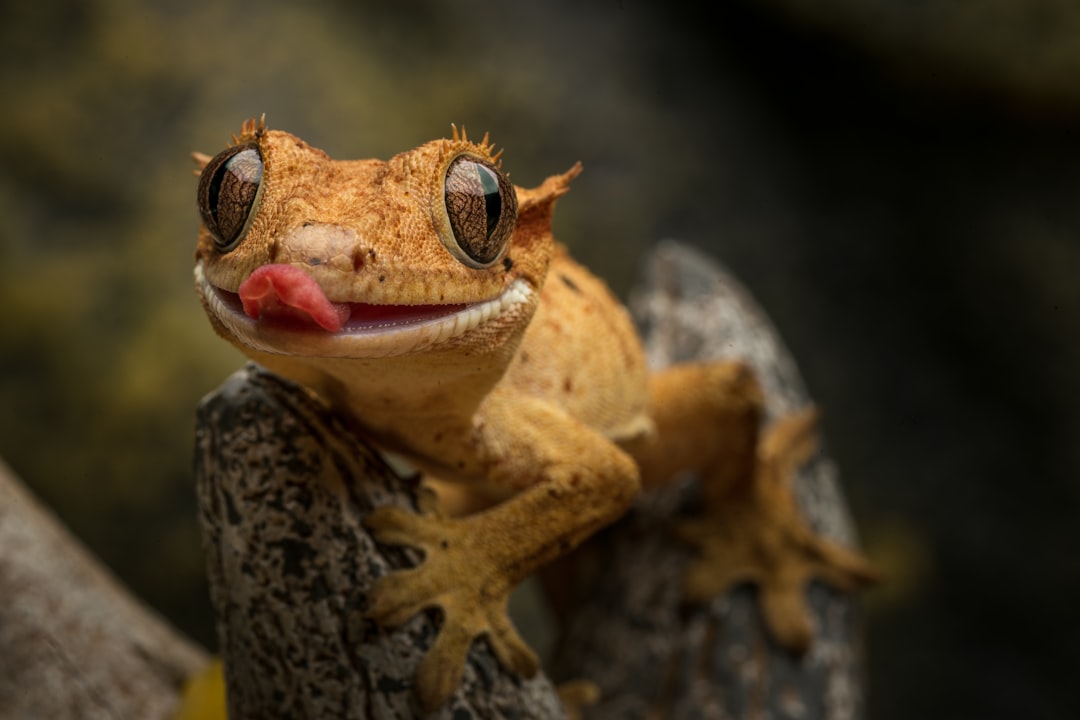
Is a T5 UV Light Suitable for a Gecko Tank?
Is a T5 UV Light Suitable for a Gecko Tank?
For decades, the standard advice in the reptile hobby was that nocturnal and crepuscular species—like leopard geckos, crested geckos, and African fat-tailed geckos—did not require ultraviolet (UV) lighting to thrive. Keepers relied entirely on dietary supplements to provide essential vitamins. However, modern herpetological science has completely flipped this outdated narrative.
Today, we know that offering low-level ultraviolet lighting dramatically improves the health, vitality, and natural behaviors of these fascinating animals. But with so many lighting options on the market, a common question arises: Is a T5 UV light suitable for a gecko tank?
The short answer is a resounding yes, but with a critical caveat: it must be the right T5 bulb, mounted at the correct distance, and used as part of a well-researched environment.
In this comprehensive guide, we will explore the science behind reptile lighting, how to choose the perfect T5 UV light for gecko tank environments, and actionable tips to keep your scaly friend healthy and thriving.

The Evolution of Reptile Lighting: Why Geckos Need UVB
To understand why a T5 is an excellent choice for your gecko, we first need to look at how these reptiles utilize light in the wild. While geckos are active primarily at dawn, dusk, or night, they are not strictly allergic to the sun. In their natural habitats, they practice "cryptic basking," exposing parts of their bodies (like a tail or a single leg) to sunlight while remaining hidden in crevices or under leaves.
Natural D3 Synthesis in Captive Geckos
When a reptile's skin is exposed to UVB light, it triggers a biological process that converts cholesterol in the skin into pre-vitamin D3, which is then processed by the liver and kidneys into active Vitamin D3. This hormone is absolutely crucial because it allows the gecko's intestines to absorb calcium from their diet.
Relying solely on synthetic dietary Vitamin D3 powder is a guessing game. It is easy to under-dose (leading to deficiencies) or over-dose (leading to toxicity). By providing a high-quality reptile uv light, you allow for natural D3 synthesis in captive geckos. The gecko’s body will self-regulate, producing exactly as much Vitamin D3 as it needs and safely breaking down any excess.
Preventing Metabolic Bone Disease in Geckos
The primary reason we care so deeply about calcium absorption is the threat of Metabolic Bone Disease (MBD). MBD is a tragic and painful, yet entirely preventable, condition where a reptile’s body leaches calcium from its own bones to maintain blood-calcium levels. This leads to soft, rubbery jaws, kinked spines, trembling limbs, and eventually death.
Pairing a proper diet with the right UVB lighting is the absolute gold standard for preventing metabolic bone disease in geckos, ensuring their skeletal structure remains robust throughout their lifespan.
Benefits of Low Level UVB for Nocturnal Reptiles
Beyond bone health, UVB has a profound impact on a gecko’s overall well-being. Studies have shown that the benefits of low level UVB for nocturnal reptiles include:
- Enhanced Immune Function: Improved resistance to respiratory infections and skin issues.
- Regulated Circadian Rhythms: A clear day/night cycle reduces stress and promotes natural feeding and sleeping behaviors.
- Color Vision: Reptiles can see into the UVA spectrum. Providing full-spectrum lighting that includes UVA and UVB brightens their world, making food and their environment look more natural.

Decoding the Lighting Tech: Why T5 is the Gold Standard
If you have started shopping for a gecko tank setup, you have likely seen a confusing alphabet soup of lighting options: T8, T5, MVB, and compact fluorescents. Why is the T5 linear fluorescent bulb heavily favored by modern keepers?
T5 HO vs T8 UVB for Reptiles
For years, T8 fluorescent tubes were the standard. However, the debate of T5 HO vs T8 UVB for reptiles has a clear winner.
- T8 Bulbs: These are wider, older technology. They produce weaker UVB that does not penetrate very far down into an enclosure. They also tend to degrade faster and are prone to flickering, which can be stressful for reptiles (who perceive flicker faster than humans).
- T5 HO (High Output) Bulbs: These are slimmer, highly efficient, and emit a more stable, flicker-free light. They project UVB much more effectively, meaning the light can penetrate the mesh screen of a terrarium and still reach the animal at safe, measurable levels.
T5 UVB vs Mercury Vapor Bulbs
Another option on the market is the Mercury Vapor Bulb (MVB), which produces heat, UVA, and UVB all in one bulb. So, how does the T5 compare?
When looking at T5 UVB vs mercury vapor bulbs, T5s are vastly superior for geckos. MVBs are incredibly intense and designed for large, high-heat, sun-loving reptiles like bearded dragons or monitors. Using an MVB in a standard crested or leopard gecko tank will likely overheat the enclosure and provide dangerously high levels of UV radiation. T5 linear bulbs allow you to separate your light source from your heat source, giving you exact control over both.
Ferguson Zones: Understanding Your Gecko’s Needs
To determine the exact T5 bulb your gecko requires, herpetologists use a system called Ferguson Zones. Named after Dr. Gary Ferguson, this system categorizes reptiles based on their natural microhabitats and daily sun exposure.
Ferguson Zones for Crepuscular Geckos
There are four primary Ferguson Zones, ranging from shade-dwellers (Zone 1) to mid-day sun baskers (Zone 4). When looking at Ferguson zones for crepuscular geckos, almost all of our common pet geckos fall into Zone 1 or the very low end of Zone 2.
- Zone 1 (UVI 0.0 - 0.7): Includes crested geckos, gargoyle geckos, and cave geckos. These animals spend most of their time in heavy shade or thick foliage.
- Zone 2 (UVI 0.7 - 1.0, maximum basking 3.0): Includes leopard geckos and African fat-tailed geckos. They hide during the day but may cryptically bask in dappled sunlight near the entrance of their burrows.
UV Index for Reptiles Explained
To match these zones, we use the UV Index (UVI), a measurement of the intensity of ultraviolet radiation. UV index for reptiles explained simply: it is a numerical scale indicating how strong the sun's (or bulb's) UVB rays are at a specific distance.
For a leopard gecko, you want the UVI at their primary basking spot to be between 0.5 and 1.5. For a crested gecko, the target is usually between 0.5 and 1.0 at the highest branch they frequently rest on.

Choosing and Setting Up Your T5 UV Light
Now that we understand the science, how do we practically apply it to your gecko tank setup?
Best UVB Percentage for Leopard Geckos
Because geckos require low-level UVB, you must purchase a T5 bulb with a very low UVB percentage. Never buy a 10%, 12%, or 14% UVB bulb for a gecko; these are meant for desert species like Uromastyx.
The best UVB percentage for leopard geckos (and crested geckos) is typically between 2% and 7%.
- Arcadia ShadeDweller (7% UVB): Specially designed for crepuscular species. It provides the perfect UVI at a standard 10 to 15-inch distance.
- Zoo Med ReptiSun 5.0 T5 HO: Another excellent choice, offering gentle, safe levels of UV for shade-dwelling species.
Does a Gecko Need a UVB Reflector?
When you purchase a T5 fixture, it almost always comes with a shiny metal hood inside. Does a gecko need a UVB reflector? Yes. A reflector captures the light that would otherwise shoot upward into your ceiling and directs it downwards into the enclosure.
However, it is vital to know that a reflector effectively doubles the UVI output beneath the bulb. All manufacturer distance guidelines assume you are using the included reflector. Without it, the light reaching your gecko would be vastly diminished.
How High to Mount T5 UVB Above Gecko Tank
Distance is the most critical factor when using a T5 fixture. If the bulb is too close, you risk burning the animal. If it’s too far, the UVB dissipates before reaching them.
So, how high to mount T5 UVB above gecko tank? The answer depends largely on whether the light is mounted inside the enclosure or resting on top of a wire mesh screen. Standard terrarium mesh blocks roughly 30% to 50% of UVB light.
- If resting on top of a mesh screen: For a 5% to 7% T5 bulb, the distance from the bulb to the gecko's back (when the gecko is sitting on its highest hide or basking rock) should be about 8 to 12 inches.
- If mounted inside the tank (under the mesh): The bulb is unobstructed, making it significantly stronger. The safe distance increases to 12 to 15 inches.
Always check the manufacturer’s packaging, as they provide exact UVI measurements at various distances for their specific bulbs.
Safe Basking Distance for Gecko UVB
To ensure a safe basking distance for gecko UVB, measure from the actual bulb to the top of the reptile's head when they are in their most elevated position. For arboreal geckos (like crested geckos), ensure they cannot climb directly onto the bulb or get closer than 6 inches to the light source, as this can cause severe eye and skin damage.

Designing the Enclosure: Gradients and Hides
Installing a T5 light is not just about turning on a bulb; it is about creating a dynamic environment that allows the gecko to choose what it needs at any given moment.
Importance of a UVB Gradient for Shade Dwellers
In the wild, a gecko can easily walk out of the sun and into the deep shade of a rock crevice. You must recreate this in captivity. The importance of a UVB gradient for shade dwellers cannot be overstated.
Your T5 linear bulb should not span the entire length of the enclosure. It should cover, at most, one-half to two-thirds of the tank's length.
- Place the UVB light on the same side as your primary heat source (such as a deep heat projector or halogen bulb). This creates a dedicated "basking zone" where the gecko can soak up heat and UV simultaneously, just as they would under the natural sun.
- The opposite side of the tank should be cool and completely unlit by the UV bulb.
- Provide multiple, completely opaque hides (like cork bark tubes or rock caves) throughout both the UV zone and the shade zone. This allows the gecko to feel completely secure and retreat into 0.0 UVI darkness whenever they wish.
Monitoring, Maintenance, and Safety
Reptile lighting is an active process. You cannot simply install a bulb and forget about it for five years. Proper maintenance is required to ensure the bulb remains safe and effective.
How to Measure UVB Output with a Solarmeter
The human eye cannot see UVB light. A bulb that looks incredibly bright to you may actually be producing zero ultraviolet radiation. The only way to know for absolute certain what your gecko is experiencing is by using a specialized tool.
Learning how to measure UVB output with a Solarmeter (specifically the Solarmeter 6.5R Reptile UV Index Meter) is a game-changer for serious keepers. To use it:
- Turn on your T5 fixture and let it warm up for about 15 minutes.
- Hold the Solarmeter inside the tank, right at the level of the gecko’s highest basking spot.
- Point the sensor directly up at the bulb.
- Read the digital display to ensure the UVI is within the safe 0.5 to 1.5 range for your crepuscular gecko.
While a Solarmeter is an expensive investment, it pays for itself by allowing you to know exactly when a bulb has degraded and needs to be replaced, rather than guessing.
T5 Linear Bulb Replacement Schedule
If you do not have a Solarmeter, you must adhere strictly to a manufacturer-recommended T5 linear bulb replacement schedule.
Even though the bulb will still emit visible light for years, the specialized phosphors inside the tube that create UVB degrade over time. For high-quality T5 HO bulbs, you must replace the bulb every 12 months. (For context, older T8 bulbs require replacement every 6 months, making T5s much more cost-effective in the long run). It is highly recommended to set a reminder on your calendar the day you install a new bulb.
Signs of UV Overexposure in Reptiles
While providing UVB is highly beneficial, too much of a good thing is dangerous. Because geckos have thinner eyelids and skin than desert lizards, they are highly sensitive to intense radiation.
If your bulb is too strong, mounted too close, or lacks a proper gradient, you may notice signs of UV overexposure in reptiles. These symptoms include:
- Squinting or keeping eyes closed: This is often a sign of photo-kerato-conjunctivitis, effectively "snow blindness" or a sunburn on the eyes.
- Lethargy and hiding: The gecko may refuse to come out of its hide, even at night, to avoid the painful light.
- Skin burns or abnormal shedding: The skin may look red, dry, or flake off irregularly.
- Sunken eyes or dehydration: Excessive UV is often accompanied by excessive heat, drying the gecko out.
If you notice any of these signs, immediately turn off the UVB light, consult an exotic veterinarian, and re-evaluate your setup distances and bulb strength before turning it back on.

Integrating T5 Lights into Your Daily Routine
Once you have your T5 set up at the proper distance, with a beautiful gradient and plenty of hides, you need to automate it. Geckos thrive on routine. Connect your T5 UVB light (and your heat source) to a simple digital timer.
- Summer hours: 12 to 14 hours of light.
- Winter hours: 10 to 12 hours of light.
This consistent day/night cycle will mimic the natural passage of seasons, further enriching your gecko's captive life. Furthermore, remember that while UVB aids in calcium absorption, you still need to dust their insect feeders with plain calcium and a multivitamin. Because you are providing a T5 light, you should drastically reduce or eliminate synthetic dietary Vitamin D3, as the gecko is now producing it naturally.
Conclusion
So, is a T5 UV light suitable for a gecko tank? Absolutely. In fact, a low-percentage T5 HO bulb, such as a 5% or 7% shade-dweller specific light, is currently the absolute best practice in herpetoculture for leopard, crested, and other crepuscular geckos.
By upgrading your gecko tank setup to include a T5, you are moving away from mere survival and towards true thrivability. You are empowering your gecko to synthesize its own Vitamin D3, effectively preventing metabolic bone disease, and enriching their environment with life-giving light.
As long as you respect the Ferguson Zones, maintain a safe basking distance, provide a lush gradient of shadow and light, and stick to a yearly replacement schedule, your T5 light will be the single best upgrade you can make for your scaly companion. Happy keeping!

Written by Talis Us



Leave a comment
This site is protected by hCaptcha and the hCaptcha Privacy Policy and Terms of Service apply.