



Green Lipped Mussel for Dogs: The Complete Science-Backed Guide
Why Vets Recommend This New Zealand Superfood for Joint Health, Arthritis Relief, and Beyond
If your dog is slowing down — taking longer to get up in the morning, hesitating at the stairs, or no longer jumping onto the couch they've claimed for years — joint inflammation may be at the root of it. And if you've started researching natural joint support for dogs, one name keeps appearing at the top of every credible veterinary resource: green lipped mussel.
This is not a trending wellness fad. Green lipped mussel (Perna canaliculus) has decades of peer-reviewed clinical research behind it, specific to dogs, and is recommended by veterinarians worldwide as one of the most effective natural anti-inflammatory supplements available for canine joint health. Here is everything you need to know.
Table of Contents
What Is Green Lipped Mussel?
 Green lipped mussel (Perna canaliculus) — native exclusively to New Zealand's pristine coastal waters — has become one of the most research-supported natural joint supplements available for dogs worldwide.
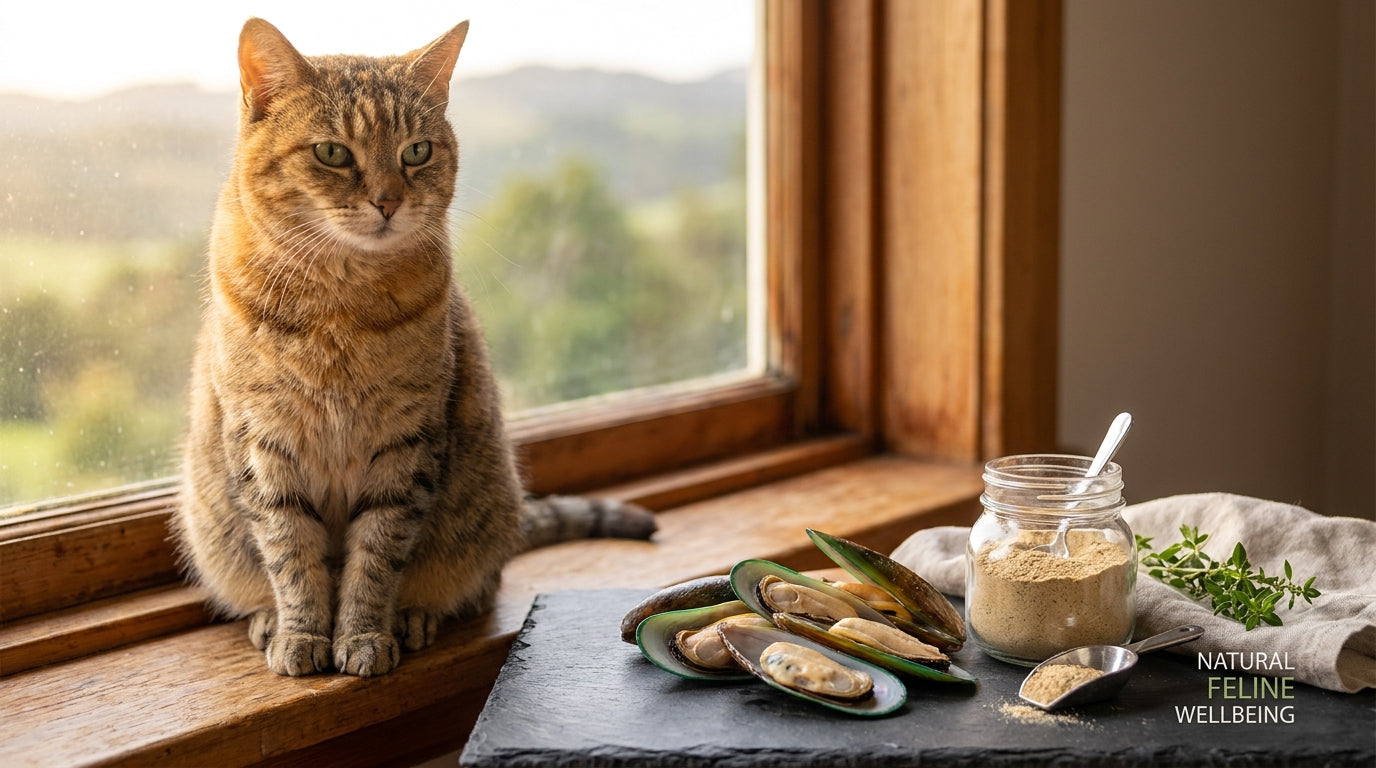
Green lipped mussel (Perna canaliculus) is a species of shellfish found only in the coastal waters of New Zealand. The name comes from the distinctive emerald-green edge along the outer rim of their shells — a marking unique to this species.
They have been part of the traditional diet of New Zealand's indigenous Māori people for centuries, who notably showed low rates of arthritis compared to inland populations on Western diets. This observation first sparked scientific interest in the mussel's anti-inflammatory properties in the 1970s — interest that has since produced a substantial body of peer-reviewed research specifically in canine medicine.
New Zealand's government maintains strict environmental and aquaculture standards for green lipped mussel farming. The mussels are grown on suspended rope lines in the country's clean coastal waters, filter-feeding on natural plankton without the need for feed additives or antibiotics. This makes New Zealand green lipped mussel one of the most sustainably sourced marine supplements available.
Source: PetMD — Green Lipped Mussels for Dogs
Why Dogs Develop Joint Problems: The Arthritis Reality
Canine osteoarthritis (OA) is the most common joint disease in dogs, affecting an estimated 20% of dogs over one year of age and more than 80% of dogs over 8 years old. It is a progressive, degenerative condition in which the cartilage cushioning the joints gradually breaks down — leading to bone-on-bone friction, synovial inflammation, pain, and progressive loss of mobility.
Factors that increase a dog's risk of developing joint disease:
| Risk Factor | Details |
|---|---|
| Age | Cartilage naturally thins and degrades over time in all dogs |
| Large/Giant Breed | Greater body weight increases mechanical stress on joints throughout life |
| Previous Injury | Cruciate ligament tears, fractures, and dislocations accelerate OA development |
| Hip/Elbow Dysplasia | Genetic malformation of the hip or elbow joint — common in large breeds |
| Obesity | Every extra pound adds significantly more force across each joint |
| High-Impact Exercise History | Working dogs, agility competitors — repetitive joint loading |
| Breed Predisposition | German Shepherds, Labrador Retrievers, Golden Retrievers, Rottweilers, Great Danes, Bernese Mountain Dogs |
Osteoarthritis cannot be cured or reversed — but its progression can be slowed, and its symptoms managed effectively through the right nutritional and therapeutic interventions. Green lipped mussel is among the most evidence-supported natural tools for doing exactly that.
Signs Your Dog May Have Joint Pain
 Joint pain in dogs is often subtle in early stages — and commonly misread as "just getting older." Recognizing the signs early gives you the best window for effective intervention.
Many dogs are remarkably good at masking pain. By the time owners notice obvious limping, significant joint damage may already have occurred. Watch for these earlier and more subtle indicators:
Early Signs
-
Morning stiffness — takes longer to get moving after rest; loosens up after walking
-
Sitting awkwardly — placing one back leg out to the side rather than tucking under
-
Slower to sit or stand — the motion appears effortful or hesitant
-
Reluctance to jump — onto the couch, into the car, or up stairs they previously managed easily
-
Licking or chewing at joints — particularly hips, knees, or elbows
-
Less enthusiastic on walks — lagging, tiring faster, stopping sooner than usual
More Advanced Signs
-
Visible limping — favoring one or more legs consistently
-
Muscle wasting — one rear leg visibly thinner than the other (atrophy from disuse)
-
Behavioral changes — irritability, snapping when touched around the back end, withdrawn personality
-
Yelping when touched — around the hips, back, or affected limbs
-
Difficulty posturing to toilet — squatting is painful; some dogs may show house-training regressions
⚠️ Veterinary note: If your dog is showing any of the above signs, a veterinary evaluation is the appropriate first step. X-rays can confirm osteoarthritis diagnosis and guide the overall management plan. Green lipped mussel is a complementary tool — not a substitute for professional diagnosis and care.
The Active Compounds: What Makes Green Lipped Mussel Work
 Green lipped mussel contains a rare and synergistic combination of bioactive compounds — no other known food or supplement source contains this precise combination in a single whole-food matrix.
What separates green lipped mussel from most joint supplements is its unique multi-compound profile — a naturally occurring combination of joint-protective and anti-inflammatory molecules that work together synergistically in ways individual supplements cannot replicate.
1. ETA (Eicosatetraenoic Acid) — The Exclusive Compound
The most scientifically significant component of green lipped mussel is ETA — an omega-3 fatty acid found exclusively in green lipped mussel and in no other known food source. ETA works by binding cyclooxygenase (COX) — the same enzyme pathway targeted by NSAID pain medications like carprofen and meloxicam — but without the gastrointestinal side effects associated with long-term NSAID use.
Research has demonstrated that ETA is significantly more potent at inhibiting inflammation than the EPA and DHA found in standard fish oil.
2. EPA & DHA (Standard Omega-3 Fatty Acids)
Green lipped mussel also contains EPA and DHA — the same anti-inflammatory omega-3s found in fish oil — but in a matrix already enhanced by ETA's more potent action.
3. Glucosamine
A naturally occurring amino sugar that is a primary building block of cartilage and synovial fluid. Glucosamine supports the maintenance and repair of joint cartilage and is one of the most commonly supplemented joint compounds in veterinary medicine.
4. Chondroitin Sulfate
A glycosaminoglycan that inhibits the enzymes responsible for breaking down cartilage. Works synergistically with glucosamine to slow cartilage degradation and support joint structure integrity.
5. Polysulfated Glycosaminoglycans (PSGAGs)
Complex carbohydrates that form the scaffolding of cartilage and joint fluid (synovial fluid). PSGAGs support joint lubrication, shock absorption, and tissue repair. Green lipped mussel provides these in a whole-food matrix — more bioavailable than synthetic isolates.
6. Zinc & Magnesium
Trace minerals that support enzyme function in cartilage metabolism, muscle health, and inflammatory regulation.
The Synergy Advantage
| Compound | Individual Supplement | Green Lipped Mussel |
|---|---|---|
| ETA omega-3 | ❌ Not available separately | ✅ Unique to GLM |
| EPA + DHA | ✅ Fish oil | ✅ Also present in GLM |
| Glucosamine | ✅ Standalone supplement | ✅ Present in whole-food form |
| Chondroitin | ✅ Standalone supplement | ✅ Present in whole-food form |
| PSGAGs | ✅ Injectable (Adequan) | ✅ Oral whole-food form |
| Zinc & Magnesium | ✅ Standalone | ✅ Present |
| Full synergistic combination | ❌ Requires multiple separate supplements | ✅ Single whole-food source |
Source: PetMD — Green Lipped Mussels for Dogs · Azestfor — Green Lipped Mussel for Dogs
The Science: Clinical Studies in Dogs
Green lipped mussel is one of the few natural joint supplements for dogs with genuine peer-reviewed clinical trial data. This distinguishes it meaningfully from many supplements that rely on theoretical mechanisms or anecdotal evidence.
Key Studies
Study 1 — Journal of Nutrition (2002) Improvement of Arthritic Signs in Dogs Fed Green-Lipped Mussel (Perna canaliculus)
-
Dogs with osteoarthritis fed a green lipped mussel-enriched diet showed significant improvement in joint pain and locomotion scores compared to placebo
-
Improvements were measurable at 6 weeks; full benefits observed at 8 weeks
-
Study also found that GLM supplementation reduced the required dose of carprofen (NSAID) to manage pain
-
Published in: Journal of Nutrition
Study 2 — Canadian Journal of Veterinary Research (2013) Effect of a Diet Enriched with Green-Lipped Mussel on Pain Behavior and Functioning in Dogs with Clinical Osteoarthritis
-
Dogs fed GLM-enriched diet showed reduced pain behaviors and improved functional ability compared to control
-
Objective gait analysis confirmed improvements in weight-bearing on affected limbs
-
Published in: PMC — Can J Vet Res
Study 3 — Journal of Veterinary Clinics (2024) Therapeutic Effect of Green-Lipped Mussel Oil on Pain and Osteoarthritis in Dogs
-
Prospective open-label clinical trial across two veterinary practices
-
Green lipped mussel oil produced significant reductions in pain scores in dogs with confirmed OA
-
Published: Journal of Veterinary Clinics, 2024
Study 4 — Frontiers in Veterinary Science (2024) Comparative Efficacy of Green Lipped Mussel Plus Krill Oil Extracts for Canine OA Pain
-
Blinded, placebo-controlled study comparing GLM-based supplement to NSAIDs
-
GLM combination showed meaningful pain reduction as part of multimodal management
-
Published: Frontiers in Veterinary Science
Cornell University College of Veterinary Medicine lists green lipped mussel (perna) among its recognized joint supplement options for dogs with orthopedic conditions, noting its omega-3 and glycosaminoglycan content as the primary mechanisms of benefit.
Source: Cornell Riney Canine Health Center — Joint Supplements
Green Lipped Mussel vs. Fish Oil vs. Glucosamine: Full Comparison
One of the most common questions dog owners have is whether green lipped mussel is worth adding if they're already giving fish oil or glucosamine. Here is the complete comparison:
| Feature | Green Lipped Mussel | Fish Oil | Glucosamine + Chondroitin |
|---|---|---|---|
| ETA (exclusive anti-inflammatory) | ✅ Only source | ❌ Not present | ❌ Not present |
| EPA + DHA omega-3s | ✅ Present | ✅ Primary ingredient | ❌ Not present |
| Glucosamine | ✅ Naturally present | ❌ Not present | ✅ Primary ingredient |
| Chondroitin | ✅ Naturally present | ❌ Not present | ✅ Primary ingredient |
| PSGAGs | ✅ Whole-food form | ❌ Not present | ❌ Not present |
| Anti-inflammatory potency | ⭐⭐⭐⭐⭐ | ⭐⭐⭐ | ⭐⭐ |
| GI side effects | Very rare | Occasional (fishy burps, loose stool) | Very rare |
| Sustainability | ✅ NZ aquaculture — highly sustainable | ⚠️ Variable by source | ✅ |
| Clinical evidence in dogs | ✅ Multiple peer-reviewed trials | ✅ Strong | ⚠️ Moderate |
| Works synergistically | ✅ All compounds in one source | Separate from GLM | Separate from GLM |
| Cost efficiency | Moderate — covers multiple supplement categories | Low | Moderate |
Bottom line: Studies show green lipped mussel is more potent at reducing inflammation than fish oil alone. Because it also naturally contains glucosamine, chondroitin, and PSGAGs, it can effectively replace multiple separate joint supplements with a single whole-food source. For dogs already on fish oil or glucosamine alone without adequate relief, green lipped mussel is a meaningful upgrade — not a duplication.
Source: Azestfor — Green Lipped Mussel vs Fish Oil · DVM360 — Joint Supplements for Dogs
Benefits Beyond Joints
While joint health is the primary and best-documented application of green lipped mussel for dogs, its anti-inflammatory and nutritional profile supports several additional areas of canine health:
🐾 Skin & Coat Health
The omega-3 fatty acid content — particularly ETA and EPA — supports the skin's lipid barrier, reduces inflammatory skin conditions, and contributes to a shinier, less brittle coat. Dogs with dry, flaky skin or mild inflammatory dermatitis may show coat improvement within 4–6 weeks.
🫀 Cardiovascular Health
Omega-3 fatty acids support heart muscle function, help regulate blood pressure, and contribute to healthy triglyceride levels. Long-term supplementation may support cardiovascular health in aging dogs.
🧠 Brain & Cognitive Support
DHA — present in green lipped mussel — is a critical structural component of brain cell membranes. In senior dogs, adequate DHA intake is associated with better cognitive function and may support dogs showing early signs of canine cognitive dysfunction (CCD).
🦷 Reduced NSAID Dependency
Multiple studies have demonstrated that dogs receiving green lipped mussel supplementation required lower doses of NSAIDs (like carprofen) to achieve the same pain control — reducing the long-term gastrointestinal, hepatic, and renal risks associated with chronic NSAID use. Green lipped mussel has also been shown to help reduce the stomach ulceration caused by conventional pain medications.
💪 Muscle Health
The mineral content — particularly magnesium and zinc — supports muscle metabolism and recovery, relevant for active and working dogs.
Dosage Guide: How Much to Give Your Dog
 Green lipped mussel is available in three primary forms for dogs — powder, capsule/softgel, and incorporated directly into food. Each has advantages depending on your dog's size, preferences, and how you feed them.
The following dosage guidelines are based on recommendations from Dr. Michael Petty, DVM (past president of the International Veterinary Academy of Pain Management) and product research:
| Dog Weight | Daily Dose (Powder) | Daily Dose (mg) |
|---|---|---|
| 1–25 lbs | ½ scoop | ~250 mg |
| 26–50 lbs | 1 scoop | ~500 mg |
| 51–75 lbs | 1½ scoops | ~750 mg |
| 76–100 lbs | 2 scoops | ~1,000 mg |
| 100–125 lbs | 2½ scoops | ~1,250 mg |
Source: PetMD — Green Lipped Mussels for Dogs · Azestfor Dosage Table
⚠️ Always confirm dosing with your veterinarian, particularly for dogs on concurrent NSAID or other medication, or dogs with shellfish allergy history.
Dosing Tips
-
Give with food — improves absorption and reduces the very small chance of digestive sensitivity
-
Start with half the recommended dose for the first week, then build up — this helps identify any individual sensitivity
-
Consistency is essential — green lipped mussel works cumulatively; sporadic dosing produces limited results
-
For dogs in food — many premium dog foods (including Kiwi Country) include green lipped mussel as an ingredient, providing a baseline daily dose through diet
Forms: Powder, Capsule, or In Food?
| Form | Pros | Cons | Best For |
|---|---|---|---|
| Powder | Easy to mix into food; precise dosing; cost-effective; most common | Slight seafood odor | Dogs who eat wet or mixed food; owners wanting precise control |
| Capsule / Softgel | Convenient; no odor; easy travel | Some dogs difficult to pill; may open and mix | Dogs who take treats or pills easily |
| In Premium Dog Food | Seamless daily delivery; no separate supplementing | Cannot adjust dose independently; depends on food quality and inclusion rate | Owners who prefer diet-based supplementation; dogs on premium brands like Kiwi Country |
| Freeze-dried whole mussel | Most bioavailable form; whole-food matrix preserved | Most expensive; less widely available | Dogs with maximum joint needs; owners prioritizing bioavailability |
A Note on Processing
The method used to process green lipped mussel significantly affects its potency. Freeze-drying (lyophilization) preserves the full complement of active compounds — including ETA — most effectively. High-heat processing can degrade ETA and reduce overall efficacy. When evaluating supplements, look for freeze-dried or cold-processed green lipped mussel products, and avoid those with no processing method specified.
How Long Until It Works?
Green lipped mussel is not an immediate pain reliever — it works by progressively reducing inflammation and supporting tissue repair over time. Here is the general timeline based on clinical evidence:
| Timeline | What's Happening |
|---|---|
| Week 0–2 | Supplement begins entering systemic circulation; glucosamine and chondroitin start supporting joint fluid quality |
| Week 2–4 | ETA and omega-3s begin measurably reducing inflammatory mediators; mild improvement in comfort may be observed |
| Week 4–6 | Anti-inflammatory effects become clinically measurable; most dogs show meaningful reduction in pain behaviors |
| Week 6–8 | Peak early benefits — significant improvements in mobility, willingness to exercise, and pain scores documented in clinical studies |
| Ongoing | Continued use maintains joint protection and anti-inflammatory effect; cartilage support is cumulative |
The key takeaway: Allow at least 6–8 weeks of consistent daily supplementation before evaluating effectiveness. Many owners discontinue too early, before the full effect has developed.
Safety and Side Effects
Green lipped mussel has an excellent safety profile in dogs. Studies assessing its use for degenerative joint disease found no toxic effects at recommended doses, and no serious adverse events have been reported in the clinical literature.
Minor Possible Side Effects (Rare)
-
Mild GI upset in the first few days — typically resolves with dose reduction or giving with food
-
Soft stools in the first week of supplementation
Contraindications
-
Shellfish allergy — dogs with a confirmed or suspected shellfish allergy should not receive green lipped mussel supplements. Signs of allergic reaction include itching, hives, vomiting, swelling, or difficulty breathing. Discontinue immediately and contact your vet if these occur.
-
Blood-thinning medications — high omega-3 intake can have mild antiplatelet effects. Discuss with your vet if your dog is on anticoagulant therapy.
-
Pre-surgery — inform your vet of any omega-3 supplementation before surgical procedures.
Can You Give Too Much?
Overdosing on green lipped mussel does not pose serious toxicity concerns. However, excessive intake beyond recommended doses is unlikely to produce additional benefit and may cause loose stools. Stick to weight-appropriate dosing guidelines.
How to Choose a Quality Green Lipped Mussel Product
Not all green lipped mussel products are equivalent. Here is what to look for:
| Quality Indicator | What to Look For |
|---|---|
| Source | Certified New Zealand origin (Perna canaliculus) — the only species with documented canine benefits |
| Processing method | Freeze-dried or cold-processed — preserves ETA and full bioactive profile |
| Single ingredient | 100% green lipped mussel — no dilution with fillers or low-quality fish meal |
| Third-party testing | Independent verification of ETA, glucosamine, and chondroitin content |
| NASC Quality Seal | National Animal Supplement Council certification indicates quality manufacturing standards |
| No artificial additives | No artificial preservatives, colors, or flavors |
| Whole-mussel vs. extract | Whole freeze-dried mussel preserves the full synergistic compound profile better than some isolated extracts |
Talis-us Tip: Our Talis Curated standard for joint health products requires verified New Zealand sourcing, freeze-dried or cold-processed manufacturing, and transparent compound disclosure. Browse our vet-aligned joint health selection at Talis-us.com.
🛍️ Kiwi Country Dog Food: New Zealand Green Mussel Built Into Every Meal
For dog owners who prefer to deliver green lipped mussel through diet rather than as a separate supplement, Kiwi Country™ offers a seamlessly integrated solution — premium New Zealand dog food with green lipped mussel as a core whole-food ingredient in every recipe.
We carry the full Kiwi Country lineup at Talis-us.com, each product earning our Talis Curated badge for sourcing integrity and nutritional standards.
🥩 Kiwi Country Grain-Free Dry Dog Food — Chicken, Lamb & Beef (2kg)

Every bag of Kiwi Country grain-free kibble includes New Zealand Green Mussel as a named whole-food ingredient — delivering natural glucosamine, chondroitin, and omega fatty acids in every serving, without the need for a separate supplement.
| Recipe | Protein | Green Mussel | Joint Extras |
|---|---|---|---|
| Chicken | Free-range NZ Chicken (30% protein) | ✅ | Glucosamine 800mg/kg, Chondroitin 1100mg/kg |
| Lamb | Grass-fed NZ Lamb (30% protein) | ✅ | Glucosamine 900mg/kg, Chondroitin 800mg/kg |
| Beef | Grass-fed NZ Beef (35% protein) | ✅ | Glucosamine 1000mg/kg, Chondroitin 1100mg/kg |
Plus fish oil and flaxseeds for additional omega-3 support — making Kiwi Country kibble a complete joint-supportive daily diet.
🥫 Kiwi Country Grain-Free Wet Dog Food — Chicken, Lamb, Beef & Venison (24-pack / 6 oz cans)

Kiwi Country's wet food line delivers 4% New Zealand Green Mussel in every can alongside 90%+ real named New Zealand meat. The moisture-rich format also supports kidney health and hydration — particularly valuable for senior dogs managing joint disease alongside age-related health changes.
| Flavor | Protein | Green Mussel % | Best For |
|---|---|---|---|
| Chicken | 90%+ cage-free NZ chicken | 4% | All ages, daily feeding |
| Lamb | 90%+ grass-fed NZ lamb | 4% | Sensitive stomachs |
| Beef | 90%+ grass-fed NZ beef | 4% | High protein, active dogs |
| Venison | 90%+ grass-fed NZ venison | 4% | Novel protein, allergy-prone |
Serve as a complete meal, mix with dry kibble, or use as a high-value topper for dogs who need palatability encouragement during joint-pain periods when appetite may decrease.
🛒 Shop Kiwi Country at Talis-us →
Frequently Asked Questions
Is green lipped mussel better than glucosamine for dogs?
They work through different mechanisms and are genuinely complementary rather than competing. Green lipped mussel contains glucosamine and chondroitin naturally, plus the unique ETA omega-3 with its potent COX-inhibiting anti-inflammatory action. For most dogs, green lipped mussel provides a broader spectrum of joint support than glucosamine/chondroitin alone. For dogs with advanced joint disease, combining green lipped mussel with additional glucosamine/chondroitin supplementation under veterinary guidance may provide additive benefit.
Can I give green lipped mussel alongside NSAIDs?
Yes — and the research actually supports this combination. Studies have shown that dogs on green lipped mussel require lower doses of NSAIDs to achieve equivalent pain control, and GLM's gastroprotective properties may help offset some of the GI effects of NSAID use. Always inform your veterinarian of any supplements your dog is receiving before making medication adjustments.
Can young dogs or puppies take green lipped mussel?
Yes — green lipped mussel is safe for dogs of all ages. For large and giant breed puppies at high genetic risk of hip dysplasia or joint disease, early joint nutritional support may be beneficial. Adjust dose to puppy weight. Consult your vet for puppy-specific guidance.
How is green lipped mussel different from regular mussels?
Regular blue mussels (Mytilus edulis) are nutritious shellfish but do not contain ETA — the omega-3 fatty acid exclusive to Perna canaliculus. They also do not contain the same profile of PSGAGs and glycosaminoglycans that make green lipped mussel specifically valuable for joint health. Only New Zealand green lipped mussel (Perna canaliculus) has the documented clinical evidence base for canine joint health.
My dog is already on fish oil — should I switch to green lipped mussel?
Studies consistently show that green lipped mussel is more potent at reducing joint inflammation than equivalent doses of fish oil, due to the unique ETA content. If your dog is taking fish oil specifically for joint support and showing limited improvement, green lipped mussel is a meaningful upgrade. If fish oil is being given for other reasons (coat, heart health), you may benefit from continuing both — consult your vet on combined omega-3 intake levels.
Final Thoughts
Green lipped mussel is one of the genuinely well-supported natural joint supplements in veterinary medicine — backed by peer-reviewed clinical studies in dogs, recommended by veterinarians with specialties in pain management, and unique in its combination of ETA, glucosamine, chondroitin, and PSGAGs in a single whole-food source from New Zealand's pristine coastal waters.
For dogs showing early signs of joint stiffness, for large breeds entering their senior years, for post-surgical recovery support, or simply as a proactive joint health strategy in breeds predisposed to dysplasia — green lipped mussel is one of the highest-value additions you can make to your dog's daily nutrition.
As always, work with your veterinarian to confirm the right approach for your individual dog. But if joint health is a priority, the science is clear: Perna canaliculus deserves a place in your dog's bowl.
🐾 From New Zealand's waters to your dog's daily nutrition — explore Talis-us.com's complete collection of vet-aligned joint health products and Kiwi Country's green mussel-enriched dog food at Talis-us.com.

Written by Talis Us


Leave a comment
This site is protected by hCaptcha and the hCaptcha Privacy Policy and Terms of Service apply.