


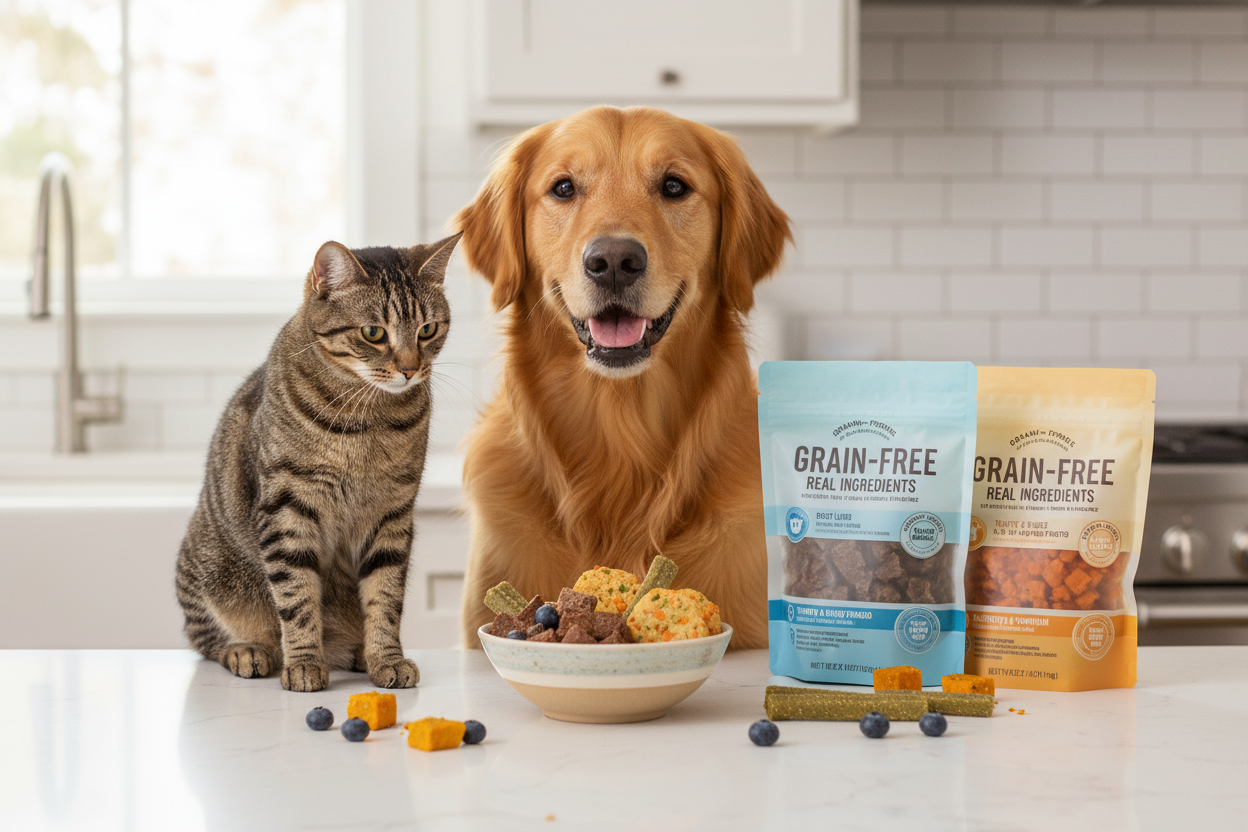
Grain-Free Pet Treats: What's the Difference and Which Is Right for Your Pet?
Choosing the Right Treat for Your Pet Starts Here
If you've ever stood in the pet store aisle staring at two nearly identical bags of treats, one labeled "grain-free" and one not, you're not alone. The world of pet nutrition has expanded rapidly, and with it, the number of choices pet owners face every day. Grain-free pet treats have become one of the most talked-about options in recent years, but what does the label actually mean? And more importantly, does it matter for your specific companion?
Whether you have a dog who scratches constantly after snack time, a cat with a sensitive stomach, or simply a pet you want to feed as thoughtfully as possible, understanding the difference between grain-free and regular treats puts you in a much stronger position. This guide breaks it all down clearly, without the jargon, so you can make a confident, caring choice.
What Are Grain-Free Pet Treats?
At their core, grain-free pet treats are formulated without common grain ingredients such as wheat, corn, rice, barley, oats, or rye. These grains are frequently used in conventional pet treats as binding agents, fillers, or carbohydrate sources. Grain-free formulas replace them with alternative ingredients that still provide energy and texture, but come from non-grain sources.
Common Ingredients Found in Grain-Free Formulas
Instead of wheat or corn, grain-free treats often rely on a combination of protein-rich and plant-based alternatives. Here is what you will typically find on a grain-free ingredient list:
Real Meat as the Primary Protein High-quality grain-free treats frequently list a named animal protein as the first ingredient. Think beef liver, duck, turkey, or salmon. Protein-forward formulas support lean muscle, energy, and overall vitality. Treats like the Crumps' Naturals Beef Liver Bites use 100% freeze-dried beef liver as their single ingredient, meaning there is nothing else in the bag. That kind of simplicity is hard to beat for pet owners who want full transparency in what they are feeding.
Sweet Potatoes and Legumes Sweet potatoes are one of the most popular grain replacements in pet treats. They provide natural fiber, beta-carotene, and a gentle carbohydrate source that most pets digest well. Lentils, peas, and chickpeas are also common in grain-free formulas, contributing plant-based protein and texture. The Darford Grain-Free Baked Turkey Recipe Minis, for example, feature sweet potatoes alongside organic carrots, cranberries, and blueberries, creating a nutrient-dense snack that does not rely on grains at all.
Fruits and Vegetables Many grain-free treats incorporate whole fruits and vegetables to supply antioxidants, vitamins, and natural flavor. Organic apples, blueberries, pumpkin, and carrots appear frequently. These ingredients are not just marketing filler; they genuinely contribute to digestive support and immune health in pets.
What Grain-Free Does Not Mean It is worth clarifying one common misconception: grain-free does not automatically mean low-carbohydrate, raw, or nutritionally complete. Some grain-free treats are still high in carbohydrates, just sourced from potatoes or legumes instead of grains. Always read the full ingredient list and not just the front-of-bag claim.
How Regular Pet Treats Differ
Regular pet treats, sometimes called conventional or grain-inclusive treats, contain one or more grain ingredients. This is not inherently a problem, and for many pets, it is completely fine. Grains like oats and brown rice are digestible energy sources that have been part of commercial pet food formulations for decades.
When Grains Are Not the Enemy
The idea that grains are universally harmful to pets is a widespread myth worth addressing. Grains are not toxic to cats or dogs. In fact, many pets thrive on grain-inclusive diets and treats without any issues whatsoever. Whole grains can contribute fiber, B vitamins, and sustained energy. For a healthy pet with no sensitivities or allergies, a grain-inclusive treat may be a perfectly appropriate and affordable choice.
The more important question is not whether grains are present, but what quality of ingredients the treat contains overall. A treat made with whole oats and real chicken is nutritionally very different from one made with corn syrup and artificial flavors, even though both might technically be "grain-inclusive."
How to Read Labels Confidently Understanding what is actually in your pet's treats comes down to label literacy. The ingredient list is organized by weight, so the first few ingredients make up the bulk of the product. If a grain appears in the top three ingredients and your pet has a known sensitivity, that is a signal worth paying attention to. Resources like the AAFCO pet food label guidelines offer a practical framework for decoding what all those ingredient names actually mean.
Look for:
A named protein source (chicken, beef, turkey, salmon) listed first
Recognizable whole ingredients rather than vague by-products
No artificial colors, flavors, or preservatives
Clear disclosure of grain sources if present
Understanding grain content is just one piece of the label puzzle. The PetMD pet food ingredient and label guide is another helpful resource for navigating the finer details of what those ingredient names actually mean in practice.
Which Option Is Right for Your Pet?
There is no single correct answer for every pet. The right treat depends on your companion's individual health, sensitivities, and dietary history. That said, there are clear situations where grain-free pet treats are the more thoughtful choice.
Signs Your Pet May Benefit from Grain-Free Pet Treats
Digestive Sensitivities If your pet frequently experiences loose stools, gas, vomiting, or general digestive discomfort after eating, food ingredients may be playing a role. While grains are not always the culprit, switching to grain-free treats can help you identify whether grain content is contributing to the issue. Research published in peer-reviewed veterinary literature notes that food sensitivities in pets can manifest as gastrointestinal symptoms, skin reactions, or both, and identifying the trigger ingredient often requires a process of elimination.
Skin and Coat Changes Dull coat, excessive shedding, flaky skin, or persistent itching can sometimes be linked to food sensitivities. Grain-related sensitivities are not the most common food allergy trigger in pets (animal proteins tend to rank higher), but they do occur. If your vet has ruled out environmental causes and your pet continues to show skin-related symptoms, reviewing treat ingredients is a reasonable next step. The Cornell Feline Health Center's overview of food allergies in cats provides a helpful overview of how food sensitivities present in feline companions specifically.
Known Grain Allergies or Intolerances Some pets have confirmed grain allergies or intolerances identified through veterinary testing or elimination diets. For these animals, grain-free pet treats are not just a preference; they are a necessity. Treats like the Emerald Pet Feline Dental Stixx are grain-free, gluten-free, soy-free, and dairy-free, making them a strong option for cats with multiple sensitivities. They also support dental health with a textured shape designed to reduce plaque and tartar, so you are addressing two needs at once.
Pets on a Raw or Whole-Food Diet If you feed your pet a raw or minimally processed diet, grain-free treats align more naturally with that nutritional philosophy. Single-ingredient freeze-dried options, in particular, complement a whole-food approach without introducing ingredients that conflict with the rest of the diet.
A Note on the Grain-Free and Heart Health Conversation It would be incomplete to discuss grain-free pet treats without mentioning the ongoing conversation around grain-free diets and canine dilated cardiomyopathy (DCM). The FDA has been investigating a potential link between certain grain-free diets and DCM in dogs, particularly diets high in legumes. It is important to note that this research has focused primarily on complete grain-free diets rather than grain-free treats used in moderation. Treats make up a small portion of your pet's overall intake, and the conversation around DCM centers on primary diet formulation. That said, staying informed and consulting your veterinarian about your pet's full dietary picture is always a wise approach. A thorough breakdown of the grain-free pet food facts versus fiction from a veterinary perspective can help you separate the science from the noise.
Cats and Grain-Free Considerations Cats are obligate carnivores, meaning their nutritional needs are fundamentally protein-driven. While cats can digest small amounts of carbohydrates, their systems are not designed to rely on them. Grain-free treats for cats tend to align more closely with their natural dietary profile. The European Pet Food Federation's resource on grain-free pet food for cats and dogs offers additional context on how grain-free formulas serve different species differently.
Exotic Pets and Treat Choices For bird, reptile, and small animal owners, the grain-free conversation looks a little different. Many exotic pets have highly specific dietary needs that are best guided by a species-appropriate nutrition plan. If you are introducing treats to an exotic companion, always prioritize species-specific formulas and consult an exotic animal veterinarian for guidance.
Make the Choice That Fits Your Pet's Life
Knowing the difference between grain-free and regular treats genuinely puts you in control of your pet's wellness. Regular treats are not automatically harmful, and grain-free treats are not automatically superior. The right choice depends on your individual pet's health, sensitivities, and the quality of ingredients in the product you choose.
For pets with digestive sensitivities, skin issues, confirmed allergies, or those following a whole-food diet, grain-free pet treats can be a meaningful upgrade. Options like single-ingredient freeze-dried bites, baked grain-free minis with organic vegetables, or dental treats made without grains, gluten, or artificial additives give you real choices that prioritize both flavor and function.
Start by reading labels carefully, paying attention to how your pet responds to different ingredients, and talking to your vet if you are ever unsure. Your companion cannot tell you what makes them feel their best, but you can learn to read the signs and respond with care. Because at the end of the day, every treat you give is a small act of love, and they deserve the very best you can offer.

Written by Talis Us


Leave a comment
This site is protected by hCaptcha and the hCaptcha Privacy Policy and Terms of Service apply.