


Free Bird Toys That Keep Parrots Happy and Active
Your Parrot Deserves More Than Just a Perch
Your parrot deserves more than a quiet corner and a bare perch. These intelligent, social creatures thrive on stimulation, interaction, and play, and the right toys make all the difference in how happy and healthy your bird truly feels. If you've been searching for the best free bird toy options that genuinely support your parrot's well-being, you're in the right place.
Whether you're welcoming your first feathered friend or you've been a devoted parrot parent for years, understanding what kinds of toys work best can feel overwhelming. This guide breaks it all down for you, from why play matters to what to look for when shopping, so you can make confident choices that match your bird's personality and keep their days full of joy.
Why Free Bird Toys Matter for Your Parrot's Health
Parrots are among the most cognitively advanced animals kept as pets. In the wild, they spend hours foraging, climbing, and solving problems. In a home environment, that natural drive doesn't disappear. Without appropriate outlets, parrots can develop stress-related behaviors like feather plucking, excessive screaming, and aggression.
Providing enriching toys isn't just a nice gesture. It's a core part of responsible parrot care.
The Link Between Play and a Stress-Free Parrot
Play directly supports your parrot's mental and emotional health. When a bird engages with a toy, whether it's shredding paper, solving a foraging puzzle, or swinging from a rope, it activates the same problem-solving and reward pathways that keep wild parrots mentally sharp.
Research in avian behavior consistently shows that birds with regular enrichment opportunities display fewer signs of anxiety and boredom. A parrot that plays is a parrot that feels secure, stimulated, and connected to its environment. That sense of engagement also translates into a stronger bond between you and your bird, since an active, happy parrot is far more likely to be social and affectionate.
Choosing the right free bird toys isn't just about entertainment. It's about giving your parrot a life that mirrors the richness of their natural instincts.
Top Types of Free Bird Toys Parrots Absolutely Love
Not all toys are created equal, and not all parrots respond the same way. Some birds go wild for anything they can shred, while others prefer the challenge of a puzzle or the thrill of climbing. Understanding the main categories of bird toys helps you build a well-rounded play environment.
Foraging, Chewing, and Climbing: What's Right for Your Bird?
Foraging Toys
Foraging is one of the most natural behaviors a parrot can engage in. In the wild, parrots spend a significant portion of their day searching for food. Foraging toys replicate that experience by hiding treats or food inside compartments, wrapping, or puzzles that your bird has to work to open.
These toys are especially beneficial for parrots who seem bored or restless, since they provide both mental stimulation and a satisfying reward. Look for foraging toys with adjustable difficulty levels so you can challenge your bird as they get more skilled.
Chewing Toys
Chewing is instinctive for parrots, and it serves a real purpose. It helps maintain beak health, relieves stress, and satisfies a deep-rooted behavioral need. Chew toys made from bird-safe wood, palm fronds, or natural fibers are ideal for parrots who love to destroy things (and most of them do).
Shredding toys, in particular, are a favorite among many parrot species. They're designed to be torn apart, which gives your bird a satisfying and healthy outlet. If your parrot tends to chew on cage bars or household objects, introducing more chewing-focused toys can redirect that energy productively.
Climbing and Physical Activity Toys
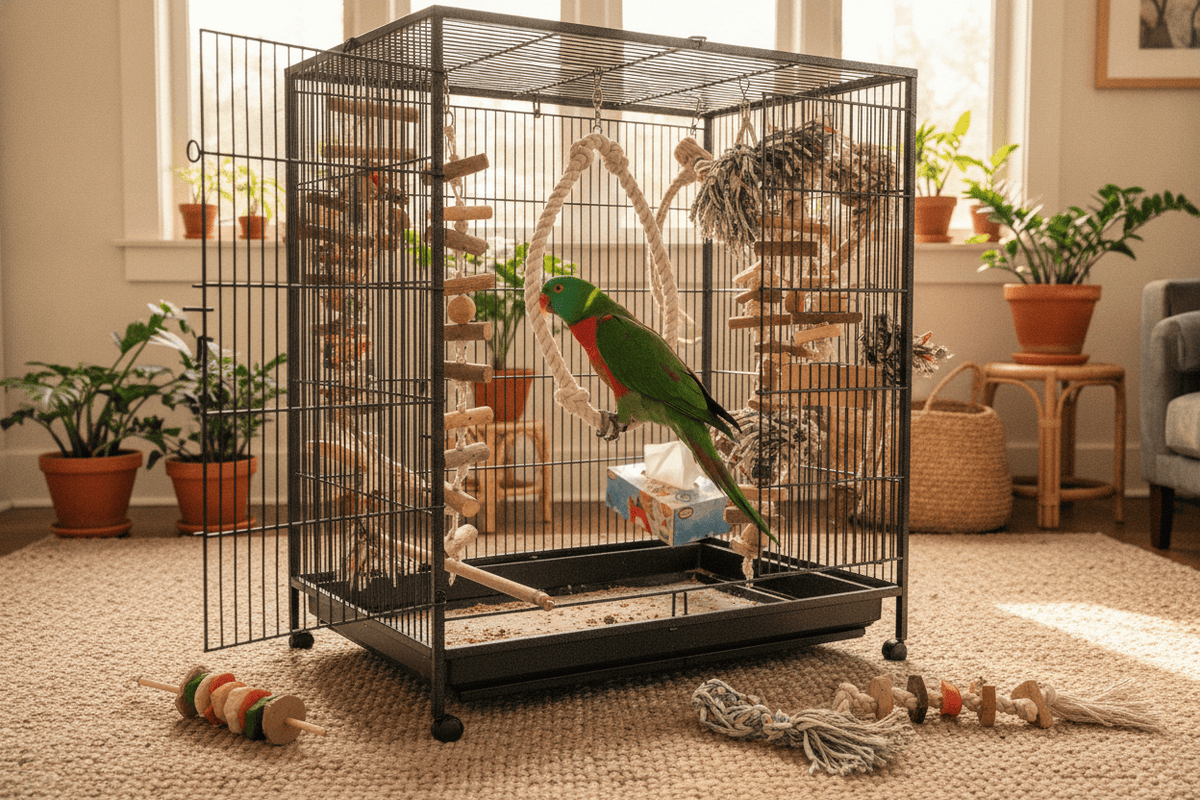
Physical exercise is just as important as mental stimulation. Climbing toys like ladders, ropes, and swings encourage movement, build coordination, and give your parrot a sense of adventure within their space. Larger parrots especially benefit from toys that require them to stretch, grip, and navigate.
Swings are a classic for a reason. Many parrots find the gentle motion soothing, and swinging also engages their core muscles. Rope perches and multi-level climbing structures add variety to their environment, turning a simple cage into an engaging playground.
Interactive and Bell Toys
Some parrots are natural performers who love toys they can manipulate, ring, or interact with repeatedly. Bell toys, mirror toys, and toys with movable parts appeal to curious, playful birds who enjoy cause-and-effect interactions. These are great for social parrots who spend time near their cage while you're around.
How to Choose Safe and Stimulating Bird Toys
Finding a toy your parrot loves is only half the equation. The other half is making sure that toy is genuinely safe. Not all bird toys on the market meet the safety standards that parrots deserve, so knowing what to look for protects your bird from unnecessary risk.
Materials, Sizing, and What to Avoid for Your Parrot's Safety
Safe Materials to Look For
The best bird toys are made from natural, non-toxic materials. Bird-safe hardwoods like pine, balsa, and manzanita are excellent for chew toys. Natural fiber ropes made from cotton or sisal are safe for climbing and shredding. Stainless steel hardware is preferred over zinc or lead-based metals, which can cause heavy metal toxicity if ingested.
When shopping for free bird toys or any parrot enrichment product, always check that materials are explicitly labeled as bird-safe. Reputable brands will be transparent about what goes into their products.
Getting the Right Size
Toy sizing matters more than many new bird owners realize. A toy that's too small for a large parrot like a macaw or cockatoo can become a choking hazard. A toy that's too large for a small parrot like a parrotlet or lovebird can be intimidating and go completely ignored.
As a general guide, match the toy size to your bird's body size and beak strength. Large parrots need sturdier, bigger toys they can really sink their beaks into. Small parrots do better with lighter, more delicate options they can easily manipulate.
What to Avoid
Certain materials and designs pose real risks to parrots. Avoid toys with:
- Loose threads or frayed rope that can wrap around toes or necks
- Small, easily detachable parts that could be swallowed
- Toxic paints, dyes, or chemical coatings
- Zinc or lead hardware (check clasps, chains, and hooks)
- Mirrors for some species, particularly those prone to obsessive behavior
Inspect toys regularly for wear and damage. A toy that was safe when new can become hazardous once it starts to break apart. Replacing worn toys promptly is a simple but important part of keeping your parrot safe.
Rotating Toys for Continued Engagement
Even the best toy loses its appeal after a while. Parrots are naturally curious and novelty-seeking, which means rotating their toys every week or two keeps their environment feeling fresh and exciting. You don't need to buy new toys constantly; simply swapping out what's in the cage and reintroducing toys after a break can feel brand new to your bird.
Give Your Parrot the Play-Filled Life They Deserve
The right free bird toys genuinely transform your parrot's daily experience, turning quiet hours into active, joyful exploration. A bird that plays is a bird that thrives, and a thriving parrot makes every moment of pet ownership more rewarding for you too.
Prioritize toys that tap into natural behaviors like foraging, chewing, and climbing. Pay attention to what your individual bird gravitates toward, since every parrot has its own personality and preferences. And always shop with safety in mind, choosing toys made from bird-safe materials in the right size for your feathered companion.
When you invest in quality enrichment, you're not just buying a toy. You're investing in your parrot's happiness, health, and the beautiful bond you share with them. Explore your options, trust your bird's instincts, and give them the vibrant, stimulating environment they were born to enjoy.

Written by Talis Us



Leave a comment
This site is protected by hCaptcha and the hCaptcha Privacy Policy and Terms of Service apply.