


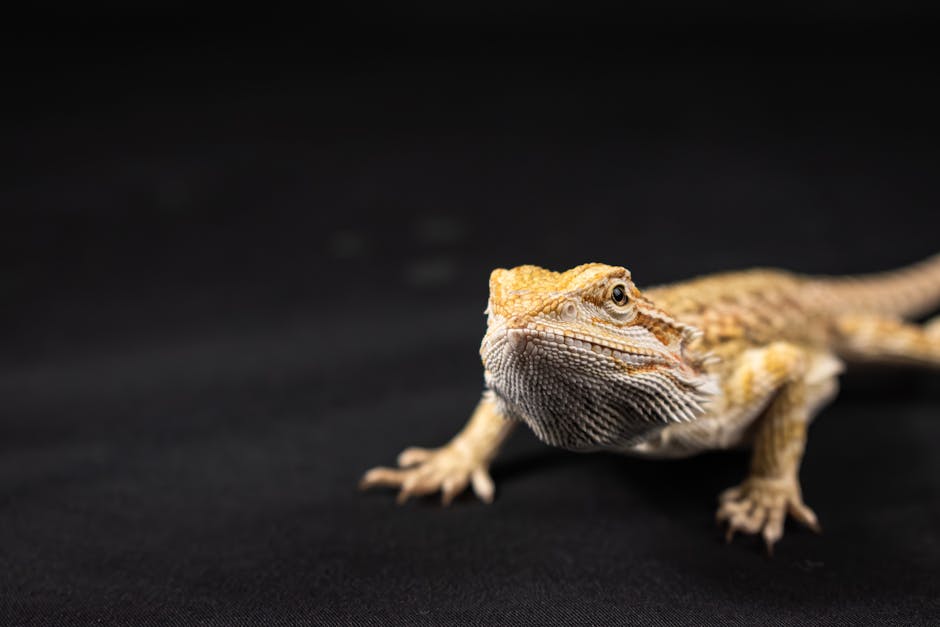
Essential Reptile Lighting Guide: Why Correct Reptile Bulb Distance Matters for D3 Synthesis
Essential Reptile Lighting Guide: Why Correct Reptile Bulb Distance Matters for D3 Synthesis
Understanding reptile husbandry requires a deep dive into environmental controls, chief among them specialized lighting. While many keepers focus solely on the type of bulb chosen, the physical distance between that bulb and the animal is equally critical for health outcomes. Achieving the correct reptile bulb distance is the non-negotiable step in ensuring your pet synthesizes Vitamin D3 effectively and avoids serious metabolic bone disease. This guide outlines the crucial role of distance in effective UV delivery.
The Science of UV Delivery: UVA, UVB, and Distance
Reptiles, unlike mammals, rely on specific wavelengths of ultraviolet (UV) radiation to initiate Vitamin D3 synthesis in their skin. This process is vital for calcium absorption, which supports skeletal growth, immune function, and overall vitality. The two primary components of concern are UVA and UVB.
UVA light is essential for behavioral cues, appetite stimulation, and general well-being, often referred to as the “feeling” component of basking. UVB light is the critical component that triggers the chemical conversion of provitamin D3 into usable Vitamin D3. Both UVA and UVB benefits must be delivered appropriately.
The fundamental challenge is that UV output decreases exponentially with distance. UV radiation adheres to the inverse square law, meaning that doubling the distance between the bulb and the basking spot reduces the effective UV intensity to one-quarter of the original output. This relationship makes precise measurement and positioning paramount.
- UVA: Influences behavior and appetite.
- UVB: Essential for Vitamin D3 synthesis and calcium regulation.
- Inverse Square Law: Dictates rapid light intensity loss over distance.
Determining the Correct Reptile Bulb Distance Based on Bulb Type
There is no universal distance setting; the correct reptile bulb distance is entirely dependent on the specific type of lighting fixture and bulb wattage used. Different technologies emit different levels of effective UVB at the source. Using a powerful bulb too close can cause burns or phototoxicity, while using it too far away results in sub-therapeutic D3 levels.
Mercury Vapor Bulbs (MVB)
MVBs are popular because they often combine heat, visible light, and UVB/UVA output in one fixture. However, their UV output can be unpredictable and powerful. Manufacturers usually provide specific guidelines based on the bulb’s wattage (e.g., 100W, 160W).
General Guidance: MVBs often require greater distances, perhaps 12 to 18 inches (30 to 45 cm), depending on the species’ basking requirement. Always defer to the manufacturer’s stated effective range for that specific bulb.
Fluorescent Tube Fixtures (T5 and T8)
These fixtures are differentiated by the diameter of the tube (T5s are smaller in diameter and generally more powerful). T5 HO (High Output) bulbs are often favored for species needing high UVB intensity because they maintain output efficiency over longer distances than T8s.
T8s typically require the basking surface to be quite close, often 6 to 10 inches (15 to 25 cm) from the tube surface, depending on the UVB percentage (e.g., 5.0 vs. 10.0). T5 HO bulbs can often be mounted further away, sometimes 10 to 18 inches (25 to 45 cm), while still providing sufficient, measurable UVB.
Important Note on Meshes and Glass
Any barrier between the bulb and the reptile significantly filters UV radiation. Glass completely blocks UVB, while metal or plastic mesh screen tops can absorb 20% to 50% of usable UVB, forcing you to place the fixture closer or use a higher output bulb. Always try to place fixtures directly over screen tops, or preferably, mount the bulb inside the enclosure if safety permits.
Measuring the Unseen: The Importance of UV Index (UVI)
Relying on visual inspection or manufacturer assumptions without verification is a common mistake leading to improper reptile husbandry. The professional standard for determining correct distance involves measuring the effective UV Index (UVI) at the basking spot.
The UVI scale correlates directly to the intensity of UVB radiation received. Desert species (e.g., Bearded Dragons) require UVI levels often ranging from 5.0 to 7.0, while shade-dwelling forest species (e.g., Crested Geckos) might only need UVI levels around 1.0 to 2.0.
To accurately gauge this, keepers must use a dedicated digital UV meter calibrated for measuring UVB wavelengths (often measured in $\mu \text{W/cm}^2$ and then converted to UVI). This tool confirms whether the chosen distance is achieving the required D3 synthesis levels for that specific species.
Mini Case Study: Diagnosing Lethargy in a Captive Tortoise
A keeper noticed their Russian Tortoise exhibiting lethargy and softening of the marginal scutes, clear signs of Metabolic Bone Disease (MBD). They were using a 150W MVB at 14 inches. Initial measurements with a UV meter revealed an actual UVI of 1.8—adequate for a small tortoise species, but insufficient for a large desert-dwelling Russian Tortoise, which requires closer to UVI 4.0. The keeper was advised to switch to a high-output T5 HO 12% UVB fixture and reposition it to achieve a UVI of 4.5 at the basking spot, while keeping the distance at 10 inches. Within weeks, improved activity and better fecal consistency were observed as calcium absorption optimized.
Step-by-Step Checklist for Optimizing Reptile Bulb Placement
Use this framework to systematically set up and verify your reptile’s lighting setup to ensure proper D3 synthesis is occurring.
- Identify Species Requirement: Determine the precise UVI range required for your specific reptile species (e.g., Desert Dwellers vs. Tropical Forest Dwellers).
- Select Appropriate Fixture: Choose a bulb/fixture combination (T5, T8, MVB) rated to produce the required UVB percentage at a reasonable distance.
- Measure Ambient Conditions: Determine the height of the enclosure top and the presence of any filtering materials (screen mesh). Account for UV reduction caused by these barriers.
- Establish Initial Distance: Based on manufacturer guidelines for your bulb type, set the fixture height so the basking spot is within the recommended range (e.g., 8–16 inches).
- Verify UVI Output: Using a reliable UV meter, measure the UVI directly at the basking spot where the animal rests.
- Adjust Height Precisely: If the UVI is too low, carefully decrease the distance incrementally (e.g., 1 inch at a time). If the UVI is too high (risk of burns), increase the distance until the target UVI is achieved.
- Confirm Basking Behavior: Observe the reptile to ensure it utilizes the basking spot comfortably for appropriate durations each day.
Comparing Lighting Technologies for D3 Synthesis
The choice of technology significantly impacts the setup required to achieve the correct distance and intensity. T5 fluorescent lamps have become a preferred standard in many advanced setups due to their penetration depth and reliability.
Note: Always replace bulbs according to the manufacturer’s recommended schedule, even if visible light appears normal, as UVB output degrades over time.
Frequently Asked Questions Regarding Reptile Lighting Distance
Q: If my reptile basks under a branch closer to the bulb, does that mean the distance is correct? A: Not necessarily. Reptiles often seek the hottest spot, which might correspond to the highest UV concentration, but they cannot sense the specific UV wavelengths needed for D3 synthesis. You must verify the UVI at that preferred spot using a meter.
Q: Can I use Talis Us lighting recommendations if I live outside the US? A: While specific brand names may vary globally, the underlying physics—the inverse square law and UVI measurement—are universal scientific constants. Focus on the required UVI levels and the specific bulb’s spectral data, regardless of the regional marketing name.
Q: How often should I re-measure the distance after installing a new fixture? A: You should measure immediately after installation. If you are using T5 or T8 lamps, measure again halfway through the bulb’s expected lifespan (e.g., at 4 or 6 months) to account for UV degradation.
Q: Does the reptile’s skin color or species size affect the necessary distance? A: Yes. Darker-pigmented animals or larger animals requiring a larger basking area may need a slightly lower UVI or a larger fixture to ensure adequate coverage. High UV environments demand lower distances for desert species.
Q: Is placing a UV-emitting bulb inside a fully screened fixture safe for D3 synthesis? A: Only if the screen material is confirmed to be UV transparent (usually very fine metal mesh). Standard plastic or coated glass screens will block the necessary UVB wavelengths, rendering the setup ineffective for D3 synthesis.
Achieving optimal reptile health is a precision exercise, and the distance setting for your UV lighting is a cornerstone of that precision. By understanding the inverse relationship between distance and intensity, utilizing appropriate technology, and verifying results with measurement tools, keepers can ensure their reptiles receive the necessary photonic stimulation for robust Vitamin D3 production. Explore our resources to learn more about advanced habitat design and spectrum calibration.

Written by Talis Us


Leave a comment
This site is protected by hCaptcha and the hCaptcha Privacy Policy and Terms of Service apply.