



Choosing the Best 40 Gallon Reptile Tank
Choosing the Best 40 Gallon Reptile Tank
A 40-gallon enclosure is one of the most versatile “sweet spots” in reptile keeping: large enough to build a real temperature gradient, offer enrichment, and maintain stable humidity—yet still manageable in most homes. Whether you’re upgrading a juvenile, moving from a basic starter kit, or planning your first serious habitat, the right 40 gallon reptile tank choice will directly affect your animal’s health, your maintenance workload, and your long-term costs.

Why 40 gallons is such a popular size
A 40-gallon footprint gives you room to do what reptiles actually need—separate warm and cool zones, multiple hides, and species-appropriate climbing or burrowing space. Compared with small tanks, the environment is typically more stable (less dramatic swings in heat and humidity), which makes husbandry easier to get right.
Common ways people use this size include:
- A permanent home for many small-to-medium reptiles
- A grow-out enclosure for juveniles of larger species
- A display-focused habitat like a planted 40 gallon terrarium
40 gallon aquarium vs 40 gallon terrarium: what’s the difference?
People often start with a 40 gallon aquarium because it’s easy to find and affordable, but an aquarium isn’t automatically a great reptile enclosure.
When a 40 gallon aquarium makes sense
A standard glass aquarium can work if:
- Your species doesn’t need tall vertical space
- You can safely mount heat/UVB
- You can secure the top and prevent escapes
It’s also commonly used for conversions, but you’ll want to think carefully about access, ventilation, and lid security.
Why a purpose-built 40 gallon terrarium is often better
A dedicated 40 gallon terrarium (especially one designed for reptiles) usually offers:
- Better ventilation patterns
- Cable/cord ports for safe routing
- Easier mounting options for UVB lighting for reptiles
- Better access for feeding and cleaning
If you plan on a planted or naturalistic habitat, look for features that support a bioactive setup for 40 gallon (drainage layers, sealed bases, and ventilation that won’t trap stagnant air).

Front opening vs top opening: what most keepers prefer
A front opening terrarium 40 gallon is a major quality-of-life upgrade—both for you and often for the animal.
Benefits of front-opening doors
- Less stress (you’re not “swooping” from above like a predator)
- Easier spot cleaning
- Better for tong feeding
- More convenient for decorating and maintenance
Top-opening tanks can still work, but they make routine tasks harder—especially if you use large basking fixtures or tall décor.
Screen top vs glass lid: choosing the right “roof”
Your lid choice affects heat retention, humidity, airflow, and safety. The screen top vs glass lid question doesn’t have a one-size-fits-all answer.
Screen tops (great for many desert/semi-arid setups)
Pros:
- Excellent ventilation
- Easy to place dome fixtures
- Helps prevent overheating in warm rooms
Cons:
- Humidity escapes quickly
- More heat loss (higher power use)
- Some species can push or climb into gaps if unsecured
Glass lids (useful when humidity is hard to maintain)
Pros:
- Better humidity retention
- Reduces evaporative cooling
- Often quieter and reduces drafts
Cons:
- Can limit airflow (watch for condensation/mold)
- Lighting/heat mounting becomes trickier
- Must still be escape-safe
Practical compromise: many keepers use a screen top and partially cover it (with safe materials) to dial in humidity while maintaining airflow.
Selecting “the best reptiles for 40 gallon” (realistic choices)
Choosing species based on adult needs matters. Here are common, realistic candidates often considered among the best reptiles for 40 gallon—depending on the exact footprint (breeder style vs taller terrarium) and your husbandry skills.
Leopard gecko (excellent fit)
A leopard gecko 40 gallon setup is popular because the extra floor space helps you create multiple hides and a true gradient. This size makes it easier to provide:
- Warm hide, cool hide, and humid hide
- More naturalistic enrichment
- Better temperature stability
Crested gecko / arboreal species (depends on dimensions)
A 40-gallon can work if it’s tall and designed for climbing. If you’re using a long, low breeder-style tank, it’s usually not ideal for arboreal species.
Small skinks, smaller colubrids, and similar (species-specific)
Some species can thrive in a 40-gallon—others need larger, especially as adults. Always check adult length, activity level, and known care standards before deciding.
Important reality checks for popular pets
Some animals are often marketed for 40 gallons, but their adult needs can exceed this size.
Can a bearded dragon live in 40 gallon?
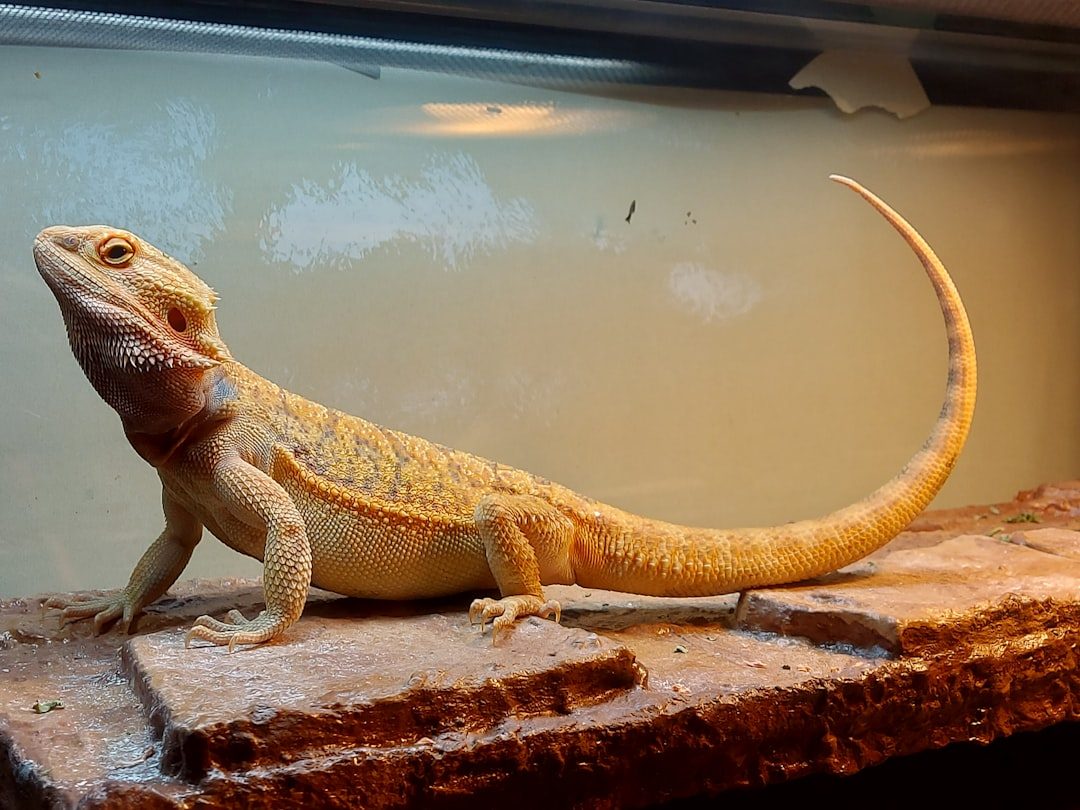
This is one of the most searched questions: can a bearded dragon live in 40 gallon? For many keepers, a 40-gallon is best viewed as a juvenile or temporary enclosure. Adult bearded dragons benefit from more floor space to move, thermoregulate, and display natural behaviors.
If you must use a 40-gallon short-term:
- Prioritize a strong basking zone and a cool end
- Keep décor low enough to prevent falls
- Plan your upgrade timeline early (measure your space and budget now)
Ball python enclosure size requirements
Ball python enclosure size requirements are also commonly debated, but ball pythons do grow and benefit from space, security, and a stable gradient. A 40-gallon may work as a grow-out for smaller individuals, but many adults do better in larger enclosures that offer:
- Two truly secure hides (warm and cool)
- More room to stretch and explore
- Better long-term environmental stability
If you’re deciding between sizes, think long-term—buying once is often cheaper than upgrading multiple times.

40 gallon breeder vs 50 gallon: which should you buy?
The 40 gallon breeder vs 50 gallon decision usually comes down to footprint, height, and how much buffer you want for gradients and décor.
Why many keepers love the 40 breeder footprint
A “breeder” style tends to be wider and longer, giving:
- More usable floor space
- Easier temperature gradient setup guide planning
- Better for terrestrial reptiles that need room to roam
When 50 gallons is worth it
A 50-gallon option can provide:
- Extra height for climbing décor and lighting distance
- More room for larger water bowls, deeper substrate, or bigger hides
- More stability if your room temperature fluctuates
Rule of thumb: if your target species is near the top end of what a 40 can handle, the 50 is often a smarter long-term pick.
How to heat a 40 gallon terrarium (without guessing)
Getting heat right is the biggest “make or break” factor for many species. If you’re researching how to heat a 40 gallon terrarium, focus on control and measurement, not just wattage.
Step-by-step temperature gradient setup guide
Use this temperature gradient setup guide approach:
-
Pick the heat method that matches the species
- Basking reptiles: overhead basking lamp + optional supplemental heat
- Nocturnal/crepuscular species: overhead heat (often) or carefully controlled heat mat (species- and enclosure-dependent)
-
Create two clear zones
- Warm side with basking/primary heat
- Cool side with no direct heat source
-
Use thermostats where appropriate
- If you use a heat mat, a thermostat is non-negotiable
- For some overhead heating, thermostats/dimmers help prevent spikes
-
Measure correctly
- Use a temperature gun for surface basking temps
- Use digital probes for ambient temps on both ends
-
Adjust with décor, ventilation, and fixture height
- Raising the fixture lowers surface temps
- More ventilation can drop ambient temps and humidity
- Darker rocks absorb and hold heat better than pale décor

UVB lighting for reptiles: what to consider in a 40-gallon
UVB lighting for reptiles isn’t optional for many diurnal species. In a 40-gallon, the key is matching:
- Species UVB needs
- Distance from bulb to basking spot
- Screen lid reduction (screens can reduce UVB output)
Practical tips:
- Prefer a quality linear UVB fixture for consistent coverage
- Place UVB alongside basking so the animal gets heat and UVB together
- Replace bulbs on schedule and keep a note of installation date
If your enclosure is tall, ensure the basking platform brings the animal into the effective UVB range—without allowing it to contact the bulb.
Humidity control for terrarium: keeping it stable
Humidity control for terrarium is about balancing ventilation, substrate, and water input.
For drier species
- Use a screen top for airflow (or partially covered if needed)
- Provide a humid hide rather than humidifying the whole enclosure
- Avoid constantly wet substrate (respiratory and skin issues risk)
For tropical species
- Use substrate that holds moisture without becoming swampy
- Add live plants and leaf litter (even in non-bioactive setups)
- Mist strategically (not endlessly) and monitor with a digital hygrometer
Key idea: stable humidity is easier in a well-designed enclosure than in a “sealed box.” Aim for fresh air exchange while retaining enough moisture for your species.

Substrate choices: desert vs tropical (and what works in 40 gallons)
Substrate affects humidity, odor, digging behavior, and cleanup time. Here are practical categories to consider.
Substrate options for desert reptiles
When researching substrate options for desert reptiles, many keepers choose:
- Packed naturalistic mixes designed for burrowing and holding shape
- Tile or solid substrate for easy cleaning (species-dependent)
- Low-dust options to reduce respiratory irritation
Avoid anything overly dusty or loose in ways that increase risk during feeding—especially if your animal lunges at prey.
Substrate options for tropical reptiles
For substrate options for tropical reptiles, look for:
- Moisture-retentive blends (often with bark, fiber, and organic components)
- A top layer of leaf litter to reduce evaporation and support microfauna
- A drainage approach if you water heavily or use live plants
If you want a naturalistic look without full bioactive complexity, you can still use tropical substrate plus plants in pots for easier maintenance.
Bioactive setup for 40 gallon: what you need (and what you don’t)
A bioactive setup for 40 gallon can look amazing and reduce waste buildup over time—but only if you build it for your species.
Basic bioactive building blocks
- Appropriate substrate layers (and drainage if needed)
- Leaf litter and natural hides
- Cleanup crew (isopods/springtails) matched to humidity and temperature
- Live plants that tolerate your lighting and your animal’s behavior
What you don’t need:
- Overly complicated “perfect” ecosystems on day one
- Rare plants that can’t handle enclosure life
- Constant saturation (most bioactive failures are too wet, too fast)
Start simple, monitor mold and moisture, and let the system stabilize before adding sensitive animals.
Escape proof reptile enclosure tips (especially for 40 gallons)
A 40-gallon tank is a common escape “training ground” for reptiles—because lids, doors, and cord gaps are often overlooked. Use these escape proof reptile enclosure tips:
- Lock or clip the lid: screen tops should be clipped down; sliding lids should have a stopper.
- Check door alignment (front-opening): ensure doors close flush and the lock actually engages.
- Seal cord gaps: use purpose-made grommets or tightly fitted foam blocks (kept out of reach).
- Mind climbing décor: branches near the top can become a launchpad to test lids and screens.
- Confirm ventilation panels are secure: some enclosures have removable sections—double check screws/clips.
Do a “pressure test” after setup: gently push at corners, lift the lid slightly, and tug on doors to find weak points before your reptile does.
Quick shopping checklist: what to prioritize
When choosing your enclosure and gear, prioritize function over aesthetics first.
Enclosure features
- Correct dimensions for the species (floor space vs height)
- Secure access (front opening preferred for many)
- Ventilation that matches humidity goals
- Cable routing and fixture mounting options
Essential equipment
- Thermostat (especially for mats/ceramic emitters)
- Reliable digital thermometers (warm/cool) + temp gun
- Proper UVB + basking lighting (species dependent)
- Hides, climbing structures, and water bowl sized for the animal
Takeaway: choose the tank that matches the animal, not the trend
A 40 gallon reptile tank can be an excellent long-term home for the right species—and a solid stepping stone for others. Choose between a 40 gallon aquarium and a purpose-built 40 gallon terrarium based on ventilation, access, and how you’ll mount heat and UVB lighting for reptiles. Dial in your gradient using a clear temperature gradient setup guide, plan your humidity control for terrarium, and pick substrates that match your species—whether you’re considering substrate options for desert reptiles or substrate options for tropical reptiles. If you build with safety in mind and follow smart escape proof reptile enclosure tips, you’ll end up with a habitat that’s healthier for your reptile and easier for you to maintain.

Written by Talis Us


Leave a comment
This site is protected by hCaptcha and the hCaptcha Privacy Policy and Terms of Service apply.