


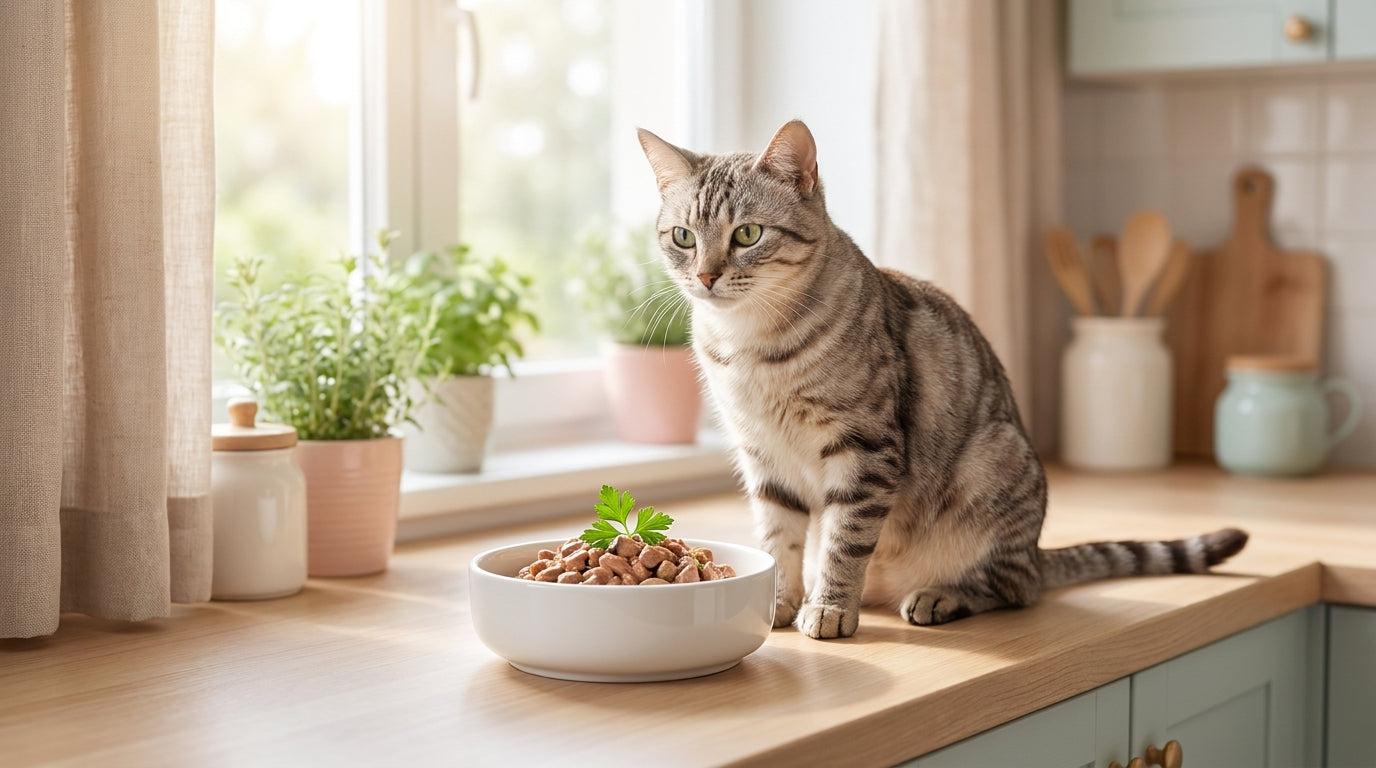
Best Cat Food for Sensitive Stomachs: A Complete Vet-Informed Guide
Best Cat Food for Sensitive Stomachs: A Complete Vet-Informed Guide

#TLDR
-
A "sensitive stomach" in cats refers to GI tract reactions to dietary inputs — vomiting, loose stool, gas, skin flare-ups, and appetite changes are the most common signs.
-
Vets recommend four primary diet strategies: limited ingredient, novel protein, hydrolyzed protein, and highly digestible formulas — each targets a different root cause.
-
The most common culprits in commercial cat food that trigger GI upset: corn, wheat, soy, unnamed by-products, artificial dyes, and high-fat additives.
-
Wet food is generally easier on sensitive stomachs due to higher moisture content and simpler ingredient lists — but quality dry formulas work too when sized appropriately.
-
Always transition over 7–10 days — abrupt food changes are themselves a trigger for GI distress, even when switching to a better formula.
-
Rule out underlying conditions (IBD, pancreatitis, parasites) with a vet before attributing chronic symptoms to food alone.
Table of Contents
What Is a Sensitive Stomach in Cats?
The phrase "sensitive stomach" appears on dozens of cat food bags, but what does it actually mean medically? At its core, a sensitive stomach refers to a cat's GI tract reacting adversely to certain dietary inputs — not necessarily from a true allergy, but from intolerance, poor digestibility, or formula mismatch.
Cats are obligate carnivores. Their digestive systems evolved for high-protein, meat-based diets with minimal carbohydrate load. When commercial formulas deviate significantly from that biological baseline — heavy starch content, unnamed proteins, excessive additives — some cats respond with measurable GI symptoms.
As RAWZ Natural Pet Food explains, "sensitive stomach" covers a range of GI tract responses to dietary inputs: coughing, hairballs, changes in weight and appetite, or vomiting. The critical factor is often change — cats' GI tracts become conditioned to consistent feeding patterns, and deviation — whether from a new formula or an inconsistent feeding schedule — can trigger upset even when the new food is technically superior.
Signs Your Cat May Have a Sensitive Stomach

According to Gibson's Paws, Claws and Crawls Veterinary Clinic, the most common signs a cat's diet isn't agreeing with their GI tract include:
| Symptom | What It May Indicate |
|---|---|
| Frequent vomiting or regurgitation | Protein intolerance, rapid eating, or formula mismatch |
| Loose or inconsistent stool | Poor digestibility, excess fat, or fiber imbalance |
| Excessive gas or bloating | Fermentable carbohydrates, poorly digestible fillers |
| Refusing certain foods | Palatability issues or learned food aversion |
| Skin flare-ups or itching | Possible food sensitivity with dermal manifestation |
| Appetite changes or weight loss | Chronic GI inflammation or underlying condition |
Important caveat: These symptoms overlap with serious medical conditions including inflammatory bowel disease (IBD), hyperthyroidism, intestinal parasites, and pancreatitis. If symptoms persist beyond 2–3 weeks or include blood in stool, significant weight loss, or extreme lethargy — a vet visit is non-negotiable before any diet changes.
Sensitive Stomach vs. Food Allergy: What's the Difference?
These two terms get used interchangeably by pet owners, but the distinction matters for treatment:
-
Food intolerance / sensitive stomach: A non-immune GI reaction. The cat's digestive system simply struggles to process a specific ingredient — often a carbohydrate, low-quality fat, or poorly digestible protein source. Symptoms are primarily GI.
-
True food allergy: An immune-mediated response. The cat's immune system identifies a protein molecule as a threat and mounts a reaction. Symptoms can include GI upset plus skin reactions, ear infections, and hair loss.
As RAWZ notes, commercially available allergy tests for cats often produce inconclusive results. Elimination diets — feeding a novel single protein for 8–12 weeks under vet supervision — remain the most reliable diagnostic tool. If you suspect a true allergy rather than general sensitivity, the protocol differs: it requires stricter ingredient control and longer trial periods.
The 4 Vet-Recommended Diet Types

Veterinarians consistently point to four diet frameworks when addressing feline GI sensitivity. Here's what each targets and when to use it:
1. Limited Ingredient Diet (LID)
Best for: Cats with suspected food intolerances or mild-to-moderate GI sensitivity.
A limited ingredient diet strips the formula to its essentials: one protein source, one or two simple carbohydrates, and essential vitamins and minerals. Fewer ingredients means fewer variables — making it far easier to isolate the trigger if symptoms persist.
What to look for:
-
Single named protein (e.g., salmon, duck, rabbit)
-
Simple carbohydrate: sweet potato, pea, or oatmeal
-
No corn, wheat, soy, or artificial additives
-
AAFCO complete and balanced statement
Why vets like it: Fewer ingredients typically means fewer potential irritants. It also gives you a clean baseline for elimination testing.
2. Novel Protein Diet
Best for: Cats who react to common proteins — chicken and beef are the most frequently implicated.
A novel protein is a protein source the cat has no prior exposure to, meaning the immune system has no existing reaction pathway built for it. Common novel proteins for cats include duck, rabbit, venison, bison, and kangaroo.
As Gibson's Veterinary Clinic explains: "New proteins reduce the chance of the immune system overreacting, which helps settle the stomach and can be very beneficial for pets with food allergies."
Key consideration: For a novel protein diet to work diagnostically, the formula must contain only that protein — no "natural flavors," no chicken broth, no fish oil from a separate species. Read ingredient lists carefully.
3. Hydrolyzed Protein Diet
Best for: Cats with chronic GI inflammation, confirmed food allergies, or IBD.
Hydrolyzed protein formulas use a manufacturing process that breaks protein molecules into fragments too small for the immune system to recognize as allergens. These diets require a veterinary prescription in their most effective formulations.
Common veterinary hydrolyzed diets:
-
Royal Canin Hydrolyzed Protein HP
-
Hill's Prescription Diet z/d
-
Purina Pro Plan HA (Hydrolyzed)
Why vets prescribe them: They're scientifically designed to minimize immune activation. They carry a higher cost but are often the most reliable option for cats with severe, unresolved sensitivities.
4. Highly Digestible Diet
Best for: Cats with mild GI upset, post-illness recovery, or occasional digestive sensitivity.
This category focuses on ingredient quality and digestibility rather than exclusion. The goal: choose proteins, fats, and carbohydrates the cat's digestive system absorbs efficiently with minimal fermentable residue.
What to look for:
-
Lean named proteins as the primary ingredient
-
Easily digestible carbohydrates: white rice, oatmeal, or pumpkin
-
Added prebiotics (FOS, inulin) and probiotics (Lactobacillus, Enterococcus)
-
Omega-3 fatty acids (EPA/DHA from fish oil) to reduce GI inflammation
Veterinary-grade options in this category include Hill's i/d GI Biome, Purina Pro Plan Veterinary Diets EN Gastroenteric, and Royal Canin Gastrointestinal.
Key Ingredients to Look For
When selecting the best cat food for sensitive stomachs, these are the ingredients that support GI health:
| Ingredient | Role | Where Found |
|---|---|---|
| Named lean protein (salmon, turkey, duck) | Highly digestible protein source | Premium & vet-grade formulas |
| Pumpkin | Soluble fiber — regulates stool consistency | Wet foods, some dry formulas |
| Probiotics (Lactobacillus, Enterococcus) | Supports gut microbiome balance | Sensitive stomach specialty lines |
| Prebiotics (FOS, chicory root, inulin) | Feeds beneficial gut bacteria | Premium dry and wet formulas |
| Omega-3 fatty acids (EPA/DHA) | Reduces GI tract inflammation | Fish-based formulas, salmon oil |
| Brown rice / oatmeal | Gentle, digestible carbohydrate | Mid-range to premium formulas |
| Taurine | Essential amino acid for cats; cardiac and GI function | All complete cat formulas (required by law) |
Ingredients to Avoid
According to Cats.com, Stella & Chewy's, and Gibson's Veterinary Clinic, these are the most common dietary triggers for sensitive-stomach cats:
-
Corn, wheat, and soy — inexpensive fillers with low digestibility for obligate carnivores; common allergen triggers
-
Unnamed meat by-products or "animal digest" — variable protein quality, inconsistent sourcing
-
Artificial dyes (Red 40, Yellow 5/6) — no nutritional function; associated with sensitivities in some cats
-
BHA / BHT preservatives — synthetic antioxidants; flagged for potential health concerns at high long-term exposure
-
High-fat additives or rich sauces — excess dietary fat is a known GI irritant, particularly for pancreatitis-prone cats
-
Dairy ingredients — adult cats are largely lactose intolerant; dairy causes GI distress in most
-
Table scraps or sudden diet changes — even "healthy" human foods cause GI disruption when introduced abruptly
Wet Food vs. Dry Food for Sensitive Stomachs

This is one of the most searched questions among cat owners — and the honest answer is nuanced.
The Case for Wet Food
-
Higher moisture content (~70–80%) — supports kidney health and dilutes GI irritants; also mirrors the moisture content of natural prey
-
Typically simpler ingredient lists — fewer additives and preservatives
-
Easier to transition between flavors — RAWZ notes that "transitioning between wet recipes, containing nearly 80% moisture, is generally a smoother and quicker process"
-
Higher palatability — cats with appetite suppression from GI discomfort often accept wet food more readily
The Case for High-Quality Dry Food
-
Convenience and cost — dry food is easier to store and typically costs less per serving
-
Dental benefits — appropriately sized kibble provides mild abrasive cleaning
-
Controlled calorie density — easier to measure precise portions for weight management
-
Some sensitive-stomach dry formulas are highly effective — Purina Pro Plan Sensitive Skin & Stomach and Hill's Science Diet Sensitive Stomach & Skin are frequently cited by veterinarians as reliable options
The Practical Answer
For cats actively experiencing GI upset, starting with wet food from a limited-ingredient or novel-protein line gives the best odds of a smooth transition. Once symptoms resolve and a stable formula is identified, transitioning to a quality dry formula — or maintaining a wet/dry mix — is perfectly viable.
Top Brands Vets Frequently Recommend
These formulas appear consistently across vet recommendations for feline sensitive stomachs:
| Brand & Formula | Type | Best For |
|---|---|---|
| Purina Pro Plan Sensitive Skin & Stomach (Lamb & Rice or Salmon) | Dry / Wet | Daily maintenance; highly digestible |
| Hill's Science Diet Sensitive Stomach & Skin | Dry / Wet | Mild to moderate sensitivity |
| Royal Canin Gastrointestinal | Vet prescription wet/dry | Chronic GI issues, IBD |
| Royal Canin Hydrolyzed Protein HP | Vet prescription | Confirmed food allergy |
| Hill's Prescription Diet i/d GI Biome | Vet prescription | Chronic GI inflammation, microbiome support |
| Blue Buffalo Sensitive Stomach & Skin | Dry | Budget-friendly sensitive option |
| IAMS Proactive Health Sensitive Digestion & Skin | Dry | Affordable, accessible |
| Merrick Limited Ingredient Diet | Wet | LID, single-protein |
| Stella & Chewy's Freeze-Dried Raw | Freeze-dried | Novel protein, minimal processing |
Talis-us Note: Prescription diets (Royal Canin, Hill's Rx, Purina Pro Plan HA) require veterinary authorization because their formulations target specific medical conditions. Over-the-counter sensitive stomach formulas are appropriate for mild sensitivity; chronic or severe cases warrant a vet-guided diet trial.
The 7-Day Food Transition Guide
Switching to a better formula the right way is just as important as choosing the right formula. An abrupt change triggers GI upset in almost any cat — including those with perfectly healthy digestive systems.
Hill's Pet Nutrition and Purina both recommend a structured 7–10 day transition. For sensitive-stomach cats, err toward 10 days:
| Day | Old Food | New Food |
|---|---|---|
| Days 1–2 | 75% | 25% |
| Days 3–4 | 50% | 50% |
| Days 5–6 | 25% | 75% |
| Days 7–10 | 0% | 100% |
Practical tips for sensitive-stomach cats during transition:
-
Keep feeding times consistent — schedule changes add stress to an already-adjusting GI tract
-
Monitor stool daily — formed but soft indicates good digestion; loose stool or mucus signals slowing the transition
-
Add a small amount of plain canned pumpkin (1 teaspoon) to meals during the transition — soluble fiber helps regulate stool consistency
-
If vomiting increases during transition, slow down — extend each phase by 2–3 days before moving forward
-
Avoid introducing treats with new ingredients during the transition window — control every variable
When to See Your Vet
Diet adjustments resolve many cases of mild feline GI sensitivity. But some symptoms signal conditions that food alone cannot fix. Schedule a veterinary visit if your cat shows:
-
Persistent vomiting (more than 2–3 times per week for over 2 weeks)
-
Significant or rapid weight loss
-
Blood in stool or vomit
-
Complete food refusal for more than 24 hours
-
Extreme lethargy or behavior changes
-
Distended or painful abdomen
These can indicate IBD, intestinal lymphoma, pancreatitis, hyperthyroidism, or parasitic infection — all of which require medical diagnosis before dietary management. As Gibson's Veterinary Clinic puts it: "While often these problems arise from a change in diet or unusual stressor, chalking such troubles up to stomach sensitivity can result in ignoring signs of bigger health issues."
The Talis-us Sensitive Stomach Standard
At Talis-us, every cat food formula we carry for sensitive stomachs clears a strict multi-point checklist before earning a Talis Curated badge:
-
✅ Named animal protein in the #1 ingredient position
-
✅ No corn, wheat, or soy as primary ingredients
-
✅ No artificial colors, flavors, or BHA/BHT preservatives
-
✅ AAFCO complete and balanced — preferably feeding-trial substantiated
-
✅ Prebiotic or probiotic inclusion confirmed in the formula
-
✅ Appropriate moisture content for the format (wet: ≥70%; dry: quality fat sources)
-
✅ Vet-reviewed or veterinary nutritionist involvement in formula development
Our Cat Health & Wellness Hub publishes full ingredient transparency across every listed product — so you can compare formulas side by side rather than trusting marketing claims on the front of the bag. We also carry limited-ingredient, single-protein, and novel-protein options across wet, dry, and freeze-dried formats to match whatever GI-support protocol your vet recommends.
Final Verdict
Finding the best cat food for sensitive stomachs is not a single purchase decision — it's a process of narrowing variables, observing responses, and transitioning thoughtfully.
The clearest decision framework:
| Scenario | Recommended Starting Point |
|---|---|
| Mild, occasional GI upset | Highly digestible OTC formula — Purina Pro Plan or Hill's Sensitive Stomach |
| Recurring symptoms, suspected intolerance | Limited ingredient diet — single named protein, no corn/wheat/soy |
| Reacts to chicken or beef | Novel protein formula — duck, rabbit, venison |
| Chronic GI issues, confirmed allergy or IBD | Hydrolyzed protein — vet-prescribed Royal Canin HP or Hill's z/d |
The ingredients list is always the most reliable signal — not the price point, not the front-of-bag claims. A named protein first, minimal filler content, no artificial additives, and an AAFCO feeding-trial statement gives you the strongest foundation.
Most cats with dietary-driven GI sensitivity show clear improvement within 3–4 weeks on the right formula, with a proper transition. If symptoms persist beyond 6 weeks on a well-chosen formula, that's a signal to loop in your veterinarian for deeper diagnostic work.
Always consult your veterinarian before making significant dietary changes, especially for cats with recurring or severe GI symptoms.

Written by Talis Us



Leave a comment
This site is protected by hCaptcha and the hCaptcha Privacy Policy and Terms of Service apply.