


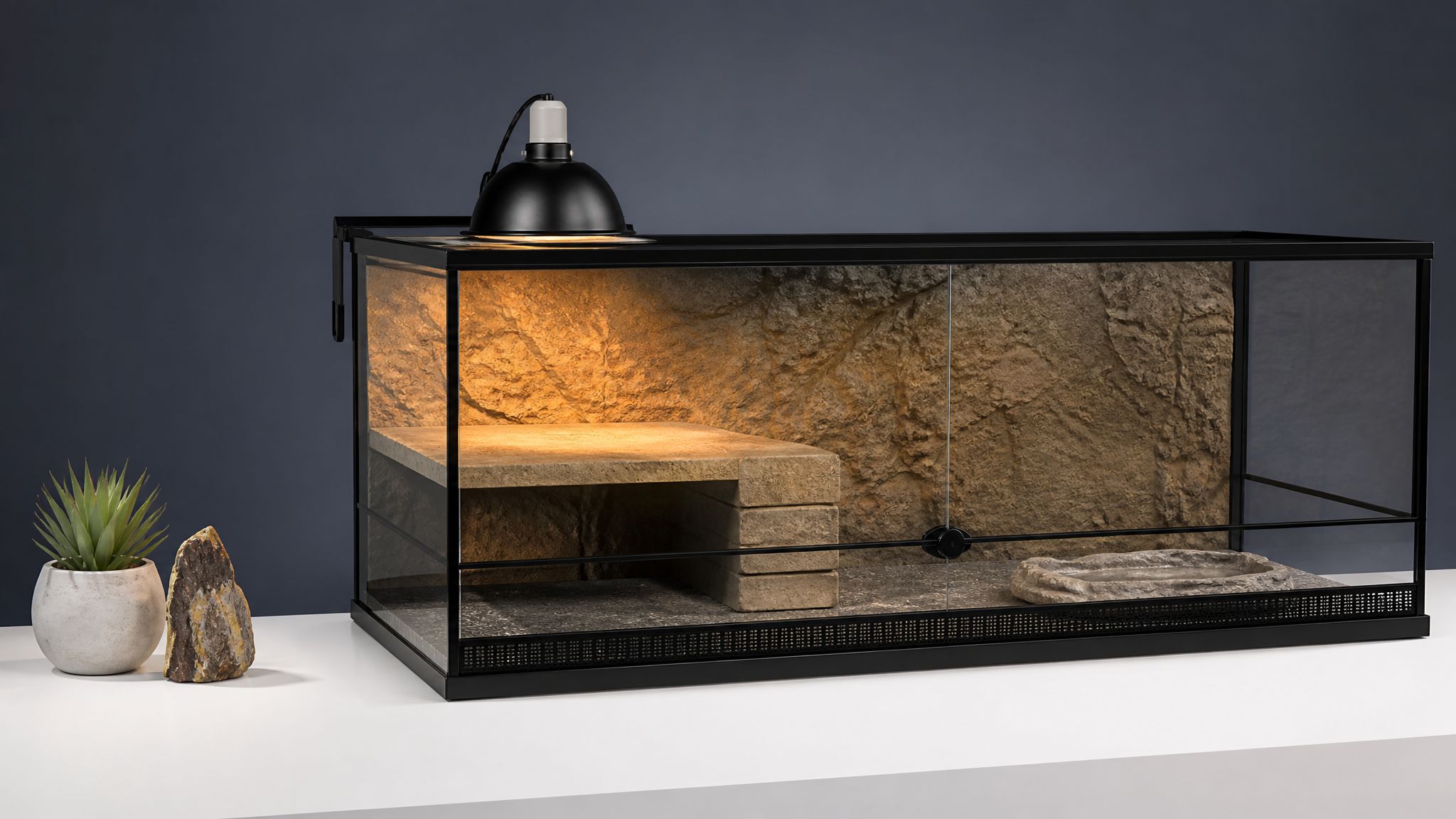
Best Bearded Dragon Enclosure Setups 2026: Reviews & Buying Guide
Finding the right enclosure for a bearded dragon isn’t just about picking a tank off the shelf. These arid-region lizards need space to roam, a reliable temperature gradient, and secure ventilation that doesn’t wreck humidity. The wrong setup can lead to stress, glass surfing, or even health issues like mouth rot. Our 2026 roundup draws on reviews from Hepper, Hometosight, and MyPetReptiles to highlight enclosures that real keepers lean on—and to flag the trade-offs you’ll actually face.
Below, we break down what to look for in a bearded dragon enclosure, compare four standout models, and walk through the common missteps that trip up new keepers. Whether you’re starting with a juvenile or upgrading an adult’s home, the right combination of size, material, and access will make daily care easier and your dragon more comfortable.
What to Look for in a Bearded Dragon Enclosure
Space is the foundation. Adult dragons grow up to 24 inches and need room to establish a warm basking zone and a cooler retreat. Most expert reviews, including those from Hepper and MyPetReptiles, recommend an enclosure of at least 120 gallons—typically a 4-foot-long, 2-foot-deep, 2-foot-tall footprint. Juveniles can start in a 50-gallon tank, but moving to a full-sized adult home early saves the cost and stress of multiple upgrades.
Material choices matter for heat and behavior. Glass tanks offer the clearest view, but some keepers report that all-glass sides can trigger glass surfing—a repetitive pacing along the glass that leads to stress and potential injury. Wood-framed enclosures, like the 110-gallon engineered wood model covered later, retain heat better and provide a more natural look. Reviews on Hometosight note that wood holds temperature more efficiently than all-glass designs. Acrylic is lightweight but scratches easily, eventually clouding your view.
Ventilation is a balancing act. Most enclosures use a screen top to allow heat lamp rays through and promote airflow, but too much ventilation can dry out the enclosure, making humidity management tricky. Some mesh side panels can also let moisture escape. If you live in a dry climate, consider an enclosure with partial solid panels or a cover to retain some humidity.
Access design impacts daily husbandry. Front-opening doors make it easier to reach in for feeding and cleaning without startling your dragon. Sliding doors save room in tight spaces but can jam or be difficult to open if they lack handles. A temperamental lock, like the one noted on some Carolina Custom Cages, even risks escapes.
Top Bearded Dragon Enclosure Picks for 2026
After evaluating feedback from keepers and reviewing specs across multiple sources, these four enclosures consistently appear in discussions for their size, features, and real-world trade-offs. Here’s how they compare.
Repti Zoo Glass Reptile Terrarium Sliding Doors with Screen Ventilation
The Repti Zoo 120-gallon glass terrarium matches the recommended adult footprint, making it a frequent pick for keepers who want a clear view of their dragon. Sliding doors don’t swing outward, saving space in cramped rooms, although some owners mention they can stick without easy-grip handles. The screen top provides solid ventilation but can make humidity harder to maintain in dry environments. And like any all-glass design, there’s a chance your dragon may start glass surfing; adding a background or climbing decor often helps.
110-Gallon Engineered Wood Tank
This wood-framed enclosure holds 110 gallons, just shy of the 120-gallon ideal but close enough to work well for most adults. The real draw is heat retention: wood insulates better than glass, so basking temperatures stay stable with less energy. A front-opening design gives easy access, though no handles are mentioned—something to check if you value a quick, one-handed open. The trade-off is weight; a wood tank is heavier than glass, but the natural look and better thermal performance win over many long-term keepers.
PROLEE 82 Gallon Tempered Glass
At 82 gallons, the PROLEE is a mid-size option that’s particularly useful for juvenile dragons growing into adulthood. Tempered glass is more durable than standard glass and resists shattering, and front-opening doors make daily tasks simpler. It’s not sized for a full-grown adult, so keepers often see it as a transitional step rather than a permanent home. That can be a sensible choice if you prefer to avoid buying a series of progressively larger cages and instead plan a single upgrade later.
Zoo Med Repti Habitat Pro 120 4x2x2
The Zoo Med Repti Habitat Pro 120 uses the 4x2x2 footprint that matches the 120-gallon recommendation, giving an adult dragon the room it needs without crowding. Front-opening doors reduce escape risks and let you use the full opening for feeding or decor rearranging. Zoo Med is a recognized brand in reptile keeping, and this enclosure shows up in many keeper setups for its straightforward design. Before buying, double-check the exact material and ventilation configuration, as options can vary.
Here’s a side-by-side look at how these four enclosures stack up:
| Product | Best For | Size (Gallons) | Key Feature | Caveat |
|---|---|---|---|---|
| Repti Zoo Glass Terrarium | Large glass showcase | 120 | Sliding doors; screen top ventilation | May trigger glass surfing; sliding doors can jam |
| 110-Gallon Engineered Wood Tank | Insulation-focused owners | 110 | Wood frame retains heat; front-opening | No door handles; heavier than glass |
| PROLEE 82 Gallon Tempered Glass | Growing juveniles | 82 | Tempered glass durability; front-opening | Too small for a full adult |
| Zoo Med Repti Habitat Pro 120 4x2x2 | No‑fuss adult setup | 120 | Front-opening doors; 4x2x2 footprint | Confirm material/ventilation specs |
Common Enclosure Mistakes to Avoid
It’s easy to fixate on decoration and overlook the structure that keeps your dragon healthy. A few frequent misjudgments show up in keeper forums and reviews.
All‑glass without a background. Clear glass walls offer a great view but can also provoke glass surfing, where a dragon repeatedly scratches at the glass. This behavior can lead to stress, snout injuries, and even mouth rot if left unchecked. If you choose an all‑glass enclosure, try attaching a background to two or three sides; partial coverage often curbs the behavior.
Too much mesh. Screen tops and side mesh panels are great for airflow, but they drain humidity quickly. In arid Australian habitats, bearded dragons experience moderate humidity; a bone‑dry enclosure can lead to shedding problems. A mix of solid panels and a screen top gives you more control.
Acrylic scratches. Acrylic tanks look sleek at first, but routine cleaning often leaves fine scratches that accumulate and eventually fog the view. Glass or tempered glass stays clearer longer, even if it’s heavier.
Serial upgrading. Buying a 20‑gallon, then a 40‑gallon, then an 80‑gallon cage adds up fast. Starting with an adult‑sized enclosure and using a partition for a juvenile often saves money and avoids disrupting your dragon with repeated moves.
How to Set Up Your Bearded Dragon Enclosure
Once you have the right enclosure, the internal layout determines how well your dragon thermoregulates and behaves. Here are the core components.
Create a basking spot at one end using a heat lamp that raises the temperature to around 100–110°F. The opposite end should stay cooler, around 75–85°F, so your dragon can move between zones. A thermal gradient like this supports digestion and activity.
UVB lighting is critical for calcium metabolism. Place a tube‑style UVB bulb covering about two‑thirds of the enclosure length, overlapping with the basking area so your dragon gets UVB while warming up. Without it, metabolic bone disease is a real risk.
Substrate choice matters for humidity and safety. Many keepers use reptile carpet, tile, or a soil/sand mixture designed for arid reptiles. Add a drainage layer if you’re going bioactive with live plants. Avoid loose substrates like calci‑sand that can cause impaction if ingested.
Decor and hides should include at least one hide on the warm side and one on the cool side. Add branches or rocks for climbing, but make sure they’re stable and won’t topple onto your dragon. Avoid sharp edges that could cause cuts.
How to Choose the Right Enclosure for Your Dragon
Your choice comes down to your dragon’s age, your home environment, and how much you value ease of access over visual excitement.
For a fully‑grown adult, the 120‑gallon enclosures from Repti Zoo and Zoo Med both deliver the recommended floor space. The Repti Zoo’s all‑glass design gives a panoramic view, but if heat retention or glass surfing concern you, the 110‑gallon wood tank, despite its 10‑gallon shortfall, may be a better long‑term fit.
If you’re raising a juvenile and don’t want to maintain a giant tank at first, the PROLEE 82‑gallon tempered glass tank works as a stopgap—just know you’ll likely upgrade. The access style is another lever: front‑opening doors on the PROLEE and Zoo Med enclosures are quick to operate, while the Repti Zoo’s sliding doors save space but might test your patience without handles.
Ultimately, matching the enclosure material to your room’s humidity and your dragon’s observed behavior often matters more than hitting the exact gallon number. A dragon that feels secure and has reliable temperature zones will thrive, even if the glass has a few scratches or the door needs a nudge.
Frequently Asked Questions
What size tank does a bearded dragon need?
Juveniles do well in about 50 gallons. Adult bearded dragons need at least 120 gallons—a 4x2x2 foot print—according to expert sources. Even a 48x18x18 inch (roughly 67 gallons) enclosure works but is considered a bare minimum.
Can I use a glass tank for a bearded dragon?
Glass tanks are perfectly functional, though some dragons may glass surf. Adding a background or decor to break up reflections often stops the behavior. If the issue persists, a wood or PVC enclosure provides a less reflective environment.
Do I need to buy a starter kit?
Starter kits bundle accessories but often include a tank that’s too small for an adult. Buying a spacious enclosure like the 120‑gallon Zoo Med or Repti Zoo and adding lights and decor separately can be more cost‑effective in the long run, avoiding the need to replace the tank later.

Written by Talis Us


Leave a comment
This site is protected by hCaptcha and the hCaptcha Privacy Policy and Terms of Service apply.