


What reptile tank accessories do I need
what reptile tank accessories do I need
A healthy reptile habitat is more than a glass box with a water bowl. The right reptile tank accessories help your pet thermoregulate, hide, climb, bask, hydrate, shed, forage, and feel secure in an environment that supports natural behavior. Because reptiles vary dramatically by species, the best setup starts with your animal’s biology rather than a one-size-fits-all shopping list.
If you are a new reptile keeper, think of the enclosure as a miniature life-support system. Every accessory should serve a purpose: heat control, safety, hygiene, enrichment, or environmental stability. A beautiful habitat is wonderful, but function always comes first.
What reptile tank accessories do I need first?
You need accessories that control temperature, provide safe hiding places, support hydration, create usable space, and allow you to monitor conditions accurately. Before adding decorative extras, prioritize heating equipment, thermometers, hygrometers, hides, substrate, water access, lighting when appropriate, and secure habitat furnishings that match your reptile’s species, size, and natural habits.
A leopard gecko, corn snake, bearded dragon, crested gecko, and ball python all have different requirements, even though many products are marketed broadly as reptile tank accessories. This is where new keepers often feel overwhelmed. The trick is to stop asking, “What looks good in the tank?” and start asking, “What does this animal need to function normally every day?”
Use the list below as a practical foundation, then refine it with species-specific guidance from a qualified reptile veterinarian, breeder, rescue, or evidence-based care resource.
Core accessories checklist
- Heat source: A basking bulb, ceramic heat emitter, radiant heat panel, heat mat, or other species-appropriate heat equipment.
- Thermostat or dimmer control: Essential for regulating many heat devices and reducing the risk of overheating.
- Digital thermometers: At least one on the warm side and one on the cool side; probe thermometers are especially useful.
- Hygrometer: Helps track humidity, which affects hydration, shedding, and respiratory comfort.
- Hides: Usually one on the warm side and one on the cool side; humidity hides may be useful for some species.
- Water dish or hydration system: Sized and placed according to the animal’s habits.
- Safe substrate: Chosen for hygiene, humidity retention, digging needs, and ingestion risk.
- Lighting: UVB and visible light when appropriate for the species.
- Climbing or basking structures: Branches, platforms, rocks, ledges, or cork bark, secured so they cannot collapse.
- Reptile tank decor: Plants, backgrounds, tunnels, and visual barriers that increase security and usable space.
- Cleaning tools: Reptile-safe disinfectant, feeding tongs, waste scoop, spare bowls, and dedicated cleaning cloths.

Temperature and lighting accessories are habitat infrastructure
Temperature is not a luxury feature in reptile care; it is central to digestion, immune function, mobility, and normal behavior. Reptiles depend on environmental heat to regulate body temperature, so the enclosure should provide a thermal gradient rather than one uniform temperature. In plain language, your pet needs options: a warmer area for basking and a cooler area for retreat.
Heat accessories should be selected with the enclosure type, room temperature, animal species, and day-night cycle in mind. Overhead heat often supports basking behavior more naturally for many diurnal reptiles, while other species may use gentler ambient warmth or belly heat under careful regulation. Whatever you choose, avoid guesswork. A tank that feels “warm enough” to your hand may be too hot, too cold, or unevenly heated for the reptile.
UVB lighting is another area where details matter. Some reptiles require strong access to ultraviolet light to synthesize vitamin D3 and use calcium properly, while others have different exposure needs. UVB bulbs also degrade over time, so the fixture, distance, screen top, and replacement schedule all influence whether the animal receives meaningful exposure.
Useful monitoring and control tools
- Digital probe thermometer: Measures surface or zone temperature more accurately than stick-on gauges.
- Infrared temperature gun: Quickly checks basking surfaces, hides, and cool zones.
- Thermostat: Controls compatible heat sources and prevents dangerous spikes.
- Timer: Keeps light and heat cycles consistent, which helps reduce stress.
- Backup thermometer: Confirms readings if one device fails or drifts.
When building your habitat, treat measurement tools as non-negotiable accessories for reptile tank safety. Pretty decor can wait; accurate temperature data cannot.
Hides, shelters, and visual security reduce stress
A reptile that feels exposed may stop eating, hide constantly, become defensive, or spend too much time in one unsuitable area of the enclosure. Hides are simple accessories, but they have profound behavioral value. They let your reptile withdraw, rest, digest, and choose privacy without leaving the thermal gradient.
Most enclosures benefit from at least two hides: one on the warm side and one on the cool side. This allows the animal to thermoregulate without sacrificing security. For species that require higher humidity during shedding, a humid hide with damp moss or another safe moisture-retaining material may be beneficial.
Not all hides are equally practical. A good hide should be stable, easy to clean, appropriately sized, and snug enough to feel secure. If the hide is enormous, transparent, sharp-edged, or prone to tipping, it may look charming while failing its main job.
Hide selection guidelines
- Choose a hide your reptile can enter fully without being trapped.
- Provide more than one shelter in larger enclosures.
- Avoid rough interiors that can scrape skin or scales.
- Place hides so they do not block essential heat, light, or ventilation.
- Clean hides routinely, especially if they sit in humid areas.
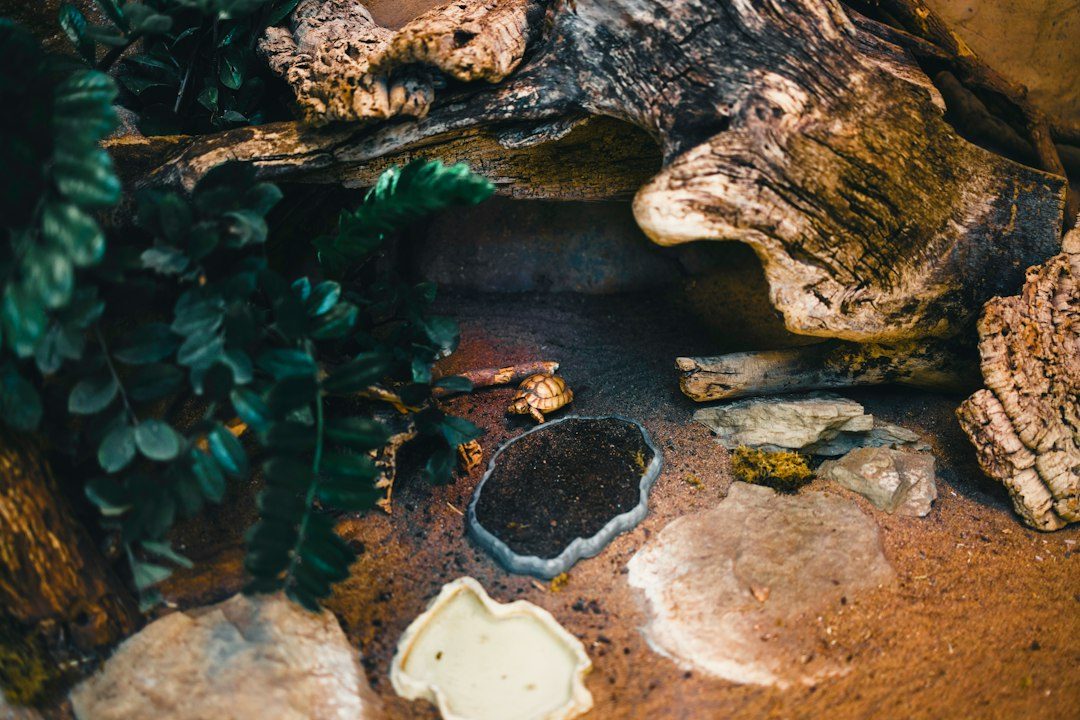
Reptile tank decor can double as shelter when used thoughtfully. Cork bark flats, half logs, caves, dense artificial foliage, and rock-style hides can all create privacy. The best designs combine security with easy maintenance, because the healthiest habitat is both enriching and cleanable.
Substrate, flooring, and drainage affect hygiene and behavior
Substrate is one of the most debated accessories for reptile tank setups, and for good reason. It influences humidity, odor control, digging behavior, foot health, cleaning routines, and potential ingestion risk. The “best” substrate depends heavily on the species and the keeper’s ability to maintain it correctly.
Paper towels, reptile carpet alternatives, tile, soil-based mixes, sand blends, bark, coconut fiber, and bioactive substrates each have advantages and limitations. For quarantine periods, medical monitoring, or brand-new keepers learning an animal’s habits, simple disposable substrate can make waste, mites, regurgitation, or abnormal stools easier to detect. For established animals with digging or humidity needs, a naturalistic substrate may offer better enrichment when properly maintained.
Loose substrate is not automatically bad, and solid substrate is not automatically ideal. The important question is whether the material supports the reptile’s physiology while remaining clean, safe, and manageable. For example, a humidity-loving species may struggle on a dry, dusty floor, while an arid species may not thrive in constantly damp bedding.
Practical substrate considerations
- Moisture: Does the substrate hold humidity or dry quickly?
- Dust: Fine particles can irritate eyes and airways.
- Digestive risk: Feeding practices and animal health affect accidental ingestion concerns.
- Cleaning method: Spot cleaning, full changes, or bioactive maintenance all require different habits.
- Burrowing value: Some reptiles benefit from enough depth to dig or create shallow scrapes.
- Traction: Smooth flooring may be easy to clean but inadequate for some species’ movement.
If you are unsure, begin conservatively and upgrade as your confidence grows. Responsible reptile care often evolves in stages, and there is no shame in choosing a simpler setup while you learn.
How should I choose reptile tank decor?
Choose reptile tank decor that improves security, movement, enrichment, and environmental control rather than simply filling empty space. Safe decor should be non-toxic, stable, washable or replaceable, free from sharp edges, and scaled appropriately so your reptile can use it without becoming stuck, crushed, or exposed to unsafe heat.
Decor is not just interior design for animal lovers, though I admit a well-planted terrarium is a tiny masterpiece. In a functional enclosure, decor creates microclimates and behavioral opportunities. A branch near a basking zone, a shaded plant cluster near a hide, or a cork tube along the back wall can make the tank feel larger and more usable.
Clutter is often beneficial when it is organized. Many reptiles prefer moving through partial cover rather than crossing open ground. Visual barriers can reduce stress because the animal does not feel watched from every angle. For prey species in particular, an empty tank may be easier for humans to inspect but less comfortable for the animal living inside it.
Safe decor options
- Cork bark: Lightweight, textured, and useful for hides, climbing, and visual cover.
- Branches and vines: Helpful for arboreal and semi-arboreal species when securely anchored.
- Artificial plants: Low-maintenance cover, especially in enclosures where live plants struggle.
- Live plants: Attractive and enriching when non-toxic, pesticide-free, and compatible with humidity and lighting.
- Rocks and slate: Useful for basking surfaces if stable and not overheated.
- Backgrounds: Increase privacy and can support climbing in suitable designs.
- Tunnels and tubes: Provide exploration paths and concealed resting spots.
Before placing any heavy accessory in the enclosure, test whether it can shift, roll, or collapse. Reptiles are surprisingly talented at wedging themselves into precarious places. Secure heavy items directly on the tank floor before adding loose substrate, especially for animals that dig.

Feeding and hydration accessories support daily care
Food and water accessories should make husbandry easier while protecting the reptile from contamination and injury. A water dish should be easy to remove, clean, and refill. It should also fit the species: some reptiles soak, some drink droplets from leaves, and some may ignore standing water unless the environment encourages natural drinking behavior.
Feeding dishes can help contain insects, greens, pellets, or prepared diets, depending on the animal. Smooth-sided bowls may reduce insect escape, while shallow dishes allow smaller reptiles to access food without awkward climbing. For snakes and some lizards, feeding tongs can reduce accidental bites and keep your hands out of the strike zone.
Hydration is broader than the water bowl. Misting bottles, drippers, foggers, and automatic misting systems may be useful for certain tropical or arboreal species, but they should not create stagnant, poorly ventilated conditions. Moisture without airflow can become a husbandry problem rather quickly.
Feeding and hydration tools to consider
- Water bowl sized for drinking or soaking, depending on species.
- Food dish that prevents tipping and is easy to sanitize.
- Feeding tongs for insects, thawed prey, or messy foods.
- Misting bottle for manual humidity support.
- Dripper or automatic mister for species that drink from surfaces.
- Dedicated measuring spoon or cup for prepared diets and supplements.
- Separate container or routine for thawing frozen prey safely, if relevant.
Keep bowls away from areas where waste commonly accumulates. Also avoid placing water directly under intense heat unless increased evaporation is intentional and monitored. Small placement decisions can change humidity, cleanliness, and your daily workload.
Cleaning and maintenance accessories prevent small problems from growing
A reptile enclosure can look tidy while still harboring waste, spoiled food, mineral buildup, or shed fragments. Cleaning accessories are not glamorous, but they protect your pet and keep the habitat pleasant for everyone in the home. Consistency matters more than perfection.
At minimum, keep a reptile-safe disinfectant, waste scoop, spare bowls, paper towels, soft brushes, and dedicated cleaning supplies that are never used for human dishes. Avoid strong fumes, residues, and cleaners not intended for animal environments. After disinfecting, rinse and dry items according to product directions before returning them to the enclosure.
A maintenance routine should include daily checks, weekly attention, and deeper cleaning as needed. Bioactive habitats may require different management because beneficial organisms help process waste, but bioactive does not mean maintenance-free. Even the most elegant ecosystem needs observation.
Simple maintenance schedule
- Daily: Check temperature, humidity, water, waste, uneaten food, and animal behavior.
- Several times per week: Spot clean substrate, rinse bowls, remove shed fragments, and inspect decor stability.
- Weekly or as needed: Clean glass, wipe high-contact surfaces, refresh humid hides, and inspect electrical equipment.
- Periodically: Replace worn accessories, deep clean removable decor, review bulb age, and reassess enclosure layout as the reptile grows.
This routine turns care into a habit rather than a rescue mission. Reptiles often hide illness well, so a predictable maintenance pattern helps you notice subtle changes sooner.
Accessories should match species, size, and life stage
The most common beginner mistake is buying accessories before understanding the animal’s adult size, climate needs, and behavior. A juvenile setup may work for a few months and then become cramped, unstable, or under-equipped. Planning ahead saves money and prevents stressful redesigns.
Arboreal reptiles need vertical space, branches, vines, elevated hides, and foliage. Terrestrial reptiles need ground-level hides, stable basking surfaces, and floor space. Burrowing species may need deeper substrate, while basking species may need carefully positioned heat and UVB access. Semi-aquatic species introduce another layer of filtration, water depth, ramps, and dry basking zones.
When comparing accessories for reptile tank upgrades, ask what problem each item solves. Does it help the animal climb, hide, digest, hydrate, shed, bask, forage, or feel secure? If the answer is only “it looks cute,” it may still be acceptable, but it should not displace a functional accessory.
Questions to ask before buying
- Is this accessory appropriate for my reptile’s species and adult size?
- Can I clean or replace it without dismantling the entire habitat?
- Could it trap toes, tails, heads, claws, or feeder insects?
- Will it melt, mold, splinter, rust, or leach dye under heat and humidity?
- Does it interfere with ventilation, UVB, temperature gradients, or visibility?
- Can the reptile knock it over, climb behind it, or wedge underneath it?
A good enclosure is not necessarily the most expensive one. It is the one where every object has been chosen with the animal’s real behavior in mind.
Common accessory mistakes to avoid
Many reptile care problems begin with well-intentioned purchases. New keepers often buy a starter kit and assume every included item is automatically suitable. Starter kits can be convenient, but they may still require upgrades in heating, lighting, measurement tools, substrate, or enclosure size.
Another common issue is overdecorating without securing items. A branch that shifts under weight, a rock placed on loose substrate, or a suction-cup plant that drops repeatedly can create unnecessary risk. Always test the habitat from the perspective of a climbing, digging, squeezing, persistent little escape artist.
Avoid relying on analog gauges alone, especially the inexpensive stick-on type. They can provide a rough impression, but precise husbandry usually requires digital tools. Also be cautious with heat rocks, adhesive products inside warm enclosures, dyed materials, fragrant woods, and anything marketed more for novelty than animal welfare.
Finally, do not copy another keeper’s setup without context. A beautiful online enclosure may be designed for a different species, age, climate, room temperature, or maintenance style. Inspiration is useful; imitation without analysis is risky.
A practical starter setup order
If your budget is limited, buy in order of biological importance. Your reptile will benefit more from correct temperatures and secure hides than from elaborate scenery. Once the essentials are stable, you can add enrichment gradually.
- Environmental control: Heat source, thermostat, lighting, thermometer, hygrometer, and timer.
- Security and basic function: Hides, water dish, safe substrate, and feeding tools.
- Species-specific structure: Branches, ledges, basking rocks, burrowing depth, plants, or humidity systems.
- Maintenance tools: Disinfectant, scoop, spare bowls, brushes, and dedicated cleaning supplies.
- Enrichment and aesthetics: Additional reptile tank decor, backgrounds, tunnels, and seasonal layout refinements.
This order keeps your priorities clear. The goal is not to create a museum display on day one; it is to create a stable, safe habitat your reptile can actually use.
Final takeaway
The best reptile tank accessories are the ones that make the enclosure safer, more stable, and more behaviorally rich. Start with temperature control, accurate monitoring, hides, substrate, hydration, lighting, and cleanable furnishings, then build outward with decor that supports climbing, cover, basking, digging, or exploration.
As The Pet Expert, my favorite setups are not simply the prettiest ones; they are the habitats where beauty and biology cooperate. Choose every accessory with your reptile’s species, size, and natural behavior in mind, and your tank will become more than a container. It will become a carefully designed home where your scaled companion can settle in, thrive, and show you the fascinating little routines that make reptile keeping so rewarding.

Written by Talis Us




Leave a comment
This site is protected by hCaptcha and the hCaptcha Privacy Policy and Terms of Service apply.