


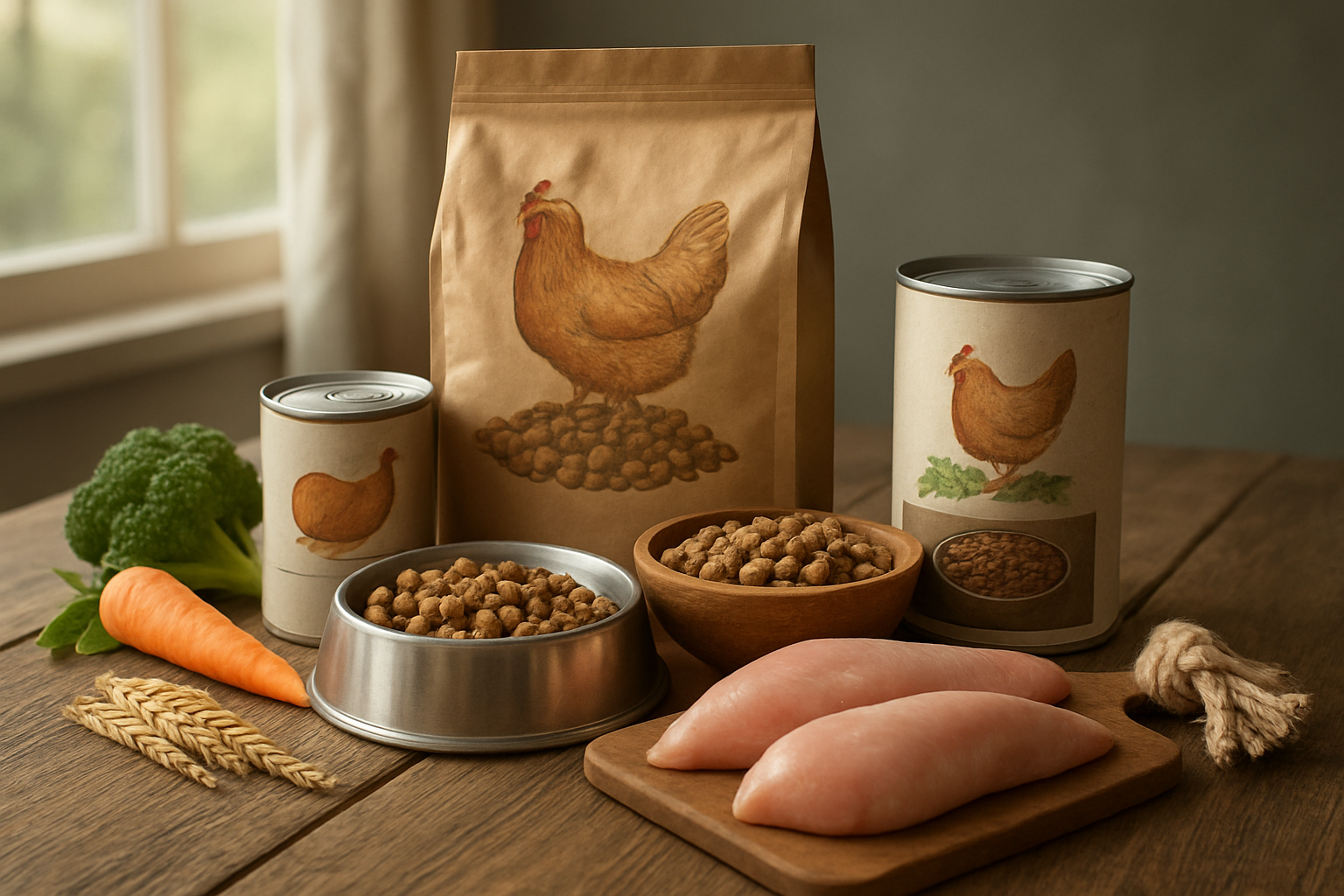
Introduction
If your dog shows digestive upset or food sensitivities, choosing a natural diet that prioritizes simple, high-quality ingredients can reduce symptoms and simplify feeding. This guide highlights key qualities to look for in natural dog food for sensitive stomachs, compares limited-ingredient kibbles to one-ingredient canned and other wet options, explains when a single-ingredient chicken can be useful, and gives a clear, safe transition plan plus a compact buying checklist to help you choose with confidence.
Key qualities of natural dog food for sensitive stomachs
The best natural dog food for sensitive stomachs prioritizes simple, traceable ingredients and predictable digestibility so you can evaluate cause and effect quickly. Look for a short ingredient list with whole-food sources of protein and limited additives; these features reduce the number of potential irritants and make it easier to identify what helps or harms your dog.
Focus first on protein sourcing and processing. A single, named animal protein (for example, chicken) listed first helps you match food to known tolerances. Canned one-ingredient options provide moisture and minimal processing steps, which many owners find easier to quantify when monitoring symptoms. Use cases: an elimination trial, a dog with intermittent loose stool, or a pet that reacts to multiple kibble blends—all benefit from foods where the input is obvious and consistent.
- Clear, short ingredient list — fewer than 10 items, with named proteins and no ambiguous “meat meals.”
- Minimal non-nutritive additives — avoid unnecessary colors, flavors, or complex preservatives.
- Appropriate format for the dog — wet (canned) for added moisture and easier digestion, dry if your dog tolerates it and portion control is important.
- Predictable sourcing — single-source protein or limited ingredients to simplify elimination testing.
Assess trade-offs before you buy. Single-ingredient canned foods simplify ingredient tracking but may be more costly per meal and require refrigeration after opening. Limited-ingredient kibbles can offer convenience and caloric density yet introduce more processing steps and binders that some sensitive dogs cannot tolerate. Decide by matching product form to the real-world constraints: feeding frequency, storage, weight-management needs, and whether you need a formula for short-term elimination versus long-term maintenance.
Practical decision rules help: if digestive issues are new or intermittent, start with a single-ingredient canned option and monitor for two weeks; if problems persist, consult your veterinarian before changing formulas again. For owners considering specific products, keep an example in mind: Against the Grain Nothing Else One Ingredient Chicken Dog Food 11-oz, case of 12 is a canned, one-ingredient option that fits the simple-ingredient approach. Use such products when you need a clean baseline for testing or when a high-moisture, single-protein meal is appropriate.
How single-ingredient canned foods support digestive health
Single-ingredient canned dog foods support digestive health by reducing the number of potential dietary triggers and providing a high-moisture, easily digestible protein source. For dogs with sensitive stomachs, that simplified ingredient profile makes it easier to identify what works and what causes symptoms while also improving palatability and hydration compared with dry kibble.
In practical terms, these cans are most useful as diagnostic and short-term feeding options. Use them when you suspect a specific protein or additive is the cause of loose stool or repeated vomiting, or when you need a bland, high-moisture meal that’s gentle on digestion. They can also serve as a topper to encourage eating or to increase daily water intake without adding complex ingredients.
- Elimination clarity: one identifiable protein reduces confounding ingredients during trials.
- Hydration and texture: wet food eases digestion and can be gentler for dogs with decreased appetite.
- Versatile use-cases: suitable as a temporary sole diet, a transitional topper, or a treat replacement during sensitive periods.
Evaluate fit by matching the single ingredient to your dog’s suspected sensitivities and life stage. If your dog tolerates a single protein well, that material can be used to narrow choices in a longer-term diet. Consider practicality: canned food increases feeding frequency and refrigerated storage after opening, and buying in cases can improve availability when you need consistency.
Decision rules to apply at purchase: prioritize an exactly named protein, confirm the product form (canned) matches your feeding needs, and plan for how long you will use it—short-term elimination versus long-term feeding requires different nutritional considerations. If uncertainty remains, consult your veterinarian before making a single-ingredient diet the primary long-term option for a dog with ongoing gastrointestinal issues.
Compare one-ingredient cans, limited-ingredient kibbles, and wet formulas
For sensitive stomachs there is no universal “best” product; the optimal choice depends on the individual dog’s trigger ingredients, texture tolerance, and feeding routine. One-ingredient canned foods excel when simplicity and minimal ingredient exposure matter, limited-ingredient kibbles offer convenience with controlled formulations, and wet formulas (including single-ingredient cans) can improve palatability and hydration—each has distinct trade-offs to weigh against your dog’s needs.
Make the decision by matching product attributes to concrete use cases rather than hype. Consider these rules of thumb when evaluating the three formats:
- Limited-ingredient kibbles: best when you need the convenience and portion control of dry food but must restrict ingredient variety. Choose formulas with a single novel protein and minimal additives if a suspected intolerance exists.
- Wet formulas (multi-ingredient wet diets): useful for fussy eaters or dogs needing more moisture intake; weigh palatability gains against the potential for additional ingredients that might provoke sensitivities.

Apply practical filters when choosing: ingredient transparency, protein source history, and how the format fits daily feeding. For example, a multi-dog household with one sensitive dog may favor a limited-ingredient kibble for main meals and reserve one-ingredient cans as a controlled topper to diagnose reactions. Conversely, an individual dog with confirmed protein sensitivity who also refuses dry food may do best on single-protein wet cans.
Finally, prioritize actionable checks before purchase: confirm the manufacturer’s ingredient declaration, consider single-protein options to reduce exposure, and ask whether the wet or dry format matches your feeding schedule and storage capacity. If uncertainty remains about which format aligns with ongoing symptoms, consult your veterinarian for tailored guidance—especially before making diet changes for medical reasons.
When to consider Against the Grain one-ingredient chicken
Use cases where a one-ingredient canned product makes practical sense include short-term testing of food sensitivities, temporary replacement of a meal to calm ingredient overload, or as a topper to improve palatability for a picky dog. The format—an 11-oz can sold as a case of 12—also suits owners who prefer to stock a consistent, single-protein option without frequent reordering.
Evaluate trade-offs before committing. Single-ingredient canned foods simplify ingredient lists but may lack balanced micronutrient profiles when used as a sole long-term diet unless labeled as complete and balanced; verify completeness elsewhere. Canned protein typically costs more per feeding than bulk kibble and requires refrigeration after opening. Those are practical constraints to weigh against the benefits of ingredient simplicity.
- Decision rule: start single-protein cans when suspected ingredient triggers are limited to protein or when other foods have multiple unknowns.
- Stocking rule: choose case sizes like an 11-oz, case of 12 if you want consistency and fewer shopping trips.
- Mixing rule: use a one-ingredient can as a topper or part of rotation—avoid relying on it exclusively unless the product is confirmed complete for daily feeding.
- Timing rule: pick a one-ingredient canned option for short-term troubleshooting or supplemental feeding rather than immediate long-term prescription replacement.
When comparing options, match the decision to your goal: diagnostic clarity, short-term digestive simplicity, or improved palatability. For diagnostic or elimination trials, the benefits of one-ingredient canned dog food are clarity and control; for budget-conscious, long-term feeding, weigh cost and nutritional completeness. Consult your veterinarian when symptoms are persistent or severe rather than assuming food alone is the cause.
How to transition foods safely for sensitive dogs
Answer: transition slowly and predictably — start with a small proportion of the new food and increase gradually over days to weeks while closely monitoring stool, appetite, and energy. For sensitive dogs a conservative plan reduces the risk of digestive upset and gives you objective signals to slow or pause the change.
- Sample 10‑day schedule: Days 1–2 = 10% new / 90% old; Days 3–4 = 25% new; Days 5–7 = 50% new; Days 8–9 = 75% new; Day 10 = 100% new.
- Slower option: increase new food by 10% every 3–4 days for dogs that historically react to change.
- Monitor: check stool consistency, frequency, vomiting, appetite, and activity each day; log any changes for quick decisions.
- Action rules: if mild loose stool appears, hold at the previous tolerated ratio for 48–72 hours; if vomiting or blood appears, stop the transition and consult your veterinarian immediately.
Use practical techniques to reduce stress: warm canned food slightly to increase palatability, offer smaller more frequent meals during transition, and consider using the new food as a topper before increasing its share. Apply simple math to ration changes — e.g., for a dog eating 400 kcal/day, 10% = 40 kcal; weigh portions rather than eyeballing. If you test for food sensitivity, allow at least 2–4 weeks at full feed to judge longer‑term tolerance, but expect early signals (good or bad) within the first week.
Finally, keep the process objective and flexible. Track measurable signs, be ready to slow the timeline, and avoid abruptly switching back and forth. When in doubt — persistent diarrhea, weight loss, or ongoing vomiting — stop the trial and seek veterinary guidance before continuing.
Buying checklist: ingredients, feeding amounts, and storage tips
Answer: prioritize transparency in ingredients, a clear feeding-calculation method, and safe storage practices. For sensitive stomachs, look for single, named proteins and minimal additives; determine daily portions by calculating your dog’s energy needs and converting that to cans or grams; and store unopened cans in a cool, dry place and opened cans in sealed containers in the refrigerator. These three checks together tell you whether a product is practical, economical, and suitable for long-term use.
Feeding amounts and storage — concrete rules. Use a calorie-based approach as your primary method: calculate Resting Energy Requirement (RER) with RER = 30 × body weight (kg) + 70, then multiply by an activity factor (typical adult factors range from ~1.2 for sedentary to ~1.6 for active). Translate calories-per-day into cans using the kcal listed on the product label; if kcal-per-can isn’t available, start with a conservative portion and adjust for weight and stool consistency. Storage rules: keep unopened cans in a cool, dry place; once opened, transfer leftovers to an airtight container, refrigerate promptly, and use within a few days (commonly 3–5). Never leave opened wet food out at room temperature for extended periods; discard any food exposed to heat or pests.
- Quick ingredient checklist: single named protein, no artificial additives, minimal unfamiliar fillers.
- Feeding rule-of-thumb: compute RER → apply activity multiplier → divide by kcal-per-can to get cans/day.
- Adjustment signal: monitor weight, stool quality, and energy; reduce or increase portions gradually and consult your vet for persistent changes.
- Storage essentials: unopened in a cool dry space; opened sealed container in fridge; label with date and use within a few days.
FAQ
How do I choose a natural dog food for a sensitive stomach?
Look for short, recognizable ingredient lists and limited-ingredient formulas that prioritize a single protein and easily digestible carbohydrates. Consider novel or single proteins during elimination trials; single-ingredient canned options (for example: Against the Grain Nothing Else One Ingredient Chicken Dog Food 11-oz, case of 12) can simplify the process. Always check for artificial fillers or additives you want to avoid.
Which ingredients commonly trigger sensitive stomachs in dogs?
Common triggers include dairy, wheat, soy, corn, and some red meats, as well as artificial colors, flavors, and preservatives. High-fat meals and spicy seasonings can also cause upset. Reading labels and choosing limited-ingredient or novel-protein formulas helps identify and remove potential culprits while monitoring your pet’s response.
How should I transition my dog to a new natural diet to avoid stomach upset?
Switch gradually over 7–10 days by mixing increasing proportions of the new food with the old food. Offer smaller, more frequent meals if your dog is prone to vomiting or diarrhea, and monitor stool consistency and appetite closely. Slow transitions reduce risk of flare-ups and help you spot whether the new diet is helping.
When should I consult my veterinarian about a sensitive stomach?
If vomiting, persistent diarrhea, weight loss, blood in stool, or reduced appetite continue despite dietary changes, contact your veterinarian. Rapid or severe symptoms, prolonged discomfort, or lack of improvement after an elimination trial warrant professional assessment and possible testing to rule out underlying medical issues.
Conclusion
For dogs with sensitive stomachs, prioritize simple, limited-ingredient natural foods with digestible proteins and minimal additives. Transition slowly, monitor stool and behavior, and use single-ingredient options for elimination trials when needed. If symptoms persist or worsen, consult your veterinarian to rule out medical causes and get a tailored feeding plan.




Leave a comment
This site is protected by hCaptcha and the hCaptcha Privacy Policy and Terms of Service apply.