


Top 10 Best Bird Toys for Mental Stimulation
Understanding the Importance of Mental Stimulation for Pet Birds
Avian companions possess remarkable cognitive abilities that require consistent engagement to maintain optimal psychological well-being. Mental stimulation serves as the cornerstone of comprehensive bird care, preventing the development of deleterious behaviors such as feather plucking, excessive vocalization, and stereotypic movements. Without proper enrichment, these intelligent creatures can experience profound psychological distress.
Wild birds spend approximately 60-80% of their waking hours foraging, problem-solving, and navigating complex environmental challenges. Domesticated birds retain these same neurological imperatives, making mental stimulation not merely beneficial but absolutely essential for their thriving existence.
Signs Your Bird Needs More Mental Enrichment
Recognizing the subtle indicators of understimulation enables proactive intervention before problematic behaviors become entrenched. Repetitive pacing along perches, excessive screaming during specific times, and self-mutilating behaviors often signal inadequate cognitive engagement. Additionally, lethargic behavior, decreased appetite, and withdrawal from social interaction frequently indicate mental stagnation.
Progressive feather destruction, particularly around the chest and wings, represents one of the most concerning manifestations of psychological distress. These behaviors typically emerge gradually, making early identification crucial for successful intervention.
Types of Mental Stimulation Toys for Birds
Effective avian enrichment encompasses multiple categories of cognitive challenges, each targeting different aspects of natural behavior. Foraging toys replicate the complexity of wild food acquisition, while puzzle toys engage problem-solving capabilities. Destructible toys satisfy the innate need for material manipulation, and interactive toys promote social engagement.
Foraging and Food-Dispensing Toys
These sophisticated devices transform routine feeding into engaging challenges that mirror natural behaviors. Foraging toys require birds to manipulate various mechanisms to access rewards, stimulating both physical dexterity and cognitive processing. The unpredictability of these devices maintains sustained interest while preventing habituation.
Multi-compartment feeders with sliding panels, rotating chambers, and hidden compartments provide varying difficulty levels. These toys effectively extend feeding duration, reducing boredom while promoting natural foraging instincts.
Puzzle and Problem-Solving Toys
Sophisticated puzzle mechanisms challenge avian intelligence through sequential problem-solving requirements. These toys typically incorporate multiple steps, requiring birds to complete specific actions in predetermined sequences to achieve desired outcomes. The cognitive load imposed by these challenges promotes neuroplasticity and mental acuity.
Top 10 Best Bird Toys for Mental Stimulation
1. Multi-Chamber Foraging Wheels
These rotating dispensers feature multiple compartments that require specific manipulations to access treats. The unpredictable reward schedule maintains engagement while developing problem-solving skills. Durable construction withstands aggressive manipulation, ensuring longevity even with larger parrot species.
2. Acrylic Puzzle Feeders with Sliding Mechanisms
Transparent construction allows visual assessment of contents while requiring complex manipulations for access. Multiple sliding panels create varying difficulty levels, accommodating different skill levels and preventing habituation. The clear materials facilitate easy cleaning and maintenance.
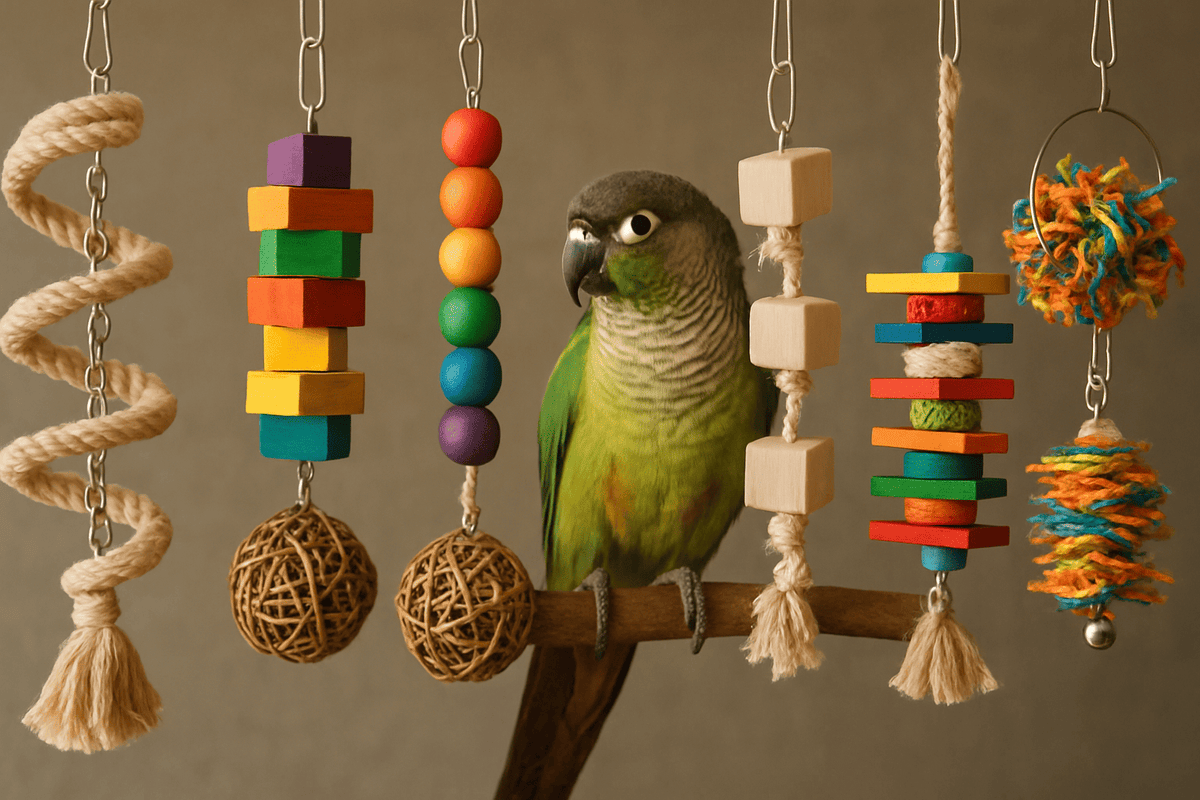
3. Natural Wood Shredding Stations
These destructible toys satisfy the fundamental need for material manipulation while providing extended engagement periods. Layered construction with multiple textures and densities creates varying destruction experiences. Replaceable components ensure cost-effective long-term use.
"The most effective bird toys combine multiple enrichment categories, providing sustained cognitive challenges that evolve as your bird develops problem-solving strategies."
4. Interactive Bell and Chain Assemblies
Complex arrangements of bells, chains, and manipulable components create dynamic play experiences. The auditory feedback reinforces engagement while developing coordination skills. Varied textures and materials provide tactile stimulation alongside cognitive challenges.
5. Treat-Dispensing Ball Systems
Spherical dispensers with adjustable difficulty settings accommodate different species and skill levels. Internal mechanisms require specific manipulations to release rewards, promoting sustained engagement. Durable construction withstands enthusiastic play while maintaining functionality.
6. Rope and Knot Climbing Structures
These three-dimensional challenges combine physical exercise with cognitive engagement through complex navigation requirements. Varying rope thicknesses and knot configurations create diverse climbing experiences. Natural fiber construction provides safe destruction opportunities.
7. Mirror-Based Puzzle Combinations
Reflective surfaces integrated with manipulable components create multifaceted engagement opportunities. The visual stimulation combines with physical challenges to provide comprehensive enrichment. Adjustable configurations maintain novelty over extended periods.
8. Stainless Steel Foraging Containers
Hygienic metal construction ensures easy sanitization while providing durable manipulation surfaces. Multiple access points with varying difficulty levels accommodate different beak sizes and strengths. The indestructible nature makes these ideal for powerful chewers.
9. Bamboo and Natural Fiber Weaving Toys
Intricate woven patterns provide extended destruction opportunities while satisfying natural shredding instincts. The layered construction reveals different textures and materials as destruction progresses. Completely safe for consumption, these toys offer guilt-free destruction.
10. Electronic Motion-Activated Toys
Advanced toys incorporating sensors and automated responses provide dynamic interaction experiences. Motion detection triggers various responses, maintaining unpredictability and sustained interest. Battery-operated mechanisms ensure consistent functionality without external power requirements.
Safety Considerations When Choosing Bird Toys
Material safety represents the paramount concern when selecting avian enrichment devices. Toxic substances, inappropriate hardware, and poorly designed mechanisms can pose serious health risks. Galvanized metals, lead-containing materials, and certain synthetic dyes should be completely avoided.
Size appropriateness ensures safe interaction while preventing accidental ingestion of components. Hardware spacing must accommodate beak dimensions without creating entrapment risks. Regular inspection protocols help identify wear patterns that might compromise safety.
| Safety Factor | Considerations | Red Flags |
|---|---|---|
| Materials | Stainless steel, natural wood, food-grade plastics | Galvanized metal, lead paint, toxic dyes |
| Hardware | Appropriate spacing, secure connections | Sharp edges, loose components, rust |
| Design | Species-appropriate sizing, escape routes | Entrapment risks, pinch points |
How to Introduce New Toys to Your Bird
Gradual introduction protocols prevent neophobic responses that might cause toy rejection. Initial placement outside the immediate cage environment allows visual familiarization without territorial concerns. Progressive movement closer to primary perching areas facilitates acceptance.
Positive associations through treat placement near new toys accelerate acceptance rates. Modeling behaviors through owner interaction demonstrates safety and encourages exploration. Patience during the acclimation period ensures successful integration.
Maintaining and Rotating Bird Toys for Optimal Engagement
Regular rotation schedules prevent habituation while maintaining sustained interest in enrichment devices. Weekly exchanges of 2-3 toys maintain environmental novelty without overwhelming sensitive individuals. Strategic storage of rotated toys preserves their novelty value for future reintroduction.
Cleaning protocols ensure hygienic conditions while preserving toy integrity. Appropriate sanitization methods vary by material composition, requiring material-specific approaches. Regular inspection during cleaning identifies wear patterns requiring attention.
Frequently Asked Questions About Bird Toy Selection
How many toys should be in my bird's cage simultaneously? Most experts recommend 3-4 toys maximum to prevent overcrowding while providing adequate stimulation. Excessive toy density can create stress and reduce effectiveness.
Can homemade toys provide adequate mental stimulation? Properly designed homemade enrichment can be highly effective, provided safety protocols are followed. Natural materials like untreated wood and safe papers offer excellent options for creative owners.
How do I know if a toy is too advanced for my bird? Frustration behaviors such as aggressive attacking or complete avoidance indicate inappropriate difficulty levels. Gradual complexity increases allow skill development without overwhelming cognitive capacity.

Written by Talis Us


Leave a comment
This site is protected by hCaptcha and the hCaptcha Privacy Policy and Terms of Service apply.