


The Ultimate Guide to Choosing the Best Substrates for Terrariums
When you're setting up a terrarium, one of the most important decisions you'll make is choosing the right substrate. I know it might seem like just dirt, but trust me, the substrate you pick can make or break your terrarium ecosystem. It affects everything from drainage and moisture retention to the health of your plants and animals. Let me walk you through everything you need to know about terrarium substrates so you can create the perfect environment for whatever you're growing or keeping.
Understanding What Substrate Really Does
Before we dive into the different types of substrates available, let's talk about why substrate matters so much. Your substrate isn't just there to look pretty or fill up space in your terrarium. It's actually doing a ton of important work behind the scenes.
The Role of Drainage
One of the most critical functions of substrate is drainage. If water sits on top of your substrate and doesn't drain properly, you're going to end up with a swampy mess that promotes mold, mildew, and root rot. Nobody wants that. Good drainage means water moves through the substrate efficiently, preventing waterlogging while still allowing the substrate to retain enough moisture for your plants to access.
Moisture Retention
On the flip side, you also need your substrate to hold onto some moisture. Plants need water to survive, and if your substrate drains too quickly, your plants will dry out between waterings. It's all about finding that sweet spot where water drains well enough to prevent problems but is retained well enough to keep your plants hydrated.
Nutrient Content
Different substrates provide different nutrients to your plants. Some substrates are nutrient-rich and can support plant growth on their own, while others are relatively inert and require you to add fertilizers. Understanding the nutrient profile of your chosen substrate helps you determine whether you need to supplement with additional nutrients.
Support and Structure
Your substrate needs to physically support your plants and any animals living in your terrarium. It should be stable enough that plants don't topple over and that burrowing animals can create tunnels without everything collapsing.
pH Balance
Different plants and animals prefer different pH levels. Some substrates are naturally acidic, while others are neutral or slightly alkaline. Knowing the pH of your substrate helps you choose plants and animals that will thrive in your terrarium.
Popular Substrate Options for Terrariums
Now that you understand what substrate does, let's explore the different options available. Each type has its own advantages and disadvantages, and the best choice depends on what you're trying to create.
Potting Soil
Potting soil is probably the most common substrate choice for plant-based terrariums, and for good reason. It's readily available, affordable, and works well for most plants. Potting soil is typically a mix of peat moss, coconut coir, perlite, and other ingredients that create a light, well-draining medium.
The main advantage of potting soil is that it's already formulated to support plant growth. It contains nutrients and has a good balance of drainage and moisture retention. You can find potting soil at any garden center or online, and it comes in various formulations for different plant types.
However, potting soil isn't perfect. Some formulations can be too dense and retain too much moisture, which can lead to root rot in closed terrariums. You might need to amend it with additional perlite or orchid bark to improve drainage. Also, potting soil can compact over time, which reduces drainage and aeration.
Coconut Coir
Coconut coir is becoming increasingly popular as a substrate component and standalone option. It's made from the fibrous husk of coconuts and is a sustainable alternative to peat moss. Coconut coir holds moisture well, drains reasonably, and is relatively lightweight.
One of the best things about coconut coir is that it's environmentally friendly. Peat moss extraction damages peatlands, which are important ecosystems. Coconut coir is a renewable resource that uses agricultural waste. If you're concerned about your environmental impact, coconut coir is a great choice.
Coconut coir does have some drawbacks. It's less nutrient-rich than potting soil, so you might need to add fertilizers. It also tends to be more expensive than regular potting soil. Additionally, some coconut coir products can be quite dense, so you might need to fluff it up or mix it with other materials to improve drainage.
Peat Moss
Peat moss has been used in terrariums for decades. It's light, fluffy, and holds moisture well. It's also relatively inexpensive and widely available. Peat moss is great for plants that like acidic conditions, like carnivorous plants and some orchids.
The problem with peat moss is the environmental issue. Peatlands are critical carbon sinks and wildlife habitats. Harvesting peat moss damages these ecosystems and contributes to climate change. Many gardeners are moving away from peat moss for this reason, but it's still a viable option if you're willing to accept the environmental cost.
Orchid Bark
Orchid bark is made from shredded tree bark and is commonly used in orchid cultivation. It's chunky, provides excellent drainage, and allows for good air circulation around plant roots. If you're growing orchids or other plants that prefer well-draining conditions, orchid bark is an excellent choice.
The downside of orchid bark is that it doesn't retain much moisture, so you'll need to water more frequently. It also doesn't provide many nutrients, so you'll likely need to fertilize regularly. Additionally, orchid bark can be more expensive than other substrate options.
Sphagnum Moss
Sphagnum moss is a living moss that can be used as a substrate component. It's excellent for moisture retention and creates a natural, attractive appearance in terrariums. Sphagnum moss is particularly good for plants that like humid conditions, like ferns and tropical plants.
The challenge with sphagnum moss is that it needs to stay moist to stay alive. If it dries out, it can be difficult to rehydrate. It's also more expensive than many other substrate options. Additionally, sphagnum moss can become compacted over time, reducing its effectiveness.
Perlite and Vermiculite
Perlite and vermiculite are mineral-based amendments that improve drainage and aeration. Perlite is volcanic glass that's been heated until it pops, creating a light, airy material. Vermiculite is a mineral that expands when heated, creating a spongy material that holds moisture.
These materials are rarely used as standalone substrates. Instead, they're mixed with other substrates to improve their properties. Perlite improves drainage, while vermiculite improves moisture retention. Most commercial potting soils already contain these materials, but you can add more if you need to adjust the drainage or moisture retention of your substrate mix.
Activated Charcoal
Activated charcoal is often used as a layer in terrariums, particularly in closed terrariums. It helps filter the air and prevent odors and mold. While it's not a substrate in the traditional sense, it's an important component of many terrarium setups.
Activated charcoal should be placed in a thin layer above your drainage layer and below your main substrate. It helps keep your terrarium fresh and healthy, especially in closed systems where air circulation is limited.
Sand and Gravel
Sand and gravel are sometimes used in terrariums, particularly for desert terrariums or terrariums housing reptiles and amphibians. They provide excellent drainage and are easy to clean. However, they don't retain moisture well and provide no nutrients.
If you're using sand or gravel, you'll likely need to water more frequently and fertilize regularly. These materials are best used in combination with other substrates rather than as standalone options.
Substrate Mixes for Different Terrarium Types
Different types of terrariums require different substrate compositions. Let me break down some popular combinations for various terrarium styles.
Tropical Rainforest Terrariums
For a tropical rainforest terrarium, you want a substrate that retains moisture while still providing good drainage. A great mix would be equal parts potting soil, coconut coir, and orchid bark. This combination provides nutrients, moisture retention, and drainage. You can also add some sphagnum moss on top for a natural look and additional moisture retention.
Some people like to add a layer of activated charcoal and then a drainage layer of small pebbles or gravel at the bottom of their terrarium before adding the main substrate. This helps prevent water from pooling at the bottom and causing root rot.
Desert Terrariums
Desert terrariums need substrate that drains quickly and doesn't retain much moisture. A good mix would be two parts sand or gravel, one part potting soil, and one part perlite. This creates a well-draining medium that mimics desert conditions. You might also want to add some larger rocks or pieces of wood for visual interest and to provide shelter for any animals living in the terrarium.
Some people use specialized cactus and succulent soil, which is formulated specifically for plants that prefer dry conditions. This can be a good option if you don't want to mix your own substrate.
Moss Terrariums
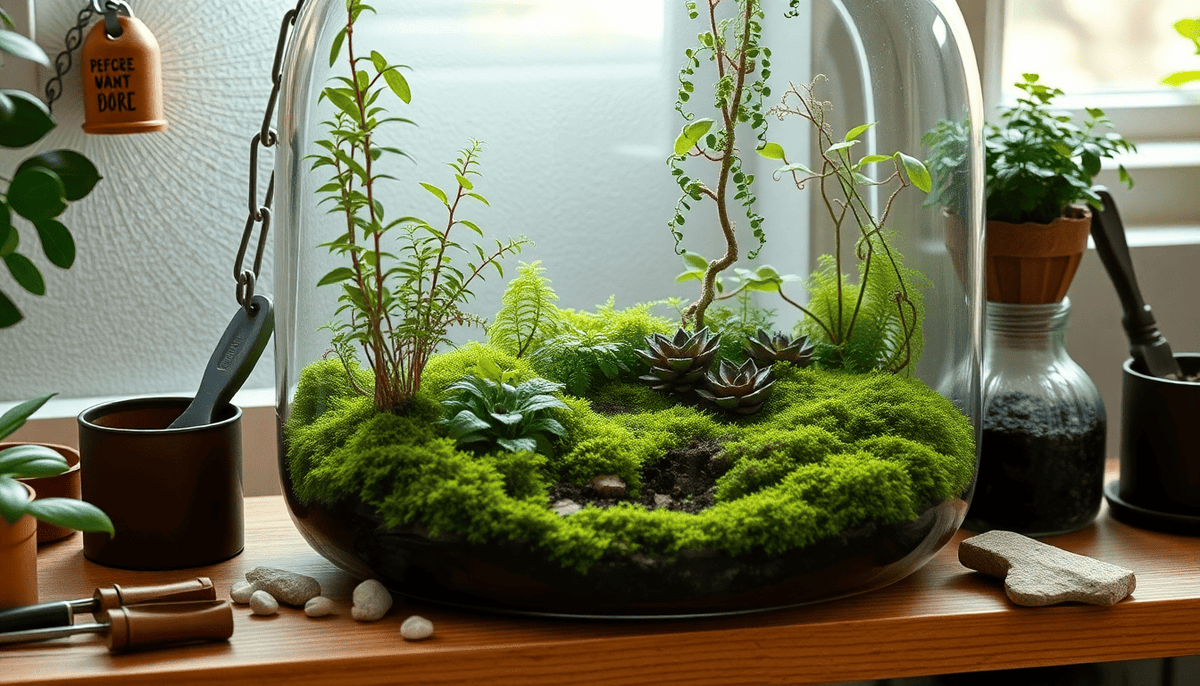
Moss terrariums are all about creating a lush, green environment. For these, you want a substrate that's moist but not waterlogged. A mix of equal parts potting soil, coconut coir, and sphagnum moss works well. You can also use a layer of sphagnum moss as your main substrate, with potting soil underneath to provide nutrients.
Moss terrariums benefit from high humidity and good air circulation. Make sure your terrarium has some ventilation to prevent mold and mildew from taking over.
Carnivorous Plant Terrariums
Carnivorous plants have specific substrate requirements. Most prefer acidic, nutrient-poor substrates. A good mix would be equal parts peat moss and sand, or you could use sphagnum moss as your main substrate. These plants typically don't like regular potting soil because it's too nutrient-rich.
Carnivorous plants also prefer distilled or rainwater rather than tap water, so keep that in mind when watering your terrarium.
Reptile and Amphibian Terrariums
For terrariums housing reptiles and amphibians, the substrate choice depends on the species. Arboreal species might prefer a mix of bark, coconut husk, and sphagnum moss. Ground-dwelling species might prefer a mix of topsoil, coconut husk, and cypress mulch. Aquatic and semi-aquatic species might need a substrate that can handle being wet, like a mix of topsoil and sand.
Always research the specific needs of the species you're keeping to ensure you choose an appropriate substrate.
Creating Your Own Substrate Mix
One of the best things about terrariums is that you can customize your substrate to meet your specific needs. Creating your own mix gives you complete control over drainage, moisture retention, and nutrient content.
Basic Formula for Custom Mixes
A basic formula for creating a custom substrate mix is to start with a base of potting soil or coconut coir, then add amendments to adjust the properties. For example:
- For better drainage, add perlite or orchid bark
- For better moisture retention, add sphagnum moss or vermiculite
- For better aeration, add orchid bark or charcoal
- For more nutrients, add compost or worm castings
Start with a base and then adjust based on your specific needs. You might need to experiment a bit to find the perfect mix for your terrarium.
Testing Your Mix
Before committing to a large batch, test your mix in a small container. Plant something in it and observe how it drains and retains moisture. Does water drain too quickly? Add more sphagnum moss or vermiculite. Does it stay too wet? Add more perlite or orchid bark. Once you've found a mix that works, you can scale it up for your full terrarium.
Sterilizing Your Substrate
If you're concerned about pests or diseases, you can sterilize your substrate before using it. The easiest way is to bake it in the oven at 180 degrees Fahrenheit for about 30 minutes. This kills most pests and pathogens. Make sure to do this in a well-ventilated area, as it can produce some unpleasant odors.
Alternatively, you can use a pressure cooker or steam sterilization method. Just make sure your substrate is completely dry before using it in your terrarium.
Substrate Depth and Layering
How deep your substrate should be depends on what you're growing or keeping in your terrarium. Generally, you want at least two to three inches of substrate for most plants. If you're growing plants with deeper root systems, you might want four to six inches or more.
The Layering Approach
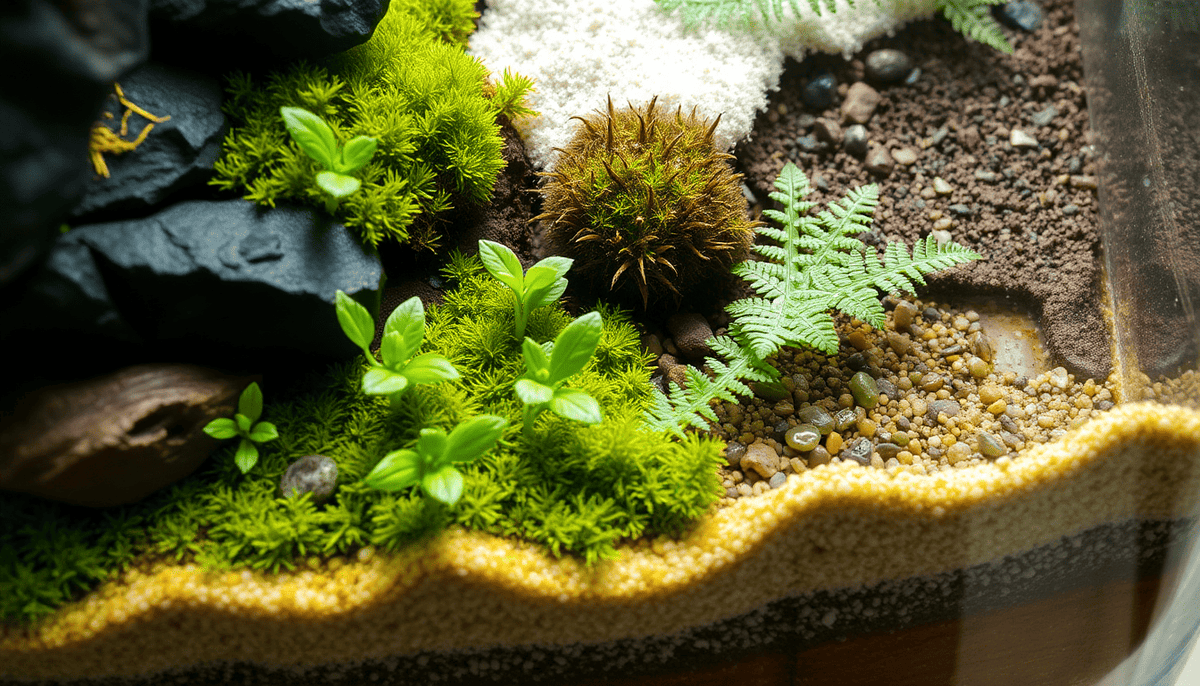
Many terrarium enthusiasts use a layering approach to create the ideal environment. From bottom to top, you might have:
- A drainage layer of small pebbles or gravel
- A layer of activated charcoal to filter the air
- Your main substrate layer
- A top layer of moss or decorative material
This layering approach helps prevent water from pooling at the bottom while still maintaining moisture in the substrate where plants can access it.
Avoiding Substrate Compaction
Over time, substrate can compact, reducing drainage and aeration. To prevent this, avoid pressing down on your substrate when you're setting up your terrarium. Also, periodically gently fluff up the substrate with a small tool to maintain its structure. If your substrate becomes too compacted, you might need to replace it.
Maintenance and Replacement
Your substrate won't last forever. Over time, it breaks down, compacts, and loses its effectiveness. How often you need to replace it depends on the type of substrate and how heavily used your terrarium is.
Signs Your Substrate Needs Replacement
Watch for these signs that it's time to replace your substrate:
- Water drains very slowly or pools on the surface
- The substrate has a foul smell
- Mold or mildew is growing on the substrate
- Plants are showing signs of stress despite proper care
- The substrate has become very compacted and hard
Partial vs. Complete Replacement
You don't always need to replace all your substrate at once. For lightly planted terrariums, you might be able to get away with replacing just the top layer every year or two. For heavily planted terrariums or those with animals, you might need to do a more complete replacement every one to two years.
When replacing substrate, try to minimize disturbance to your plants and animals. Work carefully and consider temporarily removing plants or animals if necessary.
Special Considerations for Different Situations
Closed Terrariums
Closed terrariums create their own ecosystem with limited air exchange. For these, you want a substrate that maintains moisture well without becoming waterlogged. A mix of potting soil, coconut coir, and sphagnum moss works well. Make sure to include a layer of activated charcoal to help keep the air fresh.
Water closed terrariums sparingly, as they recycle their own moisture. You might only need to water once a month or even less frequently, depending on your specific setup.
Open Terrariums
Open terrariums have better air circulation, so you can use substrates that might be too moist for closed terrariums. You'll also need to water more frequently since moisture evaporates more readily. A mix of potting soil and perlite works well for open terrariums.
Hanging Terrariums
Hanging terrariums are often smaller and more exposed to air circulation. Use a well-draining substrate mix and be prepared to water more frequently. A mix of potting soil, perlite, and orchid bark works well for hanging terrariums.
Terrariums with Water Features
If your terrarium includes a water feature like a small pond or stream, you'll need to be careful about substrate choice. Use substrates that won't break down quickly or cloud the water. A mix of sand, gravel, and larger pieces of bark works well around water features.
Common Substrate Mistakes to Avoid
Even experienced terrarium enthusiasts make substrate mistakes sometimes. Here are some common pitfalls to avoid:
Using Garden Soil
Garden soil might seem like a good option, but it's often too dense and compacts easily. It can also contain pests, diseases, and weed seeds. Stick with potting soil or other prepared substrates instead.
Not Considering Drainage
This is probably the most common mistake. People use substrates that retain too much moisture, leading to root rot and mold. Always prioritize good drainage, especially in closed terrariums.
Mixing Incompatible Materials
Not all substrate materials work well together. For example, mixing sand with peat moss can create a dense, poorly draining mixture. Research how different materials interact before combining them.
Overfilling Your Terrarium
If you fill your terrarium too full with substrate, you leave no room for plants to grow or for air to circulate. Leave at least a few inches of space at the top of your terrarium.
Not Adjusting for Your Specific Plants
Different plants have different substrate requirements. Don't just use a generic mix for everything. Research the specific needs of your plants and adjust your substrate accordingly.
Ignoring Substrate Breakdown
Substrate breaks down over time. If you ignore this and never replace it, your terrarium will eventually fail. Plan for regular substrate maintenance and replacement.

Written by Talis Us


Leave a comment
This site is protected by hCaptcha and the hCaptcha Privacy Policy and Terms of Service apply.