



Terrarium LED Light Setup: Best Practices for Plant Growth
Understanding Terrarium LED Lighting Fundamentals
Creating an optimal terrarium LED lighting setup requires understanding the intricate relationship between photosynthetic requirements and artificial illumination. Terrariums present unique challenges for plant cultivation due to their enclosed nature and limited natural light penetration. The photosynthetic active radiation (PAR) spectrum becomes crucial in determining plant health and growth trajectory.
LED technology has revolutionized terrarium cultivation by providing precise spectral control and energy efficiency. Unlike traditional fluorescent or incandescent systems, LEDs generate minimal heat while delivering concentrated photon density across specific wavelengths. This characteristic makes them particularly suitable for enclosed ecosystems where temperature regulation is paramount.
The relationship between light intensity, photoperiod duration, and plant morphology directly influences your terrarium's success. Understanding these fundamental principles will guide your lighting decisions and ensure your enclosed ecosystem thrives.
Essential Components of Professional LED Lighting Systems
Spectral Distribution Requirements
The electromagnetic spectrum visible to plants extends beyond human perception, encompassing wavelengths from 400 to 700 nanometers. Blue wavelengths (400-500nm) promote compact growth and chlorophyll synthesis, while red wavelengths (600-700nm) stimulate flowering and elongation responses. Full-spectrum LEDs incorporating both ranges create balanced growth conditions.
Modern terrarium lighting systems utilize phosphor-coated diodes to achieve broad spectral output. These sophisticated semiconductors convert blue LED emissions into broader wavelength distributions, mimicking natural sunlight characteristics. The color rendering index (CRI) should exceed 90 for optimal plant response and visual appeal.
Intensity and Coverage Considerations
Photosynthetic photon flux density (PPFD) measurements determine adequate light intensity for your terrarium inhabitants. Most tropical terrarium plants require 50-150 μmol/m²/s for healthy growth, while high-light species may demand 200+ μmol/m²/s. Proper measurement using quantum sensors ensures accurate light delivery across your terrarium's surface area.
Light distribution uniformity prevents photomorphogenic responses such as etiolation or uneven growth patterns. Multiple point sources or linear arrays provide superior coverage compared to single high-intensity fixtures, reducing shadowing effects and hotspots.
Selecting the Right LED Fixtures for Your Terrarium
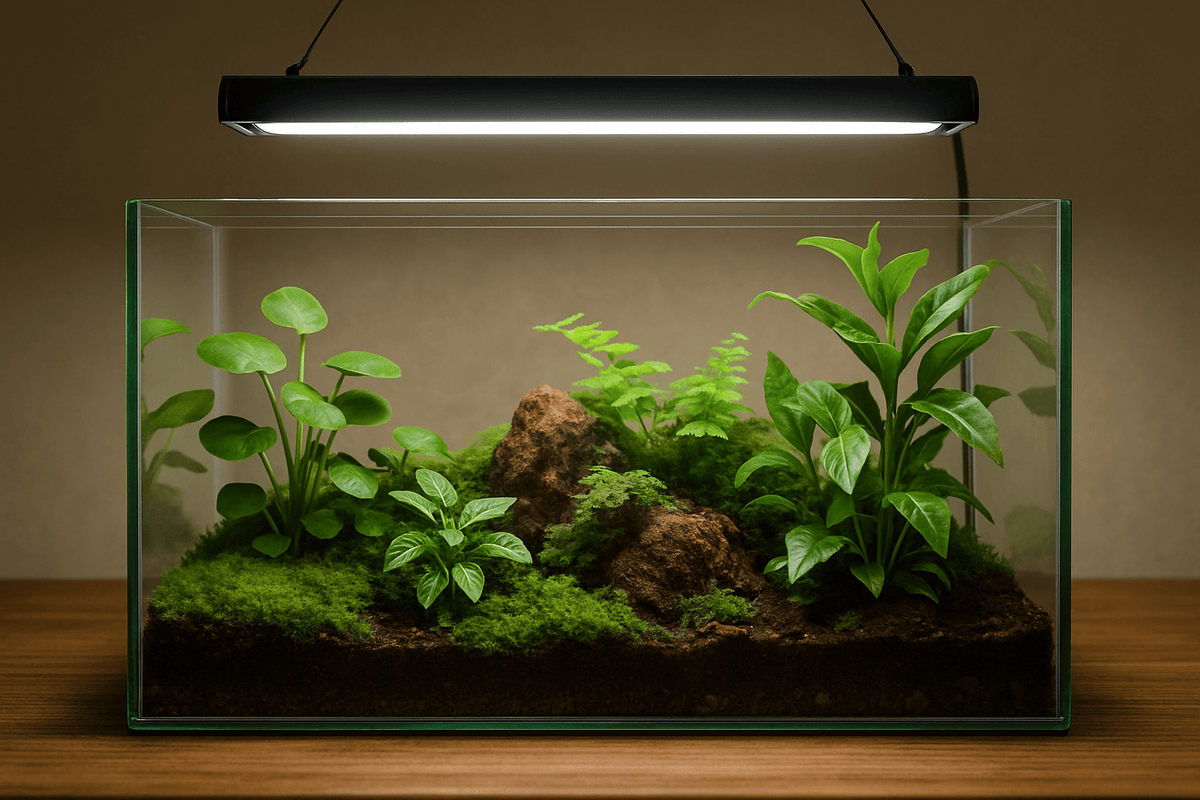
The Arcadia Jungle Dawn LED Terrarium Light Bar represents cutting-edge technology specifically engineered for enclosed ecosystem applications. This professional-grade fixture delivers full-spectrum illumination with exceptional energy efficiency and longevity. Its slim profile design accommodates various terrarium configurations without compromising aesthetic appeal.
The fixture's advanced thermal management system prevents overheating while maintaining consistent light output over extended operational periods. Its IP65 rating ensures reliable performance in high-humidity environments typical of tropical terrariums. The integrated mounting system simplifies installation across different terrarium styles and sizes.
"Proper lighting selection determines the difference between a thriving ecosystem and a struggling collection of plants. The Arcadia Jungle Dawn series provides the precise spectral quality and intensity needed for professional terrarium cultivation."
Fixture Sizing and Placement Guidelines
Determining appropriate fixture dimensions requires calculating your terrarium's surface area and desired light penetration depth. Linear fixtures work exceptionally well for rectangular terrariums, while circular or square arrangements suit cylindrical containers. The inverse square law dictates that light intensity decreases rapidly with distance, making proper positioning critical.
Mounting height affects both light intensity and coverage uniformity. Position fixtures 6-12 inches above plant canopies for optimal results, adjusting based on species requirements and growth progression. Adjustable mounting systems provide flexibility as your terrarium ecosystem develops over time.
Installation and Configuration Best Practices
Electrical Safety Considerations
Terrarium environments combine electricity with moisture, creating potential safety hazards without proper precautions. Ground fault circuit interrupters (GFCI) provide essential protection against electrical shock in humid conditions. All electrical connections should remain elevated and properly sealed against moisture infiltration.
Driver placement outside the terrarium prevents heat buildup and extends component lifespan. Remote drivers also facilitate maintenance and replacement without disturbing your established ecosystem. Ensure adequate ventilation around electrical components to prevent overheating.
Thermal Management Strategies
Heat dissipation becomes critical in enclosed terrarium environments where temperature fluctuations can stress plant inhabitants. Passive cooling through aluminum heat sinks provides efficient thermal management without additional energy consumption. Active cooling fans may be necessary for high-powered installations or poorly ventilated setups.
Temperature monitoring helps maintain optimal growing conditions while preventing heat-related plant stress. Digital thermometers with data logging capabilities track temperature fluctuations and identify potential issues before they affect plant health.
Optimizing Light Schedules and Duration
Photoperiod manipulation allows precise control over plant growth and development phases. Most tropical terrarium plants thrive under 12-14 hour daily light cycles, mimicking equatorial conditions. Programmable timers ensure consistent lighting schedules while reducing energy consumption during unnecessary periods.
Gradual light intensity transitions simulate natural sunrise and sunset conditions, reducing plant stress from abrupt illumination changes. Dimming controllers enable sophisticated lighting programs that enhance both plant health and visual appeal throughout the day.
| Plant Type | Recommended PPFD | Photoperiod Duration |
|---|---|---|
| Low-light tropical plants | 50-100 μmol/m²/s | 12-14 hours |
| Medium-light species | 100-200 μmol/m²/s | 10-12 hours |
| High-light specimens | 200+ μmol/m²/s | 8-10 hours |
Maintenance and Troubleshooting
Regular maintenance ensures consistent performance and extends fixture lifespan. Cleaning light fixtures monthly prevents dust accumulation that reduces light transmission and creates hotspots. Use soft, lint-free cloths with mild cleaning solutions to avoid damaging LED surfaces or optical components.
LED degradation occurs gradually over thousands of operational hours, requiring periodic assessment of light output levels. Quantum meters provide accurate measurements to determine when fixture replacement becomes necessary. Most quality LED fixtures maintain 90% output for 50,000+ hours under proper operating conditions.
Common Issues and Solutions
Flickering or inconsistent light output often indicates driver malfunction or loose electrical connections. Systematic troubleshooting beginning with power supply verification helps isolate problematic components. Temperature-related shutdowns suggest inadequate cooling or excessive ambient temperatures requiring ventilation improvements.
- Verify all electrical connections are secure and properly insulated
- Check driver specifications match LED requirements
- Ensure adequate ventilation around heat-generating components
- Monitor operating temperatures regularly during initial setup period
- Replace fixtures showing significant light output degradation
Advanced Techniques for Enhanced Plant Growth
Spectral manipulation throughout different growth phases optimizes plant development and morphology. Increasing blue wavelength ratios during vegetative growth promotes compact, bushy growth habits ideal for terrarium aesthetics. Higher red wavelength ratios during maturation encourage flowering and fruiting in appropriate species.
Light intensity gradients create microenvironments within single terrarium systems, accommodating species with varying light requirements. Strategic fixture positioning and reflector use direct light selectively while maintaining overall ecosystem balance.
Understanding circadian rhythms in plants allows fine-tuning of photoperiod schedules for optimal growth responses. Some species benefit from brief light interruptions during dark periods, while others require consistent dark phases for proper development.

Written by Talis Us




Leave a comment
This site is protected by hCaptcha and the hCaptcha Privacy Policy and Terms of Service apply.