


Freeze Dried Raw Dog Food: Your Complete Buyer's Guide
The Smarter Way to Feed Your Dog
If you've been curious about freeze dried raw dog food, you're in good company. More and more pet owners are making the switch, and for good reason. This feeding approach combines the nutritional integrity of a raw diet with the convenience of shelf-stable food, so you get the best of both worlds without the mess, the prep time, or the freezer space.
Whether you're a first-time raw feeder or simply looking to upgrade your dog's meals, this guide walks you through everything you need to know. From how freeze drying works to what ingredients to look for on the label, you'll leave here feeling confident and ready to make a great choice for your pup.
What Is Freeze Dried Raw Dog Food and How Is It Made?
Freeze dried raw dog food starts with real, minimally processed ingredients, typically raw meat, organs, bone, and sometimes fruits and vegetables. The food is then put through a preservation process called lyophilization, which removes nearly all moisture without using heat.
Here's how it works: the raw food is first frozen solid, then placed in a vacuum chamber where the frozen water converts directly from ice to vapor, bypassing the liquid stage entirely. The result is a lightweight, shelf-stable product that retains the original structure of the food at a molecular level.
This matters because heat-based processing methods, like extrusion used in kibble manufacturing, can degrade heat-sensitive nutrients including certain vitamins, enzymes, and amino acids. Research on freeze-drying and nutrient retention shows that lyophilization is one of the most effective preservation methods available, maintaining nutritional content far better than conventional drying or cooking.
How Freeze Drying Preserves Nutrients Better Than Traditional Processing
The science behind freeze drying is straightforward but impressive. Because no heat is applied during the moisture-removal stage, proteins remain intact, enzymes are preserved in their active forms, and vitamins that would otherwise break down under high temperatures stay stable.
Studies published in peer-reviewed nutrition journals confirm that freeze-dried foods retain significantly higher levels of vitamins and bioactive compounds compared to heat-processed alternatives. For your dog, this means that the nutrients listed on the label are actually available for absorption, rather than partially degraded before the food even reaches the bowl.
Additionally, freeze drying reduces moisture content to around 2 to 3 percent, which naturally inhibits bacterial growth and extends shelf life without the need for artificial preservatives. This makes freeze dried raw food a practical option for households that want raw nutrition without the logistical challenges of handling fresh or frozen raw meat every day.
Key Benefits of Feeding Your Dog Freeze Dried Raw Food
Pet owners who make the switch to freeze dried raw dog food often describe it as one of the most impactful changes they've made for their dog's health. The benefits tend to show up quickly and across multiple areas of wellbeing.
Here are the most commonly reported advantages:
Improved digestion: Raw food is less processed, which means it's generally easier for dogs to break down and absorb. Many owners notice firmer, smaller stools and reduced gas within the first few weeks.
Healthier coat and skin: The natural fats and omega fatty acids found in quality raw proteins support skin moisture and coat shine. This is especially noticeable in dogs that previously had dull or dry coats.
Better energy levels: Dogs fed a nutrient-dense raw diet often show increased vitality and sustained energy throughout the day.
Reduced allergic reactions: Many freeze dried raw formulas are grain-free and free from common fillers, which can reduce food sensitivities in dogs with reactive digestive systems.
Improved dental health: Chewing rehydrated raw food encourages natural jaw movement and can help reduce tartar buildup over time.
For dogs with specific health concerns, the evidence-based guidance from Cornell University's Riney Canine Health Center emphasizes the importance of choosing raw diets that are nutritionally complete and balanced, rather than homemade or unverified recipes.
Real Results Pet Owners Notice — From Coat Health to Digestion
The changes are often visible within the first month. A dog that previously had a lackluster coat may develop a noticeably shinier, softer fur. Dogs prone to loose stools or digestive upset frequently show marked improvement when transitioning to a high-quality freeze dried raw diet.
For dogs with food sensitivities or allergies, novel protein options like duck can be especially helpful. Duck-based formulas provide a complete amino acid profile while offering a protein source that many dogs haven't been exposed to before, reducing the likelihood of immune-mediated food reactions.
Products like the OC Raw Freeze Dried Meaty Rox Duck & Produce Dog Food are formulated with exactly this in mind, using hormone-free, antibiotic-free duck alongside whole vegetables and fruits to support full-body health. Similarly, the Raw Dynamic Freeze-Dried Duck Dog Food Nuggets offer a simple, single-protein option that's easy to rehydrate and serve.
How to Choose the Right Freeze Dried Raw Dog Food for Your Pup
With so many options on the market, choosing the right freeze dried raw dog food can feel overwhelming. The good news is that once you know what to look for, the decision becomes much easier.
Start by thinking about your dog's specific needs. Are they a puppy, an adult, or a senior? Do they have any known food allergies or sensitivities? Are they highly active or more sedentary? These factors will guide your protein and fat choices.
From there, focus on the ingredient list and nutritional panel. A quality freeze dried raw food should lead with a named animal protein, such as beef, chicken, duck, or fish, not a vague "meat meal" or "animal by-product."
Reading Labels: Ingredients, Protein Sources, and What to Avoid
Understanding how to read a pet food label is one of the most empowering things you can do as a pet owner. According to AAFCO's consumer guidance on pet food labels, ingredients are listed in descending order by weight before processing. This means the first few ingredients make up the bulk of the food.
Here's what to look for on a quality freeze dried raw label:
Named protein sources first: Beef, chicken, duck, fish, or lamb should appear at the top of the ingredient list.
Organ meats: Liver, heart, and gizzard provide concentrated nutrients including B vitamins, iron, and zinc.
Whole fruits and vegetables: These add natural fiber, antioxidants, and vitamins without artificial supplementation.
AAFCO nutritional adequacy statement: This confirms the food meets minimum nutritional standards for the stated life stage.
What to avoid:
Artificial preservatives like BHA, BHT, or ethoxyquin
Unnamed meat sources or "meat by-products"
Excessive fillers like corn, wheat, soy, or potato starch
Artificial colors or flavor enhancers
The OC Raw Freeze Dried Meaty Rox Beef & Produce Dog Food checks all the right boxes. Its formula uses USDA-certified beef muscle, bone, and organ alongside whole vegetables like carrots, spinach, and broccoli, with no grains, potatoes, peas, or lentils. It's the kind of clean, transparent label that gives you real confidence in what you're feeding.
For dogs who do well with poultry and fish, the OC Raw Freeze Dried Meaty Rox Chicken, Fish & Produce Dog Food is an excellent choice. The addition of pollock provides a natural source of omega-3, 6, and 9 fatty acids, supporting coat health and reducing inflammation without a heavy fishy smell.
When it comes to fat content, consider your dog's activity level and health status. Higher-fat formulas are well suited to active dogs or those needing to maintain weight, while lower-fat options like duck are better for dogs with pancreatic sensitivities or those on a weight management plan. Guidance from the Canadian Association of Veterinary Dermatology on raw food diets also highlights the importance of ensuring any raw diet is nutritionally complete to avoid deficiencies over time.
How to Transition Your Dog to Freeze Dried Raw Food Safely
Switching your dog's diet too quickly can cause temporary digestive upset, even when you're moving to a higher-quality food. This is because your dog's gut microbiome needs time to adjust to new protein sources and a different nutrient profile. A gradual transition minimizes discomfort and sets your dog up for success.
Most veterinary nutritionists recommend a transition period of 7 to 14 days, depending on how sensitive your dog's stomach is. Dogs with a history of digestive issues may benefit from an even slower transition over three to four weeks.
A Simple Feeding Schedule to Make the Switch Stress-Free
Here's a straightforward transition plan you can follow:
Days 1 to 3: Mix 25% freeze dried raw food with 75% of your dog's current food. Rehydrate the freeze dried portion with a small amount of warm water before mixing.
Days 4 to 6: Move to a 50/50 split. Watch for any signs of loose stool or stomach sensitivity. If your dog is doing well, continue progressing.
Days 7 to 10: Shift to 75% freeze dried raw and 25% of the previous food. Most dogs handle this transition smoothly by this stage.
Days 11 and beyond: Serve 100% freeze dried raw food. Your dog is now fully transitioned.
A few practical tips to make the process easier:
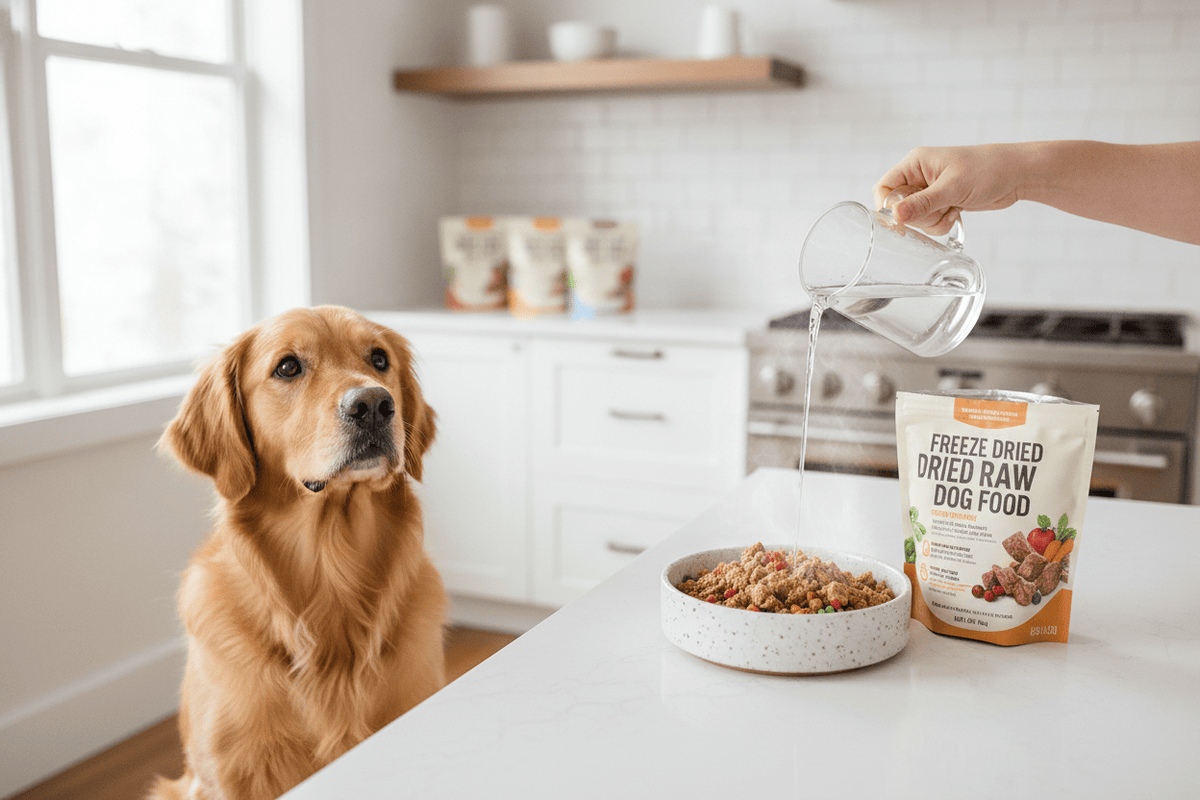
Always rehydrate freeze dried raw food with warm water before serving. This improves palatability and aids digestion.
Keep portion sizes consistent with your dog's weight and activity level. Most brands provide a feeding chart on the packaging.
Monitor stool consistency throughout the transition. Some variation is normal, but persistent loose stools may indicate you're moving too fast.
If your dog seems reluctant to eat the new food, try warming the rehydrated meal slightly to enhance the aroma.
Research published in the Journal of the American Veterinary Medical Association has noted that raw diets can carry some microbiological considerations, so it's always a good idea to handle freeze dried raw food with the same hygiene practices you'd use for any raw protein: wash hands after handling, keep food prep surfaces clean, and store unused portions properly.
Feed with Confidence Every Single Day
Freeze dried raw dog food offers a genuinely convenient, nutrient-rich way to support your dog's health and happiness every day. You don't have to choose between what's easy and what's good for your pup. With the right product, every mealtime becomes something your dog genuinely looks forward to.
The key takeaways from this guide are simple: understand how freeze drying preserves nutrition, look for clean and transparent ingredient labels, choose a protein source that suits your dog's individual needs, and transition gradually to set your dog up for digestive success.
Whether you're drawn to the rich nutrition of a beef-based formula, the omega-rich benefits of a chicken and fish blend, or the gentle novelty of duck for a sensitive pup, there's a freeze dried raw option that's right for your dog. You now have everything you need to shop with confidence and give your best friend the quality nutrition they deserve.

Written by Talis Us


Leave a comment
This site is protected by hCaptcha and the hCaptcha Privacy Policy and Terms of Service apply.