



Article: Can you suggest some engaging toys to keep my indoor cat entertained while I m at work
Can you suggest some engaging toys to keep my indoor cat entertained while I m at work
Indoor cats can live exceptionally rich, healthy lives, but they need more than a food bowl, a sunny windowsill, and your return at the end of the day. The right mix of interactive cat toys, independent play options, and cat enrichment toys can help satisfy your cat’s hunting instincts, reduce boredom, and make the workday feel less empty. For a new pet owner, the goal is not to buy every clever gadget available; it is to build a safe, varied routine that gives your cat something meaningful to do.
What toys keep an indoor cat entertained while you are at work?
The best indoor cat toys for workday enrichment are toys that invite your cat to stalk, paw, pounce, sniff, chase, scratch, or problem-solve without needing constant human supervision. Puzzle feeders, treat balls, track toys, tunnels, sturdy scratchers, window perches, and automated toys can all be useful when selected carefully and rotated thoughtfully. If you have ever wondered, “Can you suggest some engaging toys to keep my indoor cat entertained while I'm at work?” the practical answer is yes: choose toys that mimic pieces of the feline hunting sequence while remaining safe for unsupervised play.
Cats are not simply being “cute” when they bat a ball under the sofa or ambush your ankles from behind a chair. They are expressing deeply rooted predatory behaviors: watching, waiting, chasing, catching, and sometimes carrying. Indoor life removes many natural opportunities for these behaviors, so enrichment becomes a welfare tool, not a luxury accessory.
A good workday toy setup should do three things. First, it should offer mental stimulation so your cat is not left with hours of blank time. Second, it should encourage appropriate physical movement, especially if your cat is young, energetic, or prone to weight gain. Third, it should protect your furniture, cords, plants, and breakable objects by giving your cat better alternatives.

Independent toys for solo play
Independent toys are the backbone of at-home enrichment because they do not require you to hold a wand, toss a mouse, or supervise every second of play. These toys should be durable, appropriately sized, and free from parts that your cat could chew off and swallow. When in doubt, inspect toys the way you would inspect a toddler’s plaything: loose strings, small bells, cracked plastic, and detachable feathers deserve scrutiny.
Puzzle feeders and treat-dispensing toys
Puzzle feeders are among the most valuable cat enrichment toys because they turn eating into a small cognitive challenge. Instead of inhaling breakfast from a dish, your cat must paw, nudge, roll, or investigate to release pieces of kibble or treats. This slows food intake for some cats and adds purposeful activity to the day.
Start with an easy puzzle so your cat does not become frustrated. A beginner-friendly option might have open wells, sliding panels, or a simple rolling design. As your cat gains confidence, you can increase the difficulty by using smaller openings, hiding food in different compartments, or placing multiple feeders in separate rooms.
Use puzzle feeders as part of your cat’s regular food allowance rather than simply adding extra calories. If your veterinarian has recommended a specific diet or weight plan, keep that guidance in mind. The enrichment should support health, not quietly create a snack surplus.
Ball tracks and batting toys
Ball tracks give cats a moving target without creating chaos across the house. Many designs keep the ball contained inside a circular or multi-level track, allowing your cat to swat repeatedly without losing the toy under the refrigerator. This is especially helpful for cats who enjoy movement but live in smaller apartments.
Look for a stable base, smooth edges, and balls large enough that they cannot be swallowed. Some cats prefer a ball with a bell or rattle, while others are more interested in silent movement. If your cat is sound-sensitive, choose quieter toys and observe whether the noise creates curiosity or avoidance.
Tunnels and hideouts
Tunnels appeal to a cat’s love of concealment and surprise. A tunnel can become a stalking route, a nap zone, or a launch point for sudden bursts of play. Collapsible fabric tunnels are popular because they are easy to move, but they should still be checked for exposed wires, torn seams, or dangling pieces.
Place a tunnel near a toy, scratcher, or window area rather than leaving it isolated in an empty corner. Cats often enjoy enrichment more when objects create a small “activity zone.” For example, a tunnel beside a scratcher and a treat ball can feel like a miniature indoor hunting ground.
Interactive cat toys before and after work
Interactive cat toys are technically designed for shared play, but they are still important for a cat who spends the workday alone. A vigorous play session before you leave can help your cat settle more calmly, and another session after work helps rebuild your social bond. The toy matters, but the timing and quality of play matter just as much.
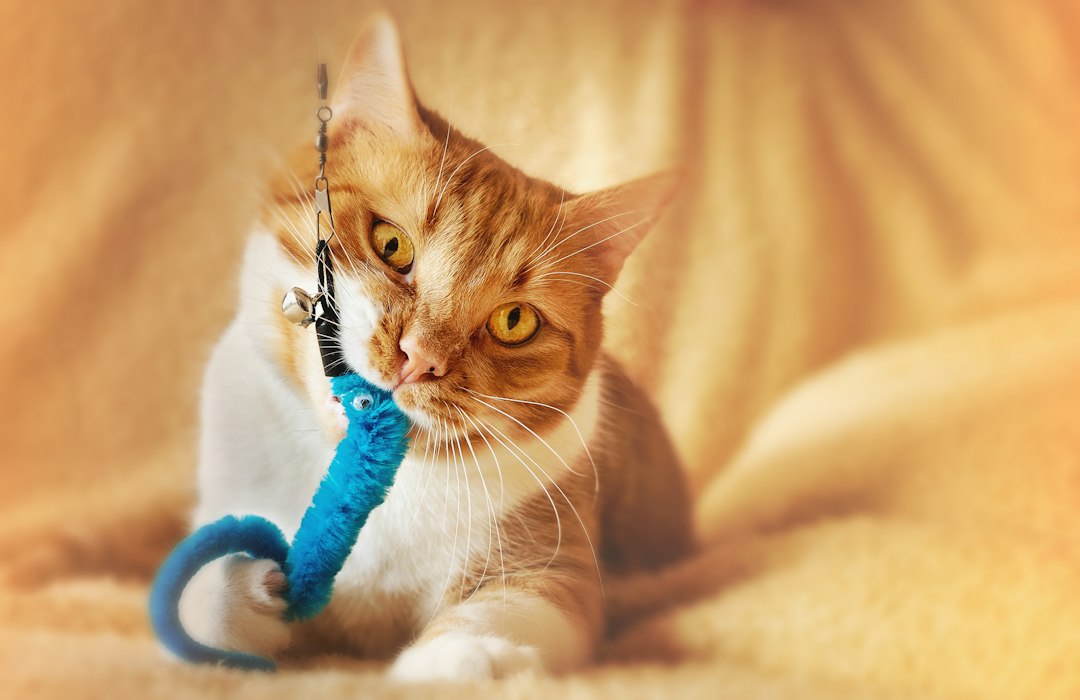
Wand toys with feathers, fabric strips, or worm-like attachments are excellent for simulating prey movement. Move the toy like a real creature: let it hide, pause, dart, tremble, and escape behind furniture. Constant frantic waving can overstimulate some cats and bore others because there is no suspense.
A useful pattern is play, catch, eat, groom, sleep. Let your cat successfully “catch” the toy several times, then offer a meal or small portion of food. This sequence respects the natural rhythm of hunting and can make the transition into your workday feel more complete.
Do not leave wand toys, string toys, yarn, ribbons, or elastic cords accessible while you are away. These can become dangerous if chewed or swallowed. They belong in the supervised-play category, even if your cat adores them with theatrical enthusiasm.
Electronic and motion-activated toys
Electronic toys can be wonderful for some cats, particularly those who respond to unpredictable movement. Motion-activated mice, fluttering toys under fabric mats, rotating feathers, and timed laser-style devices may all capture attention. However, automation should complement your involvement, not replace it entirely.
Choose electronic toys with stable construction, automatic shutoff features, and battery compartments that close securely. Avoid toys that become hot, have fragile moving parts, or continue running for excessive periods. Your cat should be intrigued, not harassed by a machine that never stops.
Laser toys deserve special care. Many cats enjoy chasing the dot, but because there is nothing physical to catch, some may become frustrated. If you use a laser, end the session by directing your cat toward a tangible toy or treat so the hunt has a satisfying conclusion.
Scratching toys and climbing spaces
Scratching is not misbehavior; it is normal feline maintenance and communication. Cats scratch to condition their claws, stretch their muscles, and leave scent markers. If you do not provide appropriate scratching options, your sofa may receive an unsolicited redesign.
Offer at least one vertical scratcher and, if possible, one horizontal or angled scratcher. Some cats love sisal rope, others prefer cardboard, carpet, or wood-like textures. Height matters, too: a vertical post should be tall enough for your cat to stretch fully.
Climbing spaces extend enrichment beyond the floor. A cat tree, wall shelf, or sturdy window perch gives your cat a vantage point, which is particularly valuable in homes with dogs, children, or busy household traffic. For a cat, height can provide both entertainment and emotional security.

How should you choose safe indoor cat toys?
Choose safe indoor cat toys by matching the toy to your cat’s size, temperament, chewing habits, and play style, then inspecting it regularly for damage. A toy that is perfectly reasonable for one cat may be risky for another if that cat chews aggressively, eats fabric, or dismantles objects with impressive determination. Safety is not a single purchase decision; it is an ongoing habit.
Use this checklist before leaving any toy out while you are at work:
- No long strings or ribbons: These should be reserved for supervised play because they can be swallowed.
- No loose small parts: Bells, eyes, buttons, and feathers can become hazards if detached.
- Appropriate size: Avoid toys small enough to lodge in the mouth or throat.
- Durable materials: Check for cracking plastic, torn seams, exposed stuffing, or sharp edges.
- Stable design: Climbing furniture and scratchers should not wobble or tip easily.
- Non-toxic construction: Select toys intended for pets, especially if your cat chews.
- Easy cleaning: Food-based toys should be washable to prevent residue buildup.
Also consider your cat’s age and health. A kitten may need frequent novelty and soft toys that are easy to chase. A senior cat may prefer slower puzzles, low-entry tunnels, and gentle batting toys. A cat with mobility limitations may still enjoy scent games, food puzzles, and reachable scratching surfaces.
A simple workday enrichment routine
A successful routine does not need to be elaborate. In fact, cats often do better with predictable structure and selective novelty than with a floor full of forgotten toys. Think in terms of stations: food challenge, movement, scratching, resting, and observation.
Try this practical sequence:
- Before work, offer active play. Spend 10 to 15 minutes with a wand or chase toy, adjusting intensity to your cat’s age and fitness.
- Serve part of breakfast in a puzzle feeder. This gives your cat a task after you leave.
- Set out two or three safe solo toys. Choose different categories, such as a ball track, tunnel, and scratcher.
- Provide a viewing area. A secure window perch can make birds, leaves, and neighborhood movement part of the day’s entertainment.
- Refresh the environment after work. Put away the day’s toys, bring out different ones, and enjoy interactive play together.
Rotation is essential. If every toy is available every day, many cats stop noticing them. Store several toys in a drawer and rotate them every few days. You are not depriving your cat; you are restoring novelty.
For cats who are strongly motivated by scent, you can occasionally use catnip, silvervine, or valerian toys, assuming your cat responds well to them. Not every cat reacts to catnip, and some become temporarily too excited. Introduce scent-based enrichment in moderation and observe the result.
Matching toys to your cat’s personality
The most engaging toy is the one your cat actually wants to use. New pet owners sometimes feel disappointed when a carefully chosen toy receives less attention than the cardboard box it came in. This is not failure; it is data.
If your cat is bold and athletic, prioritize climbing towers, tunnels, spring toys, and fast interactive play. If your cat is cautious, begin with quieter toys, low-pressure puzzles, and hideouts where exploration feels safe. If your cat is food-motivated, puzzle feeders may become your most dependable enrichment tool. If your cat loves ambush games, tunnels and wand sessions will likely be more satisfying than stationary toys.
You can learn a great deal by watching how your cat plays. Does your cat chase objects across open space, or prefer to paw from behind cover? Does movement, texture, sound, scent, or food create the strongest response? Once you identify the pattern, toy selection becomes more thoughtful and less random.
Common mistakes that reduce enrichment
Even loving owners can accidentally make cat enrichment less effective. The most common mistake is relying on one exciting toy until the cat becomes bored with it. Another is choosing toys based on human appeal rather than feline behavior. A toy may look adorable, but if it does not move, hide, crinkle, dispense food, or invite scratching, your cat may politely ignore it.
Avoid these pitfalls:
- Leaving potentially unsafe string toys out during unsupervised hours.
- Buying too many similar toys instead of varying the type of activity.
- Expecting electronic toys to replace daily human interaction.
- Placing toys in dull locations with no connection to climbing, hiding, or viewing areas.
- Forgetting to clean food puzzles and heavily used toys.
- Ignoring sudden changes in play behavior, which may signal stress or discomfort.
If your cat suddenly stops playing, hides more often, or shows major appetite or litter box changes, treat that as a wellness concern rather than a personality quirk. Toys can enrich a healthy routine, but they cannot substitute for veterinary attention when behavior changes significantly.
Conclusion
Keeping an indoor cat entertained while you are at work is less about constant distraction and more about intelligent enrichment. By combining safe solo toys, puzzle feeders, scratching surfaces, climbing spaces, and interactive play before and after your workday, you create a home environment that respects your cat’s instincts.
Start modestly, observe carefully, and rotate toys with intention. Your cat will tell you, in wonderfully feline fashion, which options deserve a permanent place in the routine. With the right cat enrichment toys and a little planning, the workday can become calmer, healthier, and far more interesting for your indoor companion.

Written by Talis Us


Leave a comment
This site is protected by hCaptcha and the hCaptcha Privacy Policy and Terms of Service apply.