



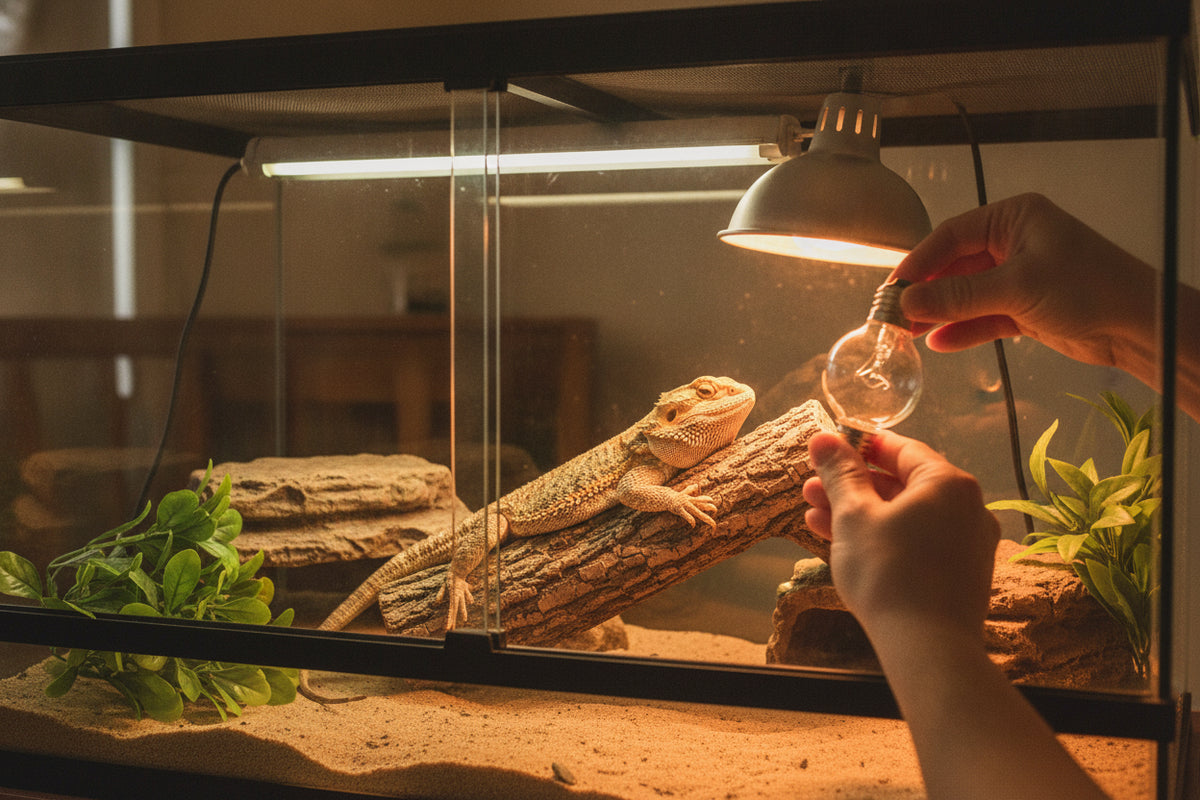
Reptile Lighting Guide for Happy, Healthy Pets
The Right Light Makes All the Difference for Your Reptile
Your reptile's health starts with the right lighting, and choosing it doesn't have to feel overwhelming. Unlike dogs or cats, reptiles depend almost entirely on their environment to regulate body temperature, mood, digestion, and bone development. That means the lighting inside their enclosure isn't just a convenience; it's a core part of their care.
Whether you're setting up your very first reptile habitat or upgrading an existing one, this guide walks you through everything you need to know about reptile lighting in a warm, straightforward way. No confusing jargon, no guesswork, just real, practical advice so your scaly companion can truly thrive.
Why Proper Lighting Is Essential for Your Reptile's Health
Reptiles are ectothermic, which means they rely on external heat sources to regulate their body temperature. In the wild, sunlight does all the heavy lifting. It warms their bodies, triggers natural behaviors, and provides ultraviolet radiation that their physiology depends on. Inside an enclosure, that responsibility falls entirely on you and the lighting system you choose.
Getting reptile lighting right isn't just about keeping your pet comfortable. It directly affects their quality of life, their lifespan, and their ability to thrive in a captive environment.
How Light Affects Your Reptile's Mood, Appetite, and Bone Strength
The effects of proper lighting go far deeper than most new reptile owners realize. Here's what's actually happening inside your pet's body when the lights are on:
Mood and Behavior: Reptiles are highly responsive to light cycles. A consistent day-and-night rhythm helps regulate their circadian rhythm, which in turn affects sleep patterns, activity levels, and stress. Reptiles kept under poor or inconsistent lighting often become lethargic, hide more frequently, and show signs of chronic stress.
Appetite and Digestion: Warmth from basking lights activates the digestive system. Reptiles that don't have access to adequate heat struggle to properly digest their food, which can lead to regurgitation, nutrient deficiencies, and long-term health problems. Pairing the right lighting with quality reptile food is one of the most impactful things you can do for your pet's wellbeing.
Bone Strength and Development: UVB light enables reptiles to synthesize Vitamin D3, which is essential for calcium absorption. Without it, reptiles develop metabolic bone disease, a painful and unfortunately common condition in captive reptiles that causes soft, deformed bones. Proper UVB exposure is genuinely life-changing for species that require it.
Types of Reptile Lights and What Each One Does
Walking into a pet store and seeing an entire wall of reptile lighting products can feel intimidating. The good news is that once you understand the basic categories, making the right choice becomes much easier.
There are three primary types of reptile lights you'll encounter:
UVB Bulbs: These emit ultraviolet B radiation, which reptiles need to synthesize Vitamin D3. UVB bulbs are essential for most diurnal (daytime-active) reptiles, including bearded dragons, chameleons, tortoises, and many lizard species. They come in linear tube and compact fluorescent formats, and their strength is measured in percentages (such as 5.0 or 10.0) that correspond to how much UVB they produce.
Basking Bulbs: These are heat-emitting incandescent or halogen bulbs designed to create a warm basking spot in the enclosure. Reptiles move in and out of this zone to thermoregulate throughout the day. Basking bulbs do not emit significant UVB, so they work alongside UVB bulbs rather than replacing them.
Ceramic Heat Emitters (CHEs): These produce heat without any visible light, making them ideal for maintaining overnight temperatures without disrupting your reptile's sleep cycle. They're a great supplemental tool, especially in cooler climates or during winter months.
Full-Spectrum and Mercury Vapor Bulbs: These all-in-one options emit both heat and UVB, making them a popular choice for larger enclosures or species with high UVB requirements. They're particularly useful for outdoor-style setups or spacious terrariums.
UVB vs. Basking Bulbs: Understanding the Difference for Your Pet
The most common point of confusion for new reptile owners is the difference between UVB and basking bulbs. Here's the simplest way to think about it: basking bulbs provide warmth, while UVB bulbs provide the biological benefits of sunlight.
Most reptiles that are active during the day need both. A basking bulb without UVB leaves your reptile warm but nutritionally deficient. A UVB bulb without adequate heat means your reptile can't properly digest food or regulate its body temperature. Together, they replicate the full benefits of natural sunlight.
Nocturnal reptiles, such as leopard geckos and crested geckos, typically don't require UVB lighting, though many experts now recommend low-level UVB even for these species as a beneficial supplement. Always research the specific needs of your reptile species before building your lighting setup.
How to Set Up and Maintain Your Reptile Lighting System
Setting up your reptile's lighting doesn't require an engineering degree, but it does require some thoughtful planning. Placement, intensity, and timing all play a role in how effective your setup will be.
Placement: UVB bulbs should be mounted inside the enclosure or directly over a mesh top, with no glass or plastic between the bulb and your reptile. Glass and plastic filter out UVB rays, rendering the bulb ineffective. Basking bulbs should be positioned at one end of the enclosure to create a temperature gradient, giving your reptile the choice to warm up or cool down as needed.
Distance Matters: UVB output decreases significantly with distance. Most T5 HO UVB bulbs are effective at a distance of 12 to 18 inches, while compact fluorescent bulbs typically work best within 6 to 10 inches. Always check the manufacturer's recommendations for the specific bulb you're using.
Replacing Bulbs: UVB bulbs degrade over time even when they still appear to produce light. Most manufacturers recommend replacing UVB bulbs every 6 to 12 months depending on the brand and usage. Keeping a note of the installation date on the bulb or in a care journal makes it easy to track when a replacement is due.
Simple Lighting Schedules That Mimic Your Reptile's Natural Habitat
Consistency is key when it comes to reptile lighting. Mimicking the natural day-night cycle of your reptile's native habitat helps regulate their internal clock and supports healthy behavior patterns.
For most tropical and desert species, a 12-hour on and 12-hour off cycle works well as a general starting point. During summer months, you can adjust to a 14-hour day cycle, and in winter, reduce it to 10 hours to replicate seasonal changes. This kind of photoperiod variation can even support breeding behavior in some species.
Using a simple plug-in timer is one of the easiest ways to automate your lighting schedule. Set it once and your reptile benefits from a reliable, consistent light cycle every single day without you having to remember to switch anything on or off manually.
At night, all visible light should be turned off. If supplemental heat is needed overnight, use a ceramic heat emitter or an under-tank heater rather than a colored nighttime bulb. Despite what some older products suggest, reptiles can see red and blue light, and leaving colored bulbs on at night can disrupt their sleep.
Your Reptile Deserves a Habitat That Truly Supports Them
The right reptile lighting transforms your pet's enclosure from a basic setup into a genuinely thriving environment. When your reptile has access to the correct UVB exposure, a warm basking zone, and a consistent light cycle, you're giving them the foundation they need to live a healthy, active, and stress-free life.
Lighting works best as part of a complete care approach. Pairing quality lights with proper reptile food, a well-designed habitat, and regular observation creates the kind of environment every reptile deserves. Small, thoughtful choices add up to a big difference in your pet's daily wellbeing.
You've got this. Your reptile is lucky to have such a caring owner looking out for them, and with the right setup in place, they'll show you just how vibrant and rewarding reptile ownership can be. Explore quality reptile lighting options and take the next step toward building the best possible home for your scaly companion.

Written by Talis Us



Leave a comment
This site is protected by hCaptcha and the hCaptcha Privacy Policy and Terms of Service apply.