


Best Reptile Lights for Your Cold-Blooded Companion
Lighting the Way to a Healthier Reptile
Your reptile depends on the right lighting to thrive, and choosing the best reptile lights can feel overwhelming with so many options available. Unlike cats or dogs, reptiles are ectothermic, meaning they rely entirely on their environment to regulate body temperature and absorb the nutrients they need. That makes lighting one of the most important decisions you'll make as a reptile owner.
Whether you're setting up your first enclosure or upgrading an existing one, this guide walks you through everything you need to know about reptile lighting. From UVB bulbs to basking lamps, you'll leave with the confidence to make a caring, informed choice for your cold-blooded companion.
Why Reptile Lighting Is Essential for Your Pet's Health
It's easy to think of lighting as a simple add-on, but for reptiles, it's a fundamental part of their biology. In the wild, reptiles bask in natural sunlight to warm their bodies, synthesize vitamin D3, and regulate their circadian rhythms. Inside an enclosure, that sunlight has to be replicated, and doing it well makes a measurable difference in your pet's quality of life.
Without adequate lighting, reptiles can suffer from metabolic bone disease (MBD), a painful and often fatal condition caused by calcium deficiency linked to insufficient UVB exposure. They may also become lethargic, lose their appetite, or develop weakened immune systems. On the flip side, the right lighting setup supports strong bones, healthy digestion, natural behavior patterns, and a longer life.
How UVB and Heat Affect Your Reptile's Daily Life
UVB radiation and heat serve two distinct but equally critical functions in your reptile's daily routine.
UVB radiation enables reptiles to synthesize vitamin D3 through their skin, just as humans do in sunlight. Vitamin D3 is essential for calcium absorption, and without it, bones become brittle and organs can fail. UVB also plays a role in regulating mood and activity levels, helping your reptile feel alert and engaged during daylight hours.
Heat, provided through basking bulbs or ceramic heat emitters, supports digestion and metabolic function. Reptiles need a temperature gradient in their enclosure, a warm basking zone and a cooler retreat, so they can thermoregulate naturally. Without sufficient heat, digestion slows, immunity weakens, and your pet may spend most of its time hiding or inactive.
Together, UVB and heat create an environment that mirrors the natural conditions your reptile evolved in, and that's the foundation of good reptile care.
Types of Reptile Lights and What They Do
The reptile lighting market offers a wide range of products, each designed for a specific purpose. Understanding what each type does helps you build a setup that covers all your pet's needs without overspending or overcomplicating things.
UVB fluorescent tubes are among the most popular options for reptile enclosures. They emit a broad spectrum of UVB radiation across a wide area, making them ideal for larger tanks or for reptiles that spend time moving around their habitat. Linear T5 and T8 tubes are common choices, with T5 bulbs offering higher output suitable for deeper enclosures.
Compact UVB bulbs are smaller, screw-in options that fit standard light fixtures. They work well in smaller enclosures or as a supplemental light source. However, they tend to cover a smaller area, so placement matters more with these bulbs.
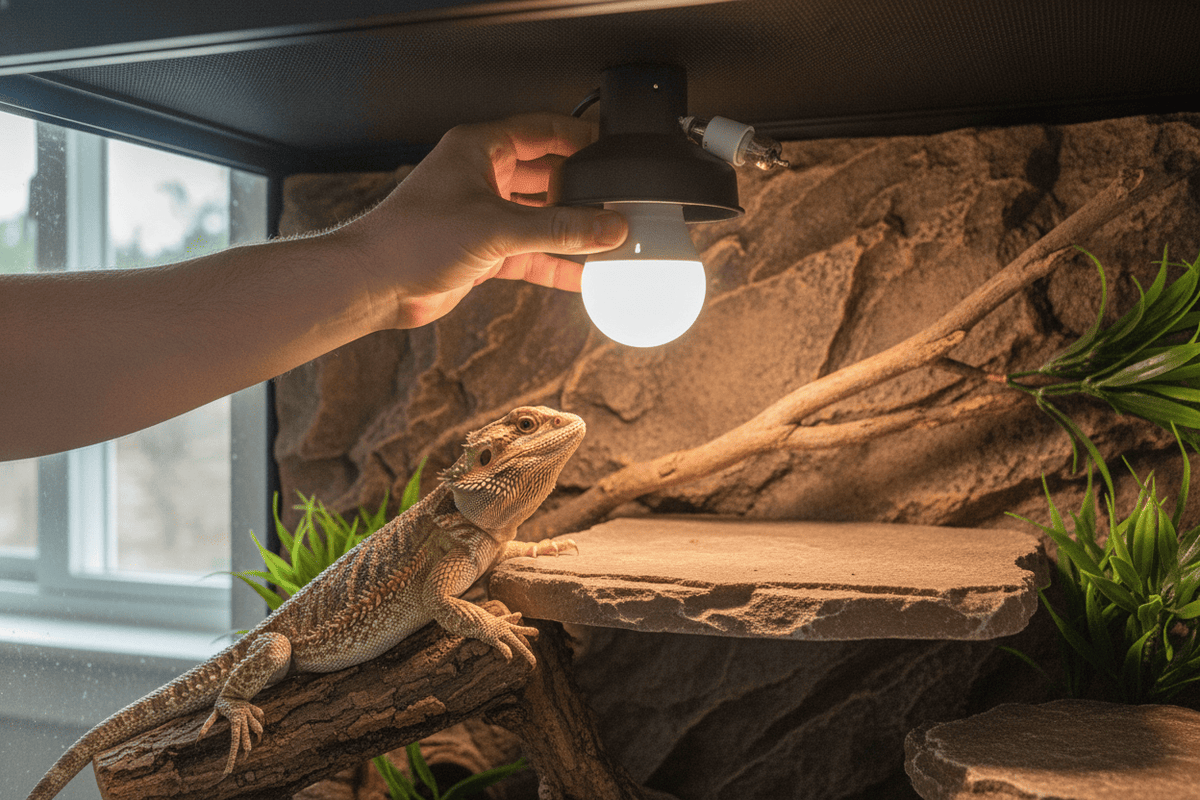
Basking bulbs are incandescent or halogen bulbs that produce focused heat and visible light. They create the warm basking spots your reptile needs to regulate its body temperature. These are not UVB sources on their own, so they're typically used alongside UVB lighting.
Mercury vapor bulbs (MVBs) are all-in-one solutions that produce both UVB and heat from a single bulb. They're a great option for larger enclosures or for reptile species with high UVB requirements, such as bearded dragons and iguanas.
Ceramic heat emitters (CHEs) produce heat without any light, making them ideal for maintaining nighttime temperatures without disrupting your reptile's sleep cycle.
UVB Bulbs vs. Basking Bulbs: Which Does Your Reptile Need?
The short answer is that most reptiles need both, but the ratio and intensity depend on the species.
Desert-dwelling reptiles like bearded dragons, uromastyx, and blue-tongued skinks require high UVB output (UVI 3.0 to 6.0) and strong basking temperatures. Tropical species like chameleons and water dragons need moderate UVB and higher humidity. Nocturnal reptiles like leopard geckos and crested geckos require lower UVB levels and gentler heat sources, since they're naturally less exposed to direct sunlight.
If you're unsure what your specific reptile needs, researching their natural habitat is the best starting point. Talis US's reptile lighting collection includes options for a wide range of species, so you can find the right fit without the guesswork.
How to Choose the Best Reptile Light for Your Setup
Choosing the right reptile light isn't just about picking the most popular product. It's about matching the light to your reptile's species, your enclosure size, and your daily routine as a pet owner.
Here are the key factors to consider:
Enclosure size: Larger enclosures need stronger or wider-coverage bulbs. A T5 UVB tube works well for tanks 40 gallons and above, while compact bulbs suit smaller setups.
Reptile species: As mentioned, different species have very different UVB and heat requirements. Always research your specific reptile before purchasing.
Bulb lifespan: UVB output degrades over time even when the bulb still appears to glow. Most UVB bulbs should be replaced every 6 to 12 months depending on the brand and type. Mark your calendar so you don't accidentally leave your reptile under a spent bulb.
Ease of setup: Look for lights that come with compatible fixtures or mounting hardware. A bulb that's difficult to install is more likely to be set up incorrectly, which can reduce its effectiveness or even create safety issues.
Timer compatibility: Reptiles benefit from consistent light cycles that mimic natural day and night rhythms. Using a timer with your lighting setup helps automate this process, reducing stress for your pet and simplifying your routine.
Matching Light Intensity and Duration to Your Reptile Species
Light intensity is measured using a UV Index (UVI) meter, and matching it to your reptile's needs is one of the most important steps in setting up a healthy enclosure.
As a general guideline, most diurnal (daytime-active) reptiles thrive with 10 to 12 hours of light per day, followed by 10 to 12 hours of darkness. This cycle supports their natural behavior, appetite, and sleep patterns. Seasonal adjustments, slightly longer days in summer and shorter in winter, can also benefit breeding cycles and overall vitality in some species.
Positioning matters too. The basking spot should be close enough to both the UVB source and the heat source that your reptile can absorb both simultaneously, just as they would in the wild. A distance of 12 to 18 inches from the UVB bulb is typical for T5 tubes, but always check the manufacturer's recommendations for the specific product you choose.
Give Your Reptile the Light They Deserve
The right reptile lighting isn't just an accessory. It's essential to your pet's wellbeing and quality of life. From supporting bone health through UVB exposure to enabling natural behaviors through proper heat gradients, every element of your lighting setup plays a role in how your reptile feels and functions day to day.
With the right bulb and the right setup, you're giving your cold-blooded companion the warmth and UV support they naturally need to thrive. And the good news is that getting it right doesn't have to be complicated or expensive, it just takes a little knowledge and the right products.
Explore Talis US's reptile lighting collection and shop with confidence, knowing your pet's health is in good hands. Whether you're starting fresh or fine-tuning an existing setup, you'll find quality options designed with your reptile's needs in mind.

Written by Talis Us



Leave a comment
This site is protected by hCaptcha and the hCaptcha Privacy Policy and Terms of Service apply.