


Grain-Free vs Ancient Grains: What Dog Owners Should Know
When you scan the dog food aisle, you’re likely to encounter two prominent labels: grain-free and ancient grains. Both promise a healthier diet, but the reasoning behind each is quite different—and the debate can leave owners feeling like they’re choosing between two opposing philosophies.
This article breaks down what these diets actually contain, how their nutritional profiles compare, and what health considerations—including the ongoing DCM discussion—might matter for your dog. Think of it as a side-by-side map, not a verdict.
What Are Grain-Free and Ancient Grain Diets?
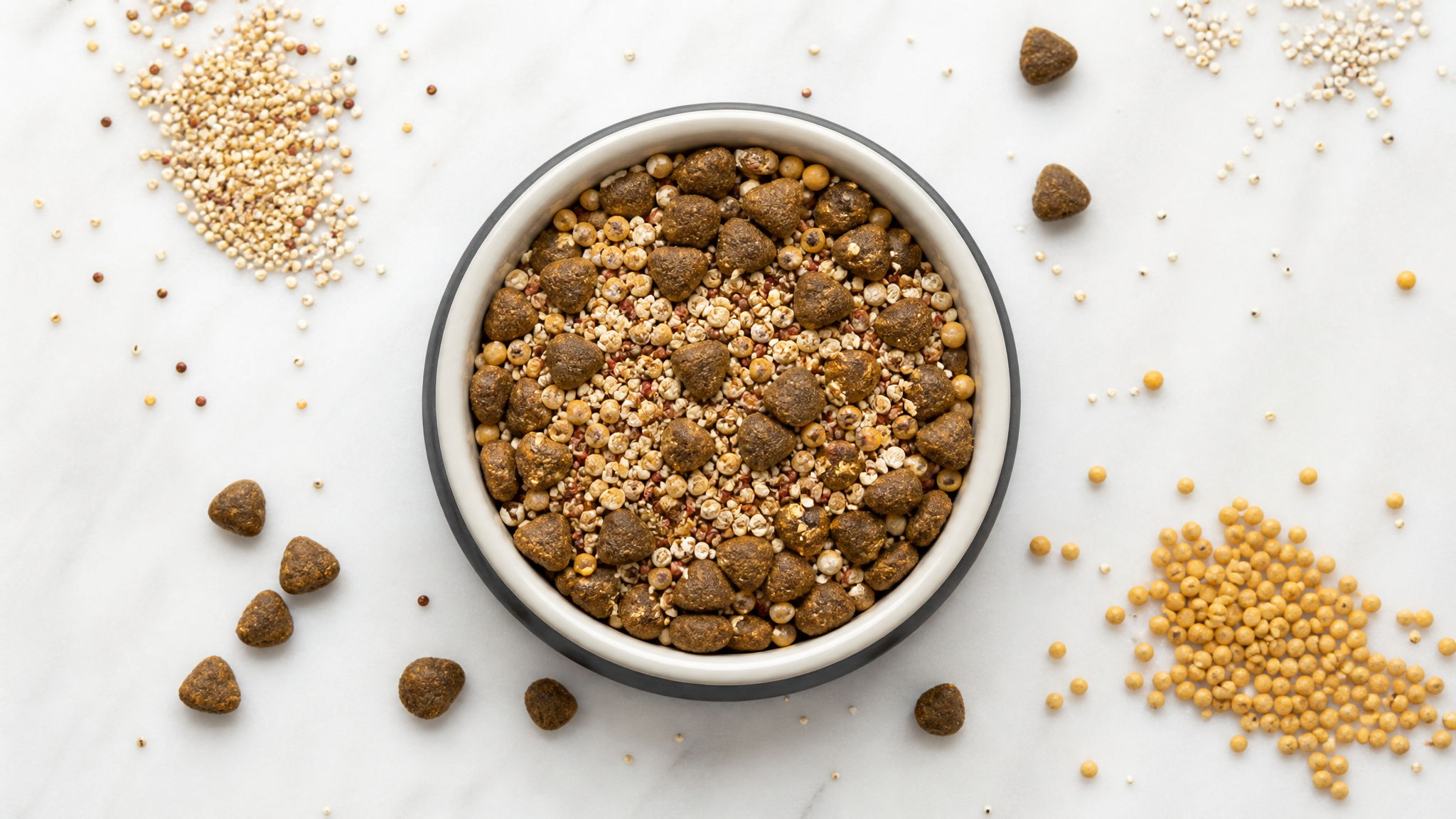
Grain-free dog food is exactly what it sounds like: formulas that exclude wheat, corn, rice, barley, and other common grains. Instead, they often use potatoes, legumes, or pea protein as carbohydrate sources. Ancient grain diets, on the other hand, lean on older grain varieties like millet, quinoa, chia, and sorghum—ingredients that are marketed as more nutrient-dense than modern staples.
The goal here isn’t to declare one camp “better.” It’s to compare nutritional profiles, health considerations, and practical differences so you can weigh what fits your dog’s needs.
Nutritional Profiles: Ancient Grains vs. Grain-Free Ingredients
Ancient grains bring a different nutritional hand to the bowl. According to Diamond Pet Foods, millet, quinoa, chia, and sorghum are naturally higher in protein, fiber, and antioxidants than modern corn and wheat. Quinoa averages 15% protein and 7–9.7% dietary fiber, while chia seeds pack 19–26% protein and an impressive 47–60% fiber. That’s a fiber-rich foundation many grain-inclusive formulas simply don’t have.
Grain-free diets, by contrast, may swap grains for legumes, potatoes, and pea protein. The result, as Darwin’s Pet notes, can be a food that’s higher in protein and lower in carbohydrates than typical grain-inclusive recipes. But the carb source itself matters. Ancient grains provide complex carbohydrates that can deliver steadier energy release—millet’s starch profile, for example, is different from the starch in legumes or potatoes, which may spike blood sugar differently. It’s not that one approach causes a crash; it’s that the fuel itself comes from a different gear.
If you’re comparing numbers, chia’s fiber density is hard to ignore. That 47–60% figure means even a small amount can add meaningful digestive bulk. Meanwhile, quinoa’s protein content outstrips most cereal grains, and sorghum’s protein is slightly higher than corn’s. These aren’t marginal differences when you’re pouring kibble every day.
Health Considerations: Allergies, Digestion, and DCM Concerns
Here’s a fact that often gets lost: true grain allergies are relatively uncommon in dogs. Petfolk points out that most food allergies stem from animal proteins like beef or dairy, not grains. So if your dog is itching, don’t assume ditching wheat will solve it—the trigger might be the chicken or lamb in the bowl.
Digestive upset can happen when you switch foods abruptly, regardless of whether you’re moving to grain-free or ancient grains. A gradual transition is the real protector here. But the louder conversation centers on dilated cardiomyopathy (DCM). The FDA has investigated a possible link between grain-free diets heavy in legumes and pulses and DCM in dogs. Petfolk references a narrative review (PubMed 41295744) that explores this association, and Darwin’s Pet provides context on why the connection isn’t fully understood yet. No definitive cause has been established, and many dogs thrive on grain-free foods. Still, the association has made many owners pause—and that’s reasonable. Talk to your veterinarian if you’re rethinking your dog’s diet, especially if your breed is predisposed to heart issues.
Grain-Free vs. Ancient Grain Diet Options
Sometimes a concrete example helps more than a list of abstracts. The two options below aren’t endorsements; they’re simply representative products that show how each philosophy plays out on a label.
Grain-Free Wet Food: Evanger’s OrgaNOMics Lamb & Beef Dinner
This Evanger’s OrgaNOMics Lamb & Beef Dinner is a grain-free pâté built around lamb and beef, with no corn, wheat, or soy. The wet format can support hydration, which is a quiet bonus for dogs prone to urinary issues. A word of caution: eliminating grains won’t magically resolve allergies if your dog reacts to beef or lamb proteins. Check the ingredients list as carefully as you’d check the grain claim.
Ancient Grain Dry Food: Diamond Pro89 Beef, Pork & Ancient Grains
Diamond Pro89 Beef, Pork & Ancient Grains Formula for Adult Dogs leans on millet and quinoa, two grains the manufacturer says provide higher protein and fiber compared to modern grains. It’s positioned for high-performing canines, leveraging nutrient-dense carbohydrates. For owners who want a grain-inclusive diet without corn or wheat, this is a practical example of how ancient grains can anchor a formula.
Transitioning Your Dog to a New Diet
Any diet switch—whether you’re trading grain-inclusive for grain-free or moving to ancient grains—deserves a slow hand. A 7–10 day transition is standard: mix a small portion of the new food with the old, gradually increasing the new over the week. Monitor stool consistency and energy levels. If you see loose stools or lethargy, slow down. The digestive system needs time to adapt to new fiber levels, new protein sources, and new starch types. An abrupt change can cause GI distress, and that’s not a reflection on the diet’s quality—it’s a reflection on the pace.
Frequently Asked Questions
Are grain-free diets healthier for all dogs?
No. Grain-free is not inherently healthier. It may help dogs with a diagnosed grain allergy, but true grain allergies are rare. The overall nutrient balance matters more than the absence of grains. Many dogs thrive on grain-inclusive foods, so the label isn’t a shortcut to better health.
What do studies say about DCM and grain-free diets?
The FDA has investigated a possible link between grain-free diets high in legumes and pulses and dilated cardiomyopathy. A narrative review (PubMed 41295744) cited by Petfolk explores this association, but no definitive cause has been established. Research is ongoing, and the picture is far from settled.

De Talis Us


Dejar un comentario
Este sitio está protegido por hCaptcha y se aplican la Política de privacidad de hCaptcha y los Términos del servicio.