


Can My Dog Eat Peanut Butter? A Complete Vet-Backed Guide
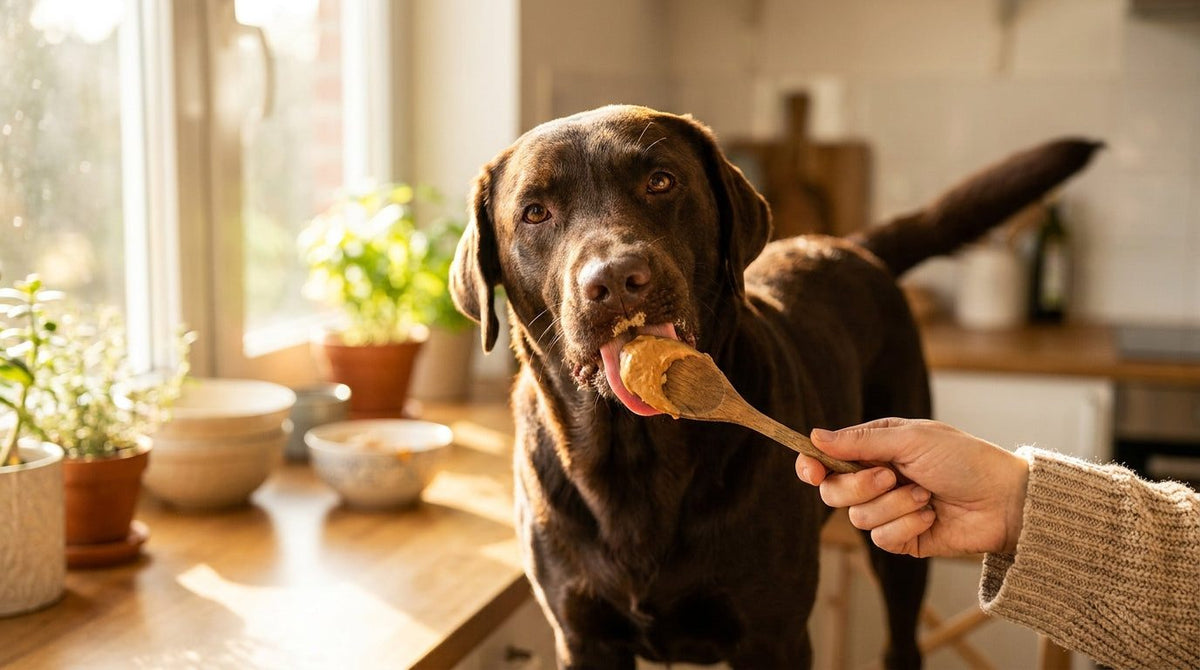
Few things produce the same level of dog enthusiasm as a spoonful of peanut butter. And unlike many human foods, plain peanut butter is genuinely safe for most healthy dogs — a good source of protein, healthy fats, and vitamins that dogs can enjoy in moderation.
The critical word here is plain. One common additive — xylitol, an artificial sweetener — turns peanut butter from a beloved treat into a life-threatening emergency. Knowing exactly what to check before sharing is not optional.
This guide covers everything: the science behind peanut butter's benefits, the xylitol danger in full detail, how much to give safely, which brands to use and avoid, and practical applications like pill-hiding and enrichment toys.
Table of Contents
Is Peanut Butter Safe for Dogs? {#is-it-safe}
Yes — plain, xylitol-free, unsalted peanut butter is safe for most healthy adult dogs in moderation. It's one of the most universally enjoyed treats among dogs, and when the right type is chosen, it provides real nutritional value alongside its entertainment benefits.
The key qualifiers:
-
Plain — no added sweeteners, especially no xylitol
-
Unsalted or low-sodium — excess salt contributes to dehydration and kidney strain
-
No added sugar — unnecessary calories without benefit
-
No chocolate or raisin additions — both toxic to dogs
Natural peanut butters — ingredients: peanuts, possibly a small amount of salt — are the gold standard. (PetMD, Aug 2025)
The Xylitol Problem: Non-Negotiable Reading {#xylitol}

Xylitol is a sugar alcohol used as a low-calorie sweetener in "reduced fat" and "natural" peanut butters — and it is severely toxic to dogs.
In humans, xylitol raises blood sugar negligibly. In dogs, it triggers a massive insulin release, causing life-threatening hypoglycemia (blood sugar crash) within 30–60 minutes of ingestion. At higher doses, xylitol causes acute liver failure.
🚨 Symptoms of Xylitol Poisoning in Dogs
-
Sudden lethargy or weakness
-
Vomiting
-
Loss of coordination or stumbling
-
Seizures
-
Collapse
If your dog has eaten peanut butter containing xylitol, contact your vet or the Pet Poison Helpline (855-764-7661) immediately. Don't wait for symptoms — early intervention is critical and dramatically improves outcomes. (GoodRx, 2025 | Tier 1 Veterinary Medical Center, Sept 2025)
How to Check for Xylitol
Read the full ingredient list every time — not just the front label. Xylitol may appear as:
-
"Xylitol"
-
"Sugar alcohol"
-
"Birch sugar"
-
"Birch bark extract"
Brands known to have contained xylitol in their peanut butter formulations include: Go Nuts Co., Krush Nutrition, Nuts 'N More, P28, and some store-brand "natural" or "no sugar added" variants. Always verify the current formulation — recipes change.
Safe mainstream brands (as of 2025, always verify current labels): Jif Natural, Skippy Natural, Justin's Classic, Teddie All Natural, Trader Joe's Organic — all currently xylitol-free. Ingredients: peanuts + salt only.
Nutritional Benefits of Peanut Butter for Dogs {#benefits}
Plain peanut butter isn't just a treat vehicle — it has genuine nutritional value:
| Nutrient | Benefit for Dogs |
|---|---|
| Protein | Supports lean muscle maintenance and energy |
| Healthy fats (monounsaturated) | Coat health, skin moisture, anti-inflammatory support |
| Vitamin E | Antioxidant; supports immune function and skin health |
| Vitamin B3 (Niacin) | Supports energy metabolism and skin health |
| Magnesium | Bone health and enzyme function |
That said, peanut butter is calorie-dense — roughly 90–100 calories per tablespoon — and high in fat. These benefits are real, but so is the risk of overfeeding. Peanut butter works best as an occasional enrichment tool or treat, not a daily nutritional supplement.
How Much Peanut Butter Can Dogs Have? {#how-much}
The 10% treat rule applies: all treats combined should not exceed 10% of your dog's daily calorie intake.
| Dog Size | Weight | Max Peanut Butter Per Day |
|---|---|---|
| Extra Small | Under 10 lbs | ¼ teaspoon |
| Small | 10–20 lbs | ½ teaspoon |
| Medium | 20–50 lbs | 1 teaspoon |
| Large | 50–90 lbs | 1–2 teaspoons |
| Giant | 90+ lbs | 2 teaspoons max |
These are maximum guidelines for plain, unsalted peanut butter. Start with less, particularly for dogs new to peanut butter, and watch for any digestive sensitivity (loose stools, gas) in the following hours.
For daily KONG stuffing or lick mat use, a thin smear across the surface — rather than a full spoon — keeps the calorie count manageable while still providing meaningful enrichment time.
Which Peanut Butters Are Safe? {#safe-brands}
The safest peanut butter for dogs has two ingredients: peanuts and salt (optional). Nothing else is needed or beneficial.
✅ Safe — Look For:
-
Ingredient list: Peanuts or Peanuts, Salt — that's it
-
Natural separation (oil on top) — sign of no added stabilizers
-
Dry roasted or raw peanut variants
-
"No added sugar" labels — only if confirmed xylitol-free
❌ Avoid:
-
Any label listing xylitol, sugar alcohols, or birch sugar
-
"Reduced fat" peanut butters — most use xylitol or other sweeteners to compensate
-
"No sugar added" varieties — requires label verification every time
-
Flavored peanut butters (honey roasted, chocolate swirl, etc.)
-
Peanut butter with added vitamins marketed to humans — some use xylitol as a carrier
Bottom line: Buy the most boring, plain peanut butter on the shelf. Two ingredients maximum. Check the label every time you buy a new jar — manufacturers change formulations without announcement.
Best Uses for Peanut Butter with Dogs {#best-uses}

🧸 Enrichment Toys (KONG, Lick Mats, Puzzle Feeders)
A thin smear of peanut butter inside a KONG or across a lick mat transforms a simple object into 10–20 minutes of focused, calming enrichment. Frozen KONG toys with peanut butter extend duration further and are particularly effective for:
-
Separation anxiety — gives a dog something absorbing to focus on when you leave
-
Post-surgery or crate rest — keeps a dog occupied without physical activity
-
Nail trims and grooming — a lick mat with peanut butter on the wall or floor redirects attention
💊 Hiding Medications
Peanut butter's thick, sticky texture makes it one of the most effective pill-hiding vehicles available. The strong flavor masks most medication smells that dogs detect in cheese or meat. A pea-sized ball of peanut butter pressed around a tablet is often all it takes for even suspicious dogs.
🎓 Training High-Value Reward
For training commands that require exceptional motivation — recall, stay in distracting environments, handling desensitization — peanut butter on a spoon or squeeze tube works as a high-value lure. Its strong scent cuts through competing stimuli better than dry treats.
🧴 Grooming Distraction
Apply a small amount of peanut butter to a lick mat or slow feeder and attach to the wall of a bathtub or grooming table at nose height. The dog focuses on licking while you brush, clip nails, or clean ears.
Which Dogs Should Avoid Peanut Butter? {#who-should-avoid}
Peanut butter is not appropriate for every dog:
-
Dogs with pancreatitis — the high fat content can trigger dangerous flare-ups; avoid entirely
-
Overweight or obese dogs — 90–100 calories per tablespoon adds up quickly; use alternative low-calorie enrichment options
-
Dogs with peanut allergies — rare but real; watch for itching, hives, swelling, or GI upset after first exposure
-
Dogs with kidney disease — sodium content in even "low-salt" peanut butters adds unnecessary strain
-
Dogs on low-fat prescription diets — confirm with your vet before adding any high-fat foods
-
Diabetic dogs — the fat and caloric density requires careful management alongside blood sugar monitoring
Peanut Butter Dog Treats: A Convenient Alternative {#treats}
For many owners — particularly those with small dogs where even ½ a teaspoon of peanut butter is a meaningful calorie hit — purpose-made peanut butter dog treats offer the same beloved flavor with controlled portions, lower caloric density, and no label-checking anxiety.
Quality peanut butter dog treats are formulated without xylitol, sized for appropriate treat portions, and often combined with complementary ingredients like banana, oats, or yogurt that add digestive and nutritional value.
Our Peanut Butter Treat Picks at Talis-us {#talis-picks}
Darford Soft Baked Peanut Buttery Dog Treats Soft-baked peanut butter treats from Darford — no artificial preservatives, colors, or flavors. The soft texture makes them ideal for senior dogs, small dogs, or any dog that struggles with crunchy treats. Available in two sizes. Darford's clean ingredient approach aligns with Talis-us's curation standards for treat quality.
- $12.99 – $14.99
Paws Gourmet Bakery Peanut Butter Carob Training Treats Peanut butter paired with carob — a dog-safe chocolate alternative that gives these training treats a rich, complex flavor dogs find highly motivating. Small training-sized pieces, grain-free formula. An excellent high-repetition training treat that keeps dogs engaged without large calorie loads. Available in single bags or bulk.
- From $9.99
GivePet Soft Chewy Dog Training Treats — Banana & Peanut Butter 6oz The banana and peanut butter combination is one of the most consistently palatable flavor profiles across dog taste preferences. GivePet's soft chewy format is ideal for training — small pieces, strong smell, soft enough to break apart instantly. GivePet also donates a portion of proceeds to animal shelters with every purchase.
- $9.99
GivePet Doghouse Rock Dog Treats — Bacon & Peanut Butter Bacon and peanut butter — two of the highest-value flavor combinations for dogs. GivePet's Doghouse Rock treats combine both in a crunchy baked format. Available in single bags or bulk value packs. A crowd-pleaser for virtually any dog regardless of typical treat preferences.
- From $10.99
Shameless Pets Peanut Butter Split — Peanut Butter & Yogurt Crunchy Dog Treats 10oz A crunchy biscuit with a peanut butter and yogurt split — two flavors in one treat. Shameless Pets uses upcycled ingredients to reduce food waste in their formulations. Clean label, no artificial additives. The crunchy texture provides a light dental scrubbing action alongside the treat benefit.
- $7.99
Archway Pet Peanut Butter Biscuits with Cricket Meal 5oz A distinctive peanut butter biscuit using cricket meal as a sustainable protein source — one of the most eco-friendly treat options in the catalog. Cricket protein is hypoallergenic, highly digestible, and carries a significantly lower environmental footprint than conventional livestock protein. A standout option for environmentally conscious pet owners.
- $9.99
Paws Gourmet Bakery Grain Free Banana Nut Training Treats Banana and nut training treats in a grain-free formula — a close flavor companion to peanut butter treats for dogs that love the nutty-sweet profile. Small, training-ready pieces, clean ingredient list. Available in single bags or bulk.
- From $11.99
Pill Buddy Naturals Soft & Chewy Dog Treats For owners who use peanut butter primarily to hide medications — Pill Buddy Naturals are specifically designed for this purpose. Pre-formed soft chews with a pocket for a pill or capsule, in multiple flavors. No need to portion peanut butter; each treat is a self-contained pill-hiding solution. Available in 10 flavor variants, 1,200 units in stock.
- From $12.99
Poochie Butter Dilly's Blueberry Soft & Chewy Dog Treats From Poochie Butter — a brand built around dog-safe nut butter products — these soft blueberry treats pair naturally with peanut butter enrichment routines. Antioxidant-rich blueberry flavor in a soft chew format. A complementary treat to rotate alongside peanut butter-flavored options.
- $9.99
Natural Balance Yo-Gut Bites — Oats & Blueberries Dog Treats For dogs who enjoy the creamy, tangy notes in peanut butter yogurt combinations — Natural Balance's Yo-Gut Bites pair oats and blueberries with a Greek yogurt drizzle. Contains prebiotics and probiotics supporting digestive health. A great complement to peanut butter enrichment sessions.
- $8.99 – $16.99
👉 Shop all Dog Treats at Talis-us →
FAQs {#faqs}
Can dogs eat peanut butter every day? Small amounts of plain, xylitol-free peanut butter are fine daily for most healthy dogs — provided total daily treat intake stays within the 10% calorie guideline. For small dogs, even daily lick mat use should involve only a thin smear (¼–½ teaspoon) rather than a full spoonful.
What peanut butter brands are safe for dogs? Plain peanut butters with ingredients listed as peanuts or peanuts, salt only. Jif Natural, Skippy Natural, Justin's Classic, Teddie All Natural, and Trader Joe's Organic are commonly verified as xylitol-free — but always check the current label, as formulations change.
How do I know if my dog ate peanut butter with xylitol? Symptoms of xylitol toxicity appear within 30–60 minutes: vomiting, weakness, loss of coordination, and in severe cases seizures or collapse. If you suspect xylitol ingestion, contact your vet or Pet Poison Helpline (855-764-7661) immediately without waiting for symptoms.
Can I put peanut butter in a KONG toy? Yes — a thin smear of plain, xylitol-free peanut butter inside a KONG is one of the most effective and popular enrichment tools for dogs. Freeze the filled KONG for 2–4 hours to extend chewing time significantly. Monitor the calorie contribution across the day.
Is peanut butter good for dogs with anxiety? Licking is a naturally calming behavior for dogs — it activates the parasympathetic nervous system and reduces cortisol. Peanut butter on a lick mat is a well-supported anxiety management tool for mild situational anxiety (separation, grooming, vet visits). It is not a substitute for behavioral intervention in dogs with chronic or severe anxiety.
Can puppies eat peanut butter? Puppies over 8 weeks old can have very small amounts of plain peanut butter — but their developing digestive systems are more sensitive, and the high fat content can cause GI upset. Keep amounts minimal and choose purpose-formulated puppy treats as the primary treat option.
What's the difference between peanut butter and peanut butter dog treats? Peanut butter dog treats are portion-controlled, formulated without xylitol risk, and often lower in calories per piece than equivalent amounts of peanut butter. For owners who want to manage portions carefully, treat training frequently, or avoid the label-checking process entirely, purpose-made peanut butter treats are the more practical choice.
This article is for informational purposes. Always consult your veterinarian before introducing new foods, especially if your dog has an existing health condition.

De Talis Us



Dejar un comentario
Este sitio está protegido por hCaptcha y se aplican la Política de privacidad de hCaptcha y los Términos del servicio.