



Can My Cat Eat Blueberries? A Complete Vet-Backed Guide
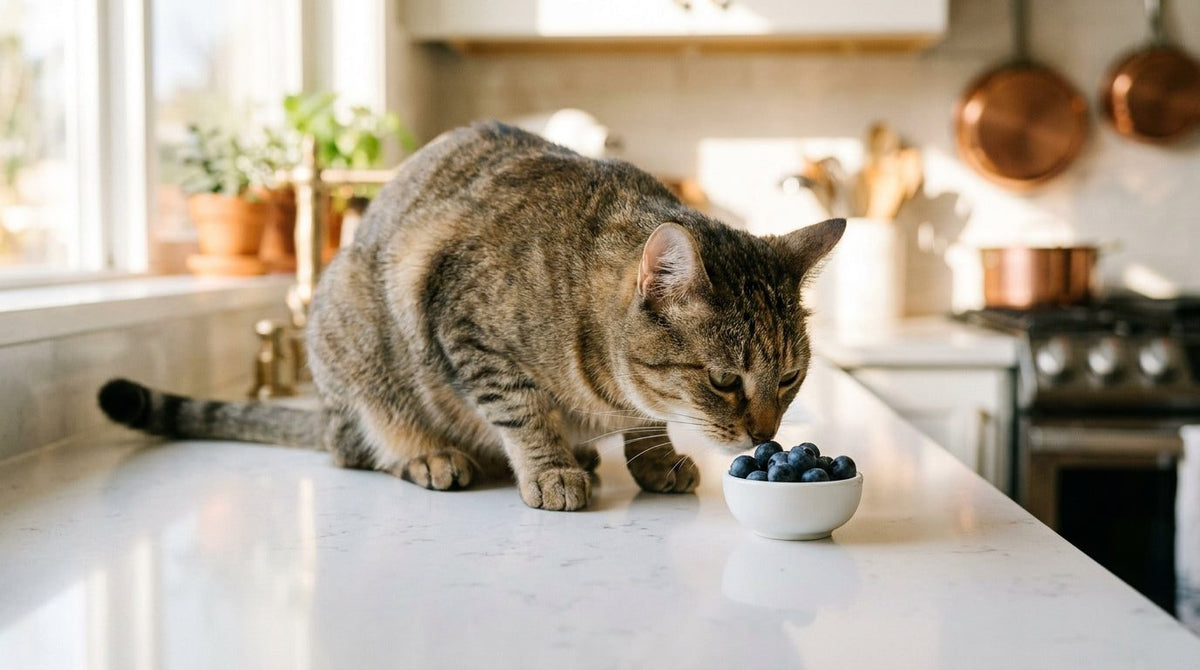
Your cat is eyeing your blueberries with the focused intensity cats reserve for things they've decided they want. Before you hand one over, the honest answer is: blueberries are not toxic to cats, and a single berry is unlikely to cause any harm. But the more complete answer involves understanding why blueberries offer very little benefit to a cat's biology — and what to offer instead.
This guide covers the science clearly: what blueberries contain, why cats process them differently than humans or dogs, what the risks are at higher quantities, and why the best treat for your cat looks nothing like a blueberry.
Table of Contents
Are Blueberries Safe for Cats? {#are-they-safe}
Yes — blueberries are non-toxic to cats. They don't appear on the ASPCA's toxic plant list, and the AAFCO does not classify them as a hazardous food for felines. A cat that steals a single blueberry from your bowl is not in danger.
That said, "non-toxic" is a low bar. Non-toxic simply means it won't poison your cat. It doesn't mean it's beneficial, appropriate, or worth offering as a regular treat. For cats specifically — obligate carnivores with digestive systems built entirely around animal protein — fruit falls squarely in the "nutritionally irrelevant" category. (Wag!, 2022)
The practical verdict:
-
One or two blueberries occasionally: safe for most healthy cats
-
Regular blueberry treats: unnecessary and mildly counterproductive
-
Large quantities: risk of digestive upset from sugar and fiber load
-
Blueberries as a health supplement for cats: no evidence of meaningful benefit
Why Cats Are Different: Obligate Carnivore Biology {#obligate-carnivores}

Understanding why blueberries don't matter much to cats starts with understanding what cats are. Unlike dogs — omnivores that can derive nutrition from a wide range of food sources — cats are obligate carnivores. Their entire metabolic system evolved to process animal protein and fat, and they lack several pathways that allow other mammals to benefit from plant-based foods.
Key differences that apply directly to blueberries:
Cats cannot synthesize vitamin C from plant sources the same way humans do. Humans get meaningful vitamin C from blueberries. Cats synthesize their own vitamin C internally from glucose metabolism — they don't need dietary sources of it.
Cats have limited ability to convert plant antioxidants. Many of the antioxidant compounds in blueberries (like anthocyanins and flavonoids) require enzymatic conversion to become bioavailable. Cats lack the specific enzymes that perform this conversion efficiently in humans and some other species.
Cats cannot taste sweetness. Cats are one of the few mammals with a non-functional sweetness receptor (Tas1r2 gene mutation). They experience no reward from the sugar in blueberries — no flavor signal that makes the fruit appealing in the way it is to dogs or humans.
A cat's GI tract is short and optimized for rapid protein digestion. Plant fiber, sugars, and carbohydrates move through a cat's digestive system differently than in omnivores, with a higher likelihood of fermentation-related gas and loose stools.
The result: blueberries offer cats essentially none of the benefits they provide to humans, while carrying a mild digestive risk at higher quantities.
Can Cats Actually Taste Blueberries? {#can-they-taste}
This is one of the more interesting facts in feline biology. Cats cannot taste sweet flavors. The gene encoding the T1R2 subunit of the sweet taste receptor (Tas1r2) is a non-functional pseudogene in domestic cats — it simply doesn't work.
What this means practically: a cat that shows interest in blueberries is responding to their smell (particularly the aromatic compounds) or texture — not to sweetness. Some cats will investigate blueberries with genuine curiosity. Many will sniff once and walk away. The ones that do eat a blueberry aren't experiencing the flavor profile that makes the fruit appealing to humans.
This also means the sugar content in blueberries provides cats with calories but zero flavor reward — purely metabolic load without the enjoyment dimension that justifies the occasional indulgence for other species.
Nutritional Content of Blueberries — And Why It Doesn't Apply to Cats {#nutrition}
Blueberries are legitimately nutritious for humans and dogs:
| Nutrient (per 100g) | Amount | Human/Dog Benefit | Cat Benefit |
|---|---|---|---|
| Vitamin C | 9.7mg | Immune support, antioxidant | Minimal — cats self-synthesize |
| Vitamin K | 19.3mcg | Blood clotting, bone metabolism | Minimal from this source |
| Manganese | 0.34mg | Enzyme function | Available from meat sources |
| Fiber | 2.4g | Digestive health (omnivores) | May cause GI upset in cats |
| Anthocyanins | High | Anti-inflammatory, anti-cancer | Limited bioavailability in cats |
| Sugar (fructose) | 9.96g | Energy (omnivores) | Unnecessary carbohydrate load |
| Water | 84% | Hydration | Minor positive in small amounts |
The antioxidant narrative around blueberries — often cited as a reason to feed them to cats — is largely based on human research. Studies specifically examining anthocyanin bioavailability in cats are limited, and the enzymatic conversion pathway for plant polyphenols in feline metabolism is significantly less efficient than in humans or dogs.
Cats get every nutrient listed above in more bioavailable forms from their primary food source: animal protein and organ meat. Beef liver, for example, contains more vitamin C, manganese, and bioavailable antioxidants per gram than blueberries — in a form a cat's body is built to use.
Risks: When Blueberries Become a Problem {#risks}
A single blueberry is a negligible risk. Higher quantities introduce real concerns:
Sugar Load
Blueberries contain natural fructose — roughly 10g of sugar per 100g of fruit. Cats have no metabolic need for dietary carbohydrates or fruit sugar. Regular sugary treats contribute to:
-
Obesity — already a significant health problem in indoor cats
-
Diabetes — cats are prone to Type 2 diabetes, and unnecessary sugar exposure is a contributing factor
-
Dental decay — sugar feeds oral bacteria that cause tartar buildup and gingivitis
Digestive Upset
The fiber content in blueberries — while beneficial for human gut health — can cause fermentation and GI disturbance in a cat's shorter, protein-optimized digestive tract. Common symptoms after eating several blueberries:
-
Loose stools or diarrhea
-
Gas and bloating
-
Vomiting in sensitive cats
Choking Risk
Whole blueberries are small but firm — a potential choking risk for cats that bolt food quickly, particularly smaller or older cats. If you do offer a blueberry, cut it in half to eliminate this risk.
Pesticide Residue
Blueberries consistently appear on environmental pesticide monitoring lists. Always wash thoroughly before offering any to pets. Organic where possible is a reasonable preference.
How Many Blueberries Can a Cat Have? {#how-many}
The 10% treat rule applies to cats as it does to dogs: all treats combined should not exceed 10% of daily caloric intake. An average indoor cat needs roughly 200–250 calories per day.
Practical maximum: 1–2 blueberries, no more than 2–3 times per week — and only if your cat shows genuine interest (many won't).
For the vast majority of cats, blueberries aren't worth the effort. They provide no meaningful nutrition a cat can use, the flavor is invisible to feline taste receptors, and purpose-made cat treats serve the enrichment and reward functions of a treat far more effectively.
If you want to offer your cat a fruit-adjacent experience, a tiny amount of cantaloupe (also non-toxic) is occasionally enjoyed by cats for its aroma — but the same nutritional caveats apply.
Which Cats Should Avoid Blueberries Entirely? {#who-should-avoid}
For most healthy cats, one blueberry is harmless. But avoid blueberries entirely if your cat has:
-
Diabetes — the natural sugar load, however small, is unnecessary and counterproductive
-
Obesity — extra calories without nutritional value work against weight management
-
Irritable bowel syndrome or chronic GI issues — the fiber can trigger flare-ups
-
Kidney disease — focus entirely on vet-prescribed nutrition; no unsanctioned extras
-
Known fruit sensitivity — any history of digestive upset after fruit means avoid
Better Treats for Cats: What Species-Appropriate Looks Like {#better-treats}

The best treat for a cat is one that delivers actual nutritional value in a biologically appropriate form — animal protein, not plant sugar. Freeze-dried single-ingredient meat treats satisfy a cat's taste receptors, provide bioavailable protein and micronutrients, and carry no sugar or fiber risk.
Here's what makes a great cat treat:
-
Single-ingredient animal protein — chicken, turkey, salmon, beef liver, sardine
-
Freeze-dried or air-dried — minimal processing, maximum nutrient retention
-
No grains, no sugar, no artificial additives
-
Small size — appropriate for a cat's daily caloric budget
-
Strong aroma — what actually drives feline treat motivation, not sweetness
These treats do what blueberries cannot: provide a meaningful reward signal through smell and flavor, deliver usable nutrients, and align with what a cat's body is built to process.
Our Top Cat Treat Picks at Talis-us {#talis-picks}
ORIJEN Original Grain-Free Freeze-Dried Cat Treats 1.25oz The benchmark for biologically appropriate cat treats — 85%+ animal ingredients from free-run chicken, turkey, and wild-caught fish. No grains, no plant fillers, no artificial preservatives. Every calorie is from animal protein a cat can actually use. Highly aromatic, irresistible to most cats.
- $7.49
ORIJEN Six Fish Grain-Free Freeze-Dried Cat Treats 1.25oz Six wild-caught fish species — Atlantic mackerel, herring, flounder, redfish, monkfish, silver hake. Rich in omega-3 fatty acids for coat health and natural anti-inflammatory support. An excellent choice for cats drawn to seafood aromas.
- $9.79
ORIJEN Tundra Grain-Free Freeze-Dried Cat Treats 1.25oz Wild boar, venison, bison, and Arctic char — novel proteins ideal for cats with sensitivities to common chicken or fish formulas. Perfect rotation treat for cats on elimination diets.
- $9.49
ORIJEN Regional Red Grain-Free Freeze-Dried Cat Treats 1.25oz Ranch-raised beef, wild boar, and bison — a red-meat formula for cats that prefer the richer aroma of red meat over poultry or fish. Same ORIJEN 85%+ animal ingredient standard.
- $8.79
Feline Natural Beef Healthy Bites Grain-Free Freeze-Dried Cat Treats 1.76oz New Zealand grass-fed beef — single-protein, freeze-dried, with full ingredient transparency. Feline Natural's clean sourcing standard and grain-free formulation make these a standout for health-conscious owners.
- $10.99
Feline Natural Lamb Healthy Bites Grain-Free Freeze-Dried Cat Treats 1.76oz New Zealand grass-fed lamb — a novel protein option for cats on limited-ingredient diets or with chicken/beef sensitivities. Single-protein, freeze-dried, zero artificial additives.
- $10.99
Smart Cookie Freeze-Dried Alaskan Salmon Cat Snacks Wild-caught Alaskan salmon, single ingredient, freeze-dried. Rich in omega-3s for skin and coat health. A species-appropriate alternative to any plant-based treat — cats get actual DHA and EPA from salmon, which their bodies can use directly unlike the plant-derived ALA in berries.
- $7.99
Smart Cookie Freeze-Dried Beef Liver Cat Treats 100% pure freeze-dried beef liver — one of the most nutrient-dense single-ingredient treats available. Beef liver is rich in vitamin A, B vitamins, iron, and taurine — all in forms a cat's body absorbs and uses efficiently. Irresistibly aromatic to most cats.
- $7.99
Smart Cookie High-Protein Freeze-Dried Turkey Cat Snacks Single-ingredient freeze-dried turkey — a lean, digestible protein treat well-suited for cats with sensitive stomachs. Clean label, high palatability, no grains or additives.
- $7.99
Momentum Chicken Hearts Freeze-Dried Cat Treats 1.9oz Whole freeze-dried chicken hearts — a natural source of taurine (essential for feline cardiac and vision health), CoQ10, and B vitamins. Organ meat treats like these provide micronutrients that are genuinely difficult to replicate from plant sources.
- $9.99
Momentum Chicken Gizzard Freeze-Dried Cat Treats 1.9oz Freeze-dried chicken gizzards — a firm, chewy texture that satisfies a cat's natural chewing instinct while delivering high-quality muscle protein. Single-ingredient, no additives.
- $11.99
Northwest Naturals Chicken Heart Freeze-Dried Treats for Dogs and Cats Northwest Naturals' chicken heart treats — taurine-rich, freeze-dried, available in two sizes. A highly palatable organ meat treat that works as a daily supplement to standard meals or a standalone high-value reward.
- From $12.99
Northwest Naturals Salmon Freeze-Dried Treats 2.5oz Single-ingredient freeze-dried salmon from Northwest Naturals — omega-3 rich, highly aromatic, suitable for cats and dogs. A clean, species-appropriate treat with genuine nutritional value.
- $13.99
Northwest Naturals Beef Liver Freeze-Dried Treats Northwest Naturals' beef liver — available in two sizes, suitable for cats and dogs. Packed with bioavailable vitamin A, iron, and B12. One of the highest nutrient-density treats in the Talis-us catalog.
- From $12.99
Vital Essentials Freeze-Dried Raw Chicken Entrée Cat Food Mini Patties More than a treat — Vital Essentials' mini patties function as a complete raw food option or a premium meal topper. Freeze-dried raw chicken in a small patty format that can be fed whole or crumbled over regular food. Available in two sizes.
- From $10.99
👉 Shop all Cat Treats at Talis-us →
FAQs {#faqs}
Can cats eat blueberries every day? Not recommended. Daily blueberry feeding adds unnecessary sugar and plant fiber to a cat's diet without providing any meaningful benefit. If your cat enjoys them, 1–2 berries a few times per week is a reasonable ceiling for a healthy adult cat.
Are frozen blueberries safe for cats? Yes — frozen blueberries are as safe as fresh ones and carry the same caveats. Some cats enjoy the different texture. Cut them in half to reduce choking risk and ensure they're fully thawed before offering to avoid any cold-related discomfort.
My cat ate several blueberries — should I be worried? A small handful of blueberries is unlikely to cause serious harm in a healthy adult cat. Watch for loose stools or vomiting over the following few hours. If your cat ate a very large quantity or shows signs of distress, contact your vet.
Do blueberries have antioxidant benefits for cats? The antioxidant narrative around blueberries is based primarily on human research. Cats lack the enzymatic pathways to efficiently convert plant polyphenols like anthocyanins — the compounds responsible for blueberries' antioxidant properties in humans. The practical benefit to a cat is minimal compared to animal-sourced antioxidants from organ meats and fatty fish.
What fruits can cats eat safely? In small amounts: blueberries, cantaloupe, watermelon (seedless, no rind), peeled banana, and peeled apple (no seeds or core — apple seeds contain cyanogenic compounds). All carry the same caveat: non-toxic does not mean beneficial. Fruit is not a biologically appropriate food source for cats.
What should I give my cat instead of fruit treats? Single-ingredient freeze-dried or air-dried animal protein treats — chicken, salmon, beef liver, turkey, sardine. These provide the flavor reward cats actually respond to, meaningful nutritional value in bioavailable form, and no sugar or fiber risk. Everything listed in the Talis-us picks section above fits this standard.
This article is for informational purposes. Always consult your veterinarian before introducing new foods, especially if your cat has an existing health condition.

De Talis Us



Dejar un comentario
Este sitio está protegido por hCaptcha y se aplican la Política de privacidad de hCaptcha y los Términos del servicio.