


Can My Dog Eat Cheese? A Complete Vet-Backed Guide
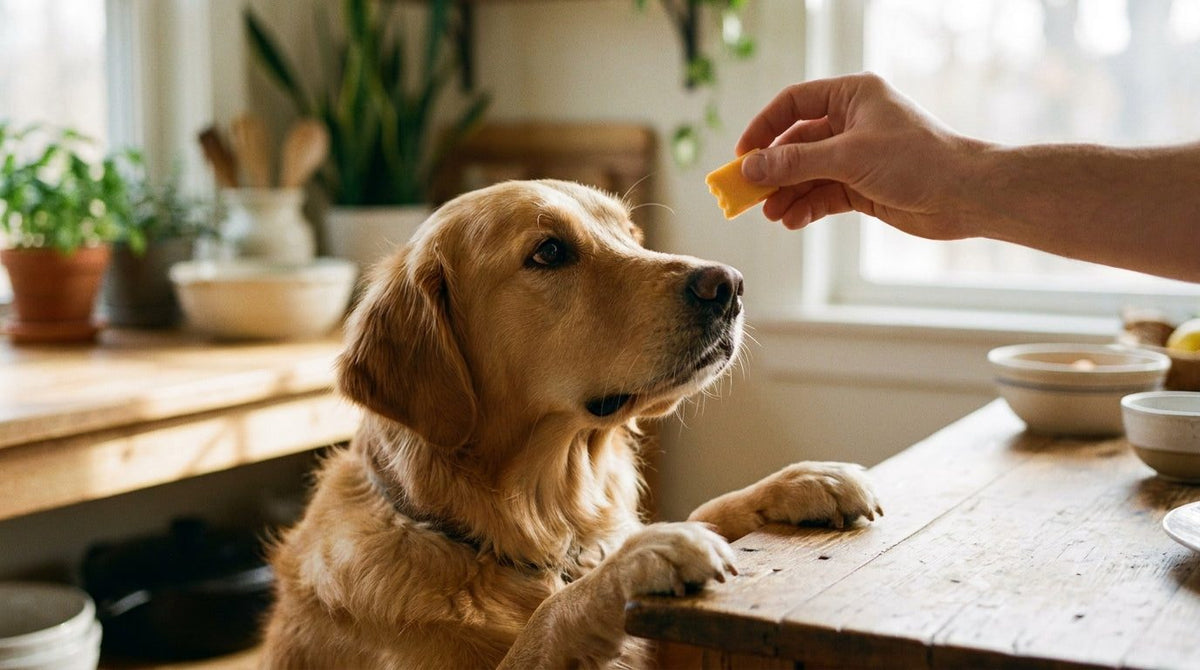
Your dog stares at your cheese board with those eyes. You know the ones. Before you share a bite, it's worth knowing which cheeses are fine, which can cause digestive upset, and which ones are genuinely dangerous — even in small amounts.
The short answer: yes, most dogs can eat certain cheeses in moderation. The longer answer involves lactose, fat content, toxic molds, and a few cheese types that require an emergency vet call. This guide covers all of it.
Table of Contents
Is Cheese Safe for Dogs? {#is-cheese-safe}
For most healthy adult dogs, small amounts of low-fat, low-sodium, plain cheese are safe as an occasional treat. Cheese provides protein, calcium, vitamin A, B vitamins, and fatty acids — all of which support muscle maintenance, bone health, and immune function.
That said, cheese carries real risks:
-
High fat content — can trigger weight gain and pancreatitis
-
Lactose — most adult dogs produce limited lactase enzyme and may experience digestive upset
-
Sodium — some cheeses contain levels harmful to dogs with kidney issues or heart conditions
-
Toxic ingredients — blue cheese mold, and add-ins like garlic, onion, or chives are dangerous
The key is choosing the right cheese, in the right amount, for the right dog. (BullyStick.com Expert Guide, 2025)
Why Most Adult Dogs Are Lactose Intolerant {#lactose}
Puppies produce lactase — the enzyme that breaks down lactose in their mother's milk. As they mature, lactase production decreases significantly. Most adult dogs cannot properly digest dairy, making lactose-heavy foods a reliable source of GI distress.
Signs your dog may be lactose intolerant:
-
Vomiting or nausea within hours of eating cheese
-
Diarrhea or loose stools
-
Gas, bloating, or audible stomach gurgling
-
Decreased appetite
Aged, hard cheeses have gone through a fermentation process that reduces lactose content substantially — making them far better tolerated than fresh dairy or soft cheeses. If your dog has shown any sensitivity to dairy before, stick to aged varieties or skip cheese altogether.
Safe Cheeses for Dogs {#safe-cheeses}

Stick to firm, plain, aged cheeses with low lactose and moderate fat. These are the best options:
| Cheese | Lactose | Fat | Best Use |
|---|---|---|---|
| Aged Cheddar | Low | Medium-High | Training treats, hiding pills |
| Mozzarella (plain) | Medium | Low-Medium | Training sessions |
| Swiss | Low | Medium | Occasional reward |
| Cottage Cheese (low-fat) | Low | Low | Meal topper, sensitive stomachs |
| Provolone | Low | High | Rare treat only |
Aged Cheddar is the most practical all-around option — firm enough to mold around a pill, easy to break into pea-sized training pieces, and lower in lactose than fresh cheeses.
Mozzarella (plain only — never pizza mozzarella with seasonings) has among the lowest fat and sodium content of common cheeses, making it a solid training reward.
Cottage Cheese works well as a meal topper for dogs with sensitive stomachs — high in protein and calcium, low in lactose. Choose plain, low-fat varieties.
What to avoid even in "safe" cheeses: flavored, smoked, or seasoned versions. Any cheese with herbs, spices, garlic, or onion additions is off-limits regardless of the base cheese type.
Dangerous Cheeses to Avoid {#dangerous-cheeses}
🚨 Blue Cheese — Toxic
Blue-veined cheeses (Roquefort, Gorgonzola, Stilton, Danish Blue) are ripened with a specific fungus that produces roquefortine C — a mycotoxin that is genuinely dangerous to dogs. Symptoms of roquefortine poisoning:
-
Vomiting and excessive panting
-
Muscle tremors or shaking
-
Seizures or convulsions
-
Hyperesthesia (extreme sensitivity to touch)
Without treatment, roquefortine toxicity can be fatal within hours. If your dog eats blue cheese, contact your vet or Pet Poison Helpline (855-764-7661) immediately — don't wait for symptoms. (Vets Now, 2025)
⚠️ Other Cheeses to Avoid
| Cheese | Why to Avoid |
|---|---|
| Brie / Camembert | Very high fat and lactose — near-guaranteed GI upset |
| Feta | High sodium, high fat, high lactose |
| Cream Cheese | Excessive fat/calories; often contains garlic or chives |
| Processed Cheese (Velveeta, American) | High lactose, additives, artificial ingredients |
| Pepper Jack / Spicy Varieties | GI irritant; causes diarrhea and gas |
| Any cheese with garlic, onion, chives | Toxic to dogs — hemolytic anemia risk |
A Note on Xylitol
Some reduced-fat or flavored cream cheeses contain xylitol — an artificial sweetener that is severely toxic to dogs, causing rapid blood sugar drops and liver failure. Always check ingredient labels. (Pet Poison Helpline)
How Much Cheese Can a Dog Eat? {#how-much}
Veterinarians recommend the 10% treat rule: all treats combined should not exceed 10% of your dog's daily calorie intake.
Portion guide by size:
| Dog Size | Max Daily Cheese |
|---|---|
| Small (under 20 lbs) | 1–2 pea-sized cubes |
| Medium (20–50 lbs) | 2–3 small cubes |
| Large (50+ lbs) | 3–4 small cubes |
Start smaller than these maximums when introducing cheese for the first time. Wait 24 hours and watch for digestive reactions before offering again.
Which Dogs Should Never Have Cheese? {#who-should-avoid}
Cheese is not appropriate for every dog, regardless of type or portion:
-
Overweight or obese dogs — the fat and calorie load works against weight management
-
Dogs with pancreatitis (past or present) — high-fat foods can trigger dangerous flare-ups
-
Dogs with kidney disease — sodium levels in most cheeses add unnecessary strain
-
Dogs with known dairy sensitivity — any history of GI upset after dairy means cheese is not worth the risk
-
Puppies — their digestive systems are still developing; stick to appropriate puppy treats
When in doubt, ask your veterinarian before introducing cheese — particularly if your dog has any ongoing health condition.
Using Cheese for Training and Hiding Pills {#training}

Cheese has two genuinely practical uses for dog owners:
Training treats: Cheese has a strong scent and rich flavor that makes it a high-value reward — more motivating than many commercial treats for training sessions. Cut aged cheddar or mozzarella into pea-sized pieces. Keep sessions short and total treat volume within the 10% guideline.
Hiding medication: Firm cheeses like aged cheddar and mozzarella are ideal for concealing pills — press the pill into a small cube and pinch it closed. The fat content actually helps here, as it slows the dog's chewing instinct.
Best cheeses for these purposes: Aged cheddar (most versatile), mozzarella (lower fat), Swiss (mild flavor most dogs accept readily).
Cheese-Flavored Dog Treats: A Safer Alternative {#treats}
For many dogs — especially those with dairy sensitivity, weight concerns, or pancreatitis history — cheese-flavored dog treats deliver that beloved flavor without the lactose, fat, or sodium risks of real cheese.
Here are the best options available at Talis-us:
Talis Us Flavored Yak Cheese Puffs Dog Treats 6oz Made from yak milk — naturally lower in lactose than cow's milk — these cheese puffs deliver authentic cheesy flavor in a light, airy format. Available in multiple flavors. A fan-favorite in the Talis-us treat lineup with 600 units in stock. Perfect for dogs who love cheese taste but don't tolerate dairy well.
- $14.99
Darford Soft Baked Super Cheesy Dog Treats Soft-baked for easy chewing — great for senior dogs or smaller breeds. Darford's Super Cheesy treats pack bold cheddar flavor into a soft, bite-sized format. No artificial preservatives, colors, or flavors.
- $12.99 – $14.99
Frankly Pet Beef Puffs Cheese Dog Chew A puffy, airy chew combining real beef with cheese flavor — a satisfying texture dogs love. Available in two sizes.
- $9.99 – $14.99
Goodness Gracious Roasted Chicken & Cheddar Dog Cookies 8oz Oven-baked cookies pairing roasted chicken with real cheddar — a premium treat with recognizable, clean ingredients. Good for training or as a daily snack.
- $15.49
Goodness Gracious Bacon Cheeseburger Dog Cookies 8oz The classic cheeseburger flavor combination in a baked cookie format. Real ingredients, no artificial additives. Highly palatable for most dogs.
- $15.49
Etta Says! Sit! Dog Training Treats — Cheese Recipe 6oz Purpose-built training treats in a cheese recipe — small size, strong flavor, and a soft texture that breaks apart cleanly for high-repetition reward sessions. At $6.99, one of the best value training treats on our shelf.
- $6.99
👉 Shop all Dog Treats at Talis-us →
FAQs {#faqs}
Can dogs eat cheese every day? Small amounts of safe cheese (aged cheddar, mozzarella, Swiss) are fine daily for healthy dogs — provided it stays within the 10% treat rule. Consistency matters more than frequency; small, controlled portions daily are better than large amounts occasionally.
What happens if a dog eats blue cheese? Blue cheese contains roquefortine C, a mycotoxin that causes vomiting, muscle tremors, and seizures in dogs. It can be fatal without treatment. Contact your vet or Pet Poison Helpline (855-764-7661) immediately.
Is string cheese OK for dogs? String cheese is a processed dairy product with higher lactose and additives than natural cheese. It won't cause a toxic emergency but can cause GI upset. Stick to natural aged cheeses instead.
Can puppies eat cheese? Cheese is not recommended for puppies. Their digestive systems are still developing, and the fat and lactose content is harder on immature GI tracts. Use purpose-formulated puppy treats instead.
Is cottage cheese good for dogs with upset stomachs? Plain, low-fat cottage cheese is sometimes recommended by vets as a bland food component for dogs recovering from GI illness — low lactose, gentle protein, and easy to digest. Always confirm with your vet before using it as a remedy.
Can cheese cause pancreatitis in dogs? High-fat foods — including rich cheeses — can trigger pancreatitis in susceptible dogs. Dogs with a pancreatitis history should avoid cheese entirely. For other dogs, small amounts of low-fat cheese (mozzarella, cottage cheese) carry lower risk than high-fat types like brie or feta.
What's the best cheese for hiding dog pills? Aged cheddar and plain mozzarella — both firm enough to mold around a tablet and strong enough in flavor to mask the medication scent.
This article is for informational purposes. Always consult your veterinarian before introducing new foods, especially if your dog has an existing health condition.

De Talis Us



Dejar un comentario
Este sitio está protegido por hCaptcha y se aplican la Política de privacidad de hCaptcha y los Términos del servicio.