


Can My Cat Eat Cheese? A Complete Vet-Backed Guide
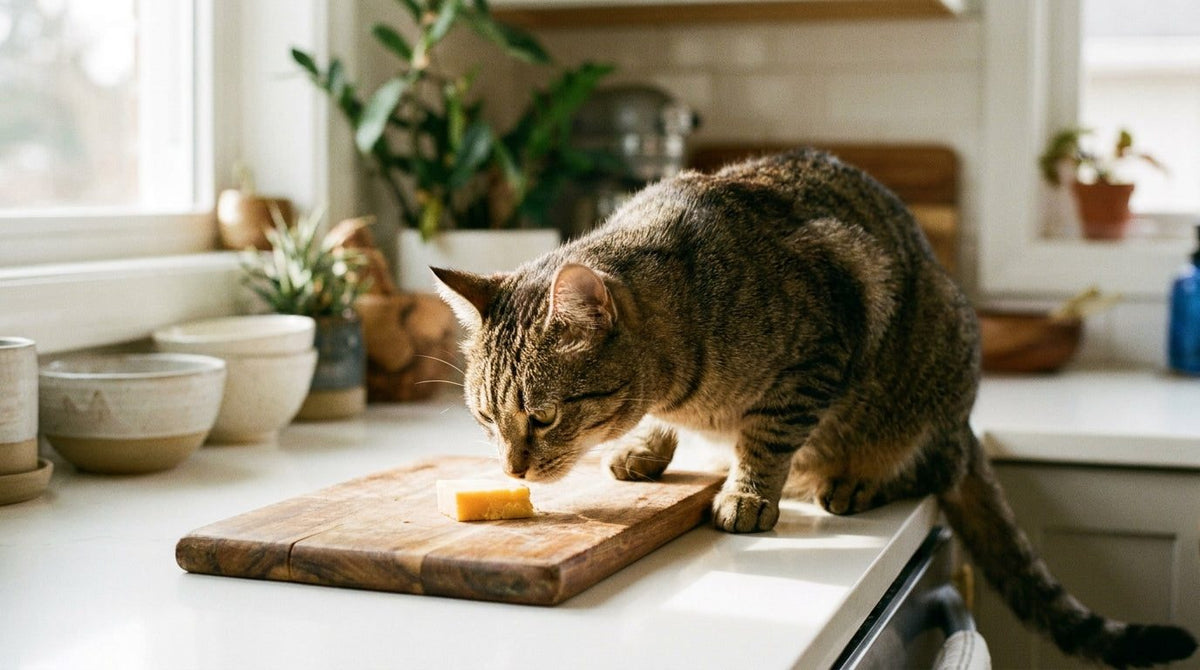
Your cat is watching you unwrap that slice of cheese with the focused intensity only a cat can manage. Before you hand any over, it's worth understanding a key biological fact: cats are obligate carnivores, and almost all adult cats are lactose intolerant. Cheese is not a natural food for cats — and some types pose real health risks.
That said, a tiny amount of the right cheese is unlikely to harm a healthy cat. The answer, as with most human foods, is nuanced. This guide covers the science, the safe options, the dangerous ones, and — most importantly — what to offer your cat instead.
Table of Contents
Is Cheese Safe for Cats? {#is-cheese-safe}
Technically, small amounts of plain, low-lactose cheese are not toxic to most healthy cats. But "not toxic" is a low bar — and cheese offers no meaningful nutritional benefit to a cat, while carrying several real risks.
Cheese is:
-
High in fat — contributing to weight gain and pancreatitis risk
-
High in sodium — taxing on the kidneys, which are already a vulnerability in cats
-
High in lactose (especially fresh cheeses) — causing digestive upset in the majority of adult cats
-
Nutritionally unnecessary — cats derive everything they need from animal protein; dairy is not part of their biological diet
The occasional tiny nibble of mild cheddar won't send a healthy cat to the emergency vet. But cheese should never be a routine treat, and several varieties are genuinely dangerous.
Why Cats and Dairy Don't Mix {#lactose}
Kittens produce lactase — the enzyme that breaks down lactose in their mother's milk. After weaning, lactase production drops significantly in most cats. The result: most adult cats cannot properly digest dairy products.
When a lactose-intolerant cat eats cheese, undigested lactose ferments in the gut, producing:
-
Diarrhea or loose stools — often within a few hours
-
Vomiting
-
Gas and bloating
-
Stomach cramping
Aged, hard cheeses go through a fermentation process that removes most of their lactose — making them somewhat better tolerated than fresh dairy. But even "low-lactose" cheese still contains fat and sodium levels that aren't appropriate for cats in any meaningful quantity.
Cats Are Obligate Carnivores: Why This Matters {#obligate-carnivores}
Unlike dogs — who are omnivores and can derive some nutrition from plant and dairy sources — cats are obligate carnivores. Their bodies are optimized for metabolizing animal protein and fat, and they lack several digestive enzymes that other mammals use to process carbohydrates and dairy.
Practically, this means:
-
Cheese provides no protein source cats can efficiently use (casein, the primary cheese protein, is cow-derived and not optimized for feline metabolism)
-
The fat in cheese is harder on the feline liver and pancreas than equivalent fat from meat sources
-
Cats have a lower thirst drive than dogs and rely heavily on food moisture — high-sodium foods like cheese actively work against proper hydration
-
Kidney disease is the leading cause of death in older cats; excess sodium accelerates kidney strain
Cats may show interest in cheese due to its fat and protein scent — but interest doesn't mean suitability.
Safe Cheeses for Cats (In Very Small Amounts) {#safe-cheeses}

If your cat has stolen a small piece of cheese, or you want to use cheese to hide a pill, the following are the lowest-risk options:
| Cheese | Lactose Level | Fat | Notes |
|---|---|---|---|
| Aged Cheddar | Low | Medium-High | Best for hiding pills; use sparingly |
| Swiss | Low | Medium | Mild flavor; lower lactose due to aging |
| Mozzarella (plain) | Medium | Low-Medium | Lower sodium than most; plain only |
| Cottage Cheese (low-fat) | Low | Low | Occasional meal topper; choose plain only |
Key rules for any of these:
-
Plain only — no herbs, garlic, onion, chives, or spices of any kind
-
Pea-sized amounts maximum — a single small cube is more than enough
-
Infrequently — not a daily treat
-
Monitor for GI symptoms — vomiting, diarrhea, or lethargy after cheese means stop entirely
Hiding pills: Aged cheddar is the most practical option — firm enough to press a tablet into, and strong-smelling enough to mask medication. Use the smallest piece that covers the pill completely.
Cheeses to Avoid {#cheeses-to-avoid}
🚨 Blue Cheese — Dangerous
Blue-veined cheeses (Roquefort, Gorgonzola, Stilton, Danish Blue) are ripened with a specific mold that produces roquefortine C — a mycotoxin toxic to cats and dogs alike. Symptoms include vomiting, muscle tremors, and in severe cases seizures. Contact your vet or the Pet Poison Helpline (855-764-7661) immediately if your cat consumes blue cheese. (MichuPet, 2024)
⚠️ Other Cheeses to Avoid
| Cheese | Why |
|---|---|
| Brie / Camembert | Very high fat and lactose; near-guaranteed GI upset |
| Cream Cheese | High fat and calories; often contains chives or garlic |
| Feta | Very high sodium and lactose; kidney strain risk |
| Processed Cheese (American, Velveeta, string cheese) | High sodium, additives, artificial ingredients |
| Spicy/Flavored Cheeses | GI irritant; herbs and spices toxic risk |
| Any cheese with garlic, onion, or chives | Toxic to cats — causes hemolytic anemia |
A Note on Xylitol
Some low-fat or flavored cream cheeses and dairy spreads contain xylitol — an artificial sweetener severely toxic to cats and dogs. Always check ingredient labels before offering any dairy product.
How Much Cheese Can a Cat Eat? {#how-much}
Far less than most owners assume. Cats are small animals with low daily caloric needs — an average indoor cat requires roughly 200–250 calories per day. Even a 1" cube of cheddar can represent 10–15% of that budget with essentially zero nutritional value.
The practical guideline:
-
A piece no larger than a pea — once or twice per week at most
-
Only plain, aged, low-lactose varieties
-
Only for healthy adult cats with no known kidney, liver, or digestive issues
If you're using cheese solely to hide a pill, use the smallest piece possible that covers the medication.
Which Cats Should Never Have Cheese? {#who-should-avoid}
Cheese is not appropriate for all cats, regardless of type or quantity:
-
Cats with kidney disease — sodium and phosphorus in cheese accelerate kidney damage; avoid entirely
-
Overweight or obese cats — the fat and calorie density works directly against weight management
-
Cats with pancreatitis — high-fat foods trigger flare-ups
-
Cats with known dairy sensitivity or IBS — any GI history with dairy means cheese is not worth the risk
-
Kittens — their developing systems are more sensitive; use purpose-made kitten treats
-
Senior cats — kidney vulnerability increases with age; err on the side of caution
Better Treats for Cats: What Vets Actually Recommend {#better-treats}

Cats thrive on animal protein — not dairy. The best treats for cats are high in meat-based protein, low in carbohydrates, free from artificial preservatives, and appropriately sized for a cat's small caloric budget. Freeze-dried, air-dried, and single-ingredient treats consistently rank as the best options from a nutritional standpoint.
Here's why these outperform cheese as a cat treat:
-
Species-appropriate protein — chicken, turkey, fish, and lamb match a cat's natural dietary needs
-
No lactose or dairy-related GI risk
-
Lower sodium than most cheese options
-
Moisture content (in wet toppers) supports feline hydration
-
No empty calories — every calorie comes with actual nutritional value
Our Top Cat Treat Picks at Talis-us {#talis-picks}
ORIJEN Original Grain-Free Freeze-Dried Cat Treats 1.25oz ORIJEN's freeze-dried treats set the standard for high-protein, biologically appropriate cat snacks. Made with 85%+ animal ingredients including free-run chicken, turkey, and wild-caught fish. No grains, no artificial preservatives, no fillers. A single-ingredient-quality treat in freeze-dried form — retains raw nutrition, irresistible to cats.
- $7.49
ORIJEN Six Fish Grain-Free Freeze-Dried Cat Treats 1.25oz Six-fish formula featuring Atlantic mackerel, herring, flounder, redfish, monkfish, and silver hake. A natural choice for cats that love seafood, and an excellent alternative to cheese for fish-motivated cats. Grain-free, freeze-dried to preserve nutrients.
- $9.79
ORIJEN Tundra Grain-Free Freeze-Dried Cat Treats 1.25oz Wild boar, venison, bison, and Arctic char — a novel protein treat ideal for cats with sensitivities to common proteins. Grain-free freeze-dried formula with 85%+ animal ingredients.
- $9.49
ORIJEN Regional Red Grain-Free Freeze-Dried Cat Treats 1.25oz Ranch-raised angus beef, wild boar, and bison in a red-meat formula. Great for cats who prefer red meat over poultry or fish. Same ORIJEN biologically appropriate standard.
- $8.79
Feline Natural Beef Healthy Bites Grain-Free Freeze-Dried Cat Treats 1.76oz New Zealand grass-fed beef in a freeze-dried bite format — single-protein, grain-free, no artificial anything. Feline Natural's commitment to clean, traceable ingredients makes these a standout treat for health-conscious cat owners.
- $10.99
Feline Natural Lamb Healthy Bites Grain-Free Freeze-Dried Cat Treats 1.76oz New Zealand grass-fed lamb — a novel protein option for cats on elimination diets or those with chicken or beef sensitivities. Freeze-dried, grain-free, single-protein.
- $10.99
Smart Cookie Freeze-Dried Alaskan Salmon Cat Snacks Wild-caught Alaskan salmon in a freeze-dried format — rich in omega-3 fatty acids for coat and skin health. Single-ingredient, no additives. A natural pill-hiding alternative to cheese for fish-motivated cats.
- $7.99
Smart Cookie Freeze-Dried Beef Liver Cat Treats 100% pure beef liver, freeze-dried. One of the most palatable single-ingredient treats available — cats find organ meat irresistible, making these an effective high-value reward or pill-hiding option without any dairy.
- $7.99
Smart Cookie High-Protein Freeze-Dried Turkey Cat Snacks Single-ingredient freeze-dried turkey — a clean, lean protein treat. Turkey is one of the most digestible proteins for cats with sensitive stomachs, making this a smart choice for cats that don't tolerate rich treats well.
- $7.99
Smart Cookie Grain-Free Cat Jerky 2oz Available in multiple flavors — grain-free jerky strips in a chewy format cats can really sink their teeth into. A satisfying texture treat without the dairy risks. Available in chicken, duck, rabbit, and more.
- $9.99
Plato Air-Dried Cat Treats — Chicken Recipe 2.5oz Air-dried chicken treats with minimal processing — slow air-drying concentrates flavor and preserves nutrition without freeze-drying or high-heat cooking. Clean ingredient list, no artificial preservatives.
- $7.99
Plato Air-Dried Cat Treats — Tuna & Salmon Recipe 2.5oz Tuna and salmon combined in Plato's air-dried format — a seafood treat with real nutritional value. Omega-3 rich, high protein, no grains or artificial additives.
- $7.99
Hungry Paws Sardine Treats for Cats 2.5oz Whole sardine-based treats — one of the most nutrient-dense single-ingredient cat snacks available. Sardines are rich in omega-3s, taurine, and B vitamins. A powerhouse treat in a simple format.
- $7.99
Snappy Tom Tuna & Egg Cat Topper 12×2.5oz A wet topper combining tuna and egg — adds moisture, protein, and irresistible flavor to your cat's regular meals. A far better dairy substitute for meal enhancement than cottage cheese, with no lactose risk.
- $28.99
👉 Shop all Cat Treats at Talis-us →
FAQs {#faqs}
Can cats eat cheese every day? No. Even the safest cheese options are high in fat and sodium relative to a cat's caloric needs. Daily cheese is not appropriate — reserve it for rare occasions or pill-hiding, and keep portions to a pea-sized amount.
My cat ate blue cheese — what do I do? Contact your vet or the Pet Poison Helpline (855-764-7661) immediately. Blue cheese contains roquefortine C, a mycotoxin that causes tremors and seizures in cats. Don't wait for symptoms.
Is cottage cheese OK for cats? Plain, low-fat cottage cheese is the lowest-risk dairy option for cats — lower in lactose and fat than most alternatives. Some vets use it as a bland food component during GI recovery. Keep portions very small and only use if your cat shows no dairy sensitivity.
Can cheese help my cat take a pill? Yes — a tiny piece of aged cheddar (the smallest amount that covers the pill) works well for pill-hiding. For cats with dairy sensitivity, freeze-dried beef liver or a small piece of chicken are equally effective and dairy-free alternatives.
Why does my cat want cheese if it's bad for them? Cats are attracted to the fat and protein scent in cheese — not the dairy itself. Their interest is driven by smell, not an instinct for what's nutritionally appropriate. The same attraction applies to much healthier meat-based treats.
Is cream cheese safe for cats? No. Cream cheese is high in fat and calories, and many varieties contain chives, garlic, or other ingredients toxic to cats. Avoid it entirely.
This article is for informational purposes. Always consult your veterinarian before introducing new foods, especially if your cat has an existing health condition.

De Talis Us


Dejar un comentario
Este sitio está protegido por hCaptcha y se aplican la Política de privacidad de hCaptcha y los Términos del servicio.