


Article: Wet vs Dry Pet Food: What's Best for Your Pet at talis-us
Wet vs Dry Pet Food: What's Best for Your Pet at talis-us
Your Pet's Nutrition Starts With the Right Choice
Choosing between wet and dry pet food is one of the most common questions pet owners face, and it's a question worth taking seriously. What your dog or cat eats every day shapes their energy, coat health, digestion, and overall wellbeing. At talis-us, we're here to help you make that choice with confidence, not confusion.
Whether you're shopping for wet dog food, wet cat food, or dry kibble, understanding the real differences between these options can genuinely transform your pet's health and happiness. This guide breaks it all down in a warm, straightforward way, because your pet deserves nothing but the best, and so does your peace of mind as a caring owner.
Understanding Wet vs Dry Pet Food
What's Actually Inside Each Option?
Before you can make the right call, it helps to know what's actually going into that bowl. Wet and dry pet food differ significantly in their composition, moisture content, and how they deliver nutrition.
Wet pet food, whether formulated for dogs or cats, typically contains around 70 to 80 percent moisture. That high water content comes from the inclusion of meat broths, gravies, or natural juices during processing. The result is a food that's rich in animal protein, often more palatable, and closer in texture to what pets might naturally consume. Wet dog food and wet cat food tend to have fewer carbohydrates than dry alternatives, which can be beneficial for pets that need to manage their weight or blood sugar levels.
Dry pet food, commonly known as kibble, contains only about 10 percent moisture. It's made by combining ingredients into a dough, then extruding and baking them into those familiar crunchy pieces. Dry formulas are convenient, cost-effective, and have a longer shelf life once opened. Many dry foods are also fortified with vitamins and minerals, and the crunchy texture can help reduce plaque buildup on teeth.
Here's a quick comparison to keep in mind:
- Protein content: Wet food often delivers higher protein per serving from animal sources.
- Hydration: Wet food contributes significantly to daily fluid intake, especially important for cats.
- Calories: Dry food is more calorie-dense per gram, so portion control matters.
- Cost: Dry food is generally more budget-friendly for long-term feeding.
- Convenience: Dry kibble is easier to store and serve, with no refrigeration needed after opening.
Neither option is universally superior. The best choice truly depends on your individual pet's needs, which brings us to the next important consideration.
Which Food Type Suits Your Pet's Needs?
Age, Breed, and Health Considerations
Every pet is unique, and what works beautifully for one animal may not be ideal for another. Age, breed, activity level, and health conditions all play a role in determining whether wet or dry food is the better fit.
Kittens and puppies often do well with wet food during their early development. The soft texture is easy on developing teeth and gums, and the high moisture content supports their rapid growth and hydration needs. As they mature, many owners gradually introduce dry food or settle into a combination approach.
Senior pets frequently benefit from wet food as well. Older dogs and cats can develop dental sensitivities, reduced kidney function, or a decreased sense of smell that makes dry kibble less appealing. Wet food is easier to chew and its stronger aroma can encourage picky or aging eaters to stay interested in mealtime.
Active and working breeds often thrive on high-quality dry food that delivers concentrated energy in every bite. For large, athletic dogs that burn significant calories throughout the day, a calorie-dense kibble paired with regular hydration can be a practical and nutritious solution.
Cats with urinary health concerns are a particularly important case. Cats are naturally low-thirst animals, and relying solely on dry food can contribute to dehydration and urinary tract issues over time. Wet cat food provides a meaningful hydration boost that supports kidney and bladder health, something many veterinarians actively recommend.
Pets with allergies or digestive sensitivities may respond better to specific formulations in either wet or dry form. Reading ingredient labels carefully and consulting your vet helps you identify which proteins and grains, or grain-free options, work best for your companion.
At talis-us, we understand that no two pets are the same. That's why offering a thoughtful range of nutrition options matters so much to us.
Mixing, Pairing, and Treating Your Pet Right
Complementing Meals with Dog Treats and Cat Treats
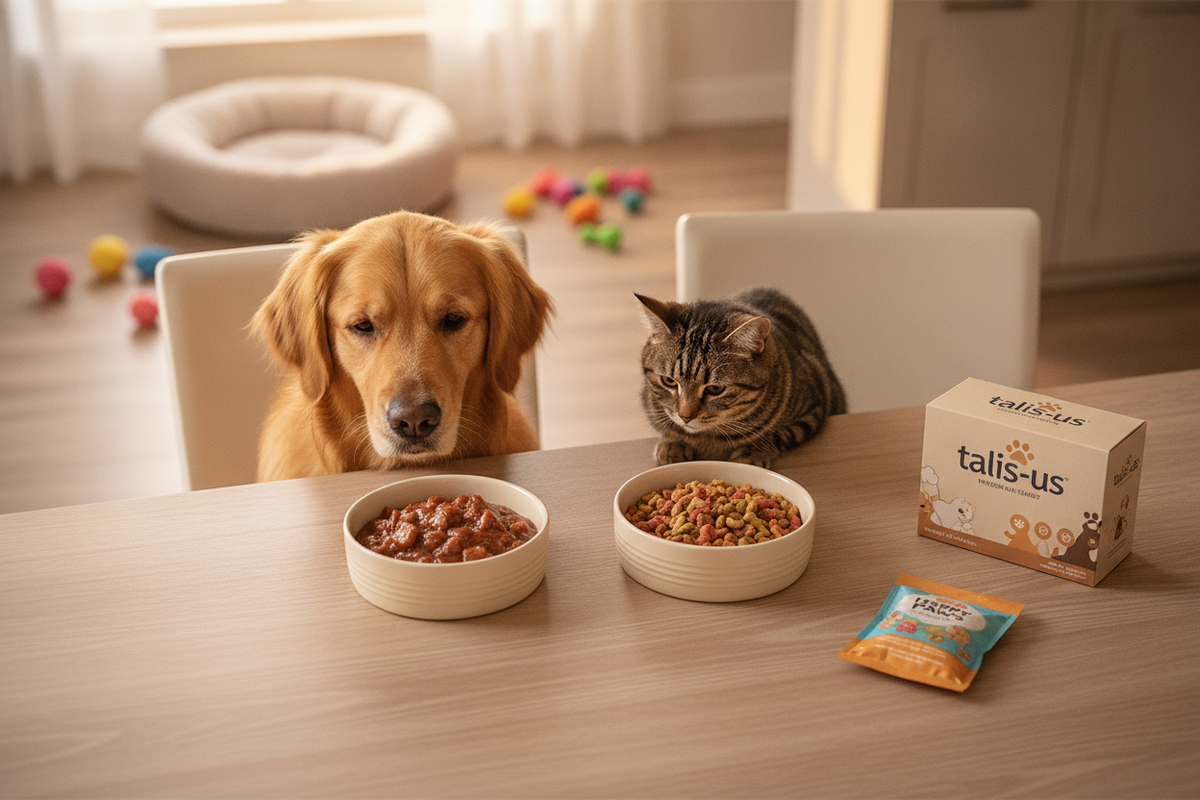
One of the most practical approaches many pet owners take is combining wet and dry food rather than choosing one exclusively. This "mixed feeding" strategy lets you enjoy the benefits of both formats. You might serve wet food in the morning for palatability and hydration, then offer dry kibble in the evening for dental benefits and convenience. It's a flexible approach that works well for many dogs and cats.
Beyond the main meal, treats play a genuinely important role in your pet's daily life. Dog treats and cat treats aren't just rewards; they're tools for training, bonding, and even supplemental nutrition when chosen wisely.
When selecting treats, keep these principles in mind:
- Treats should make up no more than 10 percent of your pet's daily caloric intake. This keeps their main meals nutritionally balanced.
- Look for treats with recognizable, wholesome ingredients. Single-protein treats or those made with natural ingredients are a smart choice.
- Match the treat to the purpose. Soft, chewy dog treats work well for training because they're quick to consume. Crunchy cat treats can provide a satisfying texture contrast to a wet food diet.
- Consider functional treats. Some dog treats and cat treats are formulated to support dental health, joint mobility, or digestive wellness, giving you added value beyond the reward itself.
At talis-us, our approach to pet care goes beyond food. We believe that a happy, healthy pet thrives when every aspect of their environment is considered, from nutrition to play. Pairing a well-rounded diet with enriching dog toys or cat toys, for example, supports mental stimulation and physical activity that food alone can't provide.
Finding the Right Balance for Your Pet
Both wet and dry food have real, meaningful benefits. Wet food excels in hydration, palatability, and protein delivery. Dry food offers convenience, dental benefits, and cost efficiency. The right choice, or the right combination, depends entirely on your pet's unique needs, lifestyle, and preferences.
There's no single answer that fits every dog or every cat, and that's completely okay. What matters most is that you're paying attention, asking the right questions, and making informed choices with your pet's wellbeing at the center.
At talis-us, we celebrate every pet and every owner who puts care first. Whether you're exploring wet dog food and wet cat food options, stocking up on dog treats and cat treats, or looking into enrichment accessories like dog toys, cat toys, or even specialty items like large bird cages, reptile lights, and reptile food for your more exotic companions, we're here to support every step of your pet care journey.
Explore our full range of pet nutrition and accessories today and keep your companion happy, healthy, and thriving. Because when your pet feels their best, so do you.

Written by Talis Us



Leave a comment
This site is protected by hCaptcha and the hCaptcha Privacy Policy and Terms of Service apply.