


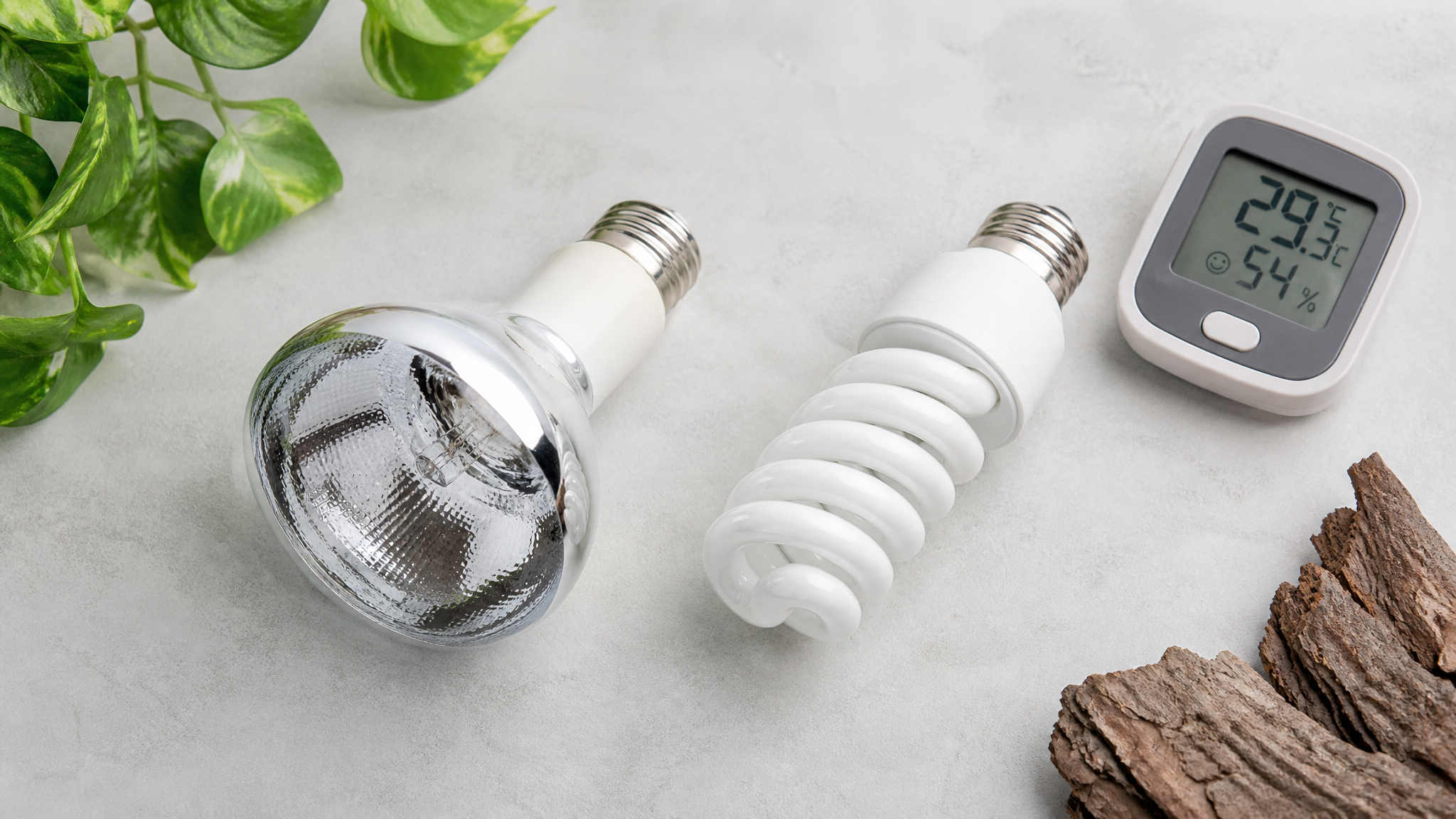
Reptile Lighting Basics: UVB, Heat, and Bulb Selection Explained
Setting up lighting for a reptile is rarely just screwing in a bulb. Because these animals are ectothermic, they rely entirely on external sources for body heat, and for many, a hidden part of the light spectrum dictates whether they can use the calcium in their food. Miss the mark, and you might see a lethargic animal or, over time, one with softened bones.
The lighting section of a pet store can look overwhelming, but once you separate heat from UVB, the choices become clearer. A basking lamp keeps a spot warm; a UVB lamp lets the reptile make vitamin D₃. They don't do each other's job. The rest is matching output, distance, and replacement schedule to the animal you're keeping.
Why Reptile Lighting Matters
Reptiles thermoregulate by moving between warmer and cooler areas, and without a proper heat gradient, they can't digest food or fight off illness. A ceramic heat emitter or basking bulb placed at one end creates that gradient, while the opposite end stays cooler. As the Long Island Bird and Exotics Pet Vet explains, managing enclosure temperature is the most important requirement for reptile care.
On the UVB side, things get more subtle. When UVB reaches the skin, it triggers vitamin D₃ synthesis, which allows the animal to absorb calcium. Without it, calcium metabolism breaks down. The Lightbulbs.com terrarium guide notes that UVA and UVB together influence feeding, activity, and breeding, so light is about behavior as much as bone health. That's why basking bulbs—which emit heat and visible light but no UVB—must be paired with a separate UVB source unless you're using a mercury vapor bulb that combines both.
The Science of UVB and Heat
A UV bulb's output isn't guesswork; it can be measured on the UV Index (UVI) scale. A shade-dwelling snake might need a UVI around 1.0, while a desert lizard basking in morning-equivalent sunlight would bask closer to 3.0 or 4.5. These values come from the Ferguson zone concept, which groups reptiles by their natural UV exposure. Baines et al. (2016) and Ferguson et al. (2010) showed that species self-regulate their UV intake, so our job is to provide a gradient of UV, not a blanket.
High-quality fluorescent tubes from brands like Zoo Med and Arcadia are currently the evidence-backed standard. A Reptiles Magazine overview points out that these german-made tubes solarise slowly and produce reliable UVB. The same can't be said for some LED UVB options. Wunderlich et al. (2023) tested UVB-emitting LEDs and found that some untested Chinese brands emitted harmful UVB and even UVC. While the technology is advancing, LED UVB lamps aren't yet proven safe.
One other trap: color-changing detector cards. They react to UVA, not UVB, so they'll tell you the bulb is fine long after UV output has dropped. Only a UVB meter gives a direct reading.
Risks of Improper Lighting
When UVB is inadequate, the first thing that suffers is calcium metabolism. Over time, that disruption may increase the risk of metabolic bone disease, where bones become soft and deformed. It's not an overnight crisis, but a slow, preventable decline. Overheating is the opposite danger: a basking bulb that's too strong or placed too close can cause fatal hyperthermia. A thermostat and a temperature gun are not optional extras.
UVB bulbs lose output while still glowing. Compact fluorescent lamps generally need replacement every 6 months, while Zoo Med and Arcadia tubes can last a year or more—but the only way to know is to take a reading with a UVB meter. And if the bulb sits above a glass or plastic cover, the UVB stops right there. It cannot pass through. That sunny windowsill won't help, nor will a bulb mounted on a glass tank lid. Mesh screens are better, though they block some UV too: ExoTerra mesh transmits about 65% of UVB, while Custom Reptile Habitats mesh lets through roughly 77%.
The Wunderlich study adds another caution: cheap LED UVB lamps can emit dangerous wavelengths, so sticking with known-quality tubes is the safer bet. On top of lighting risks, loose substrates like sand can cause impaction if a stressed reptile ingests them. Poor lighting contributes to that stress, so the whole setup connects.
Choosing the Right Bulbs for Your Reptile
A good starting point is to forget about wattage for a moment and think about what the reptile actually needs: a basking temperature (for an iguana, that might be part of a 75–105°F gradient; for a leopard gecko, 88–90°F at the basking spot) and a UV Index appropriate for its Ferguson zone. From there, you choose the bulb type, distance, and mesh that deliver those numbers. Separate heat and UVB lamps usually give more control than a single mercury vapor bulb, especially if you need to dim heat independently.
Reptile Systems Eco T5 Unit Zone 1 Kit 2.4%: A Low-Output UVB Option
For crepuscular or shade-dwelling species that align with Ferguson Zone 1, a 2.4% UVB tube mimics the filtered light of a forest floor. The Reptile Systems Eco T5 Unit Zone 1 Kit includes a T5-HO fixture, which gives good light spread across the enclosure. Because it's a high-quality tube, it tends to solarise more slowly than budget alternatives, but replacement timing should still be dictated by a UVB meter, not a calendar. The distance between the bulb and the basking area, along with any mesh in between, will determine the actual UVI at the animal's back. Test it.
Matching UVB Output to Your Reptile
Ferguson zones take the mystery out of bulb selection. A forest species does well with around 6% UVB (like the Arcadia Forest kit), while a desert lizard needs something in the 10–12% range. A bulb labeled "5.0" might be too weak for a high-UV species if the distance is large or the mesh eats up a third of the output. You can't just trust the label. T8 tubes are thicker and lower output; T5-HO tubes produce higher UVB and are usually a better fit for taller enclosures. Compact fluorescent lamps, meanwhile, offer poor coverage and need more frequent replacement, so they're often the weakest link in a serious setup.
Selecting Heat Bulbs
An incandescent basking lamp typically lasts 1,000–2,000 hours. Run 10–12 hours a day, that's 3–6 months before the filament burns out. Unlike UVB bulbs, you replace them when they stop lighting up, not on a schedule. Ceramic heat emitters and black heat bulbs give heat with no visible light, which is handy for nighttime warmth in a sleeping reptile's enclosure. Always position the heat source on one side. That lopsided warmth is the whole point: it creates the gradient that lets the animal shuttle between temperatures as needed.
Frequently Asked Questions
Do all reptiles need UVB lighting?
Many reptiles rely on UVB to produce vitamin D₃, but some nocturnal species like crested geckos can get D₃ from their diet. Still, many veterinarians recommend providing low-level UVB anyway, as it can support natural behavior. The Ferguson zone concept helps decide how much, if any, is appropriate.
How often should I replace UVB bulbs?
Compact fluorescent lamps need replacement about every 6 months. High-quality tubes from Zoo Med or Arcadia may last 12 months or longer. A bulb still glowing can emit next to no UVB, so visible light is not a gauge of UV output. Only a UVB meter confirms if the bulb is still working for your reptile.
Can I use a glass tank with a UVB bulb?
UVB cannot penetrate glass or plastic. The bulb must sit on top of a mesh screen or be mounted inside the enclosure. Mesh blocks a portion of UVB—ExoTerra screens cut about 35%—so measure the UVB level at the basking spot with a meter after installation to ensure the animal gets the intended exposure.

Written by Talis Us


Leave a comment
This site is protected by hCaptcha and the hCaptcha Privacy Policy and Terms of Service apply.