



Article: Reptile Heat Lamp Safety: Keep Your Pet Safe
Reptile Heat Lamp Safety: Keep Your Pet Safe
Why Reptile Heat Lamp Safety Matters More Than You Think
Your reptile depends on warmth to survive. Unlike mammals, reptiles are ectothermic, meaning they rely entirely on external heat sources to regulate their body temperature, digest food, and stay active. Heat lamps make that possible inside a home enclosure. But here is the part many owners do not realize until something goes wrong: those same lamps, when used incorrectly, can overheat an enclosure, cause burns, or create fire risks.
Reptile heat lamp safety is not just a checklist item. It is an ongoing commitment to understanding your pet's environment and making smart, consistent choices. Whether you have just welcomed your first bearded dragon or you have been keeping ball pythons for years, getting the heat setup right is one of the most impactful things you can do for your scaly companion's health and happiness.
This guide walks you through the most common hazards, how to choose the right setup, and the daily habits that keep your reptile safe and comfortable year-round.
Understanding the Risks of Reptile Heat Lamps
Common Heat Lamp Hazards That Sneak Up on You
Most heat lamp accidents do not happen because an owner was careless. They happen because certain risks are easy to miss, especially for newer reptile keepers. Here are the hazards that tend to go unnoticed until they cause real problems.
Overheating enclosures. A heat lamp that is too powerful for the size of your enclosure can raise the ambient temperature beyond what your reptile can safely tolerate. Reptiles cannot sweat or pant effectively to cool themselves down. If the temperature climbs too high and there is no cool zone to retreat to, heat stress or even fatal overheating can occur within hours.
Direct contact burns. Reptiles are naturally curious and will often climb or press against surfaces. An exposed bulb without a protective guard is a serious burn risk. Burns on reptiles are painful, slow to heal, and vulnerable to infection. Many owners do not notice a burn until it has already progressed because reptiles are skilled at hiding signs of discomfort.
Unsecured fixtures. A lamp that is not properly mounted or secured can shift, fall, or make contact with the enclosure material. This creates both a burn hazard for your pet and a potential fire risk for your home. Cheap or flimsy lamp holders are one of the most underestimated dangers in reptile care.
Faulty bulbs and wiring. Old bulbs, cracked sockets, or frayed cords are fire hazards. Because heat lamps often run for many hours each day, the wear on equipment builds up faster than it does with standard household lighting.
No temperature monitoring. Relying on guesswork instead of an accurate thermometer is one of the most common mistakes reptile owners make. A lamp that feels warm to the touch does not tell you what the actual basking surface temperature is inside the enclosure.
Spotting these risks early gives you the chance to correct them before your reptile pays the price.
Choosing the Right Heat Lamp Setup for Your Reptile
Matching Wattage and Bulb Type to Your Reptile's Needs
Not all reptiles have the same heat requirements, and not all heat lamps are built the same way. Choosing the right combination of wattage and bulb type is one of the most important reptile heat lamp safety decisions you will make.
Know your reptile's temperature needs. Desert species like bearded dragons and uromastyx need basking spots between 100°F and 115°F. Tropical species like leopard geckos and crested geckos do well with cooler basking zones in the 85°F to 90°F range. Aquatic turtles need surface basking areas around 90°F to 95°F. Before purchasing any lamp, research the specific temperature requirements for your species.
Choose the right wattage for your enclosure size. A 100-watt bulb in a small 10-gallon tank will quickly overheat the space. A 40-watt bulb in a large 75-gallon enclosure may not provide enough heat. As a general starting point, smaller enclosures typically need lower wattage bulbs, while larger tanks may require higher wattage or multiple heat sources. Always test and adjust using a reliable thermometer.
Understand the different bulb types.
- Incandescent basking bulbs produce visible light and heat, making them a popular choice for daytime basking.
- Ceramic heat emitters (CHEs) produce heat without light, which makes them ideal for nighttime heating without disrupting your reptile's day-night cycle.
- Mercury vapor bulbs combine UVB, UVA, and heat in one unit, which is convenient for species that need UVB exposure.
- Deep heat projectors are a newer option that penetrate deeper into muscle tissue, closely mimicking the infrared radiation of the sun.
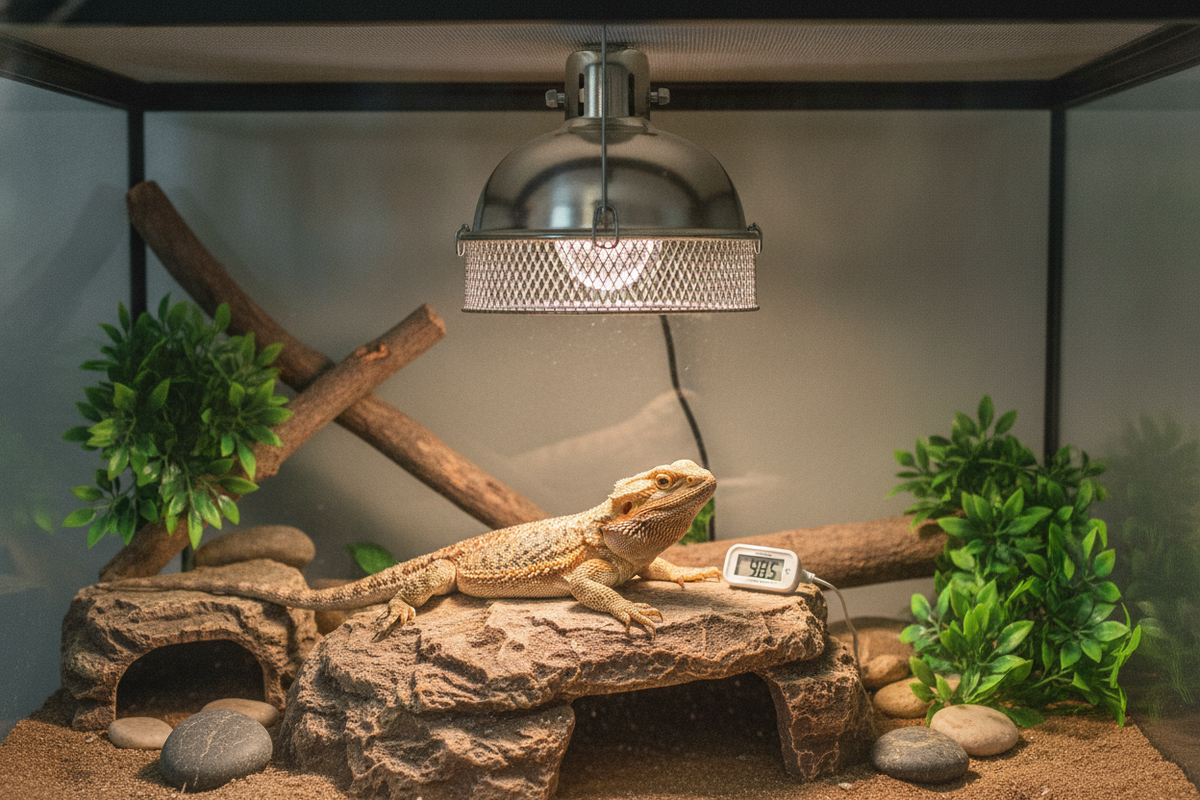
Always use a lamp guard or dome fixture. A quality dome reflector focuses heat more effectively, reduces energy waste, and keeps the bulb safely enclosed. Pair it with a ceramic socket rated for the wattage you are using to prevent overheating at the connection point.
Consider a thermostat. A thermostat connects to your heat lamp and automatically adjusts output to maintain a consistent temperature. This is especially useful for preventing dangerous temperature spikes and is considered a best practice in reptile heat lamp safety by experienced keepers.
Safe Placement and Daily Heat Lamp Habits
Creating a Burn-Free Basking Zone Your Reptile Will Love
Even the right bulb becomes a hazard if it is placed incorrectly. Safe placement and consistent daily habits are what turn a good setup into a truly protective one.
Position the lamp at the correct distance. The distance between the bulb and the basking surface directly affects the temperature your reptile experiences. Most basking bulbs work best when placed six to twelve inches above the basking spot, but this varies by wattage and bulb type. Always verify the actual surface temperature with a temperature gun or digital probe thermometer rather than estimating.
Create a proper thermal gradient. Every reptile enclosure should have a warm side and a cool side. The basking spot sits on the warm end, while the opposite end of the enclosure stays significantly cooler. This gradient allows your reptile to thermoregulate naturally by moving between zones as needed. A single heat source placed in the center of the enclosure eliminates this gradient and puts your reptile at risk.
Install a bulb guard. A simple wire mesh guard placed around the bulb prevents your reptile from making direct contact with the hot surface. This is a low-cost addition that dramatically reduces burn risk, particularly for active climbers like chameleons, iguanas, and tree monitors.
Secure all fixtures firmly. Use lamp holders designed specifically for reptile enclosures. Avoid balancing lamps on the edge of a screen lid without proper clamps or mounts. A lamp that falls into an enclosure can injure your reptile directly or start a fire.
Check your setup daily. Before leaving home or going to sleep, take thirty seconds to verify that the lamp is on, positioned correctly, and that the temperatures are within the expected range. This quick check can prevent hours of dangerous heat exposure or a cold night that stresses your reptile's immune system.
Replace bulbs on schedule. Most basking bulbs have a lifespan of around 2,000 to 3,000 hours. Even if a bulb still appears to be working, its output may have dropped significantly, meaning your reptile is not getting the heat they need. Keep track of usage and replace bulbs proactively rather than waiting for them to burn out.
Give Your Reptile the Safe, Warm Home They Deserve
Reptile heat lamp safety is one of the most important investments you can make in your pet's long-term health. The right lamp, placed correctly, monitored consistently, and paired with smart daily habits, creates a habitat where your reptile can truly thrive. Burns, overheating, and equipment failures are largely preventable when you know what to look for and take the time to set things up properly.
Your reptile cannot tell you when something feels wrong, which is why it falls to you to stay informed and stay proactive. The good news is that keeping them safe does not have to be complicated. It just takes the right tools, a little knowledge, and the kind of care that brought you to reptile keeping in the first place.
Ready to upgrade your reptile's lighting setup? Explore trusted reptile lighting options at Talis Us and find everything you need to build a safe, comfortable basking environment your scaly companion will love.

Written by Talis Us


Leave a comment
This site is protected by hCaptcha and the hCaptcha Privacy Policy and Terms of Service apply.