


How to Read a Cat Food Label and What Ingredients to Avoid
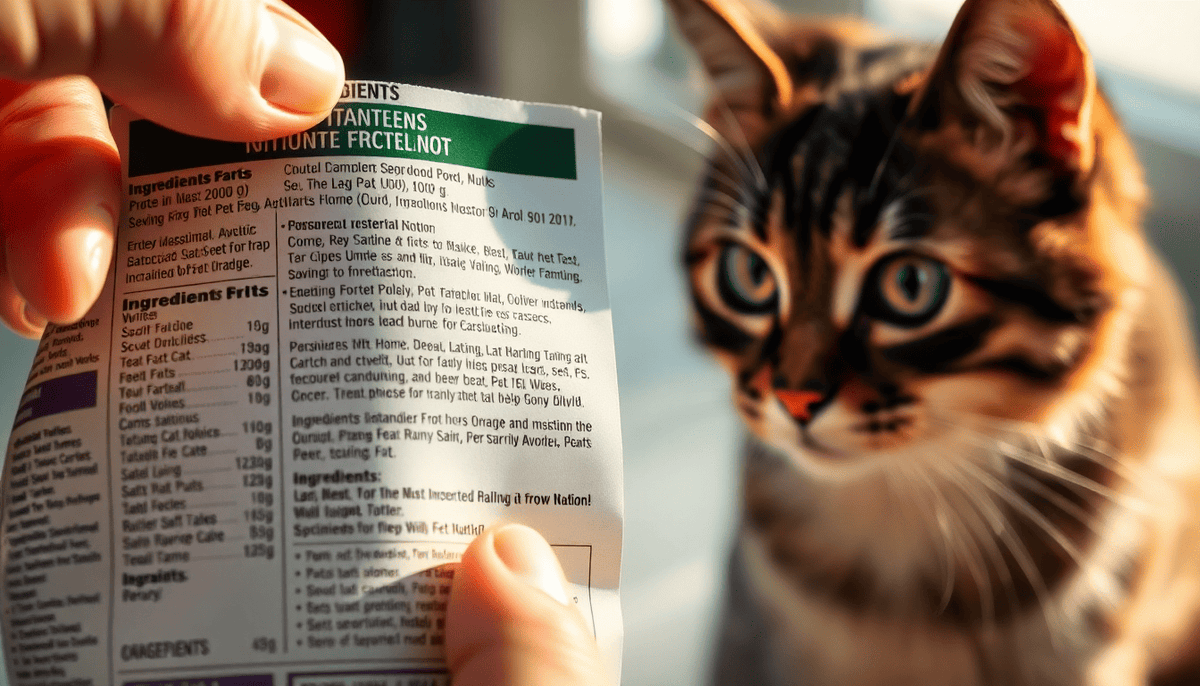
If you're a cat parent, you probably spend a good chunk of time staring at cat food labels in the pet store, wondering what all those fancy words actually mean. Is your kitty getting the nutrition they need, or are you accidentally feeding them something that's basically the feline equivalent of junk food? Don't worry – you're not alone in feeling confused. Most pet owners have no idea what they're actually reading on those labels, and honestly, the pet food industry doesn't make it easy.
Here's the thing: understanding cat food labels is one of the most important things you can do for your furry friend's health and longevity. Your cat's diet directly impacts their energy levels, coat quality, weight, and overall wellbeing. A cat that's eating high-quality food is going to live a longer, healthier life than one munching on low-grade kibble filled with fillers and questionable ingredients.
In this comprehensive guide, we're going to break down everything you need to know about reading cat food labels. We'll decode the confusing terminology, explain what those ingredient lists actually mean, and most importantly, we'll tell you exactly which ingredients you should be avoiding at all costs. By the time you finish reading this, you'll be a cat food label expert, and your kitty will be thanking you for making smarter nutritional choices.
Understanding the Basics of Cat Food Labels
Before we dive into the nitty-gritty details, let's start with the fundamentals. Cat food labels are regulated by the Association of American Feed Control Officials, or AAFCO. This organization sets the standards for what can and can't be included in pet food, and they require certain information to be displayed on every package.
The label is basically a window into what your cat is actually eating. It tells you the guaranteed analysis (the nutritional breakdown), the ingredient list, and feeding guidelines. But here's where it gets tricky – the way this information is presented can be misleading if you don't know what you're looking for.
One of the most important things to understand is that ingredient lists are required to be listed by weight, in descending order. This means the first ingredient listed is the heaviest ingredient in the food. Sounds straightforward, right? Well, it gets complicated because of something called the "water weight trick."
See, different ingredients contain different amounts of water. Meat contains a lot of water, while grains contain very little. So when a company lists "chicken" as the first ingredient, that chicken includes all its water weight. But when that chicken is processed and cooked, most of that water evaporates. Meanwhile, a grain like corn might be listed fourth, but after processing, it could actually make up a larger portion of the final product than the chicken does.
This is why you need to look beyond just the first ingredient. You need to understand the whole picture, and that's what we're going to teach you.
The Guaranteed Analysis: What Those Numbers Mean
The guaranteed analysis section is where you'll find the nutritional breakdown of the food. It typically includes protein, fat, fiber, and moisture percentages. For cat food, this section is absolutely crucial because cats have very specific nutritional needs.
Cats are obligate carnivores, which means they need meat to survive. Unlike dogs, who can adapt to a more omnivorous diet, cats require certain amino acids that are only found in animal protein. The most important of these is taurine, which is essential for heart health and vision.
When you're looking at the guaranteed analysis, you want to see a protein percentage that's at least 30 percent for adult cats. Some high-quality foods go even higher, with protein levels in the 40-50 percent range. The fat content should be at least 9 percent, and ideally higher. Cats need fat for energy and for the absorption of certain vitamins.
The fiber content should be relatively low – ideally under 3 percent. Cats don't need a lot of fiber, and excessive fiber can actually interfere with their ability to absorb nutrients. The moisture content is also important. Wet food typically has 70-80 percent moisture, while dry food has around 10 percent. This matters because cats don't naturally drink a lot of water, and they get much of their hydration from food. This is one reason why many veterinarians recommend including wet food in your cat's diet.
Now, here's something important: the guaranteed analysis only tells you the minimum or maximum of certain nutrients. It doesn't tell you the quality of those nutrients or where they're coming from. A food could have 30 percent protein, but if that protein is coming from low-quality sources, it's not going to be as beneficial as protein from high-quality meat sources. This is why you absolutely need to read the ingredient list.
Decoding the Ingredient List
The ingredient list is where the real story of your cat's food is told. This is where you'll find out whether your cat is eating premium ingredients or if you're basically paying for a bag of filler.
Let's start with the meat ingredients, since these should be the foundation of any good cat food. When you see "chicken" or "beef" listed as an ingredient, that's a whole meat source. This is what you want to see. These are high-quality protein sources that are appropriate for cats.
But watch out for vague terms like "meat meal" or "meat by-products." These are lower-quality ingredients that can include parts of animals that aren't fit for human consumption. Meat by-products can include things like beaks, feathers, hooves, and other parts that have very little nutritional value for cats. Meat meal is rendered meat – it's been cooked down and processed, which can reduce its nutritional value.
Similarly, "poultry by-products" or "poultry meal" are not ideal. You want to see specific poultry sources like "chicken meal" or "turkey meal" rather than generic "poultry" products. And if you see something like "animal by-products" without any specification of what animal it is, that's a red flag. You have no idea what your cat is actually eating.
Fish is another common ingredient in cat food, and it can be a good protein source. However, fish should not be the primary ingredient in your cat's diet. Cats in the wild don't eat fish as their main food source, and excessive fish can lead to health problems. Some cats can develop a preference for fish-based foods and become picky eaters, refusing other types of food. Additionally, some fish-based foods can contain high levels of mercury and other contaminants.
Look for named fish sources like "salmon" or "herring" rather than generic "fish meal" or "fish by-products." And ideally, fish should be listed as a secondary ingredient, not the primary one.
Now let's talk about grains and carbohydrates. This is where a lot of cat food companies try to sneak in cheap fillers. Remember, cats are carnivores. They don't need grains, and they certainly don't need a lot of carbohydrates. Yet many commercial cat foods are loaded with corn, wheat, and soy.
Corn is one of the worst offenders. It's cheap, it's a filler, and it provides very little nutritional value for cats. Worse, many cats are allergic to corn. If you see corn, corn meal, corn gluten, or any corn product listed as one of the first few ingredients, that's a sign that the food is not high quality.
Wheat is another ingredient to be cautious about. Like corn, it's often used as a cheap filler, and many cats have wheat allergies or sensitivities. Wheat gluten is particularly problematic because it's a highly processed ingredient with minimal nutritional value.
Soy is another ingredient that should be avoided. It's a cheap plant-based protein that's not appropriate for cats. Soy can interfere with the absorption of certain nutrients, and it's often used in low-quality foods as a way to artificially inflate the protein percentage.
Some grains are better than others, though. If a food contains grains, you want to see whole grains like brown rice or oatmeal rather than refined grains or grain by-products. But ideally, you want to see a food that's grain-free or at least low in grains.
Now, here's something important: grain-free doesn't automatically mean high-quality. Some grain-free foods replace grains with other carbohydrate sources like potatoes or peas, which aren't necessarily better for cats. The key is to look at the overall ingredient list and make sure the primary ingredients are high-quality meat sources.
Red Flag Ingredients to Avoid
Now that we've covered the basics, let's talk about specific ingredients that you should actively avoid. These are the ingredients that have no place in your cat's food, and if you see them on a label, you should put that food back on the shelf.
Artificial Colors and Dyes
First up: artificial colors and dyes. These are added purely for aesthetic reasons – to make the food look more appealing to humans. Your cat doesn't care what color their food is. They care about how it tastes and how it makes them feel.
Artificial colors like Red 40, Yellow 5, and Blue 2 have been linked to health problems in both humans and animals. Some studies suggest they can cause allergic reactions, hyperactivity, and even cancer. There's absolutely no reason to feed these to your cat. If you see any artificial colors listed on the label, skip that food.
Artificial Preservatives
Similarly, artificial preservatives like BHA, BHT, and ethoxyquin should be avoided. These chemicals are used to extend shelf life, but they've been linked to various health issues. BHA and BHT are particularly concerning because they've been shown to cause cancer in laboratory animals.
Look for foods that use natural preservatives instead, like mixed tocopherols (a form of vitamin E) or vitamin C. These are much safer alternatives that still keep the food fresh without introducing potentially harmful chemicals.
By-Products and Meal
We touched on this earlier, but it's worth emphasizing: avoid foods that list generic by-products or meals as primary ingredients. "Meat by-products," "poultry by-products," "animal by-products," and "meat meal" are all low-quality ingredients that should not be the foundation of your cat's diet.
If you see these listed as the first or second ingredient, that's a clear sign that the food is not high quality. You want to see named meat sources like "chicken," "beef," "turkey," or "fish" as the primary ingredients.
Corn and Corn Products
Corn, corn meal, corn gluten, and corn flour are all ingredients you should avoid. Corn is cheap, it's a filler, and it provides minimal nutritional value for cats. Many cats are allergic to corn, and it can cause digestive issues, skin problems, and other health concerns.
If you see corn listed as one of the first few ingredients, that's a major red flag. The food is likely low quality and not appropriate for your cat.
Wheat and Wheat Gluten
Similarly, wheat and wheat gluten should be avoided. Wheat is often used as a cheap filler in low-quality cat foods, and many cats have wheat allergies or sensitivities. Wheat gluten is particularly problematic because it's a highly processed ingredient with minimal nutritional value.
If your cat has sensitive digestion or a history of allergies, avoiding wheat is especially important.
Soy
Soy is another ingredient that has no place in cat food. Cats are carnivores, and soy is a plant-based protein that's not appropriate for their dietary needs. Soy can interfere with the absorption of certain nutrients, and it's often used in low-quality foods as a way to artificially inflate the protein percentage without actually providing quality nutrition.
Cellulose
Cellulose is basically processed wood fiber. It's used as a filler to add bulk to the food without adding nutritional value. Some manufacturers use it as a cheap way to increase the fiber content, but cats don't need this much fiber. If you see cellulose listed as an ingredient, that's a sign the food is low quality.
Propylene Glycol
Propylene glycol is a chemical used in some wet cat foods to keep them moist. It's the same chemical used in antifreeze, which should tell you something about whether it belongs in your cat's food. While the FDA considers it safe in small amounts, there's no reason to feed it to your cat when there are better alternatives available.
Ash
When you see "ash" listed on a cat food label, it's referring to the mineral content of the food. However, high ash content can be problematic for cats, particularly for male cats prone to urinary issues. Look for foods with ash content below 8 percent, and ideally below 6 percent.
Magnesium
While magnesium is an essential mineral, high levels of magnesium in cat food have been linked to urinary tract problems and crystals in cats. Look for foods with magnesium content below 0.1 percent, especially if your cat has a history of urinary issues.
Understanding Marketing Claims
Here's where things get really tricky. Pet food companies are masters of marketing, and they use a lot of clever language to make their products sound better than they actually are. Let's decode some of the most common marketing claims you'll see on cat food labels.
Natural
The word "natural" on a pet food label doesn't mean much. There's no strict legal definition of "natural" in pet food, so companies can use this term pretty liberally. A food labeled as "natural" could still contain artificial preservatives, by-products, and other questionable ingredients.
When you see "natural," don't assume it's a high-quality food. Read the ingredient list carefully to see what's actually in there.
Premium or Gourmet
Similarly, "premium" and "gourmet" are marketing terms that don't have strict legal definitions. A food can be labeled as premium even if it contains low-quality ingredients. These terms are basically meaningless without looking at the actual ingredient list.
Grain-Free
As we mentioned earlier, grain-free doesn't automatically mean high-quality. Some grain-free foods replace grains with other carbohydrate sources that aren't necessarily better for cats. Additionally, some grain-free foods have been linked to heart problems in cats, so this isn't always the best choice.
The key is to look at what the grains are being replaced with. If a grain-free food has high-quality meat as the primary ingredient and uses alternative carbohydrate sources sparingly, that's fine. But if it's loaded with potatoes, peas, and other plant-based ingredients, it's not ideal for a carnivore.
Organic
Organic cat food is made with ingredients that are grown without synthetic pesticides or fertilizers. While this sounds good, it doesn't necessarily mean the food is higher quality or more nutritious. An organic food could still contain low-quality ingredients like meat by-products or excessive grains.
That said, if you have the budget for organic food and you want to minimize your cat's exposure to pesticides, organic is a reasonable choice. Just make sure you're still reading the ingredient list carefully.
Human-Grade
"Human-grade" means the ingredients are fit for human consumption. This is actually a pretty good indicator of quality, because it means the ingredients are higher quality than what's typically used in pet food. However, not all high-quality pet foods are human-grade, so this isn't a requirement for good nutrition.
Complete and Balanced
This claim means the food meets AAFCO standards for complete and balanced nutrition. This is actually important – you want to see this claim on your cat's food. However, it doesn't tell you anything about the quality of the ingredients. A food can be complete and balanced while still containing low-quality ingredients.
Comparing Different Types of Cat Food
Now that you understand how to read labels, let's talk about the different types of cat food available and how they compare.
Dry Food (Kibble)
Dry food is convenient, affordable, and has a long shelf life. However, it's typically lower in moisture content and often contains more grains and fillers than other types of food. Dry food is also more calorie-dense, which can contribute to obesity in cats.
That said, some high-quality dry foods do exist. If you choose to feed dry food, look for brands that have high-quality meat as the primary ingredient and minimal grains.
Wet Food (Canned)
Wet food is higher in moisture content, which is beneficial for cats because they don't naturally drink a lot of water. Wet food also tends to have higher quality ingredients than dry food, though this isn't always the case.
Wet food is more expensive than dry food, and it has a shorter shelf life once opened. However, many veterinarians recommend including wet food in your cat's diet for the hydration benefits alone.
Semi-Moist Food
Semi-moist food is somewhere between dry and wet food in terms of moisture content. It's convenient and often has a longer shelf life than wet food. However, semi-moist foods often contain more sugar and artificial preservatives than other types of food, so they're generally not the best choice.
Raw Food
Raw food diets for cats are becoming increasingly popular. The idea is that cats evolved eating raw meat, so a raw diet is more natural for them. Raw food diets can be high quality and nutritionally complete, but they require careful handling to avoid bacterial contamination.
If you're interested in a raw food diet for your cat, make sure you're getting it from a reputable source and that it's been formulated to be nutritionally complete. You should also consult

Written by Talis Us



Leave a comment
This site is protected by hCaptcha and the hCaptcha Privacy Policy and Terms of Service apply.