


Complete Beginner Guide to Ant Keeping: How to Build and Maintain a Thriving Colony
Description
Master beginner ant keeping with our comprehensive care guide covering test tube setups, formicariums, diet requirements, and colony management for micro-pet enthusiasts.
Complete Beginner Guide to Ant Keeping: How to Build and Maintain a Thriving Colony
Ant keeping (formiculture) has evolved from a simple science project into one of the most rewarding micro-pet hobbies in the world. Unlike traditional pets, an ant colony functions as a single superorganism. Watching a solitary queen rear her first generation of workers into a bustling, organized colony provides a unique window into nature.
If you are curious about starting your first ant colony or optimizing your micro-pet setup, this comprehensive care guide covers everything from finding a queen ant to selecting the perfect nest.
Table of Contents
- Why Ant Keeping is the Ultimate Micro-Pet Hobby
- Selecting the Right Beginner Ant Species
- Step 1: The Test Tube Setup (Founding Stage)
- Step 2: Feeding Your Growing Colony
- Step 3: Moving to a Formicarium and Outworld
- Essential Environmental Controls: Temperature and Humidity
- Common Mistakes to Avoid in Formiculture
- Conclusion & Next Steps
Why Ant Keeping is the Ultimate Micro-Pet Hobby
For pet lovers with limited space or busy schedules, micro-pets like ants offer an ideal balance.
- Minimal Space Required: A flourishing colony of 500 workers can thrive comfortably in a desktop setup measuring less than 12x12 inches.
- Low Daily Maintenance: Once established, colonies require feeding and hydration checks only 2 to 3 times per week.
- Fascinating Social Dynamics: Observing division of labor, nest construction, and foraging behaviors offers continuous educational value.
Selecting the Right Beginner Ant Species
Choosing the right species determines your early success. Beginner-friendly species are resilient, forgiving of humidity fluctuations, and non-aggressive.
1. Black Garden Ant (*Lasius niger*)
- Best For: Absolute beginners.
- Characteristics: Extremely hardy, fast growth rate, highly active foragers.
- Diet: Simple sugar waters and small feeder insects.
2. Carpenter Ants (*Camponotus pennsylvanicus* / *Camponotus chromaiodes*)
- Best For: Observation and macro photography.
- Characteristics: Large worker size (up to 15mm), distinct caste system (majors and minors), slow initial growth allowing easy handling.
3. Harvester Ants (*Messor barbarus*)
- Best For: Low-maintenance insect feeding.
- Characteristics: Primarily seed-eaters that store grain in "ant bread" chambers, reducing the need for live feeder insects.
Step 1: The Test Tube Setup (Founding Stage)
The biggest mistake new ant keepers make is moving a single queen or small colony into a large nest too early. During the founding stage, ants need tight, high-humidity spaces to feel secure.
How to Prepare a Standard Test Tube Setup:
- Fill a clean glass or acrylic test tube 50% full with bottled water.
- Push a clean cotton ball down into the tube until it absorbs water without leaking.
- Introduce your fertile queen ant into the dry chamber.
- Plug the tube opening with a second dry cotton ball to allow gas exchange while preventing escape.
- Store the tube in a dark, quiet spot at room temperature (70°F–78°F) and avoid checking on her more than once a week until her first workers (nanitics) emerge.
Step 2: Feeding Your Growing Colony
Ant nutrition requires a two-part diet: Carbohydrates for worker energy and Proteins for queen egg production and larval development.
+-------------------------------------------------------------------+
|                        COLONY DIET MATRIX                         |
+--------------------------+----------------------------------------+
| Carbohydrates (Energy)   | - Liquid ant nectar / sugar water      |
|                          | - Raw organic honey (diluted)          |
|                          | - Fresh fruit juices (pesticide-free)  |
+--------------------------+----------------------------------------+
| Proteins (Growth)        | - Pre-killed mealworms & cricket legs  |
|                          | - Flightless fruit flies (*D. melanogaster*) |
|                          | - Freeze-dried protein jellies         |
+--------------------------+----------------------------------------+
Feeding Guidelines:
- Never feed wild-caught insects: They carry parasites and pesticide residues that can wipe out a young colony.
- Use small portions: Remove uneaten food within 24 hours to prevent mold and mite infestations.
Step 3: Moving to a Formicarium and Outworld
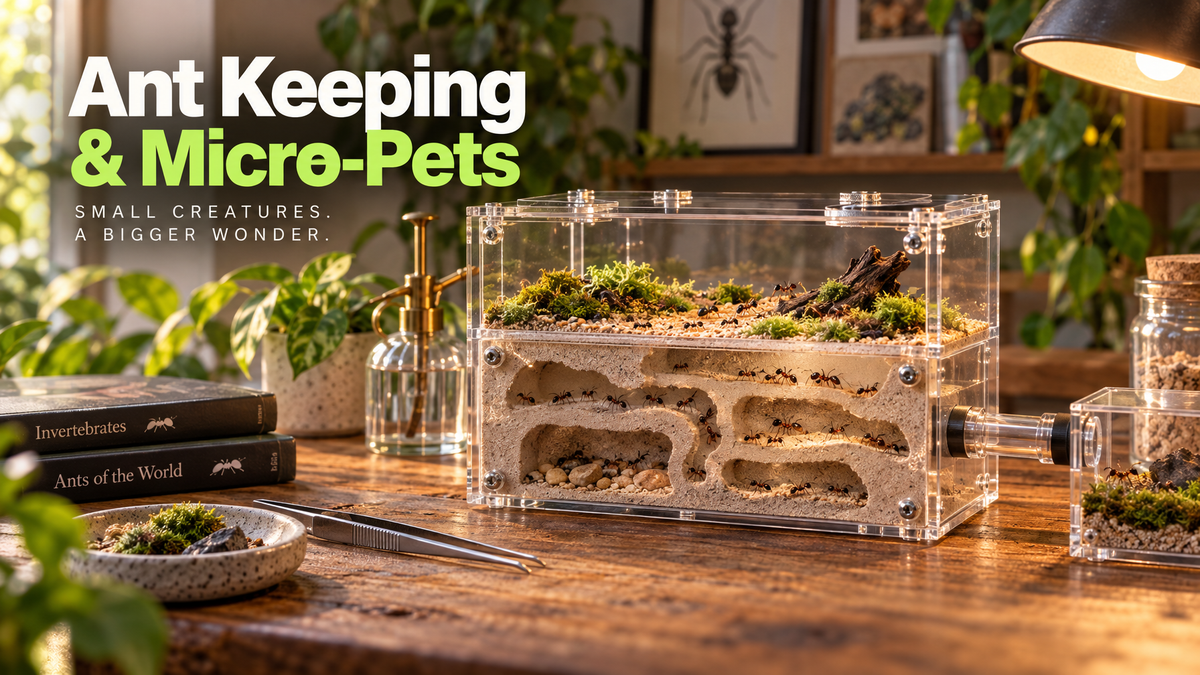
When your colony reaches 20-30 active workers, it is time to upgrade from the test tube to a modular Formicarium (nest) and Outworld (foraging arena).
Key Nest Considerations:
- Hydration Systems: Look for acrylic or 3D-printed nests featuring cotton wicks, Ytong, or plaster hydration gradients.
- Escape Barriers: Apply a thin barrier of fluon (PTFE) or liquid paraffin oil along the top inner rim of your outworld to keep workers inside during feeding.
- Expansion Ports: Choose modular setups with 9mm or 10mm tubing connections so you can attach additional nest blocks as your colony grows.
At Talis-us Natural Pet Supplies, we curate vetted habitats, hydration accessories, and specialized micro-pet foods to support healthy colony growth across all species stages.
Essential Environmental Controls: Temperature and Humidity
Maintaining correct micro-climate levels is crucial for larval development and colony activity.
- Temperature: Most temperate species thrive between 72°F and 78°F (22°C–25°C). Use a low-wattage heating cable along one edge of the nest to create a thermal gradient, allowing the ants to move brood to their preferred temperature.
- Humidity Gradient: The brood chamber requires 60%–80% relative humidity, while the foraging outworld should remain dry to prevent food spoilage.
Common Mistakes to Avoid in Formiculture
- Over-housing: Placing 5 workers in a 1,000-worker nest causes stress and leads to garbage accumulation inside chambers, promoting fatal mold growth.
- Excessive Vibrations: Keeping nests on speakers or high-traffic desks causes constant panic, leading queens to eat their own eggs.
- Direct Sunlight: Glass and acrylic trap heat quickly. Direct sunlight can overheat a nest within minutes.
Conclusion & Next Steps
Ant keeping offers a rewarding glimpse into complex social biology right from your desk. By starting with a hardy species, maintaining patience during the test tube stage, and maintaining proper hydration, you can grow a thriving colony that lasts for years.
Explore Talis Curated Exotics & Micro-Pet Supplies for specialized care gear, habitat accessories, and multi-species expert recommendations.


Leave a comment
This site is protected by hCaptcha and the hCaptcha Privacy Policy and Terms of Service apply.