


Can I keep different ant species together in the same enclosure
Can I keep different ant species together in the same enclosure
If you have been in the ant-keeping hobby for any length of time, you have likely looked at your growing collection of formicariums and wondered if you could combine them. The idea of a massive, bioactive terrarium teeming with different types of ants interacting like they do in the wild is incredibly appealing. It brings to mind a bustling miniature ecosystem right in your living room.
But this dream immediately brings up a critical question: Can I keep different ant species together in the same enclosure?
The short answer is highly nuanced. While it is technically possible under highly specific, expertly managed conditions, it is generally discouraged for beginners. Ants are fiercely territorial, highly organized, and evolutionarily programmed to view any non-colony member as a threat or food.
However, for advanced keepers willing to invest in massive setups and careful planning, creating a multi-species habitat can be the pinnacle of the hobby. This comprehensive guide will explore everything from the complex social biology of ants and the severe risks of mixing them, to the precise methods, setups, and species combinations that can make cohabitation work.

Understanding Ant Social Biology
To understand why mixing ants is so difficult, we first have to understand how ants view the world around them. Unlike humans, who rely on sight and sound to identify friends and foes, ants live in a primarily chemical world.
Ant Pheromones and Colony Recognition
The secret to an ant colony's cohesion lies in its chemical signature. Ant pheromones and colony recognition dictate almost every interaction an ant has. Every ant is covered in a waxy layer of cuticular hydrocarbons. This chemical "ID badge" is unique not just to the species, but to that specific colony.
When two ants cross paths, they rapidly tap each other with their antennae. In a fraction of a second, they "smell" these hydrocarbons. If the scent matches their colony, they share food or pass by peacefully. If the scent is foreign—even if it is an ant of the exact same species from a nest just a few feet away—it triggers an immediate alarm response.
Ant Colony Territorial Behavior
Because of this strict chemical recognition system, ant colony territorial behavior is incredibly aggressive. In the wild, resources are scarce. A neighboring ant colony represents a direct threat to a colony’s food supply, nesting space, and ultimately, the survival of its queen.
Most species are programmed to establish a perimeter around their nest. They will patrol this area relentlessly, aggressively expanding their territory as their numbers grow. In the vastness of nature, smaller or weaker colonies can simply run away or relocate their nest. In the confined space of a captive enclosure, there is nowhere to run.
The Dangers of Mixing Ant Species
Before attempting to create a multi-species utopia, you must be fully aware of the catastrophic failures that usually result from throwing two random colonies into a tank.
Interspecies Aggression in Ants
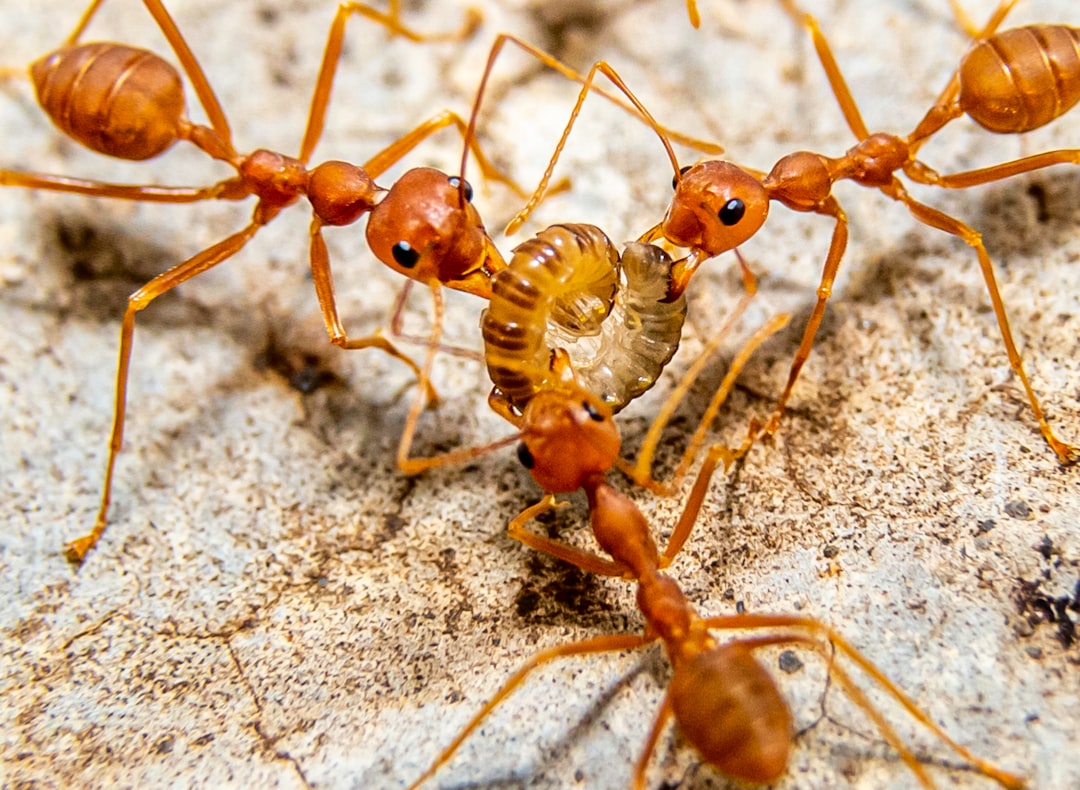
The most immediate and obvious consequence of a mixed enclosure is interspecies aggression in ants. When two colonies discover each other in a confined space, an all-out war is almost inevitable. These battles are rarely quick. They can last for days, turning a beautiful terrarium into a graveyard.
Ants have various methods of fighting:
- Mandible Grappling: Ants will lock jaws, often severing limbs or decapitating their opponents.
- Stinging: Species equipped with stingers will inject venom directly into their enemies.
- Swarming: Smaller ants will overwhelm larger species through sheer numbers, pinning them down while others dismember them.
Chemical Warfare Between Ant Colonies
Physical combat is only half the battle. Many modern ant species, particularly in the subfamily Formicinae (like Camponotus and Formica), lack stingers. Instead, they have evolved a specialized acidopore at the end of their abdomen.
When provoked, they engage in chemical warfare between ant colonies. They spray highly concentrated formic acid into the air or directly into the wounds they create with their mandibles. In a closed environment with poor ventilation, the build-up of formic acid fumes can become toxic not just to the rival colony, but to the spraying colony as well, resulting in mutual destruction.
Resource Competition in Multi-Species Enclosures
Even if the two species do not immediately engage in physical or chemical combat, they will face severe resource competition in multi-species enclosures.
Every colony requires carbohydrates for energy and protein for brood development. A faster, more aggressive, or more numerous colony will quickly monopolize feeding stations. The subordinate colony will be starved out, confined to their nest, and eventually perish from lack of nutrition rather than direct combat.
The Risks of Housing Multiple Ant Queens Together
You might wonder if you can bypass colony wars by starting with two queens in the same test tube. The risks of housing multiple ant queens together are incredibly high.
In some species, a phenomenon called pleometrosis occurs, where multiple queens of the same species cooperate to found a colony. However, once the first workers arrive, they usually execute all but one dominant queen.
If you attempt to house queens of different species together, they will almost always fight to the death immediately. Even if they somehow ignore each other, their differing brood requirements and conflicting pheromones will prevent any successful colony foundation.

Exceptions to the Rule: How Ants Coexist in Nature
Despite all these warnings, we know that if you go into a forest, you will find dozens of ant species living in the exact same square acre. Can different ant colonies live together peacefully? Yes, but nature achieves this through vast space, niche partitioning, and occasionally, complex biological loopholes.
To replicate this in captivity, we have to look at the exceptions to the territorial rule.
1. Niche Partitioning (Diet and Habitat)
In the wild, species coexist because they don't want the same things. A subterranean, blind species that hunts soil mites has absolutely no reason to fight a large, arboreal species that forages in the canopy for sugary sap. They inhabit different micro-environments and eat different foods. If their paths never cross, they never fight.
2. Size Disparity and "Cryptic" Species
Some ant species are so incredibly tiny and slow-moving that larger ants simply do not register them as a threat. Species like Temnothorax (acorn ants) form tiny colonies of a few dozen workers and live inside hollowed-out twigs. They are timid, rarely forage far, and move slowly. If a massive Camponotus (carpenter ant) walks by, the Temnothorax worker will freeze, and the larger ant will often walk right over it, assuming it is just part of the debris.
3. Social Parasites in Ant Keeping
The most fascinating exception involves social parasites in ant keeping. This is where two species not only live in the same enclosure but actually live in the exact same nest.
- Dulosis (Slave-making ants): Species like Polyergus cannot care for their own young or even feed themselves. They raid the nests of Formica species, steal their pupae, and hatch them in their own nest. The newly hatched Formica workers imprint on the Polyergus pheromones and happily raise the parasite brood.
- Temporary Social Parasites: Some queens, like Lasius umbratus, cannot found a colony alone. They infiltrate a host colony (like Lasius niger), assassinate the host queen, and take on her scent. The host workers then raise the parasite's eggs until the host workers die off, leaving a pure parasite colony.
Note: Keeping social parasites requires advanced skill, as you must constantly supply the slave-makers with host pupae, which poses ethical and logistical challenges.
Designing a Multi-Species Formicarium Setup
If you understand the risks and want to attempt this advanced facet of the hobby, you cannot use a standard, store-bought formicarium. You must build a highly specialized environment. A successful multi-species formicarium setup is less about ant keeping and more about ecosystem engineering.
Step 1: Choosing the Right Enclosure (Go Massive)
You cannot do this in a standard 10-gallon tank. Mixing ant species in one vivarium requires immense space to allow for distinct territories. A 40-gallon breeder tank is the absolute minimum for two species, but larger enclosures (75 to 100+ gallons) are highly recommended.
The tank needs to be a fully bioactive vivarium. Bioactive setups include live plants, a drainage layer, specialized soil, and a cleanup crew (springtails and isopods). The live plants break up sightlines, while the vast volume of soil diffuses alarm pheromones and prevents formic acid buildup.
Step 2: Providing Distinct Nesting Zones
The secret to successful cohabitation of ant species is ensuring they have no reason to compete for a home. You must cater to the precise nesting requirements for different ant species.
- Zone A (Arboreal): Place a large, hollow cork bark branch leaning against the back of the tank for wood-nesting species.
- Zone B (Subterranean): Create a deep, moist soil corner mixed with clay for ground-dwelling species.
- Zone C (Cryptic): Scatter hollowed-out acorns or small rotting twigs at the opposite end of the tank for tiny, non-aggressive species.
By providing ideal, pre-made nesting sites at opposite ends of a massive tank, the colonies will naturally settle far away from one another.
Step 3: Creating a Communal Ant Habitat with Divided Resources
To mitigate resource competition, you must engage in strategic feeding. Creating a communal ant habitat means acting as a mediator for their resources.
- Multiple Feeding Stations: Never put food in the center of the tank. Create dedicated feeding zones near the entrance of each colony's territory.
- Dietary Specificity: Feed them based on their specific needs. If Colony A prefers insects and Colony B prefers seeds, supply those exact items near their respective nests.
- Visual Barriers: Use dense foliage, rocks, and driftwood to block lines of sight between feeding stations. If an ant cannot see or easily walk in a straight line to the rival colony's food, they are less likely to stumble upon it.

The Ant Species Compatibility Guide
Not all ants can be mixed, no matter how large the tank is. Aggressive, highly territorial, or rapidly multiplying species (like Solenopsis invicta / Fire Ants, or Pheidole / Big-headed ants) should never be mixed with anything. They will eventually dominate the entire tank and destroy all other life.
While a definitive, universal ant species compatibility chart is impossible due to the unpredictable nature of live animals, ant keepers have discovered certain groupings that stand a high chance of success.
High Success Combinations: The "Ghost" and the "Giant"
The most reliable method of mixing species is pairing a massive, docile species with a microscopic, non-aggressive species.
- Species A: Camponotus pennsylvanicus (Large carpenter ants, nesting in wood, foraging for sugars).
- Species B: Temnothorax sp. (Tiny acorn ants, nesting in a single nut, foraging mere inches from their nest).
- Why it works: Ant species compatibility here is based on size and behavior. The Camponotus are so large they do not view the tiny Temnothorax as a threat or a food source worth the energy. The Temnothorax are naturally programmed to freeze and hide when large insects pass by. Their paths rarely cross, and when they do, no aggression is triggered.
Medium Success Combinations: The "Ground" and the "Tree"
This relies heavily on habitat partitioning in a very tall vivarium.
- Species A: Aphaenogaster sp. (Ground-dwelling, insectivorous, active scavengers).
- Species B: Colobopsis sp. (Arboreal, nesting exclusively in wood/galls, rarely coming to the forest floor).
- Why it works: By keeping the ground heavily populated with springtails for the Aphaenogaster, and providing hanging fruit/sugar stations in the upper branches for the Colobopsis, you can keep the two colonies entirely separated by elevation.
Low Success / High Risk Combinations: Similar Sizes and Diets
Never mix two species that occupy the same ecological niche.
- Example of what to avoid: Lasius niger and Tetramorium caespitum. Both are small, aggressive, fast-growing, ground-dwelling, and highly territorial. If placed in the same enclosure, a turf war is guaranteed, resulting in the eventual eradication of one or both colonies.
Managing the Setup: Signs of Ant Colony Stress and Fighting
Even with the perfect setup and the right species, things can go wrong. A colony might experience an unexpected population boom, forcing them to expand their territory into a rival’s zone. As an ant keeper, you must be hyper-vigilant.
You need to recognize the early signs of ant colony stress and fighting before a full-scale war breaks out.
1. Piles of Severed Body Parts
Ants have designated "graveyards" or midden piles where they dump their dead. Regularly inspect these areas. Finding a few dead ants is normal natural attrition. Finding dead ants that are missing heads, legs, or cut in half is a definitive sign of nocturnal skirmishes.
2. Suppressed Foraging Behavior
If a previously active colony suddenly stops sending out workers to forage, they may be pinned down. When an ant colony senses a massive threat (like a stronger rival colony’s pheromones blanketing the outworld), their survival instinct is to seal their nest entrances and hide. If you notice one colony thriving while the other disappears, resource monopolization is happening.
3. Alarm Posturing
Learn the body language of your ants. When ants are relaxed, they walk at a steady, meandering pace. When they detect enemy pheromones, their movement becomes erratic, jerky, and incredibly fast. Many species will stand on their back legs with their mandibles wide open, or curl their abdomens under their bodies, ready to spray acid or sting. If you see ants displaying this behavior constantly, the tank's environment is highly stressed.
Action Plan: How to Intervene
If you spot these signs, you must have an emergency separation plan.
- Provide an Escape Route: Connect a clear tube from the subordinate colony's nesting area to a completely separate, safe outworld. Often, a stressed colony will gladly relocate if a safer nesting tube is provided.
- Block the Paths: Use a piece of acrylic or temporary mesh to physically divide the vivarium in half until you can safely excavate one of the colonies.
- Bait and Trap: Place a test tube covered in red foil (to simulate dark nesting space) containing a high-value food item near the stressed colony. Once workers and hopefully the queen move in to investigate or hide, cap it and remove them.

Creating an Illusion: The Safe Alternative to Cohabitation
If reading about the risks, chemical warfare, and stress makes you reconsider, but you still want the aesthetic of a bustling multi-species world, there is a safer alternative.
You can build a large, unified outworld that is physically partitioned with perfectly clear, seamless acrylic or glass dividers. By dividing a 40-gallon tank into three separate, sealed sections, you can decorate it to look like one continuous landscape. A piece of driftwood can be cut and glued to both sides of the glass, giving the illusion of a single branch traversing the whole tank.
This allows you to house three completely different, highly aggressive species (like Fire ants, Carpenter ants, and Harvester ants) mere inches from each other. You get the visual joy of a multi-species formicarium setup without any of the interspecies aggression in ants. The ants cannot smell or touch each other, ensuring 100% safety and zero stress.
Deep Dive: The Role of Bioactive Clean-up Crews
While technically not ants, we cannot talk about multi-species enclosures without discussing the most successful interspecies cohabitation in the hobby: ants and clean-up crews (CUC).
If you are setting up a large naturalistic terrarium for your ants, introducing isopods (roly-polys) and springtails is practically mandatory.
- Springtails: These microscopic insects eat mold, fungus, and ant waste. Most ant species completely ignore them because they are too small and fast to catch, and offer little nutritional value.
- Isopods: These crustaceans eat decaying plant matter and leftover ant food. While some aggressive ants might hunt small isopods, large, heavily armored species (like Armadillidium sp.) will roll into a ball when attacked. Ants quickly learn that isopods are too difficult to crack open and will eventually start ignoring them, allowing them to coexist peacefully.
This is the perfect way for beginners to dip their toes into multi-species keeping. It teaches you how to balance an ecosystem's micro-climate (humidity for the CUC, dry areas for the ants) without the heartbreak of an ant-on-ant war.
Conclusion
So, can I keep different ant species together in the same enclosure?
Yes, but it is an endeavor that requires patience, extensive biological knowledge, and a significant financial investment in a large, bioactive setup. It is not as simple as dumping two test tubes into a plastic box. It is about playing the role of an ecosystem architect.
By understanding ant pheromones and colony recognition, respecting their territorial behavior, and carefully selecting species with varying nesting requirements and foraging habits, you can create a harmonious, communal ant habitat.
However, the margin for error is razor-thin. You must be prepared to monitor for signs of ant colony stress and fighting daily, and you must always have a backup plan to separate them if the delicate balance tips toward interspecies aggression.
For most keepers, focusing on growing one massive, healthy colony per enclosure is far more rewarding and infinitely less stressful. But for the dedicated veteran, successfully maintaining a multi-species vivarium is a breathtaking display of nature’s complexity, right inside your home.

Written by Talis Us


Leave a comment
This site is protected by hCaptcha and the hCaptcha Privacy Policy and Terms of Service apply.