


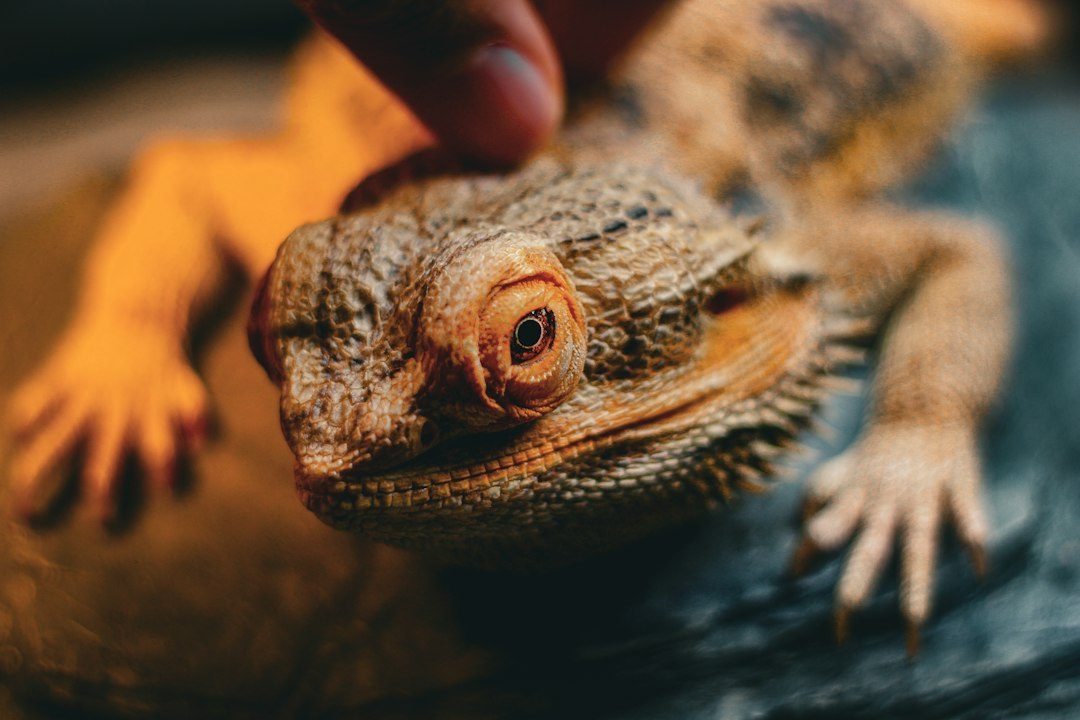
Best UVB reptile lights for bearded dragons
best UVB reptile lights for bearded dragons
Choosing the best UVB reptile lights for bearded dragons is less about buying the brightest bulb on the shelf and more about creating a safe, measurable “sun zone” inside the enclosure. A good setup gives your dragon access to UVB, heat, and bright visible light in the same basking area, while still leaving shaded space for retreat. For most new keepers, the strongest starting point is a high-output linear T5 UVB tube from a reputable reptile brand, installed at the correct distance and replaced on schedule.
What UVB light does a bearded dragon need?
A bearded dragon needs a strong, linear UVB source that covers the basking zone, usually a T5 high-output tube in the 10.0, 12%, or carefully selected 14% range, depending on enclosure height, fixture design, and whether mesh sits between the lamp and the animal. UVB helps reptiles synthesize vitamin D3, which supports calcium absorption; inadequate UVB, poor calcium intake, or poor heat can contribute to metabolic bone disease. Veterinary references describe UVB as especially important for many diurnal lizards, including species that rely on light, heat, and diet working together rather than as isolated care items. (merckvetmanual.com)
That is why the best reptile lighting setup for a bearded dragon is not a single bulb screwed into a dome and hoped into usefulness. Your dragon should be able to bask under warmth, visible brightness, and UVB at the same time, then move away when it has had enough. In practice, this means placing the UVB tube along the warm side of the enclosure, not hidden at the cool end or mounted vertically on a wall.

Why linear T5 tubes are the safest default
Linear T5 high-output lamps are popular for bearded dragons because they spread UVB across a usable basking area rather than concentrating it into a tiny beam. Compact or coil uvb reptile bulbs can be appropriate for some limited applications, but they are often a poor primary choice for bearded dragons because the usable UVB zone is small and placement becomes unforgiving. T8 tubes can work in some setups, yet they are generally weaker and must be positioned closer, which limits flexibility in modern, taller enclosures.
A tube also allows better behavioral choice. Your dragon can place its head, torso, or entire body under the “sun patch,” then move gradually into lower exposure. That gradient is not decorative; it is the reptile equivalent of having both a sunny patio and a shaded porch. Good husbandry gives the animal options instead of forcing it to choose between too much and too little.
For a typical adult setup, many keepers use a UVB tube that spans about half to two-thirds of the enclosure length, positioned over the warm side. ReptiFiles lists appropriate bearded dragon options including Arcadia T5 HO Desert 12%, Arcadia T5 HO Dragon 14%, and Zoo Med ReptiSun 10.0 T5 HO, with distance adjusted for mesh and fixture output. (reptifiles.com)
The best UVB reptile lights to consider
There is no universal “best” lamp in isolation, because the right bulb depends on distance, reflector strength, mesh obstruction, and enclosure design. Still, a few product families consistently rise to the top because they are widely used, well documented, and available in sizes suitable for serious bearded dragon habitats.
Arcadia ProT5 with Desert 12% UVB
Arcadia’s ProT5 system is one of the most beginner-friendly choices because it pairs a T5 UVB tube with a matching fixture and reflector. The ProT5 line is sold with several lamp options, including 12% Desert and 14% Dragon lamps, giving keepers a way to match lamp strength to enclosure height rather than improvising with mismatched hardware. (arcadiareptile.com)
For many standard bearded dragon enclosures, the 12% Desert version is the sensible “strong but not extreme” option. It is especially useful when the lamp is mounted inside the enclosure or above relatively open mesh at a measured distance. The key is not simply owning the lamp; it is ensuring the basking platform places the dragon within the correct exposure zone.
Arcadia Dragon 14% T5 HO
The Arcadia Dragon 14% lamp is a higher-output option designed for demanding basking species and larger or taller habitats. Arcadia describes the 14% DragonLamp as its most powerful HO-T5 reptile lamp, which makes it attractive for advanced keepers but less forgiving if placed too close. (arcadiareptile.com)
A 14% tube can be excellent when the enclosure has sufficient height, the basking distance is appropriate, and the dragon can retreat into shade. It should not be treated as an automatic upgrade for every tank. More UVB is not inherently better; correct UVB is better.
Zoo Med ReptiSun 10.0 T5 HO
Zoo Med’s ReptiSun 10.0 T5 HO is another respected choice for bearded dragon enclosures. Zoo Med describes this T5 HO lamp as stronger and brighter than the standard ReptiSun 10.0 lamp and suitable for larger reptile habitats, with distance notes provided by lamp size and packaging guidance. (zoomed.com)
This lamp is a practical pick for keepers who want a widely available tube with multiple length options. As with Arcadia products, use it with a compatible T5 HO fixture and reflector. A strong bulb in a poor fixture may underperform, while a strong bulb in an efficient reflector may need more distance than expected.
How should UVB be installed in the enclosure?
UVB should be installed so the highest exposure overlaps the basking area, while the rest of the enclosure provides lower UVB and shade. This is the most important practical principle for new owners: your bearded dragon should not have to choose between heat and UVB. In nature, basking bundles warmth, ultraviolet light, and intense visible light into one experience; your enclosure should imitate that pattern as safely as captivity allows.
Use this setup checklist before bringing a dragon home:
- Choose a linear T5 HO tube. Select a reputable 10.0, 12%, or appropriate 14% lamp rather than relying on a compact bulb as the primary UVB source.
- Use a proper fixture with a reflector. The fixture matters because reflectors shape how much UVB reaches the basking surface.
- Place the tube over the warm side. Align it with the basking lamp so heat and UVB overlap.
- Measure from bulb to dragon’s back. Distance should be based on where the dragon actually sits, not the floor of the enclosure.
- Account for mesh. Screen lids can reduce UVB, and dense mesh can change the safe distance substantially.
- Create a shade gradient. Provide hides, branches, décor, and open space so the dragon can regulate exposure.
- Use a timer. A consistent day-night cycle helps prevent accidental overlong exposure or forgotten lights.
Glass and plastic are common troublemakers because they can block useful UVB. The RSPCA notes that UVB does not pass through glass windows and recommends a reptile UVB lamp inside the vivarium for bearded dragons. (rspca.org.uk) If your lamp sits above a lid, confirm that the lid material and mesh density are compatible with your bulb choice rather than assuming “light is getting through” because the enclosure looks bright.
Distance, strength, and replacement schedule
UVB weakens with distance, obstruction, age, and fixture design. This is why two keepers can own the same bulb but provide very different conditions. The most accurate way to evaluate UVB is with a Solarmeter 6.5 or similar UV index meter; without one, you must follow species-specific distance guidance from trusted care resources and the lamp manufacturer.
ReptiFiles reports a target basking UVI of about 4.0–4.5 for bearded dragons and gives different mounting distances for specific T5 HO lamps depending on whether mesh is present. It also notes replacement intervals such as every 12 months for T5 fluorescent UVB, because a lamp can keep producing visible light after useful UVB has declined. (reptifiles.com)
Use this simplified comparison as a decision aid, not as a substitute for measuring:
|
Lighting choice |
Best use |
Main caution |
|---|---|---|
|
T5 HO 10.0 or 12% linear tube |
Most standard bearded dragon enclosures |
Must be matched to distance, mesh, and fixture |
|
T5 HO 14% linear tube |
Taller enclosures or advanced setups needing more reach |
Can be too intense if mounted too close |
|
T8 linear tube |
Lower, closer-range installations |
Less flexible; often needs closer placement |
|
Compact or coil UVB bulb |
Supplemental or limited use in select setups |
Small exposure zone; usually not ideal as the main source |
|
Mercury vapor bulb |
Combined heat and UVB in specialized setups |
Harder to fine-tune heat and UVB separately |
The big takeaway is that UVB is not a “set it anywhere” product category. A bulb’s label tells you its general strength, but your dragon experiences the final result after distance, reflector, mesh, décor, and basking posture have all done their sneaky little jobs.
Common mistakes that reduce UVB quality
Many lighting problems start with perfectly loving owners who were sold an oversimplified kit. Starter kits often include a small dome, a compact bulb, and vague instructions, then leave the keeper wondering why their dragon seems lethargic or poorly developed. If that sounds familiar, do not panic; lighting can usually be improved with methodical adjustments.
Avoid these common errors:
- Using visible brightness as proof of UVB. Your eyes cannot judge useful UVB output. A lamp may look bright while providing too little ultraviolet exposure.
- Mounting the UVB at the wrong end. If the tube sits over the cool side, the dragon may not receive UVB while basking.
- Forgetting the dragon’s body height. Measure to the animal’s back on the basking surface, not to the substrate below.
- Letting glass intervene. Glass may make a sunny-looking enclosure functionally UVB-poor.
- Keeping bulbs too long. Replace UVB lamps on schedule even if they still turn on.
- Ignoring heat. Vitamin D and calcium metabolism do not exist in a vacuum; poor basking temperatures can undermine an otherwise decent setup.
Washington State University’s veterinary hospital lists calcium deficiency, inadequate UVB lighting, improper diet, or a combination of these as typical causes of metabolic bone disease in bearded dragons. (hospital.vetmed.wsu.edu) That does not mean every appetite change or tremor is a lighting issue, but it does mean UVB, heat, diet, and veterinary care should be evaluated together.
A practical buying plan for new keepers
If you are overwhelmed by product names, percentages, wattages, and reflector jargon, simplify the purchase around the enclosure you actually own. Measure the internal height, decide where the basking platform will sit, note whether the lamp will be inside the enclosure or above mesh, and then choose the lamp strength. This is far more reliable than buying the strongest bulb first and trying to make the habitat obey it later.
For many new bearded dragon owners, a sensible shopping list looks like this:
- A linear T5 HO UVB kit from Arcadia or Zoo Med
- A 10.0 or 12% tube for most standard setups, or a 14% tube only when distance and enclosure height justify it
- A separate bright white basking bulb for heat
- A bright LED bar or daylight source for general visible illumination, if the enclosure remains dim
- A plug-in timer for consistent photoperiod control
- A digital probe thermometer or infrared temperature gun for basking-surface checks
- A UV index meter if budget allows, especially for complex custom enclosures
This plan gives you control. Separate heat and UVB sources are particularly helpful because you can adjust one without disrupting the other. If the basking surface is too cool, you can change heat output; if UVB exposure is too high or low, you can adjust lamp height, platform height, mesh placement, or tube strength.
Final takeaway
The best uvb reptile lights for bearded dragons are linear T5 HO systems that provide strong, even, measurable exposure across the basking zone. Arcadia ProT5 Desert 12%, Arcadia Dragon 14%, and Zoo Med ReptiSun 10.0 T5 HO are among the strongest candidates, but none of them is magic without correct installation. Match the lamp to the enclosure, overlap UVB with heat, preserve shaded retreats, and replace bulbs before their invisible output fades.
When in doubt, think like a careful habitat designer rather than a bulb collector. Your bearded dragon does not need the fanciest label; it needs a reliable artificial sunbeam, a safe place to warm up, and the freedom to wander out of the spotlight when it has had enough. That is how the best UVB reptile lights become more than equipment—they become daily wellness support for a very charming little desert athlete.

Written by Talis Us


Leave a comment
This site is protected by hCaptcha and the hCaptcha Privacy Policy and Terms of Service apply.