


Best Natural Dog Food Brands to Buy Online in 2026
Finding the best natural dog food online can feel like a puzzle. A quick search turns up hundreds of brands, each using terms like "natural" and "organic" — but the definitions behind those labels aren't always clear. We've sorted through expert reviews and owner experiences from sources like The Good Trade, Canine Bible, and iHeartDogs to pinpoint what matters and which brands are worth a closer look.
The goal isn't just a label. It's a food that uses high-quality ingredients and fits your dog's needs, whether you're looking for grain-free, organic, limited ingredient, or raw options. Below, we break down what "natural" really means, what to look for on a bag, and six standout brands you can order online — plus a few practical tips for storage and serving.
What Does 'Natural' Dog Food Actually Mean?
The term "natural" on dog food is regulated by the Association of American Feed Control Officials (AAFCO). According to AAFCO, to be labeled "natural," a product must consist of ingredients derived from plant, animal, or mined sources that have not been produced by a chemically synthetic process. The Good Trade notes that this definition still leaves room for some processing, so "natural" doesn't mean raw or unprocessed.
Organic is a stricter classification. For a dog food to carry the USDA organic seal, at least 95% of its ingredients must be organic. iHeartDogs explains that this means the ingredients were grown without synthetic pesticides or fertilizers. However, an organic label doesn't guarantee the food is nutritionally balanced — a common pain point. AAFCO nutritional adequacy standards are separate, so a bag can be organic but still lack the right balance of nutrients if not formulated correctly.
What to Look For in a Natural Dog Food (Vet-Recommended Criteria)
When evaluating natural dog foods, experts from Canine Bible and The Good Trade emphasize a few non-negotiable criteria. First, the food should meet AAFCO nutrient profiles for the dog's life stage — that statement on the bag is the baseline for complete and balanced nutrition. Second, look for a named animal protein (like chicken, beef, or salmon) as the first ingredient, not a vague "meat meal" or grain. Whole proteins indicate the food is built around animal-sourced nutrition rather than fillers. Third, avoid artificial colors, flavors, and preservatives, which are common in conventional foods but absent from high-quality natural options.
Board-certified veterinary nutritionists are another sign of a thoughtful formula. Ingredients like chicory root (a prebiotic for gut health) or superfoods like coconut oil and turmeric may appear in some recipes, but the source notes that these aren't essential and shouldn't distract from the fundamentals. The takeaway: a natural label is a starting point, but the ingredient list and the company's formulation standards tell you far more.
The Role of Certifications (AAFCO, Organic, Animal Welfare)
Certifications can help you narrow down quality, but they're not everything. An AAFCO-approved statement means the food is complete and balanced for a specific life stage, but it doesn't speak to ingredient sourcing or processing. Organic certification, as noted earlier, requires at least 95% organic ingredients, yet it doesn't guarantee a nutritionally balanced recipe — you still need to check the AAFCO statement. The Good Trade points out that organic dog foods often cost more due to higher ingredient costs, but for some owners, the trade-off is worth it.
Animal welfare certifications, such as those for humanely raised or pasture-raised meats, are a plus for ethical sourcing. Brands like Viva Raw highlight animal welfare certified meats, which may appeal to shoppers who prioritize how animals are treated. Just remember that these certifications don't automatically make the food healthier for your dog, but they do add a layer of transparency about the supply chain.
The Best Natural Dog Food Brands to Order Online
We pulled together six brands that repeatedly appear in expert reviews and owner roundups from The Good Trade, Canine Bible, and iHeartDogs. The table below gives a quick overview, and we've included practical notes on what each food is best for and any caveats to keep in mind.
| Product | Best For | Primary Protein Source | Standout Feature | Caveat |
|---|---|---|---|---|
| Open Farm Grain-Free Dry Dog Food | Grain-free diets that prioritize animal protein | Fish (reported fish-like aroma) | Uses premium animal proteins instead of fillers; smells like fish, not cereal | Grain-free may not be necessary for all dogs; the fish aroma may not appeal to every dog |
| Purina Beyond Organic Chicken Recipes Wet Dog Food | Organic wet food for variety or hydration | Organic chicken | Meets the 95% organic standard; pate texture with high protein | Wet food only; higher cost per serving than many kibbles |
| The Honest Kitchen Dehydrated Dog Food | Owners who want a rehydrated, human-grade meal | Chicken (common recipe) | Dehydrated format that rehydrates into a soup-and-oatmeal-like texture; human-grade ingredients | Requires water and a few minutes of prep; texture may not suit all dogs |
| JustFoodForDogs Pantry Fresh | Shelf-stable, whole-food meals | Varied (chicken, turkey, etc.) | Formulated with board-certified veterinary nutritionists; no refrigeration needed until opened | Higher cost than conventional dry food; limited protein rotation if you stick to one recipe |
| Viva Raw | Raw feeders who prioritize animal welfare | Varied (beef, chicken, etc.) | Animal welfare certified meats; minimal processing; starts at $6 per meal | Requires careful handling, thawing, and sanitization; raw diets may not be appropriate for all dogs |
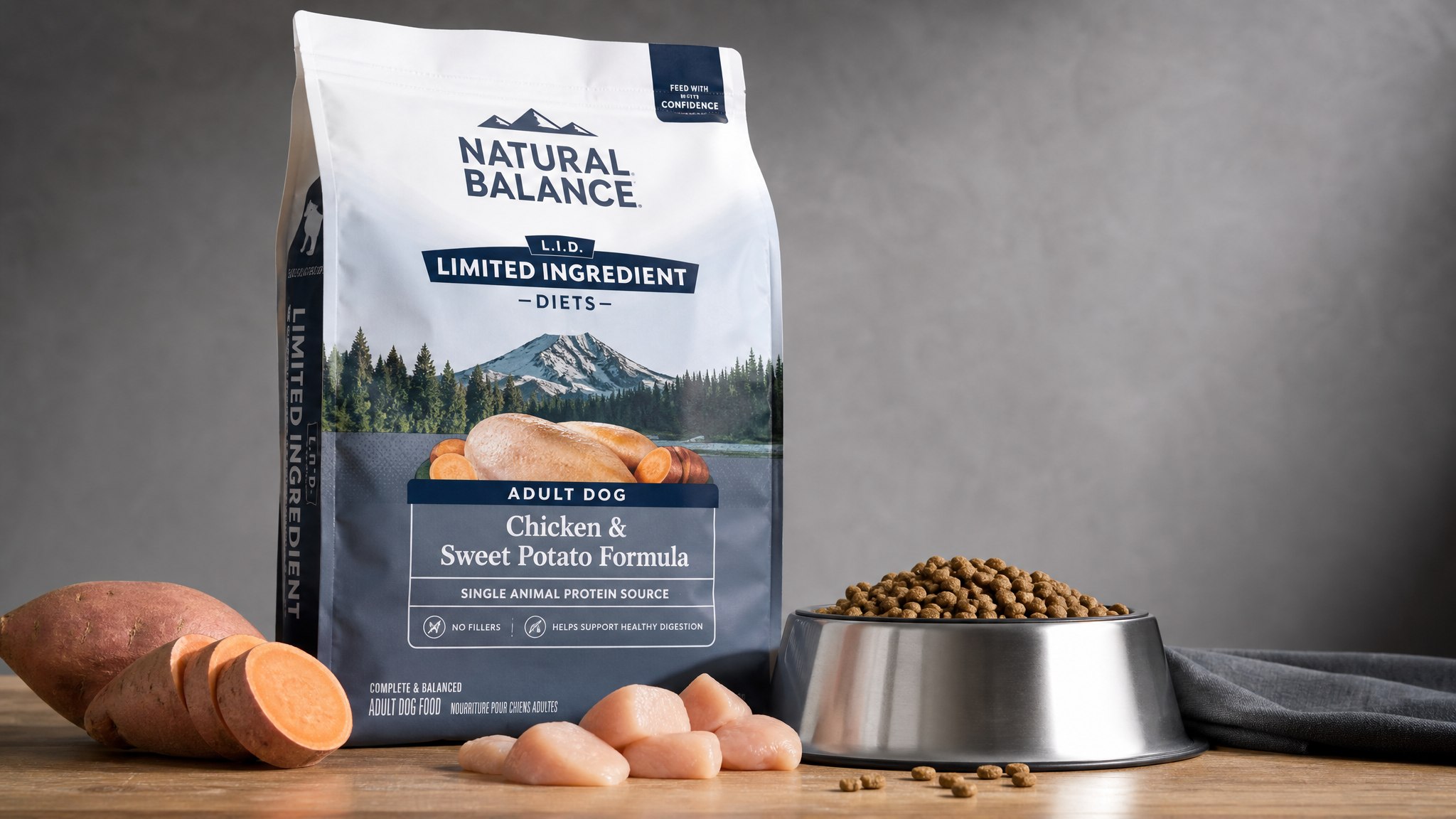
| Natural Balance L.I.D. Chicken & Sweet Potato Dry Dog Food | Dogs with food sensitivities | Chicken | Limited ingredient formula with a single animal protein and sweet potato | May not be as nutrient-dense as some varied-ingredient foods; sweet potato adds carbs |
Open Farm Grain-Free Dry Dog Food
Open Farm's grain-free kibble sets itself apart by loading up on animal proteins rather than leaning on starchy fillers. The Good Trade notes that the food smells distinctly fishy — a sign that real fish is a main ingredient, unlike many grain-free brands that smell like cereal. Owners report that the aroma is noticeable but not overwhelming, and it's a reassuring indicator of quality animal-based ingredients. It's available online with subscription options, making it convenient to keep fresh. Just keep in mind that grain-free diets aren't universally recommended, so check with your vet if you're unsure.
Purina Beyond Organic Chicken Recipes Wet Dog Food
For owners who want an organic wet food, Purina Beyond's organic chicken recipes deliver. The chicken is the first ingredient, and the product meets the USDA organic standard — at least 95% organic content. It comes in a pate texture that many dogs find easy to eat, and the high protein content aligns with what you'd expect from a meat-first recipe. The Good Trade mentions it as a convenient way to add variety or moisture to your dog's meals, though it's a wet food only, so it may cost more per serving than dry alternatives.
The Honest Kitchen Dehydrated Dog Food
The Honest Kitchen's dehydrated mix is a completely different experience. You add water, wait a few minutes, and end up with something that The Good Trade describes as a cross between soup and oatmeal. The texture can appeal to picky eaters, and because the ingredients are human-grade, you're feeding a meal that looks and smells like real food. It's available in several protein options, and the preparation is simple, though it does require a little more effort than scooping kibble. The brand also notes that its dehydrated food is made in a human-grade facility.
JustFoodForDogs Pantry Fresh
JustFoodForDogs Pantry Fresh meals are shelf-stable until opened, which is a big convenience for a whole-food diet. The recipes are developed with board-certified veterinary nutritionists, so there's a layer of professional formulation behind the ingredient list. The brand uses whole foods like chicken, sweet potatoes, and green beans, and avoids preservatives. The Good Trade points out that this format works well for owners who want to serve fresh food without the freezer space. The cost is higher than typical kibble, but for many, the trade-off is worth the simplicity and ingredient quality.
Viva Raw
Viva Raw delivers a fresh-frozen, raw diet with an emphasis on animal welfare. The meats are certified by animal welfare programs, and the food is minimally processed — no cooking, no high-pressure processing. A meal starts at $6 per serving, according to the brand. Raw feeding comes with responsibilities: you'll need to defrost in the fridge, sanitize surfaces, and serve promptly. The Good Trade and Canine Bible both highlight that raw diets can be a good fit for some dogs but require careful handling. If you're new to raw, it's wise to speak with a vet and read up on safety practices.
Natural Balance L.I.D. Chicken & Sweet Potato Dry Dog Food
Natural Balance's limited ingredient formula keeps things simple. A single animal protein — chicken — and sweet potato are the stars, with no hidden protein sources. That makes it a starting point for dogs with food sensitivities, though it's not a treatment for allergies. The kibble is widely available online, and the recipe includes no artificial flavors or colors. Natural Balance L.I.D. Chicken & Sweet Potato is a practical, no-fuss dry food that fits a natural diet without the guesswork.
Storing, Thawing, and Serving Natural Dog Food Safely
Natural and organic dog foods often skip artificial preservatives, so they have a shorter shelf life once opened. For dry kibble, an airtight container in a cool, dry place helps keep it fresh. Many online brands, including Open Farm and The Honest Kitchen, offer subscription deliveries that can help you stay stocked without storing huge bags.
Raw food demands extra care. Viva Raw and other raw brands recommend defrosting in the refrigerator, not on the counter. After feeding, wash bowls and surfaces with hot, soapy water. The Good Trade notes that raw meat can harbor bacteria, so sanitizing is essential. Serve the food promptly and don't leave it out for long. If you're new to raw, start with a small batch and follow the brand's storage instructions closely.
Frequently Asked Questions About Natural Dog Food
Is natural dog food the same as organic?
No. Natural dog food follows AAFCO's definition of minimally processed ingredients, but organic requires at least 95% organic ingredients and prohibits synthetic pesticides and fertilizers. According to iHeartDogs, organic certification is a stricter standard and doesn't automatically mean the food is nutritionally complete.
Do all natural dog foods meet AAFCO nutritional standards?
Not necessarily. The "natural" label refers to ingredient sourcing and processing, not nutritional balance. A food can be natural but lack the right vitamins and minerals. Always check for an AAFCO statement on the packaging that confirms the food is complete and balanced for your dog's life stage.
How can I tell if a natural dog food is truly high quality?
Look for a named animal protein first on the ingredient list, no by-products or fillers, and evidence of formulation by a board-certified veterinary nutritionist. Canine Bible and The Good Trade both recommend focusing on these details rather than just the "natural" claim.

Written by Talis Us



Leave a comment
This site is protected by hCaptcha and the hCaptcha Privacy Policy and Terms of Service apply.