


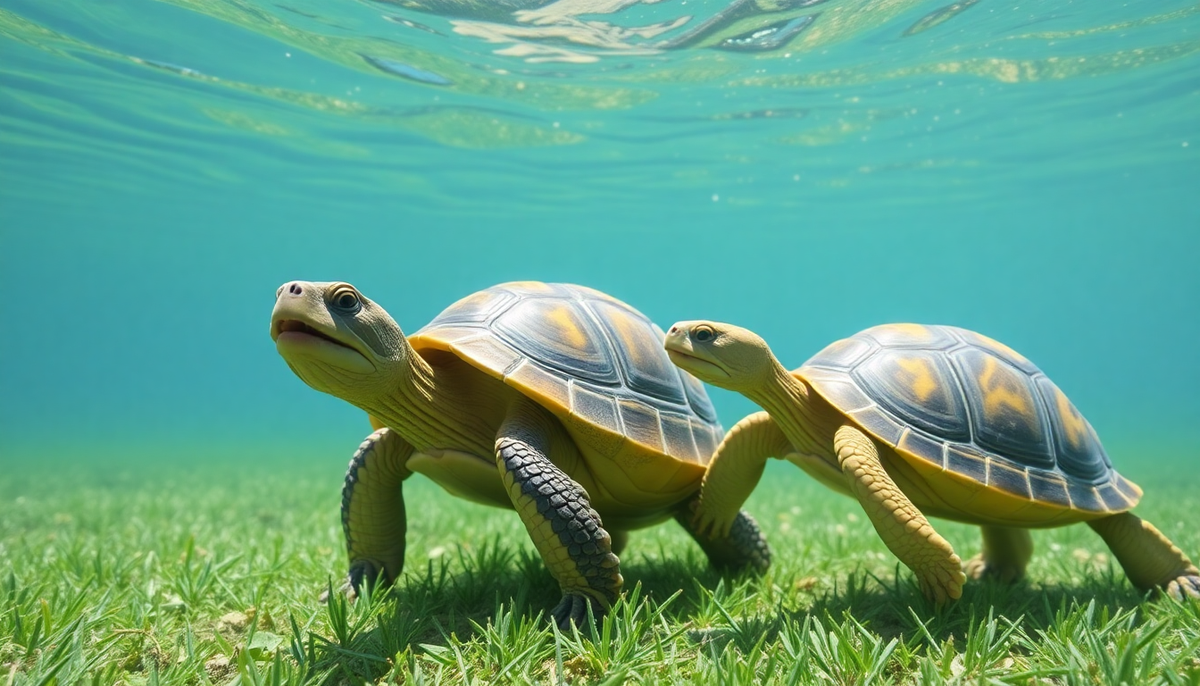
Are Tortoise and Turtle the Same? Key Differences Explained Clearly
Are tortoise and turtle the same creatures, or do they represent distinct animals? This question often arises due to the many similarities shared by these shelled reptiles. While tortoises are indeed a subset of turtles, there are crucial biological and ecological differences that separate them. This article unpacks the relationship between tortoises and turtles, clarifies common confusions, and highlights the key traits that distinguish these fascinating animals. Whether you’re a curious nature lover or considering a shelled pet, understanding these differences will enhance your appreciation of their unique adaptations.
Understanding the Biological Relationship Between Tortoises and Turtles
Shared Classification and Family Ties
Turtles and tortoises both belong to the order Chelonia (or Testudines), making them part of the same broad reptilian family. This means that all tortoises are turtles, but not all turtles are tortoises. The Chelonia order includes numerous species adapted to different habitats, from ocean depths to dry deserts. The term "turtle" is often used as an umbrella word for all these shelled reptiles globally, while "tortoise" refers specifically to land-dwelling turtles within the family Testudinidae.
Evolutionary Background
These reptiles share a common ancestor and have evolved varied traits to thrive in their distinct environments. The fundamental body plan featuring a shell protects their body, but how they use this protection, and their behaviors, diverged during evolution. Tortoises developed strong, rounded shells and sturdy limbs for terrestrial life, whereas aquatic turtles evolved more streamlined bodies and webbed feet or flippers for swimming.
Are Tortoise and Turtle the Same? Diving Into Their Key Differences
Habitat and Mobility
The most obvious difference lies in where these animals live and how they move:
- Tortoises: Mostly land-dwellers, inhabiting deserts, grasslands, and rocky areas. They do not swim and rarely enter water except for drinking or cooling off.
- Turtles: Primarily aquatic or semi-aquatic, found in freshwater ponds, rivers, and oceans. Most turtles are strong swimmers with adaptations like webbed feet or flipper-like limbs to navigate water efficiently.
Physical Characteristics
Tortoises and turtles also differ in their appearance to match their lifestyles. Tortoises typically have:
- High-domed, heavy shells for protection against predators on land.
- Short, sturdy, elephantine feet suited for walking and digging.
- Less streamlined bodies since they don’t need to swim.
Conversely, turtles often exhibit:
- Flat, streamlined shells to reduce resistance in water.
- Webbed feet or flippers to aid in swimming.
- Lighter, more flexible shells for aquatic mobility.
Diet and Feeding Behavior: How Tortoises and Turtles Differ
Tortoise Diet: Herbivorous Grazers
Tortoises are primarily herbivores. Their diet consists mostly of grasses, leafy plants, fruits, and flowers. Their digestive systems have adapted to break down tough plant fibers efficiently. In the wild, tortoises may eat cactus pads, shrubs, and other low-lying vegetation.
Turtle Diet: Omnivorous or Specialized Eating
Turtles have more varied diets which can include aquatic plants, insects, fish, and sometimes carrion, depending on species. Many freshwater turtles are opportunistic omnivores, while sea turtles specialize; for example, leatherback turtles predominantly eat jellyfish. Differences in jaw structure reflect their dietary needs—some use sharp beaks to catch prey, while others scrape algae from surfaces.
Behavior and Lifespan Differences
Lifespan Variability
Tortoises are renowned for their longevity, with some species living well over 100 years due to slower metabolisms and more protected terrestrial habitats. Turtles generally have shorter lifespans ranging from a few decades to around 50 years, varying by species and environmental threats.
Behavioral Patterns
Tortoises tend to be slow-moving and solitary, often relying on burrows or shaded areas to escape heat and predators. Turtles are more active swimmers and may travel long distances in water. Some turtles migrate seasonally between feeding and breeding sites.
Common Misconceptions and Clarifications
Why People Confuse Tortoises and Turtles
Because both have hard protective shells and similar body shapes, it’s common for many to think of tortoises and turtles as the same. Additionally, common language varies regionally—what Americans call turtles, British English speakers might call terrapins or use “turtle” less broadly. This adds to the confusion when trying to identify these animals in the wild or as pets.
Clarifying Terminology: Tortoise, Turtle, and Terrapin
- Turtle: Broadly refers to any shelled reptile in the Chelonia order.
- Tortoise: Land-dwelling turtles with specific adaptations for terrestrial life.
- Terrapin: Usually refers to turtles that live in brackish water or freshwater and spend time on land.
How to Identify If a Chelonian is a Tortoise or a Turtle
Key Physical Traits for Identification
When encountering a shelled reptile, you can often tell whether it’s a tortoise or a turtle by noting:
- Feet shape: Tortoises have rounded, elephant-like feet; turtles have webbed feet or flippers.
- Shell shape: Tortoises carry dome-shaped, bulkier shells; turtles have flatter, streamlined shells.
- Habitat context: If the animal is found swimming or near aquatic habitat, it’s likely a turtle; if on dry land in a terrestrial environment, it’s probably a tortoise.
Behavioral Observation Tips
Observe how the animal moves. Is it awkward on land but graceful in water (turtle), or clumsy but adapted to terrestrial movement (tortoise)? Watching feeding habits and environment can further clarify the identification.
Summary: Are Tortoise and Turtle the Same?
In summary, are tortoise and turtle the same? Scientifically, tortoises are a specialized group within the broader turtle family, distinguished primarily by habitat, anatomy, and diet. While all tortoises are turtles, their land-based adaptations set them apart from their aquatic or semi-aquatic turtle cousins. Knowing these distinctions helps in understanding their ecology, care requirements, and conservation needs. For those fascinated by these ancient reptiles, exploring their differences opens up a deeper appreciation for their diverse lifestyles. To learn more about turtles and tortoises, including how to care for them responsibly, dive into additional expert resources and conservation programs.

De Talis Us


Dejar un comentario
Este sitio está protegido por hCaptcha y se aplican la Política de privacidad de hCaptcha y los Términos del servicio.