


What to Feed a Senior Dog: Nutritional Needs for Healthy Aging
Aging sneaks up on dogs differently depending on their size. A Chihuahua might still be middle-aged at 8, while a Great Dane is deep into its senior years by 6. That span means “senior” dog food isn't one thing—it's a moving target shaped by breed, weight, and the quiet changes happening inside an older dog's body.
As they slow down, their metabolism shifts, muscle can slip away almost unnoticed, and appetites may wane. Yet the nutritional advice is often contradictory: some sources push higher protein, others warn against it. Sorting through what's actually backed by evidence, and what's just an assumption, can feel like walking a tightrope. The good news: research does offer some clear pointers, and they start with knowing when the senior clock really begins ticking.
When Is a Dog Considered "Senior"?
The label “senior” isn’t triggered by a single birthday—it’s a range that contracts as breed size increases. For small dogs, the transition typically begins around 8 or 9 years old. Large and giant breeds, however, are often considered seniors by age 6, according to The Vet Desk. These numbers reflect not just life expectancy but the earlier onset of age-related changes in bigger bodies, from joint stiffness to a slower metabolism.
Aging is a gradual process, not a switch that flips overnight. Nutritional needs shift bit by bit, not after a single vet visit. A dog might still chase squirrels at 9 but need a diet that accounts for declining kidney function or the first signs of arthritis. Recognizing the phase your dog is in matters more than the exact age, and that recognition often comes from watching for subtle cues—a hesitation before climbing stairs, a coat that’s lost some luster, or weight changes that are easy to miss.
What Science Says About Senior Dog Nutrition
Older dogs don't read the label. Their bodies reveal what they need, and the research is clear that one diet does not fit all. At the center of the protein debate is a tension: to counter sarcopenia—the gradual loss of lean muscle mass—many seniors benefit from diets with higher protein, sometimes up to 50% more than the standard adult recommendation, as noted by Cornell University’s Canine Health Center. Yet for dogs with pre-existing kidney disease, lower protein levels may be warranted. The Cornell source emphasizes there is no one-size-fits-all rule, and a veterinarian’s input is essential to navigate that line.
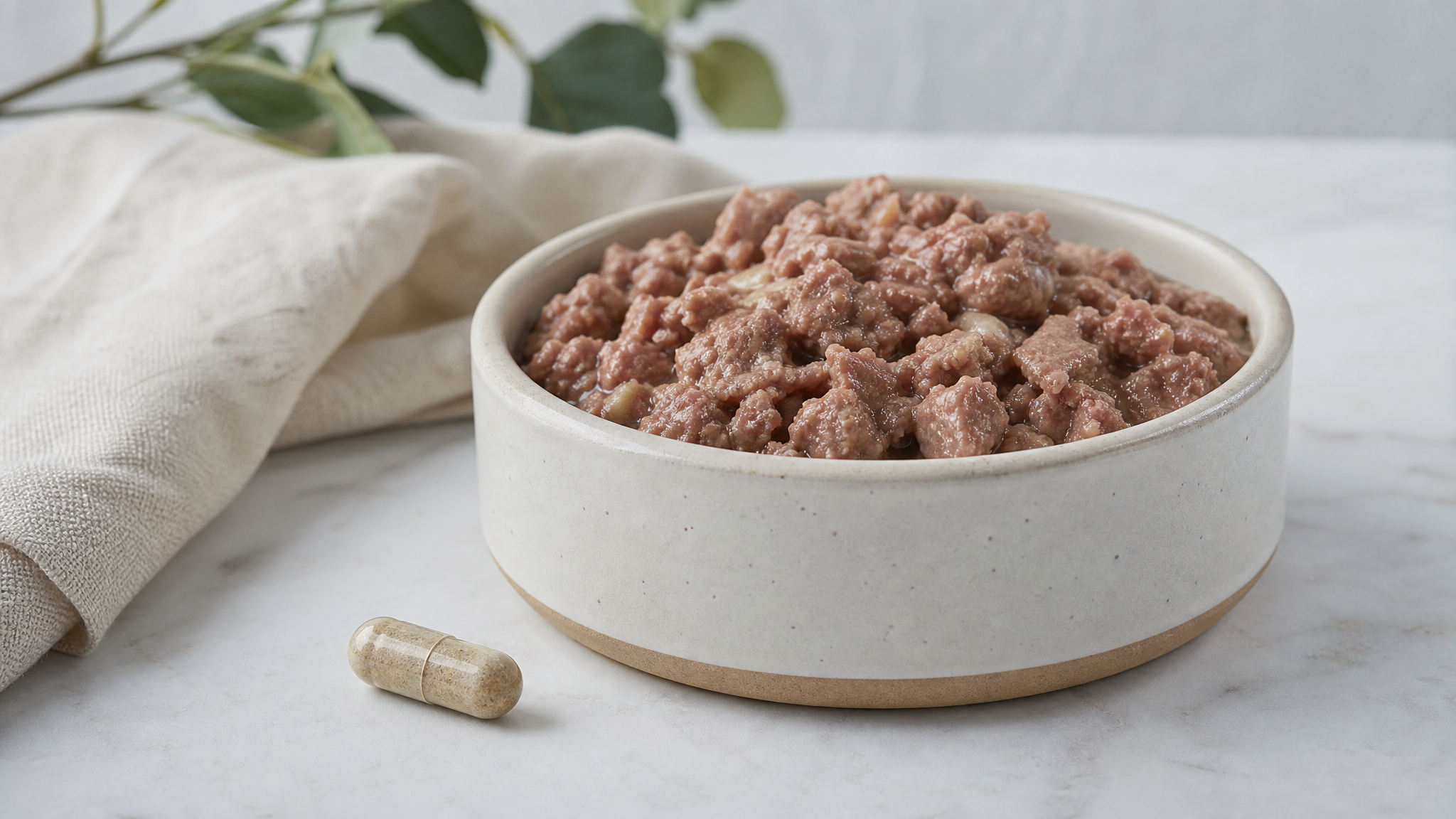
Another area with stronger consensus is omega-3 fatty acids. EPA (eicosapentaenoic acid) and DHA (docosahexaenoic acid), particularly from marine oil supplements, have been shown to help manage canine arthritis and may support cognitive function as a dog ages. Dosages referenced by Cornell suggest a 300 mg EPA/DHA per capsule, with 1–2 capsules per 10 pounds of body weight. For a 50-pound dog, that could mean 5–10 capsules daily—a practical detail that often surprises owners.
Compounding the confusion, AAFCO has no official nutrient profile for “senior” dog food. Unlike the established standards for growth or adult maintenance, commercial senior diets vary wildly in formulation. This absence puts the burden on the owner to scrutinize ingredients and on the veterinarian to interpret what a particular senior formula actually provides. It’s a gap in regulation that makes the next section especially important.
Risks and Common Misconceptions
Loss of muscle mass in an older dog is frequently dismissed as a normal part of aging. The Cornell Canine Health Center cautions that what looks like “slowing down” can actually be a sign of disease or inadequate protein intake. A dog with less muscle may still maintain a steady weight on the scale—fat displaces lean tissue, hiding the loss. That’s a misconception with consequences, because weakened muscles can’t support ailing joints as well.
Slow weight gain is equally deceptive. A pound or two might not seem like much, but on an elderly Labrador already dealing with hip dysplasia, extra weight compounds the load. As The Vet Desk points out, conflicting advice—some sources recommend low-protein, others high-protein—can leave owners paralyzed. In these cases, a veterinarian’s assessment of kidney function, body condition score, and mobility is the only reliable compass. No single diet change solves everything, and guessing only risks amplifying problems that may already be brewing quietly.
How to Choose and Feed a Senior Dog Diet
A dog that no longer rushes to the bowl might need more than a recipe change. Aging reduces sensory perception—foods that once smelled irresistible may now seem bland. Soft or wet foods can help, especially for dogs with dental pain, and slightly warming the meal intensifies aroma, often stimulating appetite that had been dwindling. Hartsdale Veterinary Clinic notes that commercial senior foods frequently differ in texture and palatability from adult formulas, not just in nutrient levels.
Palatability isn’t a luxury; it’s a practical lever when a dog’s interest in eating drops. Canned or pouch foods, in particular, combine higher moisture content with a softer mouthfeel, reducing the effort needed to chew while also helping with hydration—a secondary but important benefit for older dogs.
Evanger's EVX Restricted Diet Hip & Joint And Senior Support Wet Dog Food
Among the commercial options, Evanger's EVX Restricted Diet Hip & Joint And Senior Support Wet Dog Food is formulated specifically for senior mobility and joint health. The wet texture addresses two common hurdles at once: it’s gentler on teeth and gums that may be sensitive, and its aroma is more immediate than dry kibble, which can help an older dog whose sense of smell has faded engage with mealtime again.
It’s one path among many, not a guarantee. A dog with significant arthritis might still need supplemental support like a marine oil omega-3 supplement, while a dog with kidney concerns would require a different dietary approach entirely. The value lies in matching the food’s features—soft, aromatic, joint-targeted—to the specific obstacles a senior dog is facing right now, then adjusting as those needs evolve.

De Talis Us




Dejar un comentario
Este sitio está protegido por hCaptcha y se aplican la Política de privacidad de hCaptcha y los Términos del servicio.