


The Complete Guide to Terrarium Enclosures for Reptiles: Everything You Need to Know
So you've decided to bring a reptile into your home – awesome! Whether you're thinking about getting a bearded dragon, a corn snake, a leopard gecko, or any other scaly friend, one of the most important decisions you'll make is choosing the right terrarium enclosure. Trust me, this isn't something you want to skimp on or rush through. Your reptile's entire quality of life depends on having a proper home, and that's exactly what we're going to dive into today.
Let me be real with you – when I first started keeping reptiles, I made some rookie mistakes with my enclosures. I thought any glass tank would do, didn't pay enough attention to ventilation, and honestly, I didn't understand how crucial proper lighting and heating were. But after years of learning, research, and talking to experienced keepers, I've picked up a ton of knowledge that I'm excited to share with you. By the end of this guide, you'll understand everything you need to know about setting up the perfect terrarium enclosure for your reptile.
Understanding the Basics of Terrarium Enclosures
Before we get into the nitty-gritty details, let's talk about what a terrarium enclosure actually is and why it matters so much. A terrarium enclosure is essentially a controlled environment where your reptile lives. It's not just a box to keep your pet in – it's a carefully designed habitat that mimics aspects of their natural environment while keeping them safe and healthy.
The primary purpose of a terrarium enclosure is to provide your reptile with the right conditions for survival and thriving. This includes proper temperature ranges, appropriate humidity levels, adequate space for movement, and the right kind of lighting. Different reptile species have vastly different requirements, so there's no one-size-fits-all solution. What works perfectly for a ball python might be completely wrong for a bearded dragon, and that's something we'll explore in detail.
When you're shopping for terrarium enclosures, you'll notice there are several different types available. Each has its own advantages and disadvantages, and your choice will depend on your specific reptile's needs, your budget, and your living situation. Let's break down the main options you'll encounter.
Types of Terrarium Enclosures
Glass Aquariums and Tanks
Glass aquariums are probably the most common type of terrarium enclosure you'll find. They're widely available, relatively affordable, and they come in tons of different sizes. The main advantage of glass is that you can see your reptile clearly from all angles, which is great for observation and monitoring their health.
However, glass has some significant drawbacks. First, it's not great for ventilation. Glass tanks can trap humidity and create stagnant air, which can lead to respiratory issues in your reptile. Second, glass doesn't insulate temperature well, meaning you'll need to work harder to maintain proper heating. Third, glass can be heavy and fragile, so you need to be careful when moving it or cleaning it.
If you do choose a glass aquarium, make sure it's large enough for your specific reptile species. A lot of people make the mistake of getting a tank that's too small, thinking their reptile will be fine in a cramped space. That's not how it works. Your reptile needs room to move around, explore, and exhibit natural behaviors.
Plastic Enclosures
Plastic enclosures are becoming increasingly popular, and for good reason. They're lightweight, durable, and often come with better ventilation than glass tanks. Many plastic enclosures are specifically designed for reptiles, so they often have features like proper air vents, secure locking mechanisms, and better insulation.
The downside to plastic enclosures is that they can be more expensive than glass tanks, and the plastic can sometimes scratch or become cloudy over time, making it harder to see your reptile. Some lower-quality plastic enclosures can also be prone to warping if exposed to heat sources.
Screen Enclosures
Screen enclosures are excellent for reptiles that need high airflow and lower humidity levels. They're typically made with a metal frame and mesh screening, which allows for fantastic ventilation. These are particularly popular for bearded dragons and other desert-dwelling reptiles.
The main drawback of screen enclosures is that they don't retain heat or humidity well, so they're not suitable for species that need higher humidity levels. They can also be more expensive than glass tanks, and they require more careful setup to ensure your reptile can't escape through any gaps.
Wooden Enclosures
Wooden enclosures, often called vivariums, are popular in Europe and are becoming more common in the United States. They're typically made with plywood or similar materials and are often custom-built or purchased as kits. Wooden enclosures offer excellent insulation and can look really nice in a home setting.
The challenge with wooden enclosures is that they require more maintenance, can be damaged by moisture if not properly sealed, and they're often more expensive. They also need to be carefully constructed to ensure proper ventilation and to prevent your reptile from escaping.
Sizing Your Terrarium Enclosure
One of the biggest mistakes people make when setting up a terrarium enclosure is getting one that's too small. I can't stress this enough – your reptile needs adequate space to move around, explore, and exhibit natural behaviors. A cramped enclosure leads to stress, which can cause health problems and behavioral issues.
The minimum size requirements vary significantly depending on your reptile species. For example, a corn snake might be okay in a 40-gallon breeder tank, while a ball python would prefer something larger. Bearded dragons need quite a bit of floor space, while arboreal reptiles like tree pythons need height more than floor space.
A good rule of thumb is to research your specific species and find out what experienced keepers recommend. Don't just go with the minimum – if you have the space and budget, going larger is always better. Your reptile will be happier, healthier, and you'll have more flexibility in how you design and decorate the enclosure.
When thinking about size, consider both the floor space and the height. Some reptiles are ground-dwellers and need more horizontal space, while others are climbers and need vertical space. Understanding your reptile's natural behavior is key to sizing the enclosure properly.
Temperature and Heating Requirements
Temperature control is absolutely critical in a terrarium enclosure. Reptiles are ectothermic, which means they rely on their environment to regulate their body temperature. Without proper heating, your reptile won't be able to digest food properly, their immune system will be compromised, and they'll become lethargic and unhealthy.
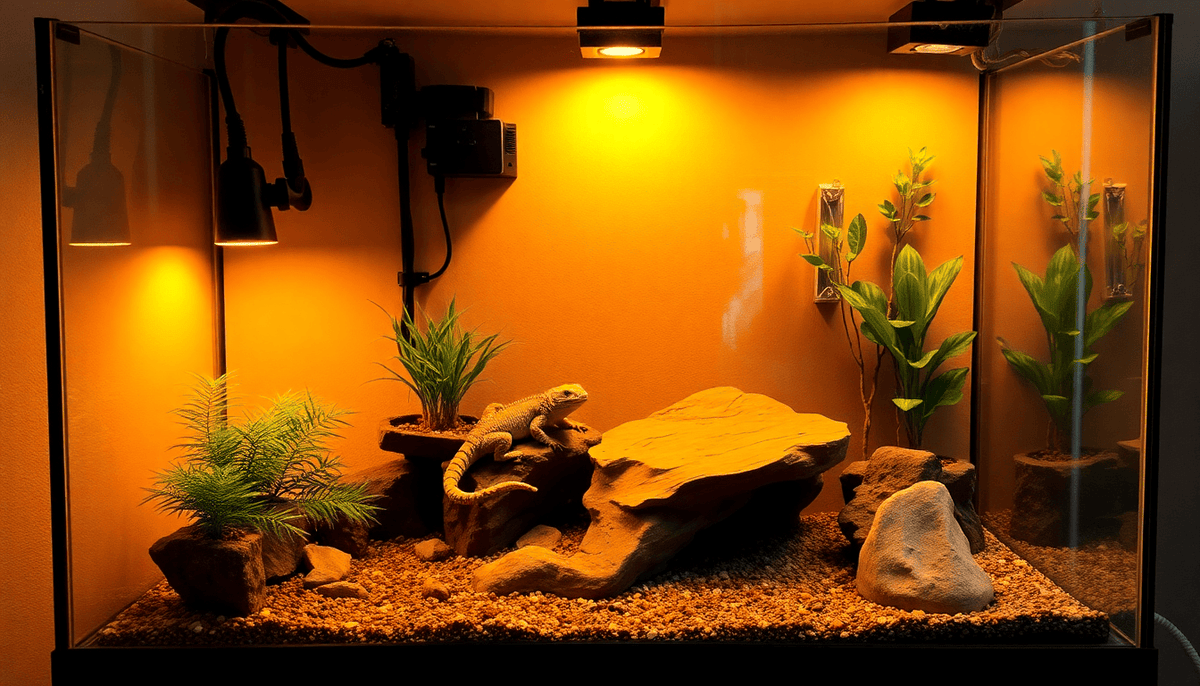
Different reptile species have different temperature requirements. Some prefer warmer environments, while others do better in cooler conditions. You'll typically need to create a temperature gradient in your enclosure, with a warm side and a cooler side. This allows your reptile to move between areas and regulate their own temperature.
To achieve proper heating, you'll need heating equipment. The most common options include under-tank heaters, heat tape, ceramic heat emitters, and heat lamps. Under-tank heaters are popular for smaller enclosures, while larger setups often use heat tape or heat lamps. Ceramic heat emitters are great because they produce heat without light, which is useful for nighttime heating.
You'll also need a thermostat to control your heating equipment. A thermostat prevents your enclosure from getting too hot and helps maintain consistent temperatures. This is really important – without a thermostat, you risk overheating your reptile or creating temperature fluctuations that stress them out.
Temperature monitoring is essential. Get a good thermometer or temperature gauge so you can check the temperatures in different areas of your enclosure. Many experienced keepers use multiple thermometers to monitor the warm side, cool side, and ambient temperature. This helps you make adjustments as needed.
Humidity and Ventilation
Humidity requirements vary wildly depending on your reptile species. Some reptiles, like bearded dragons, prefer dry environments with low humidity. Others, like ball pythons and many tropical species, need moderate to high humidity. Still others, like certain tree frogs, need very high humidity levels.
Getting humidity right is a balancing act. Too much humidity can lead to respiratory infections and mold growth. Too little humidity can cause shedding problems and dehydration. You need to understand your specific species' requirements and work to maintain those levels.
Ventilation is crucial for maintaining healthy humidity levels and preventing stagnant air. Good airflow helps prevent mold and fungus growth, reduces the risk of respiratory infections, and helps maintain proper temperature gradients. This is why screen enclosures and enclosures with proper ventilation holes are so important.
If you're dealing with a high-humidity species, you might need to use a humidifier or mist the enclosure regularly. If you're dealing with a low-humidity species, you might need to ensure good ventilation and avoid using materials that retain moisture. It's all about finding the right balance for your specific reptile.
Lighting Requirements
Lighting is another critical aspect of terrarium enclosure setup that many beginners overlook. Most reptiles need UVB lighting to synthesize vitamin D3, which is essential for calcium metabolism and bone health. Without proper UVB lighting, your reptile can develop metabolic bone disease, which is a serious and often fatal condition.
The amount and type of UVB lighting your reptile needs depends on their species and natural habitat. Diurnal reptiles (those active during the day) typically need more UVB than nocturnal species. Desert-dwelling reptiles often need stronger UVB than rainforest species.
UVB bulbs come in different strengths, typically ranging from 2.0 to 10.0 UVB output. You'll need to research your specific species to determine what strength is appropriate. The bulbs also need to be positioned correctly – UVB doesn't penetrate glass well, so you'll want the bulb as close to your reptile as possible without being so close that it causes burns.
In addition to UVB, many reptiles benefit from a regular day-night cycle with appropriate lighting. This helps regulate their circadian rhythms and promotes natural behaviors. You can use regular full-spectrum lighting for this purpose, combined with your UVB bulb.
UVB bulbs need to be replaced regularly – they lose their effectiveness over time even if they still appear to be working. Most UVB bulbs need to be replaced every 6 to 12 months, depending on the type and brand.
Substrate and Flooring
The substrate you choose for your terrarium enclosure is important for both aesthetics and functionality. The substrate affects humidity levels, temperature, and your reptile's ability to exhibit natural behaviors like burrowing or digging.
Different reptiles need different substrates. Bearded dragons do well with tile or reptile carpet, which are easy to clean and don't pose an impaction risk. Ball pythons and corn snakes can use aspen shavings, cypress mulch, or other substrates. Tropical species might need substrates that retain moisture better, like coconut husk or sphagnum moss.
Avoid substrates that are toxic or pose health risks. Cedar and pine shavings, for example, are toxic to reptiles and should never be used. Loose substrates can cause impaction if your reptile accidentally ingests them while eating, so you need to be careful about substrate choice based on your reptile's feeding habits.
The depth of substrate also matters. Some reptiles like to burrow, so they need deeper substrate. Others don't burrow at all and do fine with minimal substrate. Again, research your specific species to determine what's appropriate.
Substrate needs to be cleaned regularly. Spot-clean daily to remove feces and uneaten food, and do a full substrate change periodically. The frequency depends on your enclosure size, your reptile's habits, and the type of substrate you're using.
Decorations and Enrichment
Your terrarium enclosure shouldn't just be a bare box. Decorations and enrichment items are important for your reptile's physical and mental health. They provide places to hide, climb, bask, and explore, which helps reduce stress and promotes natural behaviors.
Hides are essential. Your reptile needs at least one hide on the warm side and one on the cool side of the enclosure. Hides can be as simple as a cardboard box or as elaborate as a commercial reptile hide. The important thing is that your reptile feels secure and can retreat when they want to.
Branches, rocks, and other climbing structures are great for arboreal species. They provide exercise opportunities and help create a more naturalistic environment. Make sure any branches or rocks are secure and won't fall on your reptile.
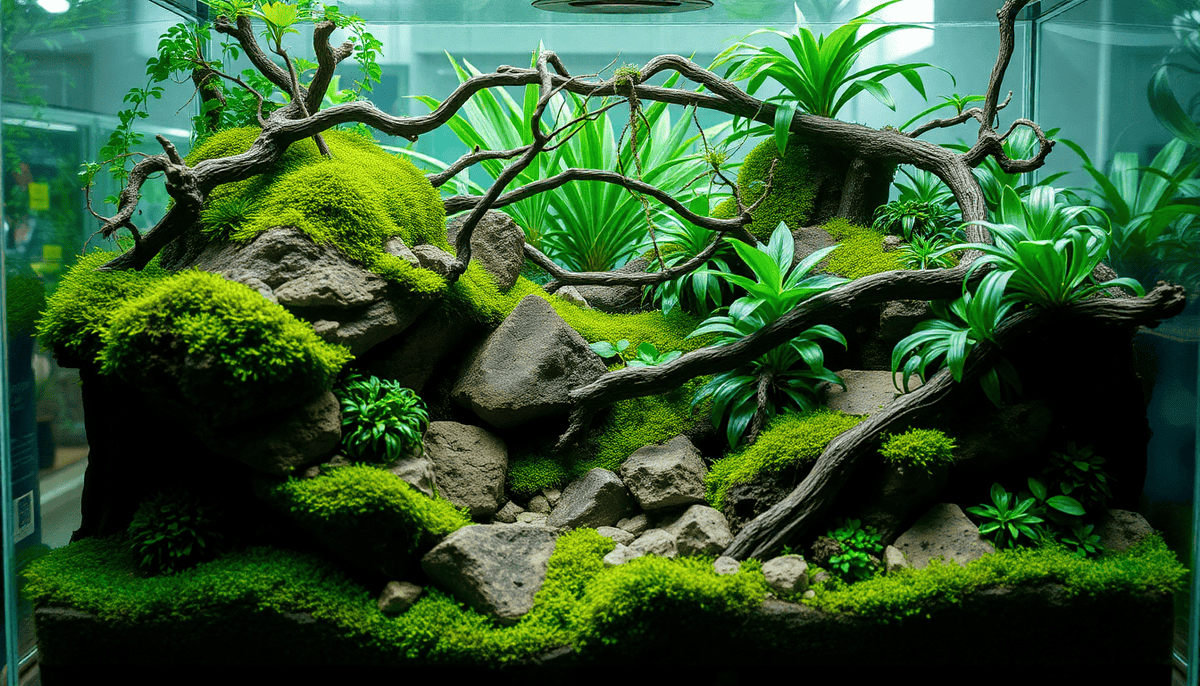
Plants can be a great addition to a terrarium enclosure. Live plants add visual appeal, help with humidity control, and provide enrichment. However, not all plants are safe for reptiles, so you need to research which plants are appropriate for your setup. Some reptiles will also eat plants, so you need to consider that when choosing.
Decorations should be arranged in a way that creates visual interest and allows your reptile to move around easily. Avoid overcrowding the enclosure – your reptile still needs open space to move and explore.
Water and Hydration
Water is essential for all reptiles, though the way they get water varies by species. Some reptiles drink from standing water bowls, while others prefer to drink from water droplets on leaves or from misting. Some species get most of their water from the food they eat.
If your reptile uses a water bowl, make sure it's appropriately sized – large enough for them to drink from but not so large that they can soak in it (unless that's appropriate for your species). The water bowl should be cleaned and refilled daily to prevent bacterial growth.
For species that prefer misting, you can use a spray bottle to mist the enclosure regularly. This also helps maintain appropriate humidity levels. Some people use automatic misting systems for high-humidity enclosures.
Hydration is important for your reptile's health. Dehydration can lead to serious health problems, so make sure your reptile has access to water and is actually drinking. You can tell if your reptile is dehydrated by looking at their skin – it should be supple and elastic, not wrinkled or dull.
Feeding Setup and Considerations
The way you set up your terrarium enclosure for feeding depends on your reptile's diet and feeding habits. Some reptiles eat live prey, while others eat frozen-thawed prey or plant matter. Some are ambush predators that prefer to hunt, while others are more active foragers.
If you're feeding live prey, you need to supervise the feeding to make sure the prey doesn't injure your reptile. Live prey can bite and scratch, causing wounds that can become infected. Many keepers prefer frozen-thawed prey for this reason – it's safer and often more convenient.
For herbivorous or omnivorous reptiles, you'll need to provide appropriate plant matter. This should be offered in a food bowl or scattered around the enclosure depending on your reptile's feeding habits. Uneaten food should be removed daily to prevent spoilage and bacterial growth.
The feeding area should be separate from the rest of the enclosure if possible. Some keepers feed their reptiles in a separate container to reduce the risk of substrate ingestion and to keep the main enclosure cleaner. This is particularly important for species that eat loose substrate.
Maintenance and Cleaning
Proper maintenance of your terrarium enclosure is essential for your reptile's health. A dirty enclosure can harbor bacteria, parasites, and mold, all of which can cause serious health problems.
Daily maintenance includes spot-cleaning to remove feces, uneaten food, and soiled substrate. Check water bowls and refill them with fresh water. Monitor temperature and humidity levels to make sure they're in the appropriate range.
Weekly maintenance might include a more thorough cleaning of decorations and hides, checking all equipment to make sure it's working properly, and observing your reptile for any signs of illness or stress.
Monthly maintenance typically includes a partial substrate change, deep cleaning of the enclosure, and checking all heating and lighting equipment. Replace any worn-out items and make adjustments as needed.
Full enclosure cleanings should be done periodically – the frequency depends on your enclosure size and your reptile's habits. During a full cleaning, remove everything from the enclosure, clean all surfaces with appropriate reptile-safe cleaners, replace the substrate, and thoroughly clean all decorations and equipment.
Common Mistakes to Avoid
Let me share some of the most common mistakes I see people make with terrarium enclosures, so you can avoid them.
First, getting an enclosure that's too small. I mentioned this before, but it's worth repeating. Your reptile needs adequate space. Don't cheap out on enclosure size.
Second, not providing proper heating and temperature control. This is a critical mistake that leads to serious health problems. Invest in good heating equipment and a thermostat.
Third, neglecting UVB lighting. Many reptiles need UVB to stay healthy. Don't skip this important component.
Fourth, not researching your specific species' requirements. Every reptile is different. What works for one species might be completely wrong for another. Do your research before setting up your enclosure.
Fifth, overcrowding the enclosure with too many decorations. While enrichment is important, your reptile still needs open space to move around.
Sixth, using inappropriate substrates. Cedar and pine are toxic. Loose substrates can cause impaction. Choose appropriate substrates for your species.
Seventh, not maintaining the enclosure properly. A dirty enclosure leads to health problems. Commit to regular

De Talis Us


Dejar un comentario
Este sitio está protegido por hCaptcha y se aplican la Política de privacidad de hCaptcha y los Términos del servicio.