


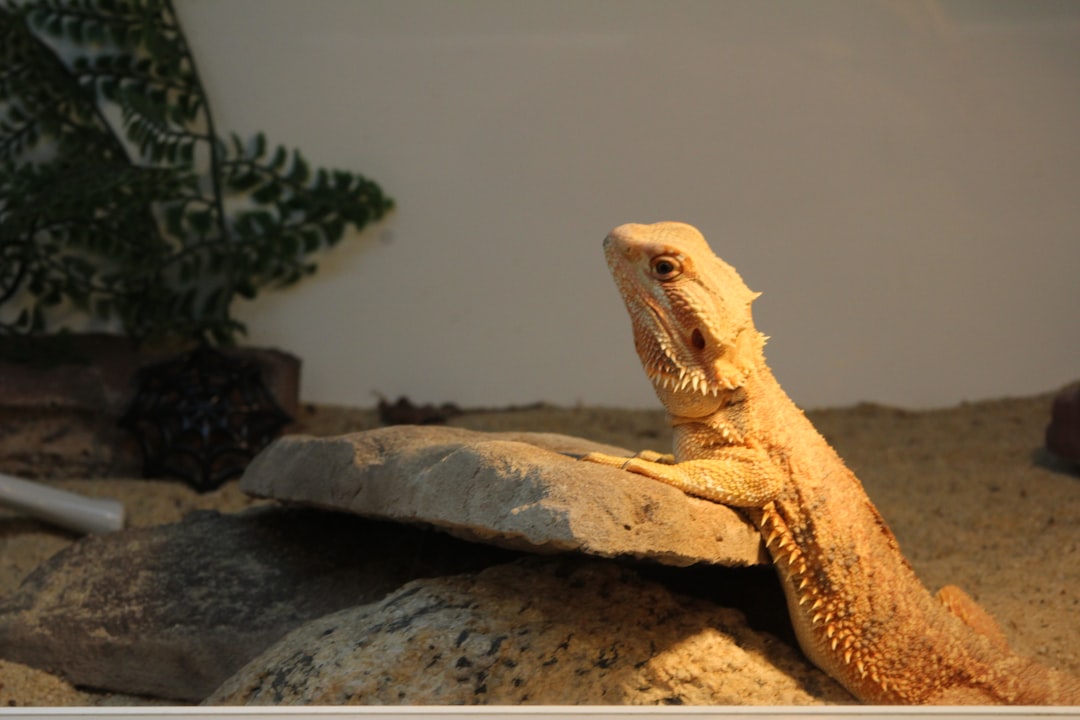
Optimal Heating & Lighting for Bearded Dragons | Essential Care Tips
Heating and Lighting for Bearded Dragons

Imagine being dropped into the scorching Australian Outback without a jacket, a snack, or any way to warm up. For a captive lizard, their glass tank is their entire world, meaning you are completely responsible for providing their weather. Because these reptiles rely on ectothermic dependency—meaning they use external surroundings to control their body temperature—getting the "sun" right isn't just about brightness. It is their literal engine for survival.
Veterinary experts agree that standard household lights simply cannot keep your pet alive. Proper bearded dragon care requires a concept called sun mimicry, where you recreate the life-saving benefits of the desert sky indoors. Replicating this wild habitat requires a specific two-bulb setup working in perfect harmony. One lamp acts as a "battery charger" providing intense heat for digestion, while the second delivers UVB, an invisible vitamin necessary for building strong bones.
Many new owners walk into a pet store and buy a basic basking bulb, mistakenly thinking a warm tank is enough. According to experienced reptile keepers, missing that crucial invisible light slowly starves a lizard of calcium, regardless of how much food they actually consume. True success in building a safe bearded dragon environment means providing both essential elements so your pet can thrive long-term.
Setting up heating and lighting for bearded dragons doesn't require an advanced degree in biology. By arranging your tank's layout correctly and knowing exactly which specific items to buy, you can easily act as the ultimate biological climate controller.
Why Heat is Your Dragon’s 'Battery Charger' for Digestion and Activity
Knowing your reptile is cold-blooded, it helps to think of their primary heat source as a daily battery charger. They rely on intense warmth to physically move, hunt, and digest meals. To provide this essential part of bearded dragon care, you must create a dedicated "basking spot" inside the enclosure. This is a concentrated, hot area directly under the heat lamp where your pet can sit to power up their metabolism for the day.
Hitting the correct numbers is vital for their survival, and the optimal basking spot temperature for adults stays right between 100°F and 105°F. When their environment drops below this range, their internal engine simply stalls out. You can quickly tell if your dragon is struggling to get enough warmth by watching for these clear warning signs:
- Extreme lethargy or hiding in the corner all day.
- Unusually dark skin coloring as they try to absorb more heat.
- Refusing food because their body cannot physically process it.
While a warm environment gives them the physical energy to stay active, proper heating and lighting actually requires a two-bulb system. Heat alone will not keep their skeletal structure from collapsing over time.
Preventing Brittle Bones: How Invisible UVB Acts as a Life-Saving Vitamin

Proper heating and lighting for bearded dragons requires recognizing that warmth is only half the equation. Think of UVB as a daily vitamin falling directly from the sky. These invisible rays allow your lizard's body to manufacture Vitamin D3, which acts as the key to unlocking calcium. Without this chemical reaction, your pet cannot absorb calcium from their meals, regardless of how many powdered supplements you dust onto their crickets.
Placing their enclosure near a sunny window might seem clever, but it creates a hidden danger. Standard window glass and dense mesh lids act like heavy sunscreen, blocking beneficial rays entirely. While the room looks bright, the nutritional value is stripped away. To thrive in a captive environment, they must have direct, unfiltered exposure to a specialized reptile bulb.
Missing this crucial light leads to Metabolic Bone Disease (MBD). When their system lacks calcium, the body survives by stealing it directly from their skeleton, resulting in soft jawbones, kinked tails, and trembling legs. Fortunately, preventing metabolic bone disease in reptiles is highly successful when you provide consistent, high-quality exposure.
Grabbing any fluorescent tube won't guarantee protection. Because we cannot see how far these rays actually reach, we must carefully match the fixture to the enclosure to ensure precise, safe nutritional support.
T5 vs T8 UVB Bulbs: Choosing the Right Strength and Safe Distance
When shopping for lights, comparing T5 vs T8 UVB for bearded dragons is your first major step. Deciding between them comes down to a concept experts call Ferguson zones for heliothermic lizards. Think of these zones as a sun-intensity scale. Dragons are "Zone 3" animals, meaning they naturally thrive in bright, mid-day desert sun. To recreate this high-energy environment indoors, your bulb must successfully push enough rays down to their favorite branch.
Older T8 bulbs are relatively weak and only work well in shallow enclosures. Today, the T5 High Output (HO) bulb is the vet-recommended choice because it projects a deeper beam of those invisible vitamins. However, because T5s are so powerful, establishing a precise safe distance for basking lamp placement is critical to prevent eye damage.
Here is your quick-reference mounting guide (measured directly from the bulb to your dragon’s back):
- T8 Bulbs: Mount 6 to 8 inches away (always inside the tank).
- T5 HO Bulbs: Mount 12 to 15 inches away (if mounted completely under the screen).
Positioning these tubes correctly ensures your pet gets perfectly balanced "sunlight" while avoiding dangerous overexposure. With proper invisible nutrition locked in, managing the physical heat they feel requires establishing a distinct temperature gradient across the enclosure.
The 'Two-Room House' Method: Setting Up a 20-Degree Thermal Gradient

Imagine living somewhere permanently locked at 100 degrees with no air conditioning. Because reptiles cannot sweat, they rely on thermoregulation behavior—physically walking between warm and cool spaces—to control their internal body temperature. By clustering your heat and UVB lamps exclusively on one end of the enclosure, you naturally set up a proper thermal gradient.
This layout creates a "two-room house" effect, ensuring your dragon can successfully escape the heat when they get too warm. To protect their digestion and immune system, aim for these distinct zones:
- The Hot Side: Keep the main basking surface between 100–105°F for quick energy charging.
- The Cool Side: Ensure the opposite end drops to 75–80°F for safe, comfortable resting.
Guessing these zones by touching the glass puts your pet at serious risk. Proper digital hygrometer and thermometer placement is the only way to monitor the bearded dragon environment accurately. Secure one digital probe directly on the basking rock and another completely across the tank in the coolest corner. Once this gradient is established, automated controls become essential to prevent dangerous overheating while you are away.
Precision Control: Why Dimming Thermostats are the 'Cruise Control' for Safety
Managing daytime temperatures manually by leaving a bulb running at full blast all day is a recipe for disaster. While standard on/off thermostats try to prevent overheating by cutting power completely when the tank gets too hot, this constant flashing stresses your pet and drastically shortens the lifespan of your expensive bulbs.
A much safer solution is using a dimming thermostat for basking lamps, which acts exactly like cruise control for your enclosure. Instead of violently shutting off, the device gently dims the light just enough to maintain that perfect 100-degree basking spot, keeping the thermal gradient stable and eliminating dangerous fire risks.
This automatic adjustment is also the ultimate secret to fixing low enclosure temperatures in winter. When your house gets chilly, the thermostat instantly compensates by pushing more power to the bulb, ensuring your dragon's environment stays perfectly warm despite cold drafts.
Automating this daily care routine provides incredible peace of mind. However, before rushing to the pet store for a red heat lamp for the evening, it is crucial to understand that complete darkness is superior to colored night bulbs.
Nighttime Comfort: Why Darkness is Better than 'Colored' Night Bulbs
Many new owners wonder if bearded dragons need light at night. The short answer is absolutely not. While packaging claims red or blue "night bulbs" are invisible to reptiles, your dragon actually sees them perfectly. Just like humans, bearded dragons have a sensitive internal clock—a circadian rhythm—that relies on total darkness for deep, restorative sleep. Leaving a colored light on is like trying to sleep with a neon sign flashing in your bedroom, resulting in a stressed and exhausted pet.
When house temperatures drop below 65°F overnight, you need a heat source producing zero light. You have two excellent, completely dark options:
- Ceramic Heat Emitters (CHE): These warm the tank's air gently, acting much like a standard space heater.
- Deep Heat Projectors (DHP): A modern upgrade, deep heat projector benefits for nighttime include emitting special, invisible warmth (Infrared-C) that penetrates deeper into your dragon's muscles.
Choosing a ceramic heat emitter vs deep heat projector depends on your budget, but both keep your sleeping pet safe from cold drafts. Even if daytime bulbs appear bright, they might quietly starve your pet of essential vitamins if they have exceeded their effective lifespan.
The 'Invisible' Expiration Date: When to Replace Bulbs Before Your Dragon Suffers
A glowing bulb isn't always a working bulb. The special coating inside UV lamps degrades over time, meaning the "invisible vitamin" stops reaching your pet long before the light actually burns out. Knowing exactly how often to replace UVB bulbs is critical: standard tubes need swapping every six months, while high-output T5s last twelve. When evaluating mercury vapor bulbs vs tube UVB, remember that those combo bulbs also lose their UV punch around the one-year mark, even while they continue producing heat.
Beyond survival vitamins, your dragon's energy depends heavily on environmental brightness. Adding full spectrum daylight bulbs alongside your primary heat and UV setup mimics the intense, cheerful glare of the Australian desert. This brilliant white light does not provide heat or UVB, but it actively triggers natural basking behaviors, stimulates appetite, and prevents daytime lethargy.
To ensure your lighting investment actually protects your dragon, stick to this simple monthly maintenance routine:
- Wipe all bulbs gently with a completely dry cloth (household dust physically blocks UV rays).
- Check that fixtures remain securely mounted at the correct distance from the basking branch.
- Write the installation date directly on the bulb's base in permanent marker.
Following these basic lighting rules sets the foundation for a reliable weekend safety routine.
Your Weekend Habit Upgrade: A 5-Point Lighting Safety Checklist
You hold the blueprint for recreating the Australian Outback right in your living room. Implementing proper heating and lighting for bearded dragons means you can finally stop guessing and start providing exactly what your pet needs to thrive.
Take 10 minutes today to audit your setup and achieve total peace of mind using this checklist:
- The Battery Charger: One bright white basking bulb (verify temperatures with a digital thermometer).
- The Invisible Vitamin: A tube-style UVB bulb overlapping the heat zone, completely unblocked by glass or plastic.
- The Two-Room House: Distinct hot and cool sides to allow for safe thermal regulation.
- The Replacement Calendar: A future-proof phone reminder to swap your UVB bulb every six months, even if it still shines.
Applying these foundational elements of bearded dragon care allows you to maintain optimal conditions for your pet consistently. Start by checking your basking temperatures today to ensure a safe, active, and healthy environment for your dragon.

De Talis Us


Dejar un comentario
Este sitio está protegido por hCaptcha y se aplican la Política de privacidad de hCaptcha y los Términos del servicio.