



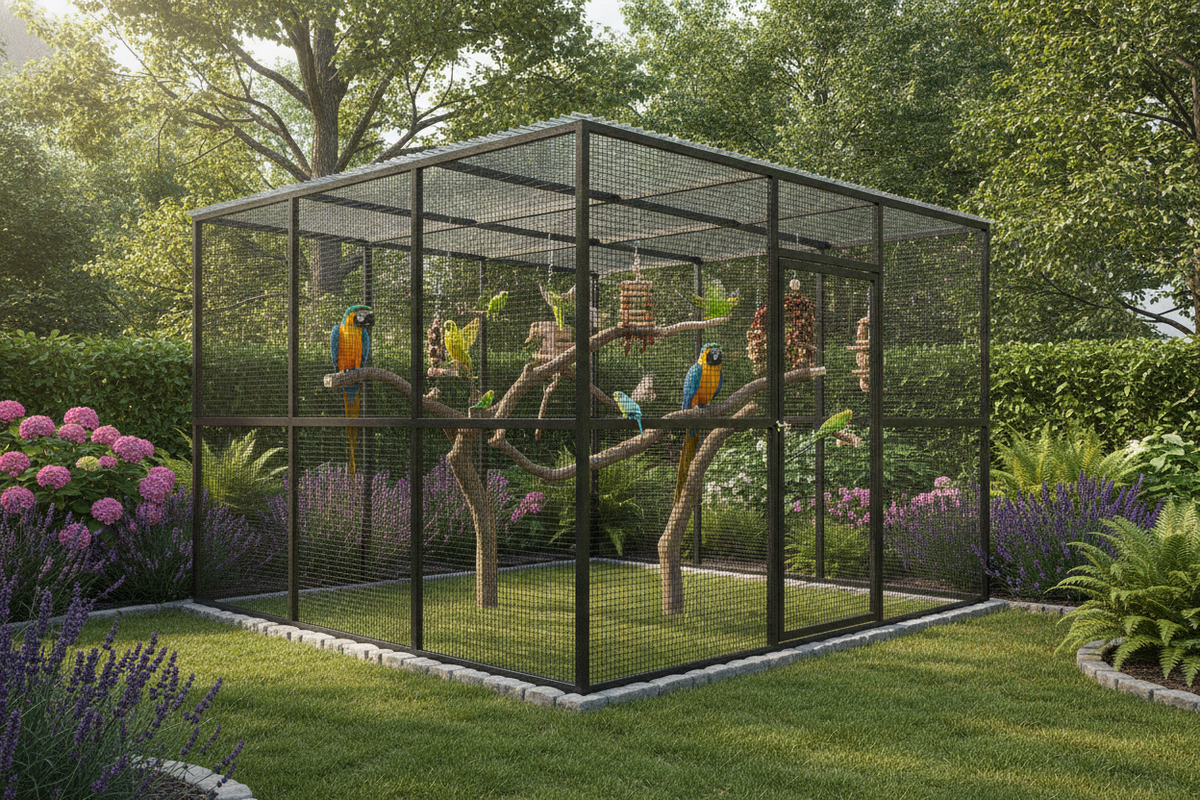
Large Outdoor Bird Aviary: How to Choose the Best One
Your Birds Deserve More Than a Cage
There is something truly special about watching your birds stretch their wings, hop between perches, and soak up the fresh air in a space that actually feels like home. If you have been searching for the right large outdoor bird aviary and feeling a little lost in all the options, you are not alone. Choosing the right aviary is one of the most meaningful decisions you will make as a bird owner, and it goes far beyond picking something that simply looks good in the backyard.
This guide is here to help you cut through the noise. Whether you keep parakeets, cockatiels, or larger parrots, you will find practical, trustworthy advice to help you choose an aviary your feathered companions will genuinely thrive in.
Why Size and Space Matter for Your Birds
How a Large Outdoor Bird Aviary Supports Natural Behavior
Birds are not meant to sit still. In the wild, they fly, forage, explore, and interact with their environment constantly. When kept in a space that is too small, birds often develop signs of stress, including feather plucking, repetitive movements, and reduced activity. A large outdoor bird aviary changes all of that.
Generous space gives your birds room to actually fly, not just flutter. Flight is essential for cardiovascular health, muscle development, and emotional well-being. Studies in avian behavior consistently show that birds housed in larger enclosures display more natural behaviors, vocalize more positively, and show fewer stress-related symptoms than those in cramped quarters.
Beyond physical health, space supports mental stimulation. When birds have room to move, they are more likely to explore, play, and engage with enrichment items like swings, foraging toys, and varied perches. A spacious aviary also reduces territorial tension if you keep multiple birds, giving each one enough room to establish its own comfortable zone without conflict.
Think of a large outdoor aviary not as a luxury, but as a foundation for your birds' quality of life.
Key Features to Look for in an Outdoor Aviary
Materials, Weather Resistance, and Safety
Not all aviaries are built the same, and the difference in quality becomes very clear once you start comparing materials. When you are investing in an outdoor structure that will be exposed to sun, rain, wind, and curious predators, durability is non-negotiable.
Rust-Proof Mesh: The wire mesh is one of the most important components of any outdoor aviary. Look for galvanized or powder-coated steel mesh that resists rust and corrosion over time. Cheap mesh can degrade quickly when exposed to moisture, creating sharp edges that can injure your birds or gaps that allow escape.
Solid, Stable Frames: The frame holds everything together, so it needs to be strong and weather-resistant. Aluminum and coated steel frames are popular choices because they hold up well against the elements without warping or weakening over seasons. A wobbly or flimsy frame is a safety hazard, both for your birds and for the structure's longevity.
Predator-Proof Locks and Entry Points: Outdoor aviaries face threats that indoor cages never have to deal with. Raccoons, cats, foxes, and even larger birds can attempt to break in. Look for aviaries with secure latches, double-entry doors or safety porches, and reinforced mesh that cannot be pried open easily. A safety porch, sometimes called an airlock entry, is especially useful because it creates a buffer zone so birds cannot escape when you enter.
Roof Coverage: A partial or full roof is important for protection from rain, direct sunlight, and aerial predators. Some aviaries come with a solid panel section that provides shade and shelter, which is ideal for keeping your birds comfortable during hot summers or unexpected weather.
Floor Design: Depending on your setup, you may prefer an aviary with a raised floor, a concrete base, or one that sits directly on the ground. Ground-level aviaries can allow for natural foraging but may require additional predator-proofing like buried mesh around the perimeter to prevent digging animals from getting in underneath.
Matching the Aviary to Your Bird Species
Sizing and Setup Tips for Common Backyard Birds
One of the most common mistakes bird owners make is choosing an aviary based on looks or price alone, without considering whether the dimensions actually suit their specific birds. The right size and setup depend heavily on the species you keep.
Parakeets and Budgies: These small but active birds need more horizontal space than vertical. They love to fly back and forth, so a longer aviary suits them better than a tall, narrow one. A minimum of six feet in length is a good starting point for a small flock. Perches should be placed at varying heights and distances to encourage movement, and natural wood perches are preferable to uniform dowels because they exercise foot muscles more effectively.
Cockatiels: Cockatiels are curious, social birds that benefit from both vertical and horizontal space. They enjoy climbing as much as flying, so an aviary with good height (at least five to six feet) works well. Include a mix of horizontal perches, swings, and foraging stations to keep them mentally engaged. Cockatiels are also sensitive to drafts and cold, so make sure the aviary has a sheltered section for cooler months.
Larger Parrots (African Greys, Amazons, Macaws): Bigger birds need significantly more space and sturdier construction. A large outdoor bird aviary for parrots should have a minimum of eight feet in height and enough width for full wing extension and short flight bursts. The mesh gauge needs to be heavier to withstand the grip and chewing power of larger parrots. Perches should be thick, sturdy, and replaceable, since parrots will chew through them over time.
Mixed Flocks: If you house multiple species together, always plan around the largest or most dominant bird in the group. Ensure there are enough perches, feeding stations, and visual barriers so that no single bird monopolizes the space. Overcrowding, even in a large aviary, can lead to stress and aggression.
A few additional setup tips that apply across species: position the aviary in a spot that gets morning sun and afternoon shade, place it away from high-traffic or noisy areas, and always include a sheltered sleeping area where birds can retreat and feel secure at night.
Ready to Give Your Birds the Space They Deserve?
Choosing the best large outdoor bird aviary comes down to three core priorities: space, safety, and a setup that genuinely fits your birds' needs. A roomy aviary encourages natural flight and reduces stress. Durable, weather-resistant materials and predator-proof features protect your birds year-round. And tailoring the dimensions, perches, and layout to your specific species makes the difference between an aviary your birds tolerate and one they truly love.
Your birds depend on you to make this choice thoughtfully, and now you have the knowledge to do it with confidence. Take your time, compare your options carefully, and invest in a setup that will support their health and happiness for years to come. When you see them flying freely, singing, and exploring their outdoor space, you will know it was absolutely worth it.

De Talis Us



Dejar un comentario
Este sitio está protegido por hCaptcha y se aplican la Política de privacidad de hCaptcha y los Términos del servicio.