


Freeze-Dried vs. Raw Dog Food: The Real Differences
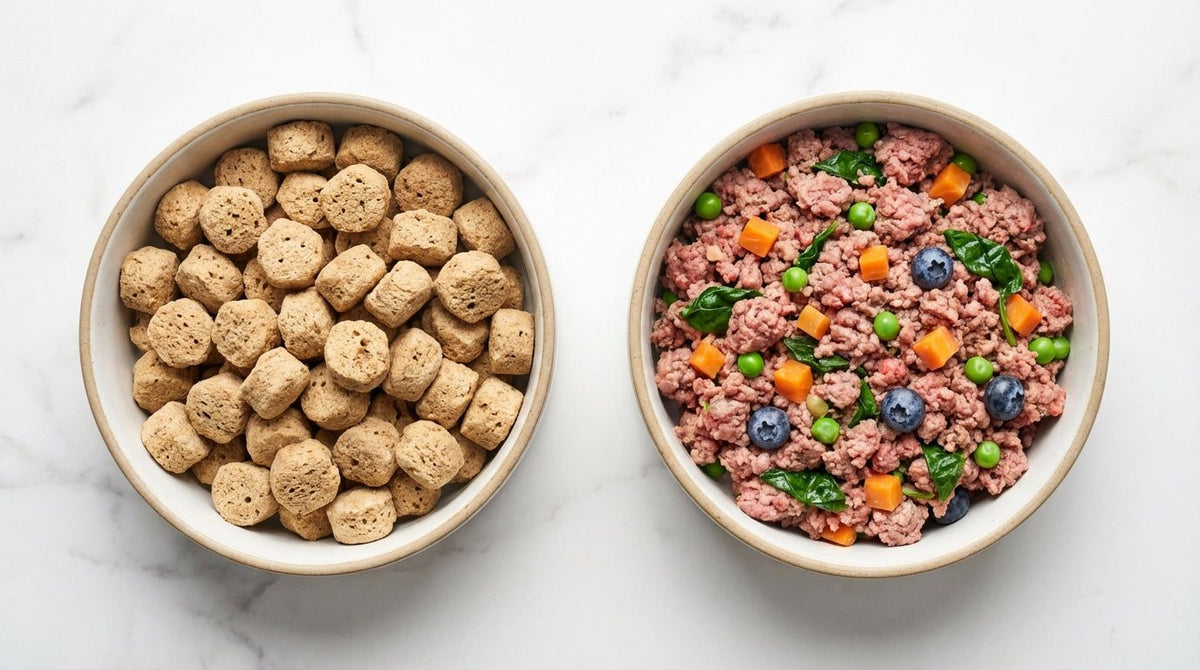
The pet food aisle has changed. Where kibble once dominated, freeze-dried patties, raw frozen rolls, and air-dried toppers now command entire sections. For dog owners who want something closer to whole-food nutrition, two options come up most often: freeze-dried dog food and fresh raw dog food.
They look different. They behave differently in storage, handling, and digestion. And they carry meaningfully different safety profiles. Understanding those real differences — not just marketing claims — is the foundation of a well-informed feeding decision.
Here's what the research and veterinary guidance actually say.
Table of Contents
What Is Raw Dog Food?
Raw dog food — sometimes called BARF (Biologically Appropriate Raw Food) — is exactly what it sounds like: uncooked meat, bones, organ meat, and often fruits and vegetables, served fresh or frozen. The philosophy behind it is that dogs evolved eating prey animals, not extruded grain-based kibble, and that an unprocessed, whole-food diet more closely mirrors what their digestive systems are designed to handle.
Raw diets come in two main forms:
-
Commercial raw — pre-formulated, portioned, and frozen; ground or whole prey formats; often AAFCO-compliant when labeled "complete and balanced"
-
Home-prepared raw — sourced and assembled by the owner; requires careful nutritional balancing to avoid deficiencies
Raw food retains its full moisture content — typically 60–80% water — and contains intact enzymes, natural fats, and the complete protein structure of unprocessed meat. (Pet Butler)
What Is Freeze-Dried Dog Food?
Freeze-dried dog food starts as raw food — then has virtually all its moisture removed through a specialized process called sublimation: the food is frozen, then placed under low pressure with gentle heat so the ice converts directly to vapor without passing through a liquid stage. The result is a shelf-stable, lightweight product that retains much of the original raw food's nutritional profile.
Importantly: freeze-dried food is technically still raw. The freeze-drying process does not cook the food, does not reach temperatures that kill pathogens, and does not fundamentally change the microbial status of the original ingredients. (PetMD, Cornell Riney Canine Health Center)
Freeze-dried dog food is available as:
-
Complete and balanced meals (patties, nuggets, crumbles)
-
Toppers and mixers added to kibble or wet food
-
Single-ingredient treats (freeze-dried liver, chicken, etc.)
How the Processing Differs
This is the most important distinction to understand — and the one most marketing materials obscure.
Fresh raw food undergoes no processing. It is sourced, portioned, and delivered frozen or refrigerated. The complete nutritional profile of the original ingredients is preserved — enzymes, moisture, naturally occurring fats, and all microbes (beneficial and harmful alike) remain intact.
Freeze-dried food undergoes minimal processing — specifically the removal of moisture via sublimation. No heat sterilization occurs. No cooking. The nutritional structure is largely preserved, and so is the bacterial status of the original ingredients.
"When it comes to the risks from bacteria and parasites, freeze-drying is not equivalent to cooking. In fact, it's the opposite. At our research facilities, when our scientists need to preserve bacteria to study them, one of the ways we accomplish this is to simply dry them out. They can survive in a dried state for decades." — Cornell Riney Canine Health Center
The critical takeaway: freeze-drying preserves bacteria alongside nutrients. A freeze-dried product made from contaminated raw meat retains that contamination in dormant — but fully revivable — form.
Some manufacturers apply High Pressure Processing (HPP) to their freeze-dried products as a pathogen-reduction step. HPP reduces but does not fully eliminate bacterial risk. Always check whether a brand uses HPP if food safety is a priority.
Nutrition: How Do They Compare?

Both formats share a common nutritional philosophy: minimally processed, protein-rich, whole-food ingredients that retain more of the original nutrient structure than extruded kibble.
Protein
Both raw and freeze-dried diets are high in animal protein. Freeze-dried foods typically contain 80–90% crude protein on a dry matter basis — because the moisture removal concentrates the macronutrients. Raw food, with its high water content, appears lower in protein by volume but delivers comparable amounts on a dry matter comparison. (PetMD)
Enzymes and Nutrient Integrity
Raw food retains all naturally occurring digestive enzymes in their active state. Freeze-dried food also retains enzymes, since sublimation does not destroy them — a meaningful advantage over kibble, which uses high heat that degrades enzyme activity. (PetMD)
Moisture Content
This is one of the sharpest practical differences. Fresh raw food is 60–80% moisture — close to what dogs would consume from whole prey. This supports kidney function, urinary tract health, and overall hydration. Freeze-dried food is nearly moisture-free (around 2–5%). When rehydrated before serving, moisture is partially restored — but it rarely matches the hydration contribution of fresh raw food.
Completeness and Balance
Both formats vary significantly by brand. The AAFCO label "complete and balanced" is your most reliable indicator that a product meets minimum nutritional standards. Some freeze-dried foods are formulated as complete meals; others are designed as toppers only. The same applies to commercial raw. Always check the label — and consult your vet for dogs with specific health needs.
Digestibility
Both raw and freeze-dried diets are generally highly digestible for healthy dogs. The absence of heavy starch content and the preservation of natural digestive enzymes give both formats an advantage over heavily processed kibble for many dogs — particularly those with sensitive digestive systems. (PetMD)
Safety and Bacterial Risk

This is where freeze-dried and raw food share a critical risk that differentiates both from cooked diets — and where owners most often receive incomplete information.
The Pathogen Problem
An FDA study found that roughly 1 in 3 frozen raw pet food products purchased online tested positive for foodborne pathogens including Salmonella, Listeria, or toxigenic E. coli. A University of Pennsylvania study found that 10% of canine raw food products contained gram-negative bacteria producing ESBLs — enzymes that degrade antibiotics used to treat serious human infections. (Cornell Riney Canine Health Center)
Freeze-dried food carries the same bacterial risk. Freeze-drying places bacteria in a dormant state — it does not kill them. When the food is rehydrated (or when a dog salivates on it), those bacteria can reactivate. Multiple raw pet food recalls have included freeze-dried products specifically.
"Freeze-drying does not eliminate all pathogens in the diet. Even with high-pressure pasteurization, pathogens may be decreased but not fully eliminated." — Brittany Kleszynski, DVM, PetMD
Household Transmission Risk
Dogs fed contaminated raw or freeze-dried food can shed pathogens in their stool — even when they appear completely healthy. A large 2017 epidemiological study indicated raw meat consumption was a significant risk factor for Salmonella shedding in dogs, with close to half of infected dogs showing no symptoms. (Cornell Riney Canine Health Center)
This presents a genuine household risk — particularly to children, elderly individuals, pregnant people, and immunocompromised family members.
Handling Guidelines for Both Formats
If you choose raw or freeze-dried food:
-
Treat it like raw meat you'd prepare for your family — contain drips, use dedicated utensils
-
Never wash raw meat in the sink (this aerosolizes bacteria)
-
Wash hands thoroughly with soap after every handling session
-
Disinfect all bowls, surfaces, and prep tools after use
-
Do not allow high-risk household members (young children, elderly, pregnant, immunocompromised) to handle the food or contact the dog immediately after eating
-
Refrigerate rehydrated freeze-dried food and discard after 24 hours
Parasites
Fresh raw food carries an additional parasite risk not present in freeze-dried food. Parasites such as Neospora caninum and Trichinella spiralis can be present in raw meat — but are destroyed or rendered non-viable during the freeze-drying process. Freezing at sufficiently low temperatures also reduces (but does not always eliminate) parasite risk in fresh raw food. (Pet Butler)
Convenience, Storage and Shelf Life
This is where freeze-dried food holds a clear and meaningful practical advantage.
| Factor | Fresh Raw | Freeze-Dried |
|---|---|---|
| Storage | Freezer required; fridge after thawing | Room temperature (sealed); fridge after opening/rehydrating |
| Shelf life (unopened) | 6–12 months frozen | 1–3 years at room temperature |
| Preparation | Thaw 24–48 hrs in fridge; portion and serve | Add water, stir, serve — 1–2 minutes |
| Travel/portability | Difficult — requires cooler or freezer | Very easy — lightweight, no refrigeration until open |
| Mess factor | Higher — raw meat handling | Lower — dry until rehydrated |
| Risk of spoilage | Higher — thawed raw food must be used within 2–4 days | Lower — dry format more forgiving |
For owners who travel, camp, or lack reliable freezer space, freeze-dried food offers meaningfully greater convenience without sacrificing much of the nutritional philosophy behind raw feeding.
Cost Comparison
Both formats cost significantly more than standard kibble. Here's a realistic breakdown:
| Diet Type | Approximate Monthly Cost (25 lb dog) |
|---|---|
| Standard kibble | $30–$60 |
| Premium kibble | $60–$100 |
| Fresh raw (commercial) | $150–$300+ |
| Freeze-dried (complete meal) | $200–$400+ |
| Freeze-dried (as topper/mixer) | $40–$80 |
Freeze-dried complete meals tend to be the most expensive option per feeding — because the freeze-drying process itself is costly, and the high protein density means a small volume packs significant caloric and nutritional value. Many owners use freeze-dried food as a topper or partial mixer with high-quality kibble or wet food rather than a complete meal replacement — a practical middle ground that stretches the budget while adding nutritional variety. (PetMD)
Side-by-Side Comparison Table
| Criteria | Fresh Raw | Freeze-Dried |
|---|---|---|
| Processed? | No | Minimally (moisture removed) |
| Still raw? | Yes | Yes |
| Bacteria killed? | No | No (dormant, not dead) |
| Parasite risk | Yes | Reduced |
| Nutrient retention | Highest | Very high |
| Moisture content | High (60–80%) | Very low (~2–5%) |
| Enzyme activity | Fully intact | Largely preserved |
| Shelf life | 6–12 months (frozen) | 1–3 years |
| Prep time | 24–48 hrs (thawing) | 1–2 minutes |
| Portability | Low | High |
| Cost | High | Very high |
| AAFCO compliant options? | Yes (commercial) | Yes (select brands) |
| Suitable for puppies? | With vet guidance | With vet guidance |
| Suitable for immunocompromised dogs? | Consult vet | Consult vet |
Who Each Diet Suits Best
Fresh Raw May Be the Better Fit If:
-
You prioritize maximum moisture and hydration (especially for dogs prone to UTIs or kidney concerns)
-
You have consistent freezer access and can manage the thaw-and-serve routine
-
You want the closest approximation to a whole-prey diet
-
You have a healthy adult dog with no immune deficiencies
-
You are committed to safe raw-handling protocols consistently
Freeze-Dried May Be the Better Fit If:
-
You travel frequently or camp with your dog
-
You want to reduce the mess and handling complexity of fresh raw
-
You're transitioning a dog from kibble and want a gentler introduction to raw nutrition
-
You want to use it as a nutritious topper to elevate an existing kibble-based diet
-
Freezer space is limited or unreliable
-
You want a longer pantry shelf life with less daily planning
Neither May Be Ideal If:
-
Your dog is immunocompromised, has cancer, is on immunosuppressant medications, or is recovering from surgery — the pathogen risk of any raw diet format becomes genuinely elevated in these cases
-
Household members include infants, elderly individuals, pregnant people, or immunocompromised individuals — cross-contamination risk is real and documented
-
Your dog has kidney disease — high protein diets require veterinary oversight
-
Budget is a primary constraint — both options are significantly more expensive than quality kibble
In all of the above situations, consult your veterinarian before choosing either format.
How to Transition to Either Diet
Abrupt dietary changes cause digestive upset in most dogs. A gradual transition over 7–14 days reduces the risk of vomiting, diarrhea, and food refusal:
Days 1–3: 75% current food / 25% new food Days 4–6: 50% current food / 50% new food Days 7–10: 25% current food / 75% new food Days 11+: 100% new food
Monitor stool consistency, energy levels, and appetite throughout. Some digestive adjustment (slightly looser stools, more frequent elimination) is normal in the first week. Persistent vomiting, blood in stool, or significant lethargy warrants a call to your vet.
For freeze-dried food specifically: always rehydrate with water before serving as directed on packaging. Serving it dry to a dog that then drinks heavily afterward can cause digestive discomfort from rapid rehydration in the stomach.
What Vets and Research Say
The official positions from major veterinary organizations are clear and consistent:
-
The CDC does not recommend feeding raw pet food or treats to dogs and cats, citing public health risks from foodborne pathogens. (CDC)
-
The AVMA discourages feeding raw or undercooked animal-source proteins due to risk to both pets and household members.
-
Cornell's Riney Canine Health Center explicitly states that freeze-drying is not equivalent to cooking and carries the same bacterial risk profile as fresh raw food.
-
PetMD (reviewed by Brittany Kleszynski, DVM) notes that several national veterinary associations recommend against raw diets due to food safety concerns — and that freeze-dried formats share this risk.
This does not mean raw or freeze-dried diets are universally harmful or that no dog can thrive on them. Many dogs do. It means the risks are real, documented, and require informed handling protocols and veterinary oversight — especially for dogs or households with vulnerability factors.
At Talis-us, we carry a carefully curated selection of premium dog nutrition options — including high-quality freeze-dried foods, raw toppers, and nutrient-dense complete diets — chosen to meet our Talis Curated standards for ingredient quality and transparency.
FAQs
Is freeze-dried dog food the same as raw dog food? They share the same nutritional philosophy and both are technically "raw" — neither is cooked. The key difference is moisture: raw food is wet; freeze-dried has had nearly all moisture removed. Freeze-drying does not kill bacteria; it places them in dormancy.
Is freeze-dried dog food safer than raw? Marginally, in one respect: freeze-dried food eliminates the parasite risk present in fresh raw meat. However, bacterial risk (Salmonella, Listeria, E. coli) remains present in both formats. Neither is as safe as fully cooked food from a pathogen standpoint.
Do I need to rehydrate freeze-dried dog food? Yes, for complete meal products — rehydration with water before serving is recommended. It improves palatability, aids digestion, and restores some of the moisture content. Serving dry to a dog that then drinks a lot of water can cause discomfort.
Can puppies eat raw or freeze-dried food? Only with veterinary guidance. Puppies have developing immune systems and are more vulnerable to foodborne pathogens. If you choose either format for a puppy, work directly with your vet to ensure the diet is complete, balanced, and handled safely.
What is the BARF diet? BARF stands for Biologically Appropriate Raw Food (sometimes Bones and Raw Food). It's a raw feeding philosophy emphasizing whole prey components: muscle meat, raw meaty bones, organ meat, vegetables, and fruits. Freeze-dried diets inspired by BARF aim to deliver the same nutritional profile in a shelf-stable format.
How do I know if a freeze-dried food is complete and balanced? Look for the AAFCO statement on the packaging: "formulated to meet the nutritional levels established by the AAFCO Dog Food Nutrient Profiles." If the label says "for supplemental or intermittent feeding only," it is not a complete meal replacement.
Can I mix freeze-dried food with kibble? Yes — this is one of the most practical and cost-effective approaches. A small amount of freeze-dried food as a topper adds nutritional variety, improves palatability, and delivers some of the enzyme and protein benefits of raw nutrition, without the full cost or handling requirements of a complete raw diet.
The Bottom Line
Freeze-dried and raw dog food are closely related — both are minimally processed, protein-rich, and rooted in a whole-food feeding philosophy. But they are not the same product, and the differences matter:
-
Fresh raw offers the highest moisture content and the closest approximation to whole-prey nutrition — with the highest handling complexity, shortest shelf life, and full bacterial and parasite risk
-
Freeze-dried offers superior convenience, shelf life, and portability — with the same bacterial risk profile as raw (dormant, not eliminated) and very low moisture unless rehydrated
-
Neither is inherently dangerous for healthy adult dogs with informed owners — but both require safe handling protocols and veterinary oversight, especially in households with vulnerable individuals or dogs with compromised immune systems
If you're unsure which format is right for your dog, the most reliable starting point is a conversation with your veterinarian — not the packaging.
This article is for informational purposes. Always consult your veterinarian before making significant dietary changes, particularly for puppies, senior dogs, or dogs with health conditions.

De Talis Us



Dejar un comentario
Este sitio está protegido por hCaptcha y se aplican la Política de privacidad de hCaptcha y los Términos del servicio.