


Essential Reptile Care Lighting Systems That Save Lives
Understanding the Critical Role of Illumination in Reptilian Health
Proper lighting represents the cornerstone of successful reptile husbandry, serving as more than mere ambient illumination. Reptiles depend on specific wavelengths of light to regulate their circadian rhythms, synthesize essential vitamins, and maintain optimal physiological functions. Without adequate phototherapy, these fascinating creatures face severe health complications that can prove fatal.
The complexity of reptilian photobiology demands careful consideration of multiple lighting parameters. Ultraviolet radiation, particularly UVB wavelengths between 280-320 nanometers, enables reptiles to synthesize vitamin D3 endogenously. This process facilitates calcium metabolism, preventing metabolic bone disease and ensuring proper skeletal development.
Inadequate lighting systems remain the primary cause of preventable health issues in captive reptiles, with metabolic bone disease affecting over 70% of improperly housed specimens according to veterinary herpetological studies.
Essential Components of Effective Reptile Lighting Systems
UVB Radiation Sources
UVB-emitting fixtures constitute the most critical element of any reptilian lighting array. These specialized luminaires produce wavelengths essential for vitamin D3 photosynthesis, directly impacting calcium absorption and bone mineralization. Linear fluorescent tubes generally provide superior coverage compared to compact fluorescent alternatives, ensuring more even distribution across the terrarium.
Mercury vapor bulbs offer an excellent dual-purpose solution, combining UVB output with heat generation. These high-intensity discharge lamps prove particularly beneficial for larger enclosures housing species requiring elevated basking temperatures alongside substantial UV exposure.
Thermal Regulation Through Basking Lights
Thermoregulation remains paramount for reptilian physiological processes. Basking lights create essential temperature gradients within enclosures, allowing animals to behaviorally regulate their core body temperature. Halogen spotlights deliver focused heat with excellent color rendition, while ceramic heat emitters provide infrared radiation without visible light output for nocturnal heating.
Comprehensive Lighting Solutions for Optimal Care
Creating an effective lighting environment requires careful coordination of multiple elements. The Ultimate Reptile Lighting Care Kit provides a thoughtfully curated collection of premium lighting components designed to address the complex photobiological needs of various reptilian species. This comprehensive system eliminates guesswork while ensuring optimal wavelength delivery and thermal management for enhanced animal welfare.
Photoperiod Control Systems
Automated timer mechanisms ensure consistent light cycles that mirror natural seasonal variations. Digital programmable timers offer precise control over photoperiod duration, enabling gradual transitions that support natural behavioral patterns and reproductive cycles.
Species-Specific Lighting Requirements
Desert Species Considerations
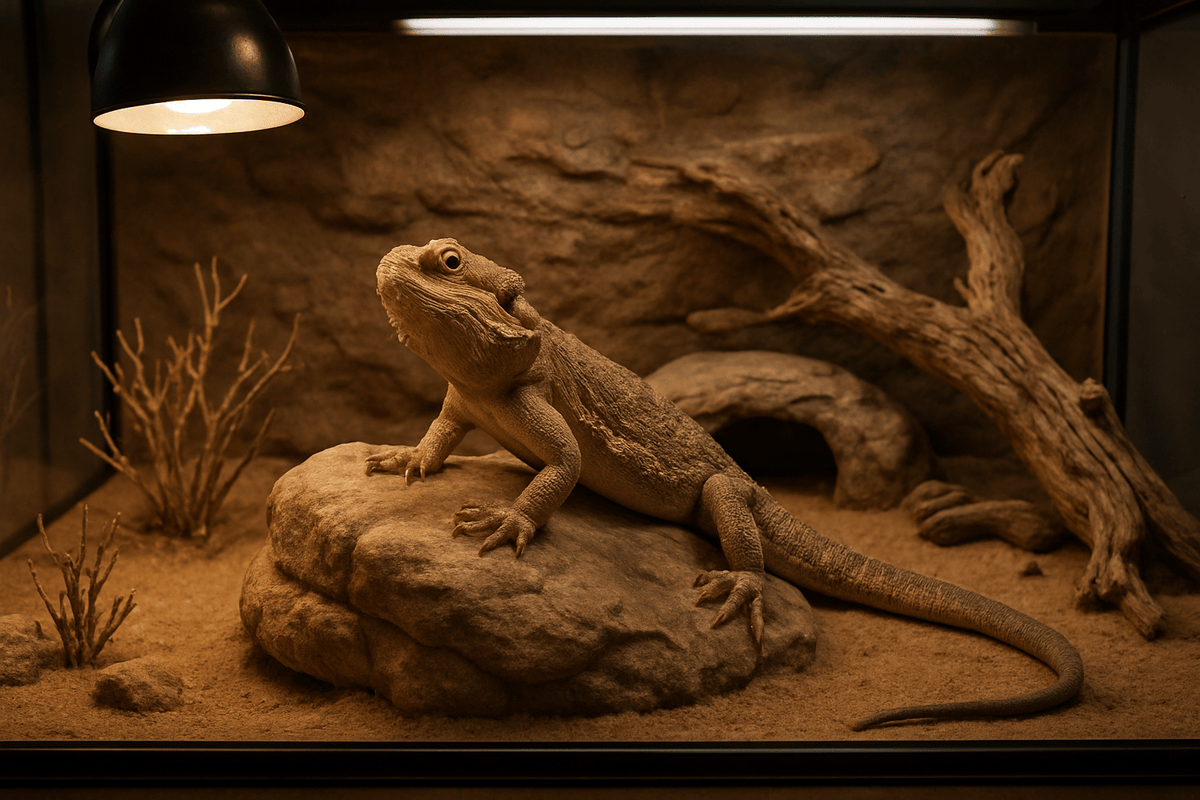
Heliothermic reptiles originating from arid environments require intense UV exposure and elevated basking temperatures. Bearded dragons, leopard geckos, and uromastyx species thrive under high-output UVB sources combined with powerful basking elements that create distinct thermal zones.
- High-intensity UVB sources (10-12% output minimum)
- Concentrated basking spots reaching 95-110°F
- Extended photoperiods during active seasons
- Seasonal variation in light intensity and duration
Forest-Dwelling Species Requirements
Shade-adapted species require moderate UV exposure with diffused lighting patterns that simulate dappled forest canopies. Green tree pythons, chameleons, and various gecko species benefit from gentler illumination combined with appropriate humidity management.
Proper Installation and Maintenance Protocols
Fixture Positioning and Distance Calculations
UV output diminishes significantly with distance, following inverse square law principles. Positioning fixtures at manufacturer-recommended distances ensures adequate irradiance levels reach basking zones. Screen tops can reduce UV transmission by 30-50%, necessitating closer fixture placement or higher-output bulbs.
| Bulb Type | Recommended Distance | Effective Coverage | Replacement Schedule |
|---|---|---|---|
| T8 Fluorescent | 6-8 inches | 18-24 inches | 6-8 months |
| T5 HO Fluorescent | 8-12 inches | 24-36 inches | 10-12 months |
| Mercury Vapor | 12-18 inches | 12-18 inches | 12-18 months |
Lamp Aging and Replacement Schedules
UV output degrades significantly before visible light diminishes, creating deceptive situations where seemingly functional bulbs provide inadequate radiation. Proactive replacement schedules prevent gradual decline in animal health due to diminishing phototherapy effectiveness.
Common Lighting Mistakes and Their Consequences
Insufficient UV exposure leads to metabolic bone disease, characterized by soft shells in chelonians, rubbery jawbones in lizards, and severe skeletal deformities. Excessive heat without proper gradients causes thermal stress and dehydration. Poor photoperiod management disrupts natural behaviors and reproductive cycles.
Many keepers underestimate the importance of light penetration through enclosure materials. Standard glass blocks virtually all UVB radiation, while acrylic materials may filter beneficial wavelengths. Selecting appropriate enclosure materials ensures lighting investments deliver intended benefits.
Monitoring and Optimization Strategies
UV meters provide objective measurements of actual radiation levels within enclosures, eliminating guesswork from lighting assessments. Digital thermometers with probe capabilities enable precise temperature monitoring across thermal gradients. Regular photometric evaluations ensure lighting systems maintain effectiveness over time.
Behavioral observations offer valuable insights into lighting adequacy. Proper basking behavior, normal appetite patterns, and appropriate activity levels indicate successful environmental parameters. Conversely, lethargy, appetite loss, or abnormal behaviors may signal inadequate phototherapy.
Investing in quality reptile lighting systems essential care components represents a fundamental responsibility of conscientious reptile ownership. These sophisticated creatures deserve environments that honor their evolutionary adaptations while supporting optimal health and natural behaviors. Through careful attention to illumination parameters, dedicated keepers can provide their scaled companions with the foundation for long, healthy lives in captivity.

De Talis Us


Dejar un comentario
Este sitio está protegido por hCaptcha y se aplican la Política de privacidad de hCaptcha y los Términos del servicio.