


Dog Brushes & Combs: Essential Grooming Tools for Healthy Coats
Essential Dog Brushes for Every Coat Type
We've all been there: You lovingly pet your Golden Retriever, and suddenly a cloud of fur drifts across the living room like a tumbleweed. Staring at the dozen different tool options at the pet store is enough to make anyone surrender to the shedding. However, finding the right dog brushes and combs is your best defense against indoor sneezing. According to allergy specialists, catching loose fur at the source significantly reduces the dander that triggers household allergens before it ever reaches your sofa.
To your dog, grooming shouldn't feel like a chore—it should feel like a relaxing spa day. Unfortunately, grabbing the wrong brush or pressing too hard can turn that experience into a trip to the dentist, sometimes causing a painful skin irritation known as brush burn. You can easily spot the physical difference between a neglected coat and a healthy one just by touch. A struggling coat feels dull, snags your fingers, and traps heat against the body, whereas a well-maintained coat feels smooth and shines naturally.
Regular brushing improves canine skin health through a process called sebum distribution. Think of sebum as your dog's built-in conditioner; running a brush through their fur sweeps these natural oils from the skin down to the hair tips. Naturally, your grooming expectations will depend entirely on the breed sitting in front of you. A short-haired Pug might need a quick five-minute weekly sweep, while a thick-coated Lab requires longer sessions to pull out that hidden, fuzzy undercoat.
The Two-Layer Secret: Why Your Dog's Coat is Like a Weatherproof Jacket
Have you ever petted your dog and come away with a fistful of fuzz? Many dogs wear a natural weatherproof jacket: a soft base layer called the undercoat, protected by longer, coarser top pieces known as guard hairs. While guard hairs repel rain, that hidden undercoat regulates temperature. During a "seasonal blowout," your dog sheds this base layer in massive clumps, which is exactly why shaving them destroys their natural insulation and actually makes them hotter in the summer.
Figuring out your dog's jacket type takes ten seconds. Part the fur on their shoulder down to the skin: if you see dense wool hiding beneath the smooth top, it's a double coat. Every dog falls into a main category:
- Smooth: Pugs
- Double: Golden Retrievers
- Silky: Yorkshire Terriers
- Wiry: Scottish Terriers
Your choice of pet grooming tools depends entirely on this structure, ensuring natural shedding doesn't tangle into painful matting. The best grooming tools for double-coated breeds safely pull loose fuzz past those guard hairs without ever scratching the skin.

Mastering the 'Glitter' Shedders: The Best Tools for Short-Haired Dogs
Short dog hair has a frustrating habit of weaving itself into clothes like tiny, stubborn needles. If you share your sofa with a smooth-coated breed like a Pug or Labrador, you don't need intense metal tools that might scrape their unpadded skin. Instead, your best defense is a rubber curry comb. Think of this tool as a gentle scalp massager; its soft, flexible nubs grab loose fur like a magnet while keeping your dog completely comfortable.
To get the most out of your short hair dog brush, massage their coat in small, firm circles rather than pulling straight down. This circular motion effortlessly loosens dead hair while providing excellent skin stimulation. It also encourages the release of sebum—a natural oil that moisturizes the skin and prevents winter flakiness. You can finish the routine by stimulating natural skin oils with bristle brushes, using long, sweeping strokes in the direction the hair grows to smooth everything down.
Maintaining this sleek look only requires a quick five-minute session twice a week. Once you finish brushing, simply wipe your dog down with a warm, damp washcloth to capture any lingering dust and deliver a brilliant "show-dog" shine. However, if your dog wears a much thicker jacket that clogs rubber tools in seconds, you will need to upgrade to heavier-duty equipment.

Beating the Seasonal Blowout: How Undercoat Rakes and De-Shedders Save Your Vacuum
When seasons change, double-coated dogs unleash a storm of fluff that can overwhelm any household vacuum. Successfully managing seasonal shedding in heavy shedders means understanding the difference between an undercoat rake and a de-shedding tool. Rakes feature smooth, widely spaced pins that safely pull loose fuzz from the deep base layer without cutting. Conversely, de-shedding tools use a fine, ridged edge to grab stubborn dead hair before it hits your furniture.
When deshedding your dog, first select a rake with a tooth length matching your pet's hair depth so the pins work effectively without scratching bare skin. When using a de-shedder, master the "short stroke" technique by making gentle, two-inch sweeps. Dragging the tool in long, heavy pulls causes coat stripping—accidentally ripping out healthy, shiny topcoat hairs alongside the dead fluff, which damages the coat and causes your dog unnecessary discomfort.
Keeping your dog comfortable also requires recognizing when to stop and when to upgrade your equipment. Metal de-shedders eventually suffer from blade fatigue, becoming dull and painfully yanking hair instead of gliding smoothly, so replace them immediately if you feel snagging. Furthermore, always observe the "Safety Stop" during grooming; once your tool collects only a few stray hairs rather than a thick clump, end the session to prevent skin irritation.
Clearing out dense fuzz handles the bulk of the shedding problem, but heavy-duty tools aren't meant for delicate detangling. If your dog has finer hair that loves forming tight knots, you need an entirely different approach.
Slicker vs. Pin Brushes: Choosing the Right Tool for Tangle-Free Curls
When choosing the right grooming kit for curly-haired dogs, the secret lies in wire flexibility and pin spacing. Slicker brushes feature densely packed, slightly bent wires designed to gently tease apart tight curls without creating a frizzy puffball. Conversely, pin brushes resemble your everyday human hairbrush with widely spaced pins, making them perfect for sweeping through flowing, silky coats without painful snagging.
While a quality tool feels like a gentle massage to your pet, a poorly made one can easily scratch their delicate skin. Always test a new brush against your own arm first using this simple three-point quality check:
- Rounded Tips: Ensure the metal pins have polished or coated ends that glide smoothly.
- Flexible Pad: Press down to verify the rubber cushion yields easily under pressure.
- Handle Grip: Pick an ergonomic shape to prevent annoying hand cramps.
Once you secure the right equipment, try the "Fluff" technique by brushing in gentle, upward strokes against the grain to build a professional teddy-bear finish. You can also save cleanup time by utilizing self-cleaning slicker brushes, where a simple push-button retracts the pins to drop trapped hair directly into the trash. Even with excellent brushing, however, tiny tangles occasionally survive near the roots.
The Stainless Steel Comb: Your Secret Weapon Against Hidden Mats
You might think brushing is finished when the coat looks fluffy, but brushes easily glide over sneaky tangles near the roots. Think of a metal comb as your grooming routine's "final exam" to ensure you have completely cleared the hair down to the skin. As you comb, pay attention to any spots that stop the teeth, which often feel like tiny pebbles hidden beneath the topcoat.
Most essential grooming supplies feature a dual-sided design to handle different sections of your dog's body efficiently. Start with the wider, coarse teeth for the back and sides, then flip to the fine-toothed side for high-friction areas like rubbing armpits or right behind the ears. Choosing polished stainless steel dog combs for sensitive skin ensures these metal teeth gently tease through fur without scratching a delicate belly.
Always follow the natural combing grain—the direction the hair actually grows—to keep your pet relaxed rather than pulling against their skin. Use the comb to gently part the fur and lift it away from the body, revealing exactly where those deeper tangles start.
Turning a 'Mat-astrophe' Into a Minor Snag Without Using Scissors
A sudden stop on a hard lump of fur can induce immediate dread. Leaving these tight clumps alone isn't an option, since preventing hotspots through regular coat maintenance keeps trapped moisture from irritating your dog's skin. Before reaching for the scissors, grab a few household lifesavers.
Emergency DIY Detangling Kit:
- Cornstarch (to loosen the grip)
- Wide-tooth comb
- Pet-safe detangling spray
The first step is assessing the situation using the "Pinch Test." Feel the base of the tangle; if you can't easily slide your fingers between the mat and the body, call a professional groomer. Dogs have very loose skin that easily pulls up into tight knots—a hidden danger called "skin tenting"—which makes cutting them out incredibly risky.
When a knot passes the test, the secret to removing dog coat mats without pain is friction-free detangling. Massage a pinch of cornstarch into the clump to make the individual hairs slippery. Hold the base of the fur firmly against the body to protect the skin, then use just the corner of a slicker brush to gently tease the outer edges apart.
Taking your time with stubborn tangles ensures your pet stays perfectly comfortable on their home spa day. Handling a tough knot calmly prepares you for the ultimate bonding experience.

Building the 'Grooming Groove': Introducing Puppies and Rescues to Brushing
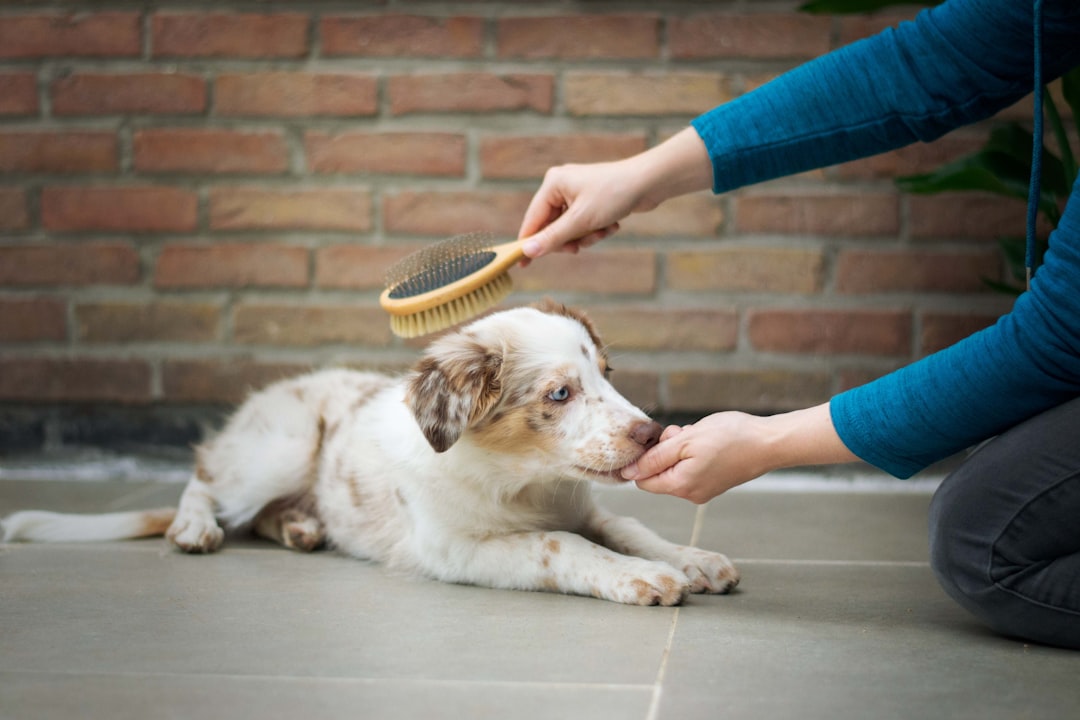
If your new rescue disappears the moment you grab your grooming kit, it's time to shift your approach. Brushing shouldn't feel like a wrestling match; it must be a relaxing routine built on positive association. Establish a comfortable "grooming station" on a living room rug, avoiding slippery floors that cause anxiety. Reward your dog with treats just for sitting calmly in this spot, proving it means relaxation before a tool ever touches their fur.
Rushing into detangling causes panic, so focus on simple desensitization first. Before introducing grooming tools, spend a few days simply massaging their paws, holding their tail, and rubbing their ears. Dogs naturally protect these sensitive zones, and accepting your bare hands builds vital trust. Pair every calm touch with soft praise, smoothly preparing them for future brushings.
Once they welcome your touch, introducing puppies to grooming brushes requires an incredibly gentle transition. Choose a soft rubber curry brush as your starter tool, since young skin and anxious bodies irritate easily under stiff pins. Sweep the soft bristles over their back while feeding them a snack, turning the brush into a ticket for treats.
The Shake Test Success: Transforming Your Home and Your Dog's Health
By matching the right tool to your dog's specific coat, you are doing more than just styling—you are actively checking for hidden bumps and ticks. If you ever discover a tight, felted knot that won't gently tease apart, simply set the brush down and call a professional groomer rather than risking a painful pinch.
For a baseline weekly grooming calendar, try following these rhythms:
- Short/Smooth Coats: 5 minutes twice a week with a rubber brush to loosen dirt.
- Silky/Wiry Coats: 10 minutes every other day using a pin brush to prevent tangles.
- Thick/Double Coats: 15 minutes daily during shedding season with a rake to catch loose fuzz.
To make this new routine stick, always implement a high-value "post-brush" reward system. Consistently pairing the right grooming tools with a tasty treat transforms the process from a stressful chore into a relaxing bonding session. Just wait for "The Shake Test": if your dog stands up, gives a vigorous full-body shake, and a cloud of fur doesn't fly across your living room, you've successfully mastered their coat.

De Talis Us


Dejar un comentario
Este sitio está protegido por hCaptcha y se aplican la Política de privacidad de hCaptcha y los Términos del servicio.