



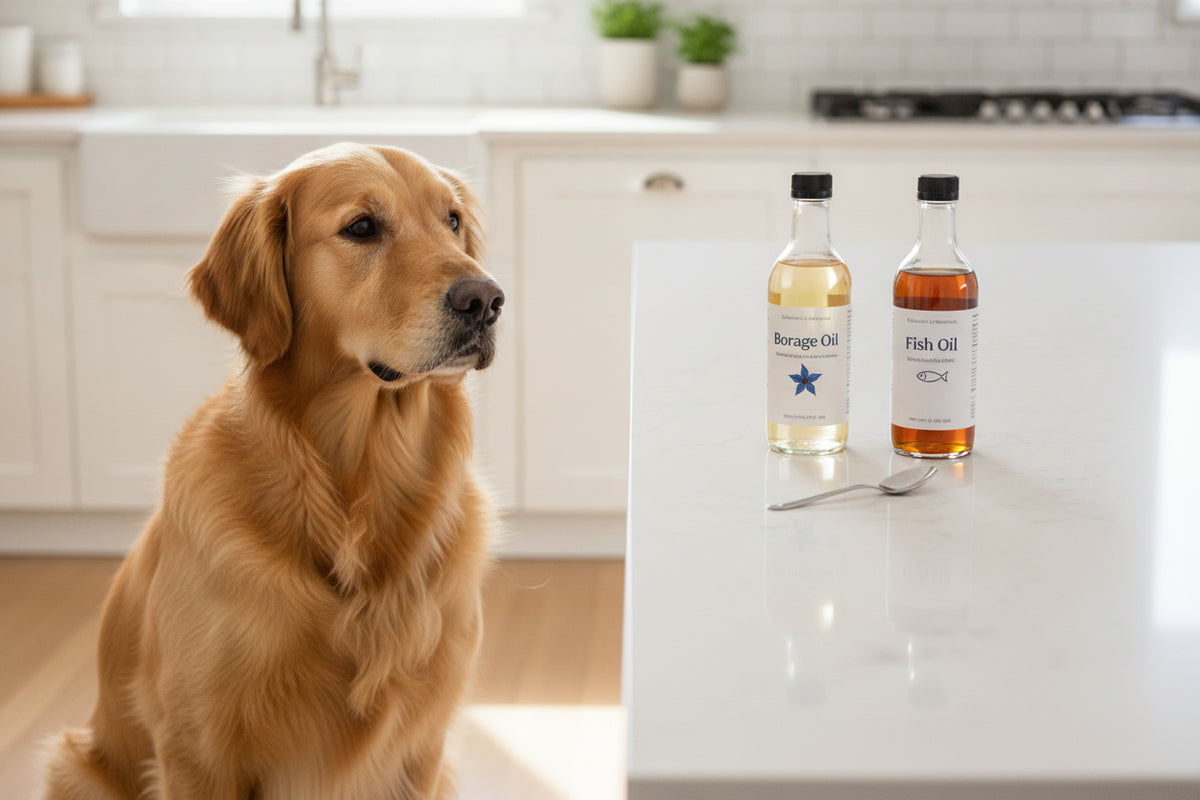
Borage Oil for Dogs vs Fish Oil: Which One Wins?
The Supplement Debate Every Dog Owner Should Know About
Choosing the right supplement for your dog can feel overwhelming, especially when the shelves are packed with options that all promise remarkable results. But here is the truth: not all supplements work the same way, and what your dog actually needs depends on their unique health profile.
If you have been researching borage oil for dogs and wondering how it stacks up against the ever-popular fish oil, you are in the right place. This guide breaks down both options clearly, so you can walk away with real confidence in your decision. Whether your pup is dealing with a dull coat, itchy skin, stiff joints, or general inflammation, understanding the difference between these two oils is the first step toward giving them the care they deserve.
What Is Borage Oil and Why Do Dogs Need It?
Borage oil comes from the seeds of the borage plant, also known as starflower. What makes it stand out in the world of pet supplements is its exceptionally high concentration of gamma-linolenic acid, or GLA. GLA is an omega-6 fatty acid, but unlike the more common omega-6s found in processed pet foods, this one has powerful anti-inflammatory properties.
Most dogs today consume diets that are already high in omega-6 fatty acids. However, the type of omega-6 found in borage oil is fundamentally different. GLA works through a unique metabolic pathway that actively helps reduce inflammation rather than promote it. This makes borage oil a genuinely therapeutic option, not just a general nutritional supplement.
For dog owners dealing with chronic skin conditions, allergies, or persistent coat issues, borage oil can be a meaningful addition to their pet care routine.
How Borage Oil Supports Your Dog's Skin and Coat Health
The skin is the largest organ in your dog's body, and it is often the first place that nutritional deficiencies show up. A dull coat, excessive shedding, flaky skin, or constant scratching can all signal that something is off internally.
GLA plays a direct role in maintaining the skin's natural barrier function. When that barrier is compromised, allergens and irritants can penetrate more easily, leading to the itching and inflammation that so many dog owners struggle with. Supplementing with borage oil helps restore that barrier from the inside out.
Dogs with atopic dermatitis, environmental allergies, or seasonal skin flare-ups have shown noticeable improvement with consistent GLA supplementation. The coat often becomes shinier, shedding reduces, and overall skin comfort improves. For pet owners who have tried everything from medicated shampoos to dietary changes, borage oil can be the missing piece.
Fish Oil for Dogs: The Well-Known Contender
Fish oil has earned its reputation as a go-to supplement for dogs, and for good reason. Derived from fatty fish like salmon, sardines, and mackerel, fish oil is rich in two key omega-3 fatty acids: EPA (eicosapentaenoic acid) and DHA (docosahexaenoic acid).
These omega-3s are widely studied and consistently linked to a range of health benefits in dogs, including reduced joint inflammation, improved cardiovascular health, better cognitive function, and even support for dogs with kidney disease. Fish oil is also one of the most accessible supplements on the market, available in capsules, liquid form, and even built into certain premium dog foods.
Omega-3 Fatty Acids and Their Role in Canine Wellness
EPA and DHA work primarily by reducing the production of inflammatory compounds in the body. For dogs with arthritis or joint stiffness, this can translate to noticeably better mobility and less discomfort over time. For aging dogs, DHA in particular supports brain health and may help slow cognitive decline.
Fish oil also contributes to coat and skin health, though through a slightly different mechanism than borage oil. Rather than targeting the skin barrier directly, omega-3s help regulate the overall inflammatory response that can trigger skin issues. Many veterinarians recommend fish oil as a first-line supplement for general wellness, and it is one of the most thoroughly researched options available for canine health.
Borage Oil vs Fish Oil: Key Differences Every Dog Owner Should Know
At first glance, both oils seem to do similar things. They both support skin health, both have anti-inflammatory effects, and both can contribute to your dog's overall wellbeing. But the way they work and what they target are quite different.
GLA vs EPA/DHA: Which Fatty Acid Does Your Dog Need Most?
The core distinction comes down to the type of fatty acid each oil delivers.
Borage oil provides GLA, an omega-6 fatty acid that specifically supports skin barrier integrity and targets localized skin inflammation. It is particularly effective for dogs with chronic skin conditions, allergies, and coat issues that have not responded well to other treatments.
Fish oil provides EPA and DHA, omega-3 fatty acids that work systemically across the entire body. These are the better choice for dogs dealing with joint pain, cardiovascular concerns, cognitive aging, or general systemic inflammation.
Here is a quick comparison to help you visualize the difference:
- Borage Oil: High in GLA; best for skin barrier support, coat health, and allergy-related inflammation
- Fish Oil: High in EPA and DHA; best for joint health, heart health, brain function, and systemic inflammation
Neither oil is universally superior. The right choice depends entirely on what your dog needs most right now.
When to Choose Borage Oil, Fish Oil, or Both
Now that you understand what each oil does, the next step is matching the right supplement to your dog's specific situation.
Matching the Right Supplement to Your Dog's Specific Needs
Choose borage oil if your dog:
- Has persistent itchy or flaky skin
- Suffers from environmental or food-related allergies
- Has a dull, brittle, or excessively shedding coat
- Has not responded well to fish oil alone for skin issues
Choose fish oil if your dog:
- Is showing signs of joint stiffness or arthritis
- Is a senior dog with cognitive concerns
- Has a history of heart or kidney issues
- Needs broad anti-inflammatory support throughout the body
Consider using both if your dog:
- Has skin issues alongside joint pain
- Is an older dog with multiple health concerns
- Needs comprehensive support for both internal and external inflammation
Combining borage oil and fish oil is generally considered safe and can even be more effective than using either alone. The GLA from borage oil and the EPA/DHA from fish oil work through complementary pathways, so together they provide a more complete anti-inflammatory approach. That said, always consult your veterinarian before starting any new supplement, especially if your dog is on medication or has an existing health condition.
Dosing matters too. More is not always better with fatty acid supplements. Your vet can help you determine the right amount based on your dog's weight, age, and health status.
Give Your Dog the Care They Truly Deserve
Both borage oil and fish oil offer real, meaningful benefits for dogs. The best choice is not about which oil is more popular or more talked about; it is about which one addresses what your specific dog needs right now.
Borage oil for dogs shines when skin health, coat quality, and allergy-driven inflammation are the primary concerns. Fish oil leads when the focus is on joints, heart health, brain function, and systemic wellness. And in many cases, using both together gives your dog the most comprehensive support possible.
The most important step you can take is to observe your dog closely, note their symptoms, and have an honest conversation with your vet. With the right information and the right supplement, you are not just managing symptoms; you are investing in a longer, more comfortable, and happier life for your pup. And that is exactly what they deserve.

De Talis Us




Dejar un comentario
Este sitio está protegido por hCaptcha y se aplican la Política de privacidad de hCaptcha y los Términos del servicio.