


Artículo: Best Reptile Lights to Brighten Your Pet's Habitat
Best Reptile Lights to Brighten Your Pet's Habitat
Give Your Reptile the Light It Needs to Thrive
Your reptile deserves more than just a tank and some substrate. It deserves a habitat that closely mirrors the natural world it evolved in, and lighting is one of the most important pieces of that puzzle. Choosing the best reptile lights for your pet's enclosure directly supports its health, behavior, and overall quality of life. Whether you're setting up your first terrarium or fine-tuning an existing one, this guide walks you through everything you need to know to make a confident, informed choice.
Why Reptile Lighting Is Essential for Your Pet's Health
The Connection Between Light, Heat, and Reptile Well-Being
Unlike mammals, reptiles are ectothermic, meaning they rely on external sources of heat and light to regulate their body temperature and internal processes. In the wild, sunlight does this naturally. In captivity, the right reptile lights fill that role.
There are two key types of radiation your reptile benefits from: UVA and UVB rays. UVA rays influence natural behavior, including feeding, mating, and activity cycles. Without adequate UVA exposure, reptiles can become lethargic, lose their appetite, or show signs of stress.
UVB rays play an even more critical role in physical health. When reptiles are exposed to UVB light, their skin synthesizes vitamin D3, which is essential for calcium absorption. Without sufficient UVB exposure, reptiles are at serious risk of developing metabolic bone disease, a painful and often fatal condition that weakens bones and affects muscle function.
Beyond physical health, proper lighting also supports your reptile's circadian rhythm. A consistent light and dark cycle signals when to be active, when to eat, and when to rest. Disrupting this cycle can cause chronic stress and weaken the immune system over time. Simply put, getting the lighting right is not optional. It is one of the most foundational aspects of responsible reptile care.
Types of Reptile Lights and What They Do
UVB Bulbs vs. Basking Bulbs vs. Full-Spectrum Lights
Not all reptile lights are created equal, and understanding the differences helps you build a well-balanced habitat.
UVB Bulbs
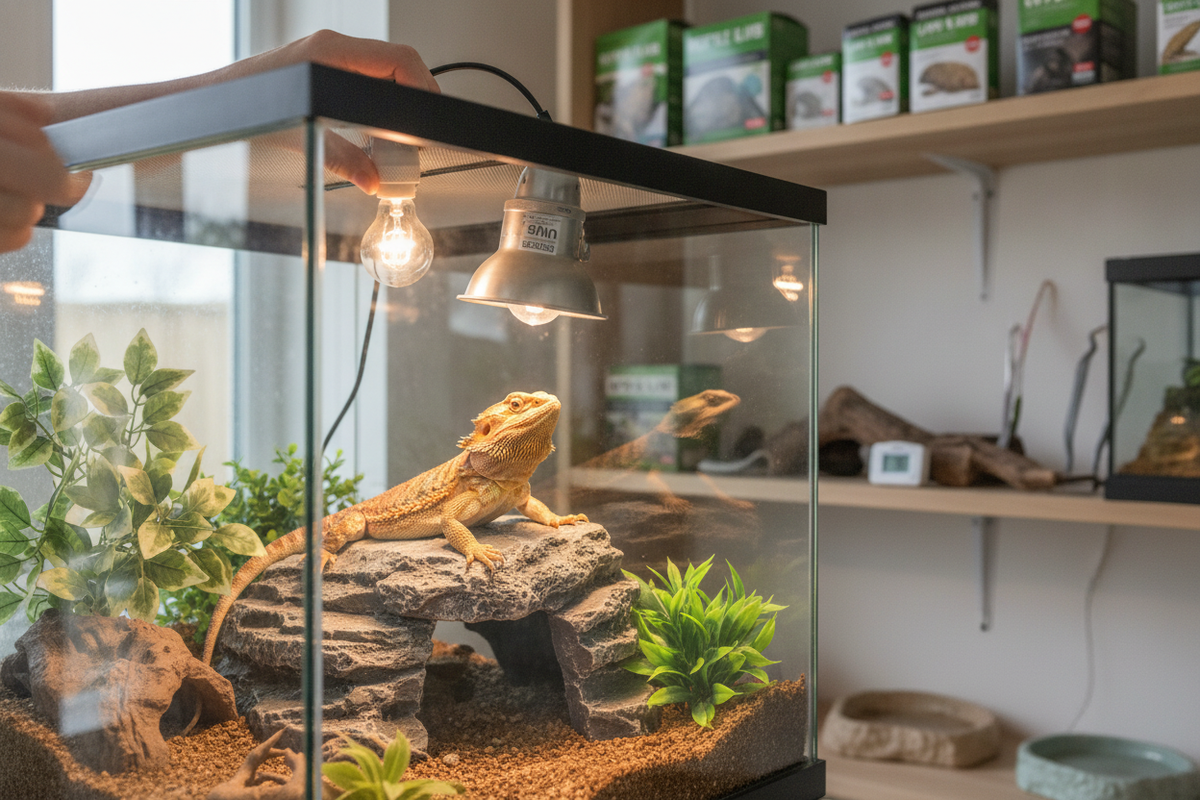
UVB bulbs are specifically designed to emit ultraviolet B radiation. They come in two common formats: fluorescent tubes and compact coil bulbs. Fluorescent tubes provide broader coverage and are ideal for larger enclosures, while compact bulbs work well in smaller setups. The strength of a UVB bulb is measured by its UV index output, often labeled as 5.0, 10.0, or 12.0. Desert-dwelling reptiles like bearded dragons and uromastyx need higher UVB output, while tropical species like leopard geckos or crested geckos require lower levels.
It is worth noting that UVB bulbs degrade over time even when they still appear to emit visible light. Most need to be replaced every six to twelve months to ensure your reptile is still receiving effective UV exposure.
Basking Bulbs
Basking bulbs are heat-focused light sources that create a warm spot within the enclosure. Reptiles use this basking zone to raise their body temperature, aid digestion, and regulate their metabolism. These bulbs typically emit UVA rays as well, which supports natural behavioral patterns.
The wattage you choose depends on your enclosure size and the temperature requirements of your specific species. A bearded dragon, for instance, needs a basking spot between 100 and 110 degrees Fahrenheit, while a ball python requires a much gentler gradient.
Full-Spectrum Lights
Full-spectrum bulbs are designed to simulate natural sunlight as closely as possible. They emit a balanced combination of UVA, visible light, and sometimes low levels of UVB. These are a popular choice for reptile owners who want a more naturalistic lighting experience, particularly for diurnal species that are active during daylight hours.
Some full-spectrum lights also support live plants within the enclosure, making them a versatile option for bioactive setups.
How to Choose the Best Reptile Light for Your Setup
Matching Light Intensity and Cycle to Your Reptile's Natural Habitat
Choosing the right reptile light starts with understanding your specific pet's natural environment. A desert species like a bearded dragon has very different lighting needs compared to a rainforest dweller like a chameleon. Researching your reptile's native habitat gives you a clear baseline for what to replicate.
Here are some practical tips to help you get it right:
Consider Your Enclosure Size
Larger enclosures need more powerful or additional light sources to ensure even coverage. A single compact UVB bulb may be sufficient for a 20-gallon tank, but a 120-gallon enclosure will need a longer fluorescent tube or multiple fixtures to provide adequate UVB exposure across the space.
Position Lights Correctly
UVB effectiveness decreases significantly with distance. Most UVB bulbs are most effective within 12 inches of your reptile's basking spot. Mesh screens can also block a portion of UVB rays, so factor that in when positioning your light source. Ideally, mount the UVB bulb inside the enclosure or as close to the screen top as possible.
Use a Timer for Consistency
Reptiles thrive on routine. Using a simple plug-in timer to automate your light cycle removes the guesswork and ensures your pet gets a consistent day-night rhythm. Most species do well with a 12-hour light and 12-hour dark cycle, though this may vary slightly by species or season.
Match Wattage to Temperature Needs
Too much heat can stress or harm your reptile, while too little prevents proper thermoregulation. Use a reliable thermometer to monitor your basking zone and adjust wattage accordingly. Start with the manufacturer's recommendation for your enclosure size and fine-tune from there.
Replace Bulbs on Schedule
As mentioned earlier, UVB output fades before the bulb burns out. Mark your calendar and replace UVB bulbs every six to twelve months. Keeping a consistent replacement schedule protects your reptile from silent UV deficiency that can build up over time without obvious symptoms.
Think About Nighttime Needs
Some reptiles, particularly those from tropical environments, benefit from a slight nighttime temperature drop without complete darkness. In these cases, a low-wattage ceramic heat emitter or a red or blue night bulb can maintain warmth without disrupting the natural light cycle.
Light Up Your Reptile's World with Confidence
The best reptile lights are not just accessories. They are essential tools that shape how your pet grows, behaves, and feels every single day. From UVB bulbs that protect against metabolic bone disease to basking lamps that support digestion and activity, every light source in your reptile's habitat plays a meaningful role.
The good news is that once you understand your reptile's specific needs, building the right lighting setup becomes much more straightforward. Take the time to research your species, invest in quality products, and keep a consistent maintenance routine.
Explore Talis US's curated reptile lighting collection to find the right bulbs, fixtures, and accessories for your setup. Your scaly companion deserves a habitat that truly supports the life it was built to live.

De Talis Us



Dejar un comentario
Este sitio está protegido por hCaptcha y se aplican la Política de privacidad de hCaptcha y los Términos del servicio.