



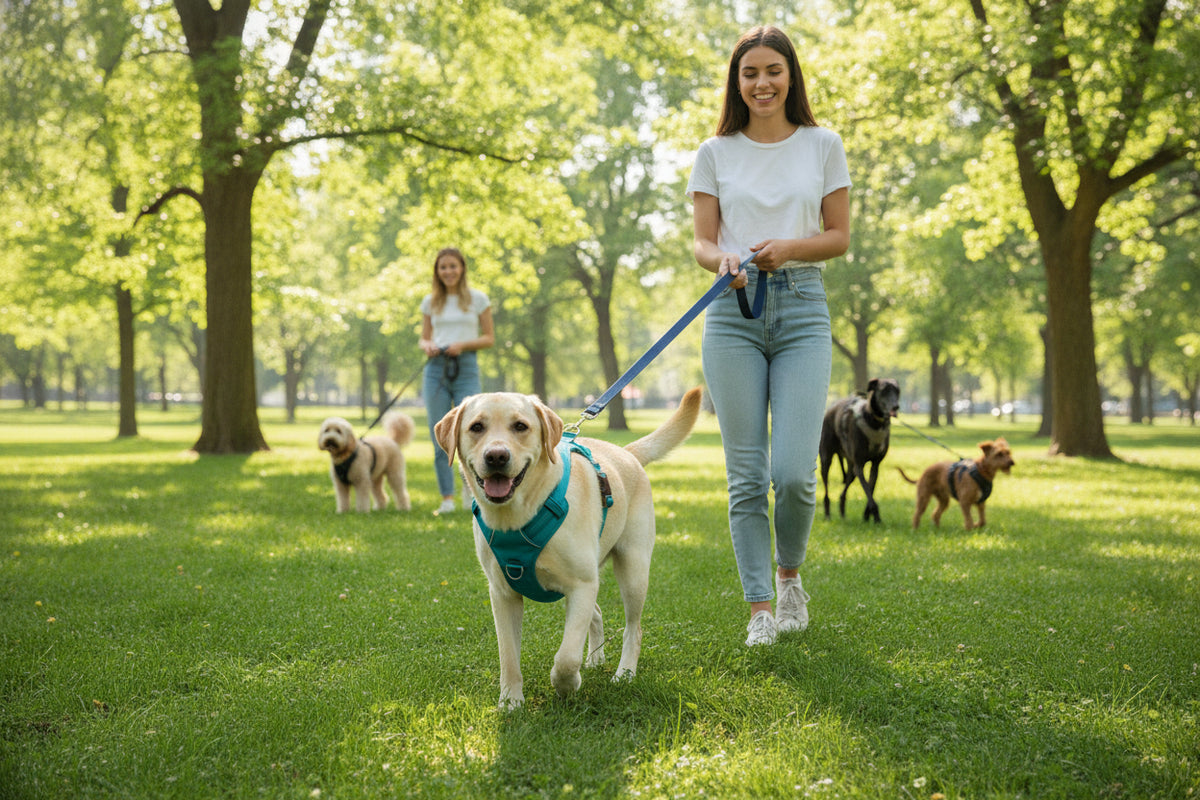
Dog Harness Guide for Every Breed and Size
Finding the Right Dog Harness Makes Every Walk Better
There are few things more frustrating than a walk that turns into a tug-of-war. If your dog pulls, slips out of their collar, or seems uncomfortable during outings, the problem might not be your pup's behavior. It might be the gear. Finding the right dog harness can completely transform your daily walks, making them safer, more comfortable, and genuinely enjoyable for both of you.
Whether you share your home with a tiny Chihuahua who needs gentle support or a large Labrador who charges ahead with enthusiasm, fit and style matter more than most pet owners realize. This guide walks you through everything you need to know about choosing the best dog harness for your breed and size, so you can shop with confidence and walk with ease.
Why a Dog Harness Beats a Collar for Most Dogs
Collars have their place, especially for holding ID tags, but when it comes to daily walks and training, a harness is almost always the smarter choice. The difference comes down to how pressure is distributed across your dog's body.
Reducing Strain on Your Dog's Neck and Throat
When a dog pulls against a collar, all of that force concentrates directly on the neck and throat. Over time, this can cause serious issues, including tracheal damage, thyroid disruption, and increased eye pressure, particularly in small breeds with delicate anatomy. Brachycephalic breeds like Bulldogs, Pugs, and French Bulldogs are especially vulnerable because their shortened airways already make breathing a challenge.
A harness distributes pressure evenly across the chest and shoulders, which dramatically reduces the risk of injury. For dogs that pull, a harness gives you better control without causing discomfort. For small breeds, it offers a gentler point of contact that protects fragile necks. For dogs with respiratory sensitivities or a history of tracheal collapse, it can be a genuine health necessity.
Beyond safety, many dogs simply behave better in a harness. When they are not fighting against uncomfortable pressure on their throat, they tend to walk more calmly and respond more consistently to leash guidance.
How to Choose the Right Dog Harness for Your Breed and Size
With so many options available, choosing the right harness can feel overwhelming. The good news is that the process becomes straightforward once you know what to measure and what to look for.
Measuring Your Dog for the Perfect Fit
Getting the right fit starts with two key measurements: chest girth and body weight. Here is a simple step-by-step approach to measuring your dog accurately.
Step 1: Measure the chest girth. Use a soft measuring tape and wrap it around the widest part of your dog's chest, just behind the front legs. Make sure you can fit two fingers comfortably between the tape and your dog's body. This ensures the harness will not be too tight once secured.
Step 2: Note your dog's weight. Most harness manufacturers provide sizing charts that combine chest girth with weight to recommend the correct size. Weight alone is not always reliable since dogs of the same weight can have very different body shapes, but it provides a helpful secondary reference.
Step 3: Check the brand's specific sizing chart. Sizing varies between manufacturers, so always refer to the chart provided for the specific harness you are considering. A medium in one brand might fit differently than a medium in another.
Step 4: Consider your dog's breed characteristics. Deep-chested breeds like Greyhounds and Whippets often need harnesses designed for their unique proportions. Barrel-chested breeds like Bulldogs may need a wider chest panel. Knowing your dog's breed tendencies helps you choose a style that will fit well beyond just the numbers.
A well-fitted harness should sit snugly without restricting movement. You should be able to slip two fingers under any strap, and the harness should not shift or rotate when your dog moves.
Top Dog Harness Styles and When to Use Each One
Not all harnesses are built the same way, and the style you choose should reflect how and where you walk your dog. Understanding the differences helps you match the harness to your specific needs.
Back-Clip vs. Front-Clip vs. No-Pull Harnesses
Back-Clip Harnesses
Back-clip harnesses have the leash attachment ring on the top, between your dog's shoulder blades. They are easy to put on, comfortable for most dogs, and ideal for calm walkers or dogs that are already leash-trained. Smaller breeds often do well with back-clip designs because they tend to be lighter and less likely to pull with significant force.
The trade-off is that back-clip harnesses offer less control for dogs that pull. If your dog surges forward, the attachment point can actually encourage a pulling motion rather than redirect it.
Front-Clip Harnesses
Front-clip harnesses attach the leash at the chest, which naturally redirects your dog toward you when they pull. This makes them excellent for training and for dogs that are still learning leash manners. When the dog pulls forward, the front attachment causes them to turn sideways, which interrupts the pulling motion and encourages them to refocus.
These harnesses work particularly well for medium and large breeds with strong pulling tendencies. They do require a bit more adjustment to fit correctly, but the added control is well worth it during the training phase.
No-Pull Harnesses
No-pull harnesses are specifically engineered to discourage pulling behavior. Many feature both a front and back attachment point, giving you the flexibility to use either or both simultaneously with a dual-clip leash. Some designs also incorporate gentle pressure points or a tightening mechanism that signals the dog to slow down when they pull.
These are a popular choice for high-energy breeds, dogs in active training, or owners who want maximum control without resorting to aversive tools. They are also a great option for outdoor adventures where unpredictable terrain or wildlife might cause sudden lunges.
Adventure and Tactical Harnesses
For dogs that accompany their owners on hikes, trail runs, or outdoor excursions, adventure-style harnesses offer additional features like padded panels for comfort over long distances, handle grips for helping your dog over rough terrain, and attachment points for gear or identification patches. These are especially popular among owners of working breeds and athletic dogs.
Choosing the right style is not just about functionality. It is also about your dog's comfort and your daily routine. A harness that works beautifully for a weekend hiker might be overkill for a short neighborhood stroll, while a basic back-clip might leave you struggling on a trail.
Find the Perfect Harness for Your Best Friend
The right dog harness does more than keep your pup secure. It makes every walk a better experience for both of you. When your dog is comfortable, supported, and moving freely without strain, the whole dynamic of your time together outdoors shifts. Walks become something you both look forward to rather than something you dread.
With the right fit and the right style, you will notice the difference almost immediately. Less pulling, more connection, and a happier dog by your side on every adventure you share.
Explore our carefully selected dog harness collection at Talis Us and find the perfect match for your best friend today. Your pup deserves gear that feels as good as it performs.

De Talis Us




Dejar un comentario
Este sitio está protegido por hCaptcha y se aplican la Política de privacidad de hCaptcha y los Términos del servicio.