


Ant Keeping for Beginners: Your Complete Starter Guide
Welcome to the World of Ant Keeping
There is something genuinely captivating about watching a tiny ant colony build tunnels, care for their queen, and work together with remarkable precision. Ant keeping for beginners might sound niche, but it has grown into one of the most rewarding and accessible hobbies for curious minds of all ages. Whether you are a nature enthusiast, a pet lover looking for something a little different, or simply someone who wants a living, breathing science experiment in your home, this guide is here to help you start with confidence.
You do not need a biology degree or a big budget to get started. What you do need is a little patience, the right information, and a setup that works for both you and your colony. This complete starter guide walks you through everything, from choosing your first ant species to building the ideal habitat and establishing a feeding routine that keeps your colony thriving.
Choosing Your First Ant Species
Why Beginner-Friendly Species Make All the Difference
One of the most important decisions you will make as a new ant keeper is choosing the right species. Not all ants behave the same way, and some species are far more forgiving for beginners than others. Starting with a hardy, manageable species sets you up for success and makes the learning curve much gentler.
Here are a few species that consistently top the list for beginners:
Lasius niger (Black Garden Ant) Lasius niger is widely considered the ideal starter species. These ants are common across Europe and North America, making them easy to source. Their colonies grow at a steady, observable pace, they are tolerant of minor husbandry mistakes, and they have relatively simple care requirements. A Lasius colony typically starts with a single queen and a handful of workers, making it easy to observe every stage of colony development.
Camponotus species (Carpenter Ants) Camponotus ants are larger, which makes them easier to observe and handle. They are slow-growing compared to some species, but that slower pace actually works in a beginner's favor because it gives you time to learn and adjust. They nest in wood and soil, and their calm temperament makes them a pleasure to keep.
Messor barbarus (Harvester Ants) If you are fascinated by the idea of watching ants harvest and process seeds, Messor barbarus is an excellent choice. These grain-collecting ants are active, visually engaging, and well-suited to structured starter setups designed specifically for their species.
Formica species Formica ants are active foragers with dynamic colony behavior. They can be slightly more demanding than Lasius, but they reward attentive beginners with fascinating activity and rapid colony growth.
Choosing a species that matches your lifestyle and observation goals makes a real difference. If you want something low-maintenance and easy to source, start with Lasius. If you prefer watching industrious foragers at work, Messor or Camponotus might be your perfect match. You can explore community recommendations and firsthand beginner experiences through resources like the ant keeping beginner's budget guide on Reddit to help narrow down your choice.
Setting Up Your Ant Habitat
Essential Formicarium Features to Look For
Once you have chosen your species, the next step is setting up a proper home for your colony. This structure is called a formicarium, and it is essentially a purpose-built ant habitat that allows you to observe your colony while keeping them safe and contained.
A good formicarium for beginners should offer several key features. Understanding these features before you buy helps you invest wisely and avoid common setup mistakes.
Visibility Clear panels are essential. You want to watch your ants dig tunnels, tend to the queen, and carry food without disturbing the nest. Look for designs with clean inner panes that stay unobstructed over time.
Appropriate Size Bigger is not always better for a new colony. A smaller or medium-sized setup is actually ideal for beginners because it encourages ants to settle and nest rather than spreading too thin across a large space. As your colony grows, you can expand or connect additional modules.
Moisture Control Different ant species need different humidity levels. A quality formicarium should allow you to manage moisture easily, whether through a dedicated wet zone, a drinking trough, or a substrate that holds moisture without becoming waterlogged.
Substrate Compatibility The material inside the nesting area matters. Sand-loam substrates work well for most ground-burrowing species, while cork or wood-based inserts suit species like Camponotus that prefer wood environments.
Escape Prevention Ants are remarkably good at finding gaps. Any setup you choose should include reliable escape protection, such as anti-breakout oil applied around the rim, secure plugs for tube connections, and a well-fitted cover.
Expandability As your colony grows, your setup should be able to grow with it. Look for formicariums with connection ports that allow you to add arenas, modules, or accessories over time.
For a deeper understanding of what separates a well-designed formicarium from a basic one, the formicarium design and setup guide at Ant Shack is an excellent resource that covers practical design principles in detail.
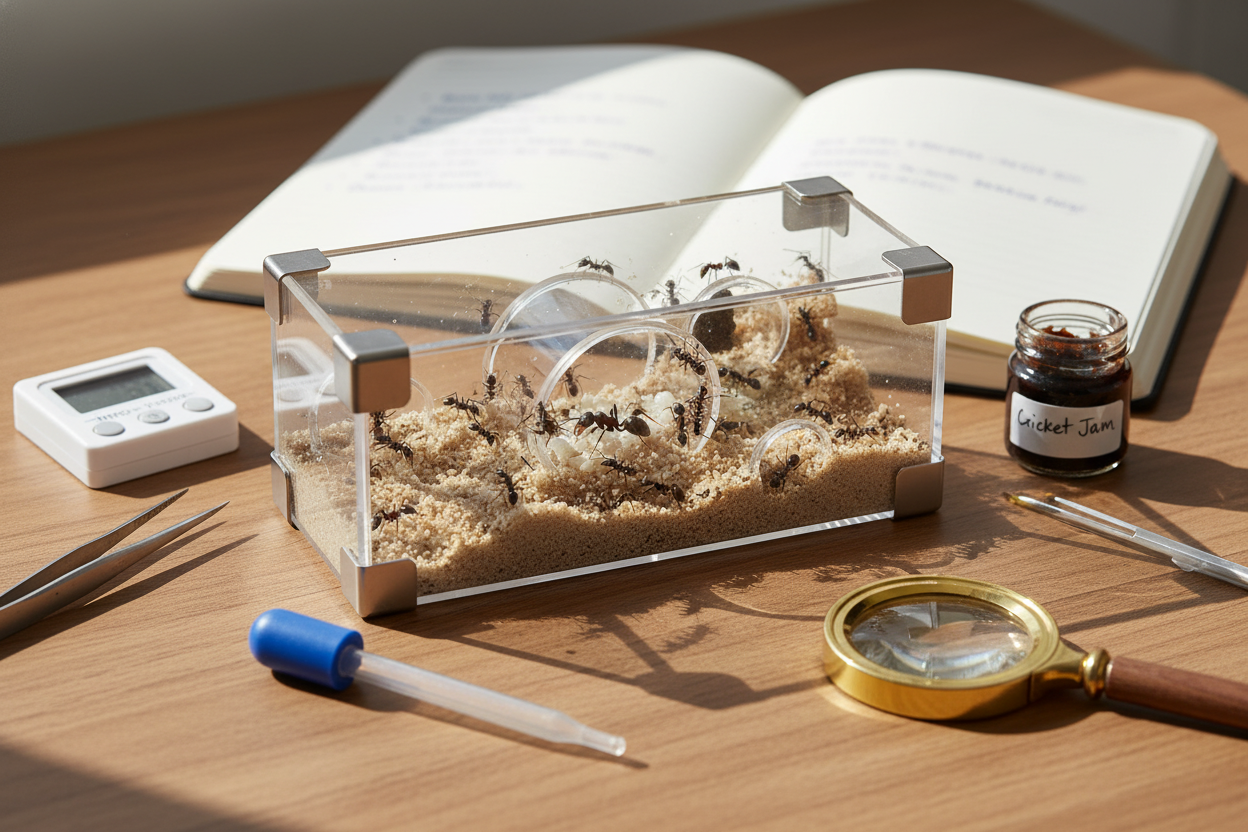
The ANTCUBE Starter Sets are a strong choice for beginners because they address all of these needs in one package. The ANTCUBE Starter Set L – Combi offers a versatile sand-loam substrate environment that works for most ground-burrowing species. It includes an arena, cover, escape protection oil, tweezers, pipette, and a hand magnifier, giving you everything you need right out of the box.
If your chosen species prefers a wood-based nesting environment, the ANTCUBE Starter Set L – Cork is designed with a natural cork nest that mimics the conditions ants like Camponotus and Formica thrive in. It also includes a mini thermo-hygrometer so you can monitor temperature and humidity with ease.
For those interested in keeping harvester ants like Messor, the ANTCUBE Starter Set for Harvester Ants – L – Popcorn is purpose-built for grain-collecting species. It includes a Popcorn plate for grain storage, a Terra Nidum nesting plate made from diggable material, and a full suite of tools including cricket jam, grain food, and an ant escape protection system.
If you are working with limited space or starting with a very small founding colony, the ANTCUBE Starter Set S – Combi offers the same quality in a compact format that fits easily on a desk or shelf.
A helpful discussion on choosing the best formicarium setup for limited space on Reddit also offers real-world beginner perspectives that can help you decide which size and style fits your situation best.
Setting Up Your Formicarium Step by Step
Once you have your formicarium, setup is straightforward. Start by moistening your substrate before placing it in the nesting area. This allows it to bind properly and creates a firm, stable environment for your ants to dig into. Avoid overly dry or dusty substrate, as this can cause respiratory issues for your colony.
Maintain a substrate layer of around 2mm in the arena section to discourage ants from burrowing into areas they should not. Lightly pricking the nesting material with a tool before introducing your ants can make it easier for them to begin digging immediately.
Apply anti-breakout oil to the inner rim of the arena before introducing your colony. Connect any tubes and modules securely, and double-check all plugs and covers before your ants go in.
Feeding and Caring for Your Ant Colony
Simple Feeding Routines That Keep Your Colony Thriving
Feeding your ant colony does not need to be complicated, but it does need to be consistent. Ants have two primary nutritional needs: protein and carbohydrates. Getting the balance right supports healthy worker activity, brood development, and long-term colony growth.
Protein Sources Protein is essential for raising larvae. In the wild, ants source protein from insects and other invertebrates. In a captive setting, you have several practical options. Cricket jam, which is included in several ANTCUBE starter sets, is a convenient and nutritious protein source made from gently cooked crickets. It is easy to portion, simple to store (keep it refrigerated after opening, or freeze for longer shelf life), and eliminates the need to handle live insects.
Small pieces of mealworm, boiled egg white, or commercially available ant protein gel are also well-accepted by most species. Offer protein two to three times per week, removing uneaten food promptly to prevent mold.
Carbohydrate Sources Carbohydrates fuel your worker ants and keep the colony energized. A diluted honey or sugar water solution works well and can be offered using a small drinking trough. Avoid pure honey as it can be too thick and sticky. Many beginner setups include a dedicated 2ml trough for sugar solutions, making this part of care simple and mess-free.
For harvester ant species like Messor, seeds and grains are a core part of the diet. These ants mill seeds into a paste called ant bread, which they store and feed to the colony. Grain food specifically formulated for harvester ants is included in the ANTCUBE Harvester Ant Starter Set and provides a reliable, ready-to-use option.
Water Fresh water should always be available. A sponge-based water trough prevents drowning while keeping the colony hydrated. Change the water regularly to maintain hygiene and prevent bacterial growth.
Feeding Frequency and Observation For a young founding colony with just a queen and a few workers, feed small amounts every two to three days. As the colony grows, you can increase the frequency and quantity. Watch how quickly food is consumed and adjust accordingly. Overfeeding leads to mold and hygiene issues, while underfeeding slows colony development.
Observing your colony during and after feeding is one of the most enjoyable parts of ant keeping. You will notice how workers divide tasks, how food is distributed, and how the colony responds to different offerings. Research published in peer-reviewed journals, including studies accessible through PubMed Central, highlights how ant colonies exhibit sophisticated collective behavior and division of labor, making every feeding session a genuine window into complex social dynamics.
Temperature and Environment Most beginner-friendly ant species thrive at room temperature between 20 and 28 degrees Celsius. Some species benefit from a slight temperature gradient, with a warmer nesting area and a cooler foraging zone. A mini thermo-hygrometer, included in several ANTCUBE starter sets, makes it easy to monitor conditions and make adjustments as needed.
Avoid placing your formicarium in direct sunlight or near heat sources. Many ant species prefer darkness in the nesting area, which is why red-tinted foil covers are commonly used. Red light is invisible to ants, so you can observe your colony without disturbing them.
Keeping a Care Log One habit that makes a real difference for beginners is keeping a simple care log. Note when you fed your colony, what you offered, how much was consumed, and any changes you noticed in behavior or colony size. This record helps you spot patterns, identify issues early, and track your colony's growth over time. It also makes the hobby more engaging as you build a personal history with your colony.
For a comprehensive overview of how to approach your first colony setup from sourcing to daily care, the Ants Canada guide to starting your ant colony is a trusted resource used by beginners and experienced keepers alike.
Your Ant Keeping Journey Starts Here
Ant keeping for beginners is one of those hobbies that surprises you. What starts as curiosity quickly becomes a genuine connection with a living, breathing community working together in ways that are endlessly fascinating to observe. With the right species, a well-designed formicarium, and a consistent care routine, your colony will grow and thrive in ways that reward every bit of attention you give them.
You now have the foundation you need to begin. Choose a beginner-friendly species that matches your interest, set up a quality formicarium that supports your colony's natural behaviors, and establish a feeding routine that balances protein, carbohydrates, and fresh water. Take it one step at a time, observe closely, and enjoy the process.
Every thriving ant colony started with a single curious keeper who decided to give it a try. That keeper can be you. Start your colony today and discover just how remarkable these tiny creatures truly are.

De Talis Us



Dejar un comentario
Este sitio está protegido por hCaptcha y se aplican la Política de privacidad de hCaptcha y los Términos del servicio.