



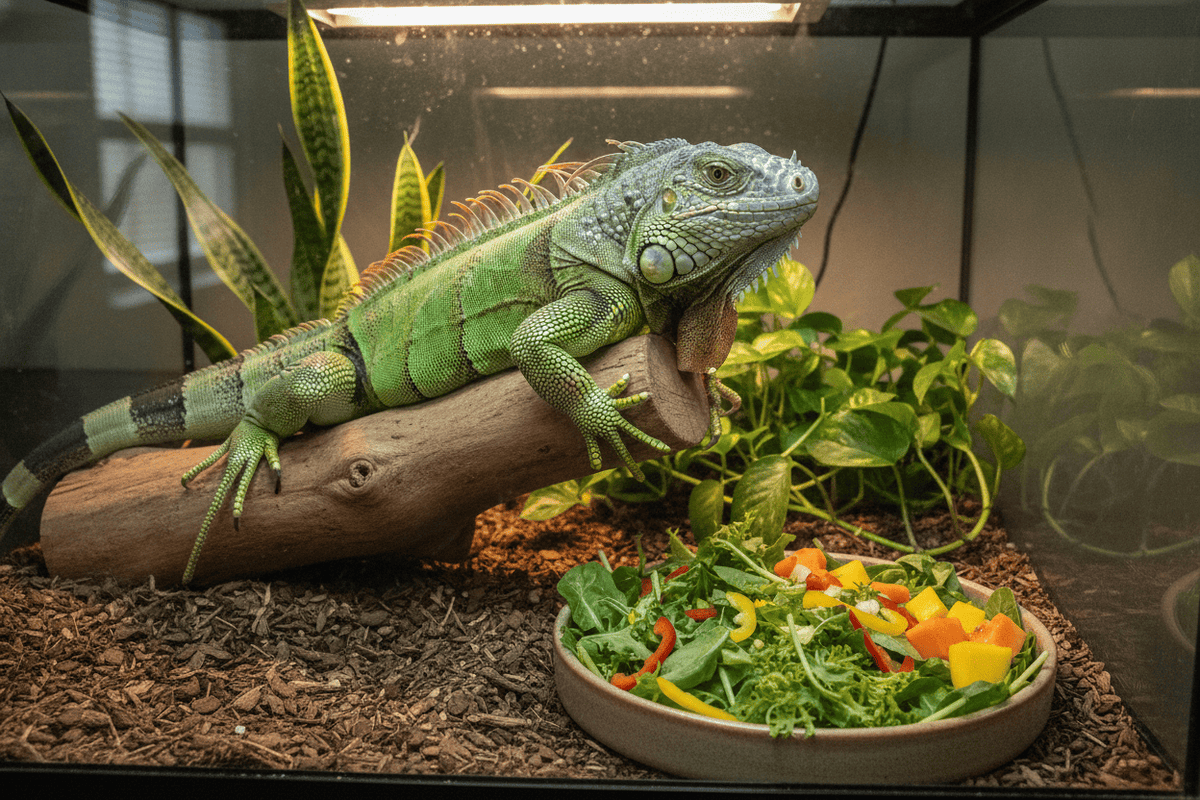
Adult Iguana Diet: Best Foods for a Healthy Life
What You Feed Your Iguana Matters More Than You Think
Your adult iguana deserves far more than a bowl of shredded lettuce tossed together at mealtime. The truth is, the adult iguana diet is one of the most critical factors in determining how long and how well your scaly companion lives. Iguanas are strict herbivores, and when their nutritional needs are met consistently, they thrive with vibrant color, strong bones, and active behavior.
Whether you recently welcomed an iguana into your home or you've been caring for one for years and want to sharpen your approach, this guide covers everything you need to know. From the best leafy greens to rotate daily, to smart vegetable and fruit additions, to the foods that should never land in their bowl, you'll walk away with a clear, confident meal plan your iguana will genuinely benefit from.
Leafy Greens: The Core of Every Adult Iguana Diet
If there's one thing to get right in your iguana's nutrition, it's the greens. Leafy greens should make up the bulk of every meal, roughly 70 to 80 percent of the total diet. They provide essential vitamins, calcium, and fiber that keep your iguana's digestive system running smoothly and their bones strong.
Best Greens to Rotate Daily
Rotating greens is key. Feeding the same green every day can lead to nutritional imbalances and even toxin buildup from certain plants. Here are the top options to cycle through regularly:
Collard Greens: One of the best staples for adult iguanas. Collard greens are rich in calcium and low in oxalates, which means the nutrients are actually absorbed efficiently by your iguana's body. They're widely available and easy to prepare.
Mustard Greens: Another excellent daily option, mustard greens offer a strong nutritional profile with good calcium content. They have a slightly peppery flavor that many iguanas enjoy, making them a great way to add variety.
Dandelion Greens: Often overlooked but incredibly valuable, dandelion greens are packed with vitamins A, C, and K, along with calcium and iron. If you can source organic dandelion greens free from pesticides, they make a fantastic addition to the rotation.
Turnip Greens: High in calcium and vitamin A, turnip greens are another solid choice for supporting bone health. They pair well with other greens in a mixed salad-style meal.
Endive and Escarole: These slightly bitter greens are well-tolerated by most iguanas and add helpful variety to the weekly rotation.
When preparing greens, wash them thoroughly and chop them into manageable pieces. Offering a colorful, mixed bowl not only ensures nutritional balance but also keeps mealtime interesting for your iguana.
Vegetables and Fruits: Smart Additions for Variety
Beyond leafy greens, vegetables and fruits round out a complete adult iguana diet by adding different vitamins, antioxidants, and hydration. These should make up roughly 15 to 20 percent of the overall diet, with fruits kept to a smaller portion of that.
Vegetables Worth Adding Regularly
Several vegetables offer strong nutritional benefits and are safe for adult iguanas:
- Bell peppers (red, yellow, or orange) are rich in vitamin C and add a satisfying crunch.
- Butternut squash provides beta-carotene and vitamin A, supporting eye health and immune function.
- Green beans offer fiber and moderate calcium without the risks associated with high-oxalate vegetables.
- Snap peas can be offered occasionally for variety and are generally well-received.
Avoid cooking vegetables whenever possible. Raw, fresh vegetables preserve the most nutrients and are easier for iguanas to digest naturally.
How Much Fruit Is Too Much?
Fruits are where many iguana owners unknowingly go wrong. While fruits like mango, papaya, and berries are nutritious and safe in small amounts, they are high in natural sugars. Too much fruit in the adult iguana diet can lead to digestive upset, obesity, and even liver issues over time.
Think of fruit as an occasional treat rather than a dietary staple. Offering a small portion of fruit two to three times per week is generally appropriate. Mango and papaya are particularly popular choices because they're rich in vitamins and enzymes that support digestion. Figs are also worth including occasionally since they're one of the few fruits with a favorable calcium-to-phosphorus ratio.
Keep fruit portions small, roughly a tablespoon or two per serving, and always offer them alongside a full serving of greens rather than as a standalone meal.
Supplementation: Filling the Nutritional Gaps
Even the most carefully planned adult iguana diet can have gaps, especially when it comes to calcium and vitamin D3. In the wild, iguanas absorb vitamin D3 through direct sunlight, which enables proper calcium metabolism. In captivity, this process depends heavily on proper UVB lighting and dietary supplementation.
Dusting food with a calcium supplement without vitamin D3 (since the UVB light handles D3 conversion) is a common and effective practice. A light dusting three to four times per week is typically sufficient for most adult iguanas.
A multivitamin supplement can also be added once a week to cover any micronutrient gaps. Always follow dosage guidelines carefully, as over-supplementation, particularly with vitamin A, can be just as harmful as deficiency.
Foods to Avoid in Your Iguana's Meal Plan
Understanding what not to feed your iguana is just as important as knowing the best options. Several foods that seem harmless or even healthy can cause serious problems for adult iguanas.
Common Mistakes That Can Harm Your Iguana
Spinach and Beet Greens: These are high in oxalic acid, which binds to calcium and prevents absorption. Regular feeding of high-oxalate greens can contribute to metabolic bone disease, a painful and debilitating condition.
Iceberg Lettuce: This is one of the most common feeding mistakes among new iguana owners. Iceberg lettuce is almost entirely water with very little nutritional value. Filling your iguana's bowl with it may seem like you're feeding them, but you're essentially offering empty calories with no real benefit.
Animal Proteins: Iguanas are strict herbivores. Feeding them insects, meat, eggs, or dairy products puts unnecessary strain on their kidneys and liver. Over time, a diet that includes animal protein can lead to kidney failure and significantly shorten your iguana's lifespan.
Onions, Garlic, and Chives: These are toxic to iguanas and should never be offered in any form.
Avocado: Avocado contains persin, a compound that is toxic to many reptiles and should be completely avoided.
High-Phosphorus Foods: Foods with an unfavorable calcium-to-phosphorus ratio, where phosphorus is significantly higher than calcium, can interfere with calcium absorption and contribute to bone health issues over time.
When in doubt about a specific food, it's always worth researching its calcium-to-phosphorus ratio and oxalate content before adding it to your iguana's rotation.
Set Your Iguana Up for a Long, Healthy Life
A thoughtfully planned adult iguana diet built on a rotating base of leafy greens, fresh vegetables, and carefully portioned fruits gives your pet the nutritional foundation they need to thrive. Add in consistent supplementation and proper UVB lighting, and you're creating an environment where your iguana can truly flourish.
Consistency and variety are your most powerful tools as an iguana owner. Rotating foods weekly prevents nutritional imbalances and keeps mealtime engaging for your pet. Small, intentional choices, like swapping collard greens for dandelion greens one day or adding a few pieces of bell pepper to the bowl, make a meaningful difference over time.
You clearly care about getting this right, and that dedication shows. Your iguana is lucky to have someone so committed to their well-being. If you're looking for quality reptile food and supplements to support your iguana's diet, explore options designed with reptile health in mind and give your scaly companion the care they deserve every single day.

De Talis Us




Dejar un comentario
Este sitio está protegido por hCaptcha y se aplican la Política de privacidad de hCaptcha y los Términos del servicio.